Development threatens this Charlotte neighborhood. Can history save it?
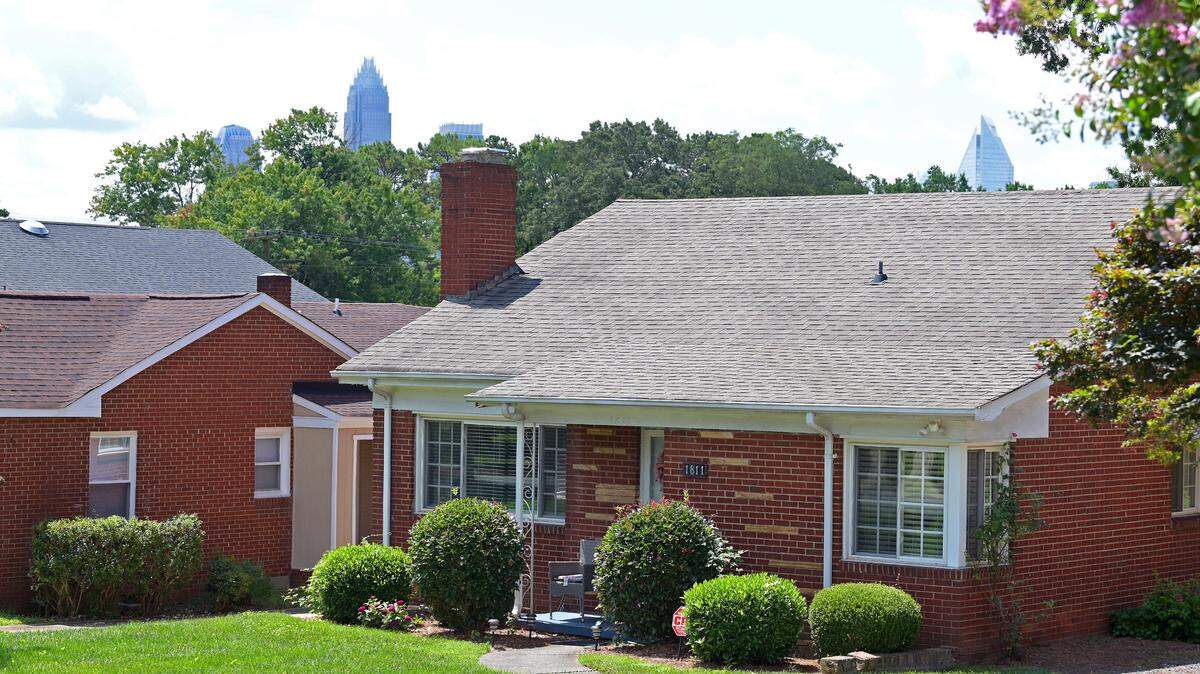
McCrorey Heights looks much the same as it did in its heyday in the late 1960s and ‘70s. Brick ranch-style homes line a rectangular grid of straight streets, most along five major avenues.
But threats to that character and architectural style are encroaching, including newly built — and more expensive — homes nearby. Now, residents of the historically Black neighborhood have a way to put a stop to the rapid pace of change other parts of Charlotte are accustomed to.
Charlotte City Council as early as next month may approve McCrorey Heights as a historic district. It would mean that all buildings would be protected by a local design review process.
Minor and major changes to people’s properties and homes like fences, windows, tree removal, painting brick and front porches would need approval from Charlotte’s Historic District Commission.
The historic designation would not restrict any use of a home, according to city planning officials. It also does not require review of interior changes like to the kitchen or bathrooms nor require things like specific paint colors.
McCrorey Heights sits close to uptown. It’s generally bounded by Oaklawn Avenue, Beatties Ford Road, and the intersection of Interstates 77 and 277, on the northwest end of center city.
McCrorey Heights history
Comprised of about 167 homes a short distance from Johnson C. Smith University, McCrorey Heights would be Charlotte’s 8th historic district. The others include Fourth Ward, Dilworth, Plaza Midwood, Wesley Heights, Hermitage Court, Wilmore and Oaklawn Park.
The seven districts established today comprise around 920 acres citywide, or about .5% of Charlotte’s total land area, according to city planning staff.
McCrorey Heights was founded by JCSU president H.L. McCrorey in 1912.
Many men and women who built and led key Black institutions during segregation lived in the neighborhood, according to a report compiled by a neighborhood history committee.
James R. McKee, who established the Excelsior Club on Beatties Ford Road, lived in a home on Oaklawn Avenue with his wife. The club was once a central nightspot for the Black community.
Willie L. Johnson Sr. lived there, too, when he bought the Charlotte Post. The Johnson family became the city’s leading Black newspaper publishers well into the 21st century, according to the report.
Gentrification in Charlotte
Sean Langley has lived in the neighborhood for 16 years.
He moved to Charlotte in 1999 to attend JCSU. Seven years later, he became a McCrorey Heights resident. A number of McCrorey Heights residents helped transform the city and nation, dating back several decades, he said.
“In many respects this neighborhood helped birth many parts of the civil rights movement,” Langley said at a Monday night City Council public hearing. “They were highly educated men and women who demanded Black people be treated with respect and also be accommodated in public spaces in Charlotte.”
They were, Langley said, driving forces that helped take down the walls of segregation.
Marilyn Brown’s parents built a house in McCrorey Heights when she was 4. After she retired, Brown moved back to the home she grew up in on Madison Avenue. She noticed that houses near the neighborhood had become more expensive.
The area also recently saw the completion of the CityLYNX Gold Line, with stops near JCSU and connections to uptown and the Elizabeth neighborhood. The line was welcomed by some who thought it could help bring more economic investment into the area. But many were worried the transit addition could lead to future problems like resident displacement. In 2020, residents voiced concerns about new development near Beatties Ford Road leading to property values soaring and residents being priced out, The Charlotte Observer reported.
“What is happening all over the city in various neighborhoods we do not want happening in our community,” Brown told council members Monday night.
Zoning vote
Many council members expressed their support Monday to designate the neighborhood as a historic district.
“This is what it’s going to take to balance out this explosive development and gentrification in the city,” councilwoman Renee Johnson said.
The council could vote on the designation as soon as its August 15 zoning meeting.
The city has created a website for the proposed historic district. It can be found under the planning tab.
This story was originally published July 21, 2022 at 6:00 AM.