Racial equity talks in Charlotte: Not deep. Not justice. Not enough, advocates say.
In the aftermath of last year’s protests and a nationwide racial reckoning, Charlotte’s elected officials and a number of its major corporations pledged to address the system of inequality that has hindered opportunities for Black residents.
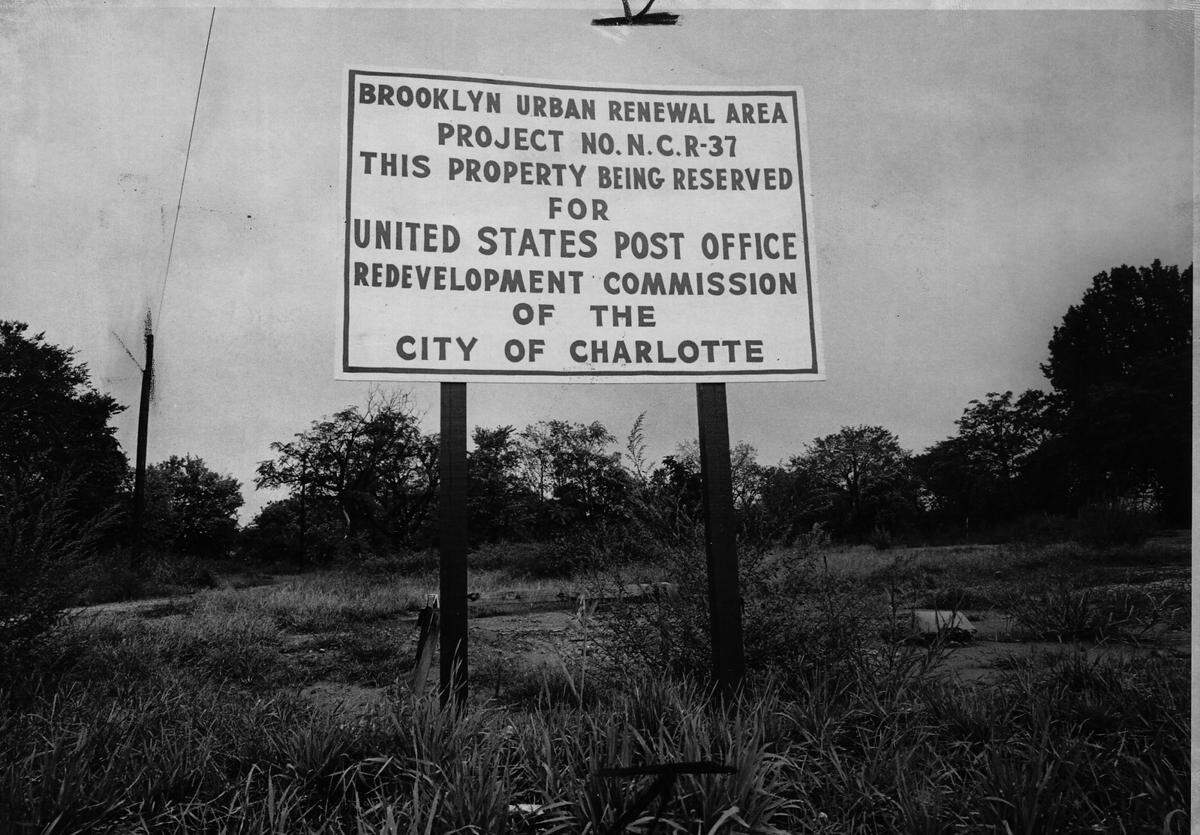
Both Mecklenburg County commissioners and Charlotte Mayor Vi Lyles declared racism a public health crisis. In August, Lyles apologized for the city’s leading role in demolishing Brooklyn, once the largest Black neighborhood in Charlotte, in the name of urban renewal in the 1960s and ‘70s. And in an op-ed Lyles penned in the Observer in June that referenced the Minneapolis Police killing of George Floyd, the mayor said Charlotte needs to have uncomfortable conversations about race in order to make systemic changes.
At the same time, companies issued statements and set aside money for fighting racial disparities, including Bank of America, which announced a $1 billion commitment last June.
But more than six months later, several advocates from the racial justice group Restorative Justice CLT say progress on broad-based solutions they’ve recommended has stalled.
“We were being placated,” said Corine Mack, a Restorative Justice CLT board member.
“It’s not enough to say ‘I apologize.’ … The way you heal the wrong is to correct the harm that was done,” said Mack, who is also president of the local NAACP but said that she was not speaking on its behalf.
A public-private partnership, billed in part as a response to the mayor’s apology and George Floyd, has been quietly taking shape behind closed doors, with limited public input. While Lyles pledged transparency with her apology, there have been no public meetings on how to spend an unspecified amount of money being discussed in the “Public-Private Partnership on Racial Equity.”
And, according to interviews and documents reviewed by the Observer, some of the partnership’s plan isn’t new but instead points to programs or efforts that were already in the works before bold promises to address Charlotte’s long-standing inequities.
Racial justice advocates say the plan has not included key stakeholders — namely Charlotteans who were displaced by urban renewal or their descendants — and excludes specific financial commitments to atone for disparities exacerbated when the city helped raze Brooklyn.
They also say business and political leaders have resisted proposals of restitution for Black communities harmed by decades of racism.
And in a city that has long taken cues from the corporate community, they question whether the businesses that have been enriched through that very system that deprived Black residents of economic opportunity should be at the helm of the response.
Lyles and others, though, say their public-private partnership goes beyond addressing urban renewal, and aims to right the wrongs of systemic racism and segregationist policies like redlining.
The Rev. Willie Keaton Jr., a Restorative Justice CLT member, shared with the Observer a description of a four-pillar plan Lyles and others say they back. That includes making investments in the historically Black Johnson C. Smith University, financial help for minority-owned businesses and development in several neighborhoods, bridging the digital divide and hiring and retaining diverse talent.
“Charlotte has always been a place where the public sector and private sector have worked together,” Lyles said in a recent interview with the Observer.
But board members with Restorative Justice CLT — whose leaders include prominent clergy and anti-racist activists — charge the partnership’s plan lacks the depth needed for racial reconciliation.
“They seem to feel as though it’s not necessary to atone for the sins of the past,” said Keaton, who is also a pastor at Mt. Olive Presbyterian Church.
Charlotte’s racial reckoning
Restorative Justice CLT formed in 2019, amid increased scrutiny over the $683 million redevelopment of a swath of uptown land that was once Brooklyn. More than 1,400 homes, businesses, churches and other buildings were torn down through urban renewal, which the city claimed at the time was “slum clearance,” but in reality ousted Black people from valuable land.
The predatory policy of urban renewal has had long-lasting effects on Black wealth in Charlotte and other cities across the United States.
In the wake of protests over the police killing of George Floyd, some cities began to re-examine how they tackle certain social justice issues. Asheville adopted a reparations resolution last summer, although a vote to allocate funds has since been delayed, and Durham City Council called for reparations at the federal level.
For years, some elected leaders in Charlotte have pointed to a local study that found modern-day segregation was the main contributing factor to Charlotte’s 2014 ranking as last among 50 cities for economic mobility. Policies like urban renewal and redlining going back decades, the report from the Leading on Opportunity group found, added to the difficulties poor people face in moving up economically.
Restorative Justice CLT initially called for restitution to come from the Brooklyn redevelopment in the form of housing for former Brooklyn residents and retail space for Black-owned businesses, for example. None of their requests have been met yet, but Keaton said they have had positive discussions with developer Don Peebles. The group also pushed more broadly for the city to reckon with the impacts of urban renewal on the Black community.
So Keaton and other Restorative Justice members say they were hopeful last summer when Lyles, at a virtual City Council meeting, read an apology, citing the “past actions of our government that impeded the stability and the well-being and progress of African-American residents.”
“People at the bottom of the economic ladder are struggling just to maintain their very existence,” said the Rev. Reggie Tuggle, pastor of Grier Heights Presbyterian Church. “And we as a city have the opportunity to put into place certain policies that can change that whole landscape.”
In a meeting organized by the Foundation For The Carolinas a month after the mayor’s apology, Restorative Justice CLT and other community leaders proposed their plans to address racial justice, emails viewed by the Observer show. One of them was Malcomb Coley, Charlotte managing partner at EY (formerly Ernst & Young), who presented the mayor’s public-private partnership at the September meeting.
The Rev. Benjamin Boswell, the senior minister at Myers Park Baptist Church, said ideas from Restorative Justice CLT appeared to fall on deaf ears.
Specifically, according to Keaton, Coley later told him members had no “appetite” for what Restorative Justice CLT presented. Restorative Justice CLT is pushing for investments in six areas harmed by urban renewal: land and housing, business, criminal justice, mental health, education and faith.
For example, because 11 Black churches were displaced, the group suggests providing support for capital needs at churches in impacted communities. Because urban renewal shut down two schools and a library, they ask for additional funds for schools and libraries in at-risk neighborhoods.
The group proposes forming a public trust, which the Foundation For The Carolinas has agreed to house, through which they hope to raise $20 million over five years from the city, county and private companies for initiatives in those six areas. A board of directors comprised of community members and former residents or families impacted by Brooklyn would decide how to spend the money.
Coley said valuable work that benefits people of color is underway — and he denies saying that there was no appetite among business leaders for Restorative Justice CLT’s plan. He was tapped by Lyles to help lead the public-private partnership initiative, which does not incorporate anything from the group’s proposal, according to interviews and documents viewed by the Observer detailing the plan.
He said the public-private partnership was already underway before the apology, and that there’s not enough bandwidth to focus on anything outside of the four areas in the proposal.
But he said no one is stopping Restorative Justice CLT from separately moving forward with its program.
“We’re well down the road,” Coley said. “These are four big things that we’re doing that would improve and benefit this community immensely.”
Lyles and Coley have broadly described the four-pillar public-private plan in interviews with the Observer, but did not provide details on spending, timing and the exact parameters. A city spokesperson told the Observer Thursday there’s “no dollar figure that’s been discussed at this point.”
When Lyles apologized in August, she said the city would “measure the results of change with transparency.”
“Several of our most prominent organizations are working together on racial inequity. It’s that type of large scale, multi-organizational, private-public response that we need to create to address these issues,” Lyles said in a statement to the Observer provided by a spokesman recently.
“This City Council has been very responsive to the impacts of systemic racism and the type of response required to begin to repair the damage done over decades and centuries. Our work is driven by and influenced by the community engaging with us, which they have done with purpose and intent.”
In an interview, she said the city is pursuing other initiatives focusing on equity, including areas like transportation and mobility.
“I think we agree on all of the areas of harm,” she said. “We also agree that we have to develop specific efforts to make that happen. You’ve got to try something and see how it works.”
Corine Mack said no plan can claim to be restorative justice unless the people who have been harmed are in the room. “You have to be willing to be uncomfortable and hear those stories,” she said.
‘I want reconciliation’
Behind the scenes, Restorative Justice CLT members say they encountered resistance — even down to the wording of the resolution they drafted which evolved into Lyles’ public apology.
A draft of the resolution mentioned the financial services industry and said Charlotte is home to Bank of America’s headquarters, making it a prosperous city, yet Black residents have not shared proportionately in that wealth.
Restorative Justice CLT asked business and community leaders to sign the resolution and wanted the City Council to vote on the item. But there were objections to naming Bank of America specifically and it’s unclear why the resolution became a mayoral proclamation instead of a resolution backed by the council.
As the group’s discussions about the apology were in the works with the city, the mayor, Coley and members of Restorative Justice CLT met to discuss the details. Coley said he was invited to talk about the public-private partnership with the advocates.
In that meeting, according to Keaton, Lyles and Coley questioned why one business was singled out in the resolution.
Lyles disagreed with naming one corporation because many businesses have benefited from systemic racism, according to the statement provided to the Observer by a city spokesman. Coley said there was a group decision made to mention the business community at large, rather than single out one entity.
Eventually, advocates agreed to remove the reference to Bank of America — but they point to the conversation as an example of an ongoing refusal from businesses, government and other organizations that profited from systemic racism to accept responsibility. Members of the group say an acknowledgment and apology from those responsible is a form of reconciliation that is necessary for true justice.
“I want reconciliation,” Tuggle said. “You can’t move in that direction until the people in power, the decision makers say, ‘You know what, you’re right, there is racial inequity, yes there was an injustice done and we have to address it.’ ”
More investment sought
Part of the partnership’s plan touts programs already in place, some of which were funded before Lyles’ apology.
For example, the push to provide capital to minority-owned businesses is part of the city’s Corridors of Opportunity program, which seeks to revitalize areas that have historically lacked investment. Critics have said the plan, which focuses on six corridors in west, north and east Charlotte, will accelerate gentrification.
Lyles said her role is to develop a program that can be funded. She likens the public-private partnership to Asheville’s reparations plan, and said it deals with “historical disparities.”
But Boswell, with Myers Park Baptist Church, said the plan puts equity ahead of justice — and fails to make up for the actions of the past.
“We’re going to infuse capital now, but we’re not going to make up for anything that happened in the past because we don’t want to deal with all that,” he said. “That’s not my definition of justice.”
Coley defended the plan, and said each of the focus areas constitute systemic change. “It clearly helps those communities that have been marginalized,” he said.
Jackson Faw, a publicist for “Tomorrow’s Bread,” a novel his mother wrote about Brooklyn, said the areas in the public-private partnership are a great start. But he said the city, landowners and corporations located on the land that was once Brooklyn ought to provide reparations in the form of payments to former residents and their descendants.
“When you think about folks whose homes, whose schools, whose churches were destroyed to enrich a white, upper-class population ... They certainly prospered economically,” he said. “And I think the victims should have some personal economic opportunity.”
Keaton said the mayor’s apology and response amounted to “tokenism,” and he is frustrated.
“Martin Luther King Jr. once said that the Negro has been written a promissory note marked insufficient funds,” Keaton said. “This apology is also just another bad check for African Americans in Charlotte.”
This story was originally published February 12, 2021 at 6:00 AM.