
Duke Energy: No toxic algae found at Lake Norman site where state said it was
Duke Energy found no potentially toxic algae at a 55-acre site on Lake Norman in Mooresville where a resident recently reported its presence to the state, a company spokesperson said this week.
A Duke Energy team inspected the site and found 13 acres of nontoxic native species – green algae, spikerush and eelgrass – and no Lyngbya algae, spokesperson Logan Stewart told The Charlotte Observer.
“Someone probably assumed it was lyngbya and added that to the NCDEQ site, but it is incorrect,” Stewart said in an email, referring to the N.C. Department of Environmental Quality’s NC Fish Kill & Algal Bloom Reports site.
That statement from Duke, however, is in conflict with a preliminary review by a state environmental official.
The Lake Norman location where the resident reported and posted photos of the aquatic growth is off Binns Road, which is off Tuskarora Trail southwest of Trump National Golf Club Charlotte.
Is it harmful, or isn’t it?
On April 21, the resident posted photos of the aquatic growth on the N.C. Department of Environmental Quality’s NC Fish Kill & Algal Bloom Reports site.
“Second time there has been a Algea bloom in this area in the last three plus years,” the resident wrote on the site. “Until recently we never had Algea bloom in this area.”
The algea blooms appeared “after all the forested areas were cut down and homes built,” the resident wrote. “Water run off in the area is excessive. Lawns in this area are treated with chemicals.”
In “final investigation” comments on the reporting site, a DEQ official replied that the photos “indicate growth of Microseira (Lyngbya) wolleid, a type of benthic cyanobacteria.”
The algal bloom response coordinator for DEQ’s Division of Water Resources “made the preliminary identification, based on professional judgment, of Lyngbya, Microseria wollei, also known as black-mat algae,” Water Resources spokesperson Laura Oleniacz told the Observer.
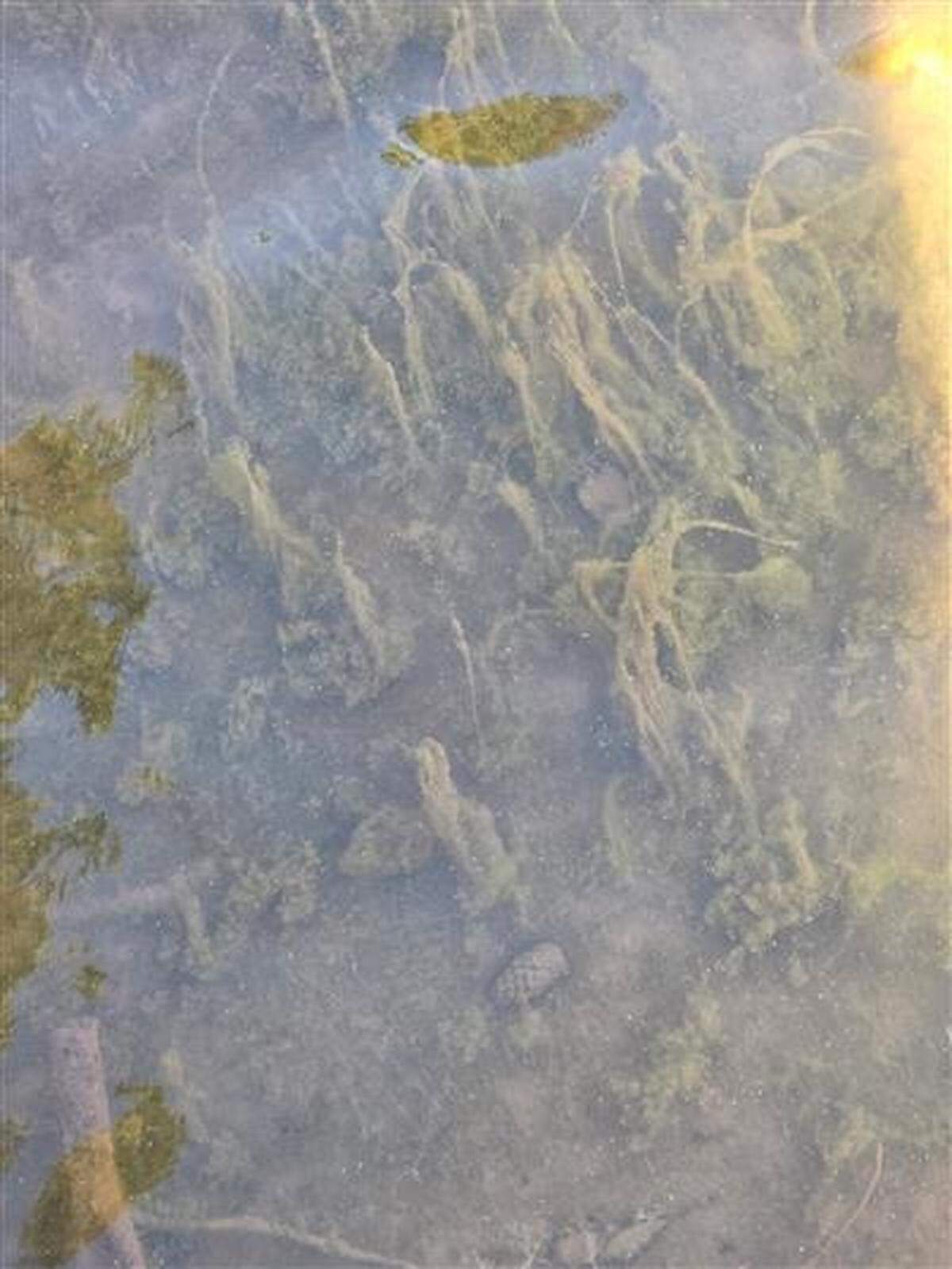
“DWR has not done a follow-up identification or sampling that would be needed to confirm the species identification at this time,” Oleniacz said in an email.
Lyngbya has been confirmed elsewhere on the lake in recent months and years, the Observer reported.
Algal toxins can kill fish and dogs, according to the N.C. Division of Public Health. North Carolina has never had a documented report of a person sickened by algal blooms, according to the N.C. Department of Health and Human Services.
Lyngbya “has potential to produce toxins but is unlikely to produce them in the natural environment,” Stewart said. “N.C. State is currently doing a lot of research on it.”
Duke Energy manages Lake Norman and other Catawba River lakes under federal license.
The state Division of Water Resources reminds people to avoid contact with discolored water that could indicate the presence of an algal bloom, Oleniacz said.
The N.C. Division of Public Health “routinely encourages the public to avoid contact with large accumulations of algae and to prevent children and pets from swimming or ingesting water in an algal bloom,” she said. “Remember: When in doubt, stay out.”
State health officials also remind the public “to take precautions as other microorganisms or pollution may be present in water bodies that can lead to recreational water illness,” Oleniacz said.
This story was originally published May 14, 2026 at 12:45 PM.