Charlotte region transportation board maintains decision to kill I-77 toll support
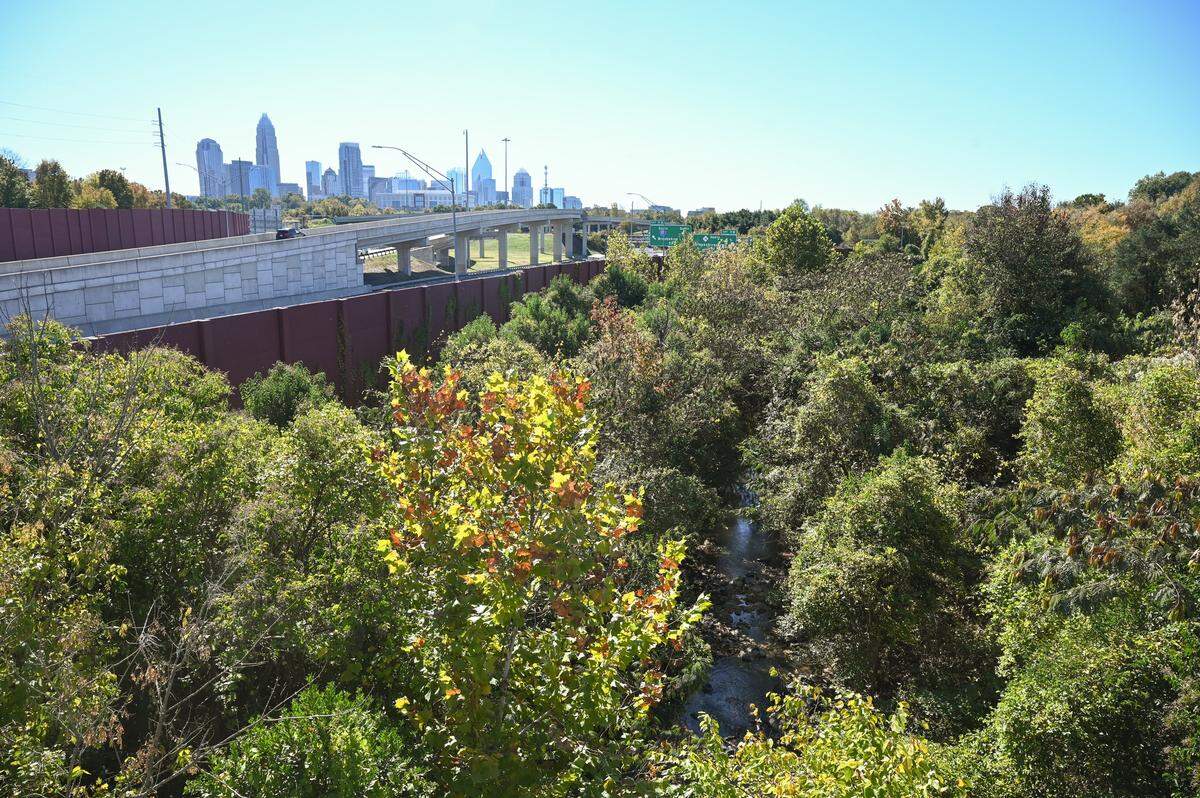
The Charlotte Regional Transportation Planning Organization is maintaining its decision to end support for the funding agreement for the Interstate 77 South toll lane project for now after a motion to reopen the discussion failed Wednesday night.
It comes just a month after the Charlotte City Council and CRTPO voted to rescind support for the controversial, $3.2 billion project. NCDOT committed $600 million to the project and already has spent about $64 million.
James Kerr, who represents Monroe, made the motion to add reconsidering the vote to the agenda. It comes after the Monroe City Council voted earlier on Wednesday to direct its representative to reverse its vote in May to rescind support for the I-77 South toll lanes project’s funding agreement.
But the push to reopen the discussion failed with Charlotte, Mecklenburg County, Matthews and Davidson voting against the motion.
“I am not going to support the motion because it’s not clear to me the outcome of the vote will be different,” said Ed Driggs, who represents Charlotte on CRTPO.
CRTPO uses a weighted vote system and Charlotte makes up about 41% of the vote. But it remains unclear if this is the last of the controversial project.
Threat from the legislature
The decision Wednesday night comes after Republican state Sen. Vickie Sawyer drafted legislation that could require Charlotte and other local governments to repay $64 million to the state. Local governments who do not pay would lose Powell bill funding, which is used for street resurfacing, and new state funding for road projects.
The measure would’ve also blocked NCDOT from removing the project from its prioritization list until Jan. 1.
Matthews Attorney Daniel Peterson called the move “unlawful” in a memo released Tuesday.
“Whether one agrees with the I-77 South project is beside the point,” Peterson said. “The Sawyer Amendment offends due process, attacks local governments for listening to constituents, violates the rights of local elected officials to vote their conscience without fear of unconstitutional retribution, and seeks to impose the already immense power of the North Carolina General Assembly to coerce a result on a federally-mandated cooperative process.”
But Sawyer held off on adding the amendment to House Bill 1094, a tangential bill requiring an audit of NCDOT’s ferry division. She said in the state senate’s transportation committee on Wednesday that the I-77 South toll lanes project is expected to be removed from the State Transportation Improvement Program list by August. Leaving it on the list could put other state projects at risk due to finances not being properly balanced, according to Sawyer.
She added that the language in the drafted amendment was not a “hollow threat.”
“This is as friendly as I can be — a warning — to all of you to reconsider,” Sawyer said.
History of the I-77 South toll lane project
NCDOT planned toll lanes on an 11-mile stretch from uptown to the South Carolina border to address crashes and congestion on I-77. According to NCDOT, I-77 South has the state’s highest congestion levels, seeing more than 160,000 cars a day.
The long-discussed project had been in the works since 2007, with a private-public funding agreement approved in 2024. But the project drew increasing scrutiny from residents after preliminary designs were released in November.
Opponents said it would significantly damage historically Black neighborhoods who bore the brunt of growth before. Others questioned the need for toll lanes.
Residents also called for more transparency and engagement from NCDOT. But despite efforts from the agency, trust between residents and NCDOT had already broken down over the last several months.
Reporters Nick Sullivan and Desiree Mathurin contributed to this story.
This story was originally published June 17, 2026 at 6:57 PM.