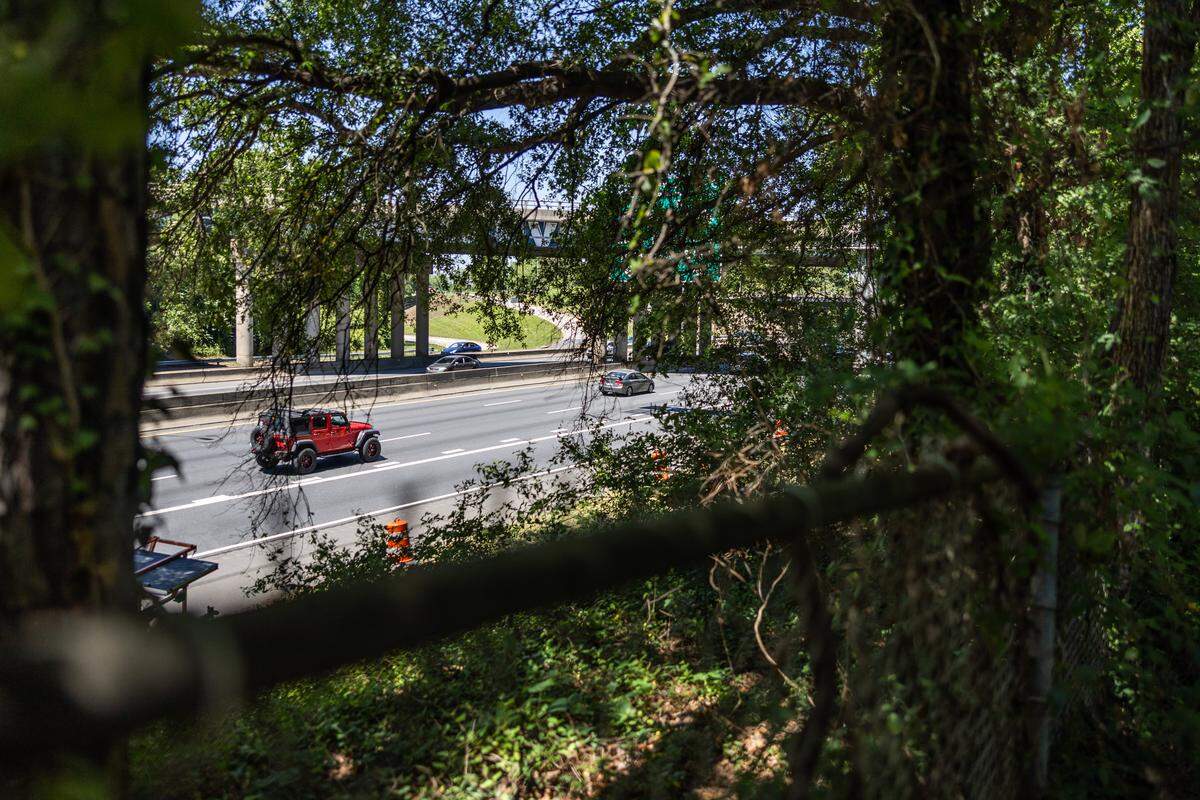
A history of the I-77 South toll project: What happened and how it was killed
Charlotte has been roiled in the past two weeks with the sudden end to the Interstate 77 South toll lane project.
The Charlotte region’s transportation board vote to kill support for the project on Wednesday, despite the board’s chair and attorney cautioning against a vote. The decision has left residents who could’ve been impacted by the controversial project excited about a more collaborative step forward.
But the North Carolina Department of Transportation has said the move means the loss of millions of dollars in critical transportation funding. Business leaders have similarly expressed disappointment in the recent decision.
“While NCDOT retains the authority to move this project forward, political opposition of this magnitude puts the June RFP release, and with it, $700 million in state investment, in real jeopardy,” Charlotte Regional Business Alliance President and CEO Robert McCutcheon said in a statement. “If that RFP does not go out, this project does not get built. And if this project does not get built, the consequences for commuters, employers, freight movement, and regional competitiveness will be felt for generations.”
On Friday, NCDOT effectively declared the project dead.
“As a result of CRTPO’s decision, NCDOT will need to remove the project from the State Transportation Improvement Plan to maintain compliance with federal requirements,” the agency said in a statement. “The $600 million in project funds will be redistributed to other eligible projects around the state through the state’s prioritization process for transportation projects.”
How the project reached this point has been a long and winding road of its own.
What was the plan?
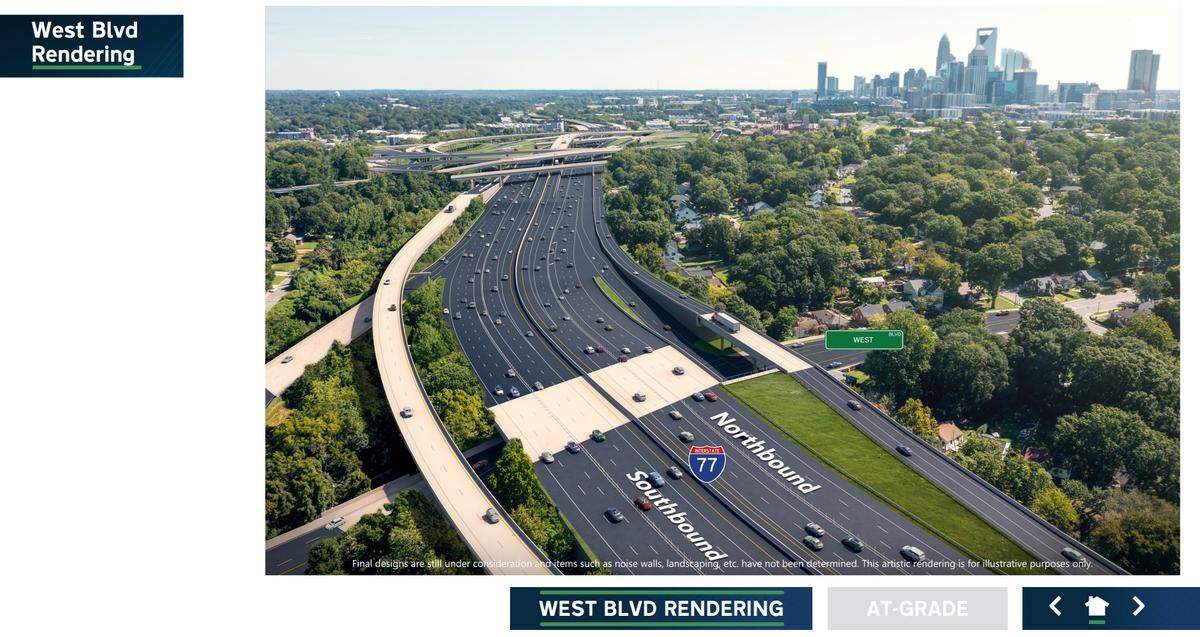
NCDOT planned toll lanes on an 11-mile stretch from uptown to the South Carolina border in order to address crashes and congestion on I-77. The project had been in the works since 2007, and a public-private funding agreement was approved in 2024. The state would own the lanes while partnering with a contractor to design, build, finance, operate and maintain them.
Why did they need to add it?
The corridor, according to NCDOT, has the state’s highest congestion levels, seeing over 160,000 cars a day. The agency estimated that, with or without toll lanes, I-77 would see a 25% increase in traffic by 2050, meaning the roadway will see over 200,000 cars a day.
Why express lanes?
The concept for adding express lanes to I-77 began with the Fast Lanes Study.
NCDOT partnered with the Charlotte Department of Transportation and other regional agencies in 2007 for the study to determine whether existing and planned highways would benefit from express toll lanes to ease congestion.
According to the study, additional non-tolled general-purpose lanes only temporarily reduce traffic congestion. The study also found converting lanes into toll roads would speed up construction because the toll money could help pay for the expansion.
NCDOT has said express lanes also provide drivers with an optional and more reliable travel time. It would mean that for every vehicle in the express lane there would be one less in the general-purpose lanes, according to the state agency.
Why were people upset?
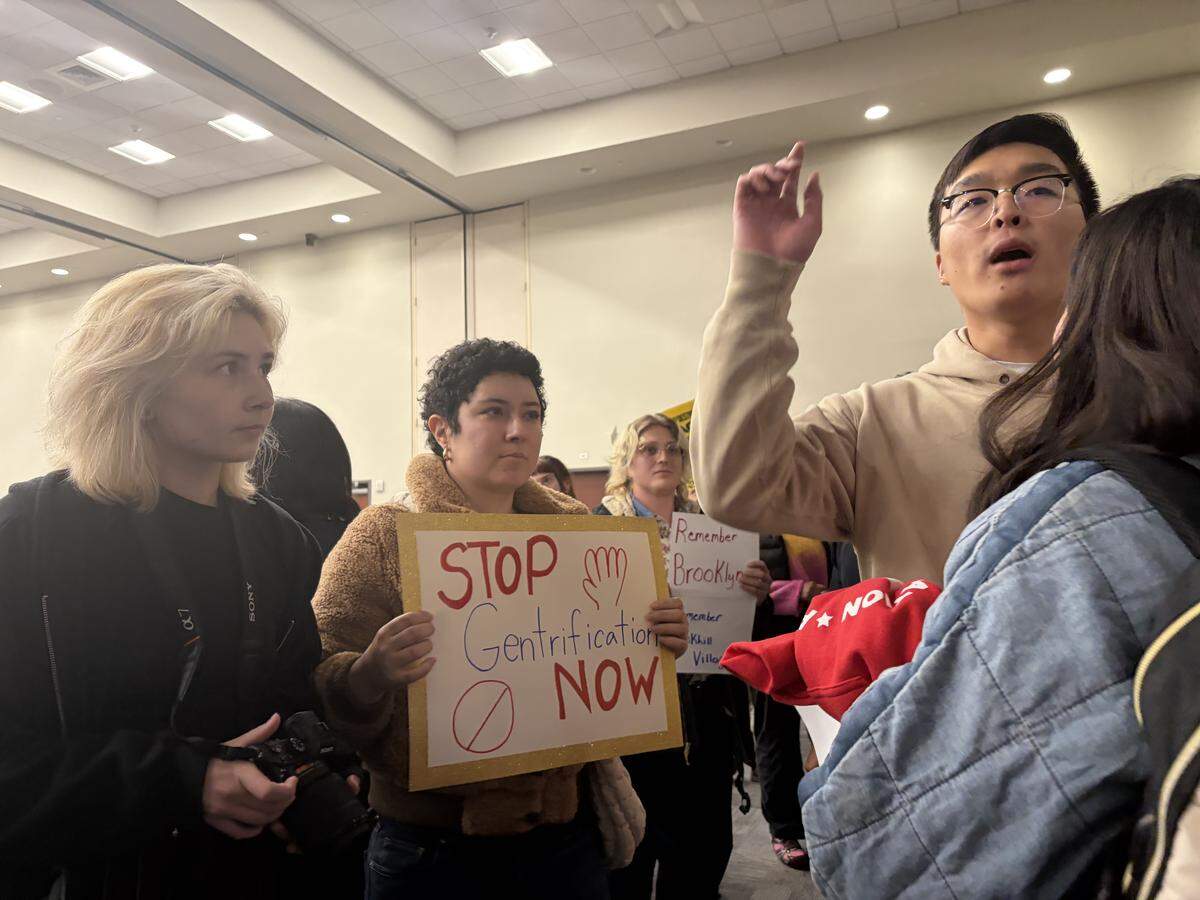
Residents said they felt the NCDOT wasn’t being transparent in its presentations, nor was the agency engaging properly with the community. Those who lived along the corridor came out heavily against the project because they said it would significantly damage historically Black neighborhoods that have endured the cost of growth before.
Several parks and greenways would have also been affected by the project, including the complete removal of Wilmore Park.
What changed?
The first major shift was the Charlotte City Council voting 6-5 in early May to rescind its support of the funding agreement for the project. The shocking move would direct the council’s representative on the Charlotte Regional Transportation Planning Organization to similarly pull support.
There’s been talks of what led to the change for some local officials, including speculation of pressure from political groups.
Council member Malcolm Graham was one of the six local officials who voted in favor of rescinding support. He said he tuned out political pressure and focused on community members when making his decision.
“There’s a lot of noise out there for sure,” Graham told the Observer. “My job is to block out the noise, focus on the residents, those being impacted, and listen to their concerns. And that’s what I did.”
When asked if he was ever considering changing his vote in the following days his reply was short: “No.”
After hours of debate on Wednesday, CRTPO followed suit and voted to rescind its support for the project just a week after the council’s stunning move. The decision came just under two years after the key transit group first voted to back it.
What this all means
Graham said Thursday that either way he believes the conversation can’t simply just end.
“I think at some point in time we’re going to have to address congestion on I-77 South,” he said. “It’s not if, it’s when, and it’s not just when, it’s how.”
Shannon Binns, executive director of the nonprofit Sustain Charlotte, similarly said no one disagrees with the idea that the heavily traveled thoroughfare needs a solution. But the debate came down to how best to fix it.
“The current situation is not tolerable,” he said in regard to I-77 South. “But what the opportunity we have now is to do what we should have done in the beginning - explore all the ways to reduce congestion that does not involve something as simplistic and outdated as just widening the road.”
Binns said the rejection of a toll road should not be taken as a rejection of the city or residents’ willingness to work with NCDOT.
“We just want to work on a solution that will work for our community and is in collaboration with our community,” Binns said. “Not just a burden to our community.”