Charlotte votes to yank support for I-77 toll project’s funding agreement
In a surprise turn, the Charlotte City Council late Monday voted to cancel its support of the funding agreement for the Interstate 77 South toll lane project.
With a 6-5 vote, the council will inform the Charlotte Regional Transportation Planning Organization it no longer supports the public-private partnership funding mechanism for the project. From there, the organization will decide if it wants to revote on the funding, which was approved in 2024.
If the regional board revokes the funding, the future of the $3.2 billion I-77 South toll lane project would be unclear.
While several council members have discussed revoking funding for the project, there’s also been a consensus it’s needed to address congestion and safety.
The council initially approved a resolution requesting the North Carolina Department of Transportation comply with a list of requests before continuing the project. That included performing a design re-analysis by a third party — something residents have also requested.
The resolution still stands. But the council went a step further with its subsequent vote to rescind its approval.
There’s still work to be done to address community needs, said the Rev. Janet Garner-Mullins, a community advocate. That includes looking at transportation improvements that don’t cause damage to the neighborhoods along the corridor, including historically Black communities.
Rickey Hall, a longtime west Charlotte resident, agreed.
“It’s a matter of going slow. Putting a stop to it is a win for the community and its progress going forward,” Hall said
An I-77 tolls refresher
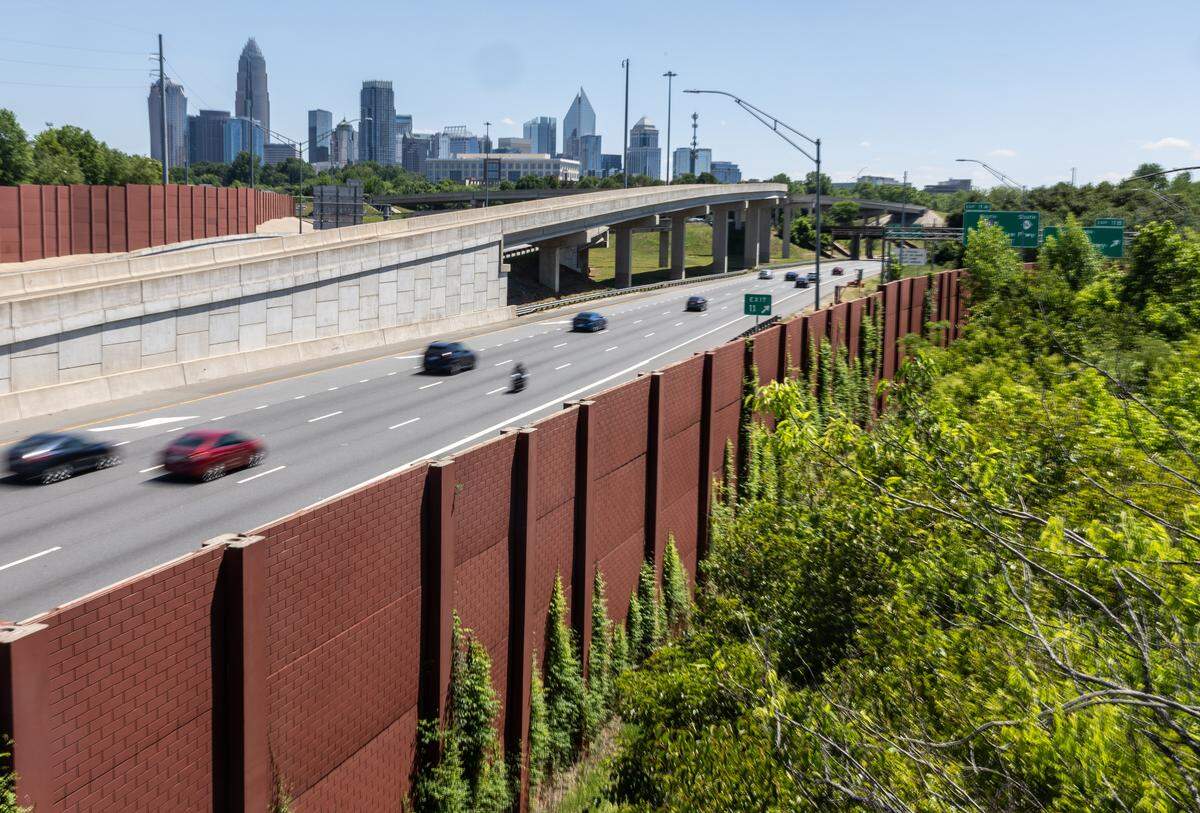
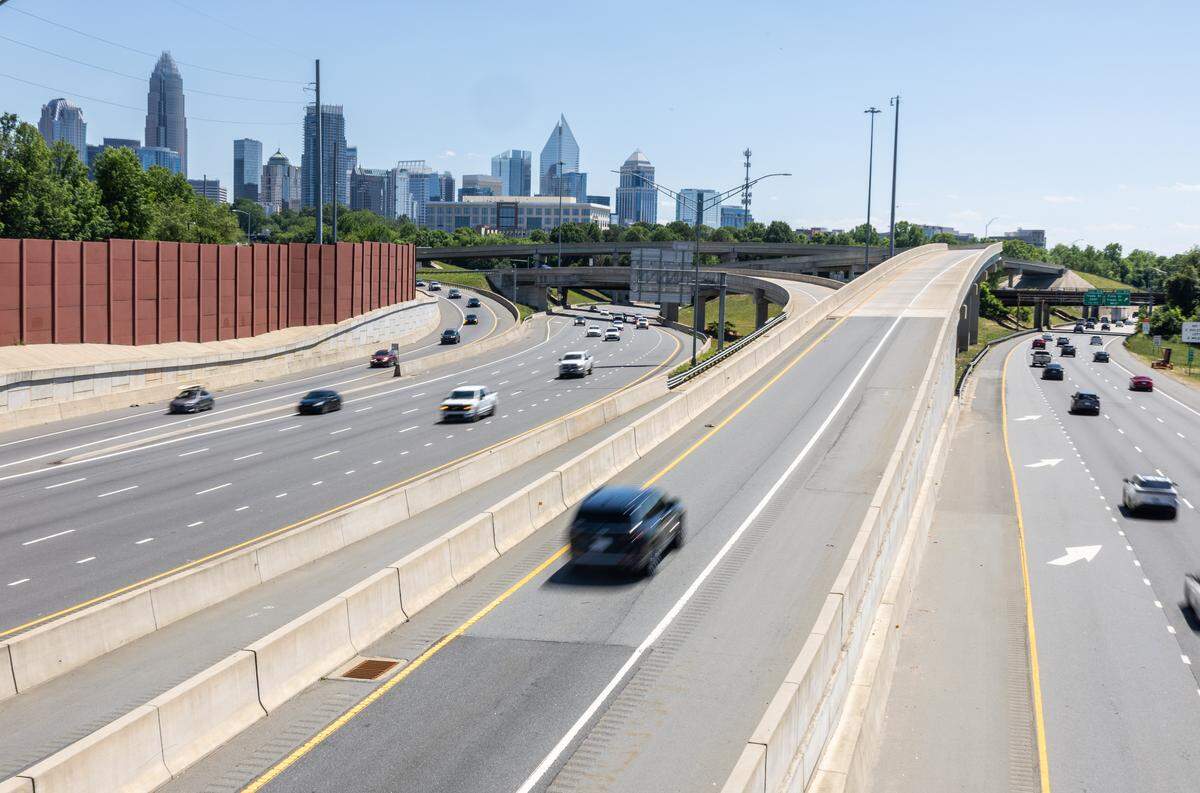
The controversial toll project would add toll lanes to an 11-mile stretch of I-77 from uptown to the South Carolina border. The reason for the I-77 project is to reduce traffic and crashes.
I-77 South, according to NCDOT, has the state’s highest congestion levels, seeing over 160,000 cars a day. The agency estimates that, with or without the toll lanes, I-77 will see a 25% increase in traffic by 2050, meaning the roadway will see over 200,000 cars a day.
But the project’s elevated design throughout the uptown neighborhoods close to I-77 has alarmed residents and environmentalists.
Parks and greenways will be affected, including the complete removal of Wilmore Park. Several homes in the Wilmore neighborhood will also be taken via eminent domain.
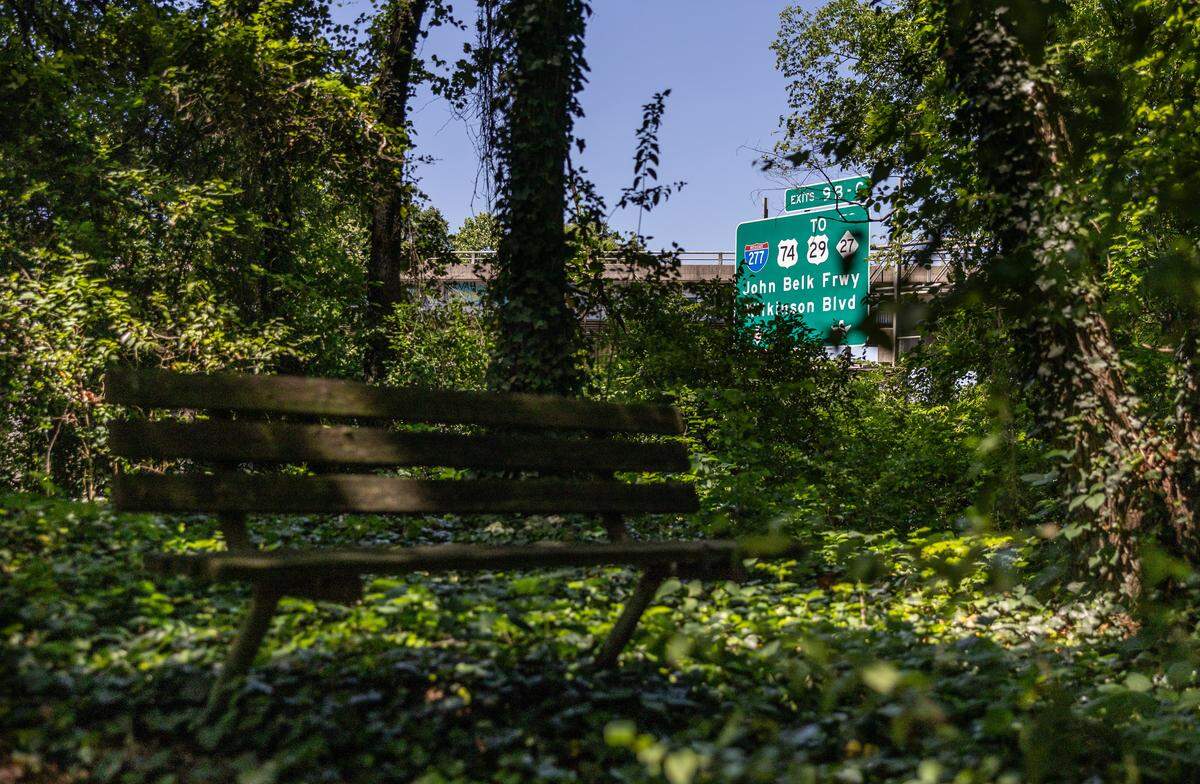
Earlier maps showed even more houses in the path of destruction. Even with recent revisions, community members are still arguing the project would cause too much damage to historically Black neighborhoods that have borne the cost of growth before.
Charlotte City Council on I-77
Monday’s agenda focused on a resolution to require NCDOT to take a deeper look into the project from the community’s perspective.
That’s something Councilman Malcolm Graham said should’ve happened since the beginning.
Since NCDOT began discussing the project in October, residents have demanded better transparency.
They’ve also asked NCDOT to consider the damage that could be done to the neighborhoods along the corridor and what has already been done. In the 1960s, Charlotte’s highways, including I-77 and the Brookshire Freeway, displaced residents in historically Black neighborhoods.
“Despite what I think is good work that we have done in March and April to try to re-correct,” Graham said during Monday’s council meeting. “And reintroduce this project to the community, there is significant distrust of the process and the impact for this community.”
The resolution, though not a legal binding document, addressed residents’ transparency and well-being concerns.
The main request was that NCDOT pause any “irreversible actions” on the project, such as issuing contracts, until it satisfies a list of the city’s requests. That included a complete redo of the department’s design analysis.
But during discussion of the resolution, Councilwoman Renee Perkins Johnson issued a counter motion. She wanted to rescind the funding approved for the project.
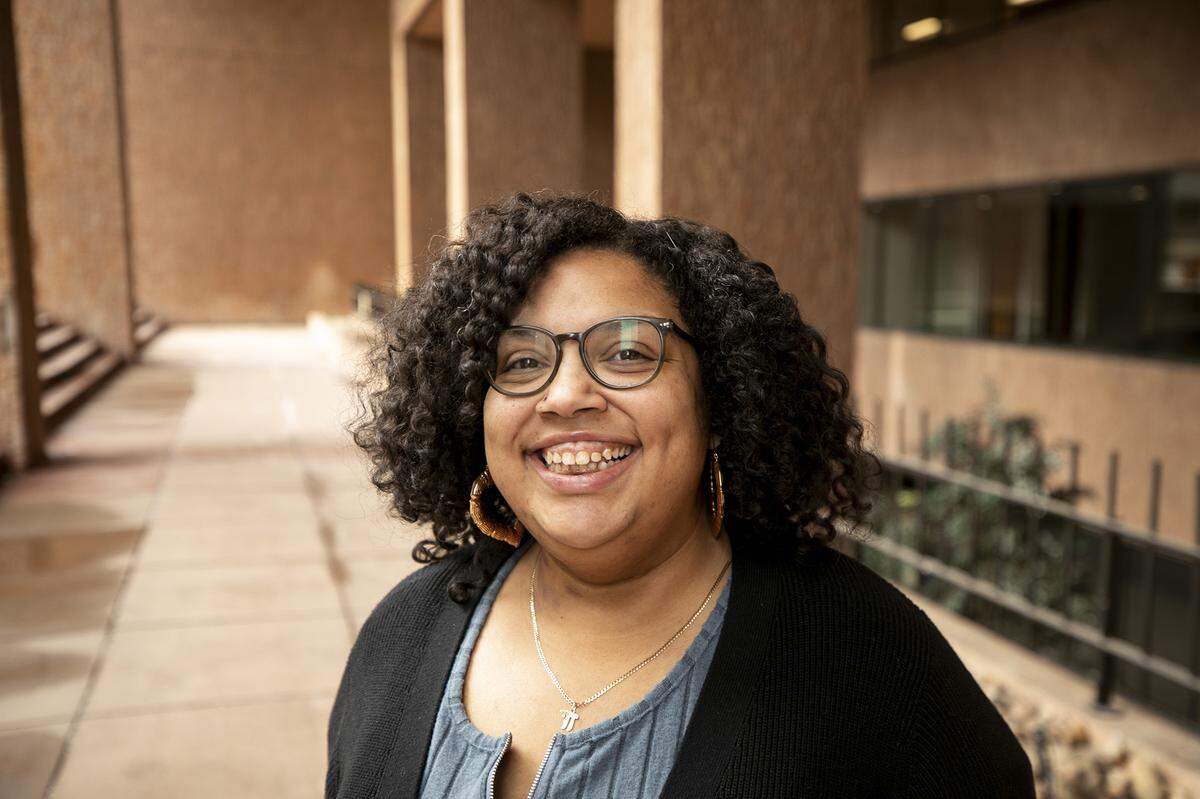
“I think we were saying the same thing,” Perkins Johnson said. “We wanted to withhold our approval until things were met and so this just added some teeth to that.”
Councilman Ed Driggs, Charlotte’s representative of the regional transportation board, disagreed with Perkins Johnson’s assessment.
“It’s a huge difference. She doesn’t get it,” Driggs said to The Charlotte Observer. “I think she believes that we could do what she proposed, and that we could come back some time in the future, and everything would be just the same as it is now, which is not the case.”
Charlotte City Council votes on I-77’s future
Before the council voted on Perkins Johnson’s motion to rescind the funding, Councilwoman Victoria Watlington doubted there were enough votes to move the motion forward.
But six hands went up to in support: Perkins Johnson, Graham, Watlington, JD Mazuera Arias, LaWana Slack-Mayfield and Joi Mayo.
The vote shocked residents, including Bobby Drakeford.
“Councilmember Johnson did not waver from representing the people,” Drakeford said.
Council members Driggs, Dante Anderson, Dimple Ajmera, Kimberly Owens and James Mitchell voted against rescinding the funding.
“I think a lot more harm was done tonight than what my colleagues realize,” Driggs said. “I believe that NCDOT, when they see this action, will take a look at that project and think, ‘OK, we’re gonna put it on a back burner.’
What’s next for I-77 South?
With the vote, Driggs must tell the Charlotte Regional Transportation Planning Organization that Charlotte wants to rescind approval of the funding agreement for the new tolls. Charlotte has the largest number of votes in the organization at 41%.
Although he voted against the motion, he cannot vote differently than what his peers decided. And it’s up to the regional organization whether they want to revisit the vote on the funding, which they approved in 2024.
Some CRTPO members have already said they would rescind the agreement.
The situation is unprecedented, Brett Canipe, a NCDOT engineer, said during the council meeting.
Usually, Canipe said, the municipality and the state work out differences and funding isn’t revoked.
The state has already allocated $600 million to the project. If it doesn’t move forward, the $600 million would go back to the statewide fund and be distributed to other projects, NCDOT previously said.
N.C. Board of Transportation at-large member Stephen Rosenburgh said that action would have consequences. The state has already spent $50 million on the project, according to Rosenburgh. If officials back out now, he said the NCDOT board will question whether it should support other projects for the Charlotte area in the future.
Perkins Johnson said the move shouldn’t harm relationships with NCDOT.
“There’s this relationship where we’re always kind of threatened with what the state will do,” Perkins Johnson said. “I’m not saying to stop this forever … It’s not forever. It’s simply, we’re withholding our support because there’s so much opposition on all sides.”
This story was originally published May 12, 2026 at 5:00 AM.