I-77 South toll plans would hurt Frazier Park, Charlotte greenways, county says
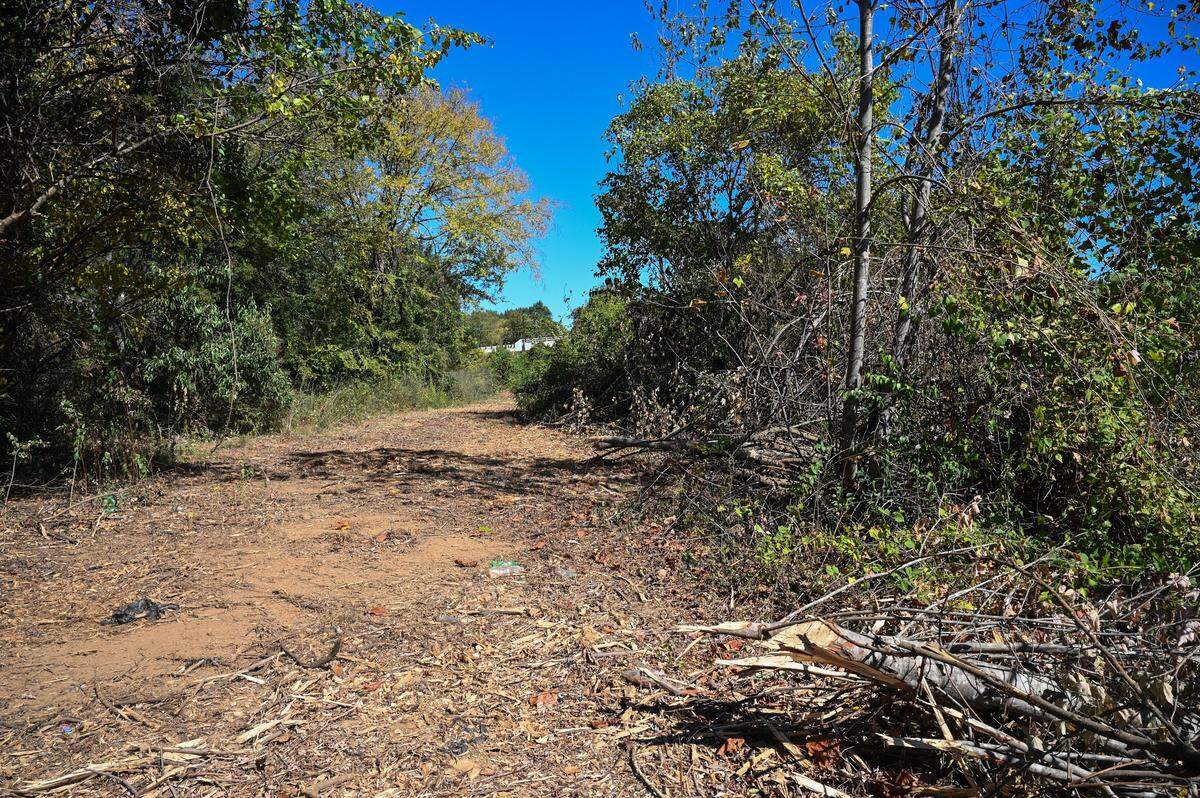
Under proposed designs for the controversial I-77 South toll project, 11 parks and several Charlotte greenways would be harmed, with some losing space and amenities, according to Mecklenburg County staff. That includes the complete removal of Wilmore Park in the Wilmore neighborhood.
County officials from Parks and Recreations and Storm Water Services laid out the environmental impact of the proposed express lane project to several Mecklenburg County Commissioners during Tuesday’s Environmental Stewardship Committee meeting.
The long list of environmental concerns to Charlotte’s already limited greenspace is the latest concern the 11-mile project has conjured. Since October, residents along the Interstate 77 corridor have expressed frustrations with the North Carolina Department of Transportation plans, which at one point included removing homes from historically Black neighborhoods.
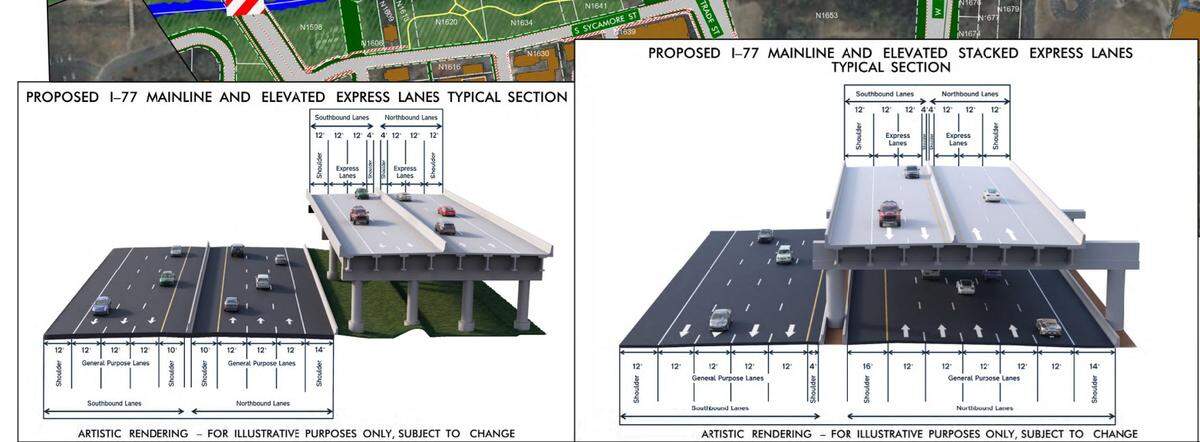
During Tuesday’s meeting, county staff members went over NCDOT’s proposed maps. The agency has said it would go with an elevated design plan, which would see raised toll lanes in uptown neighborhoods. But county officials also went over the at-grade designs.
But with either option, Wilmore Park, which sits up against Interstates 77 and 277, would no longer exist.
“This park is heavily impacted by the proposed express lane,” said Bert Lynn, capital planning division director with Parks and Recreation. “That includes amenities in the park and the majority of the property. There would be no functioning park remaining in this location.”
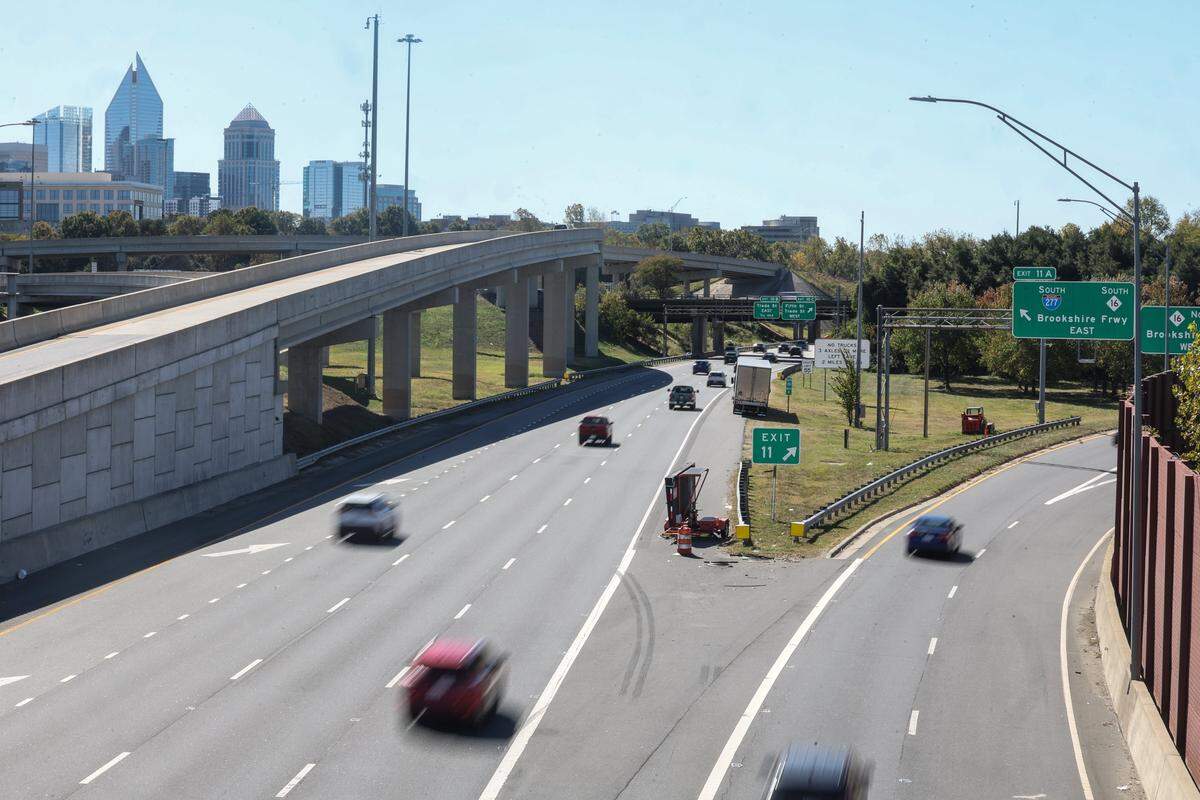
Irwin Creek and its greenway would also be impacted.
The creek and greenway run on both sides of Interstate 77 and would see about eight areas of impact. In Revolution Park, a section of the creek would need to be moved for the highway, which would either cut off or severely impact the adjacent trail, Lynn said.
I-77 project still in design phase
The I-77 South toll project is still in the design phase.
NCDOT previously said it would study other options, including an underground section in uptown. The agency also said it was open to what developers may propose, as long as those designs fall within the footprint it has already laid out for elevated lanes.
And essentially the project is on a 90-day pause. NCDOT said it would delay sending out request for proposals to the four shortlisted developers.
But county commissioners on Tuesday said a pause is not enough with the effects to residents and the environment.
“This has gotten worse and worse as more information comes out,” said Commissioner Laura Meier. “This is not just a 90-day pause situation. This is stop, re-evaluate and start over because nobody benefits from this … We have already, for generations, hurt these neighbors. We cannot do this again.”
I-77 South’s impact on parks and environment
While Wilmore Park faces elimination several other parks would also see changes.
The Charles Sifford Golf Course, named after the first African American golfer to play on the PGA Tour, Revolution Park and Abbott Park would all lose amenities, be reduced in space or have fewer access points.
Third Wards’ Frazier Park would see changes in both design options. The park was built in 1956 and is considered a jewel of the neighborhood, said Al Austin, former Charlotte City Councilman and current president of Third Ward Neighborhood Association.
With surface toll lanes, Frazier Park would need to relocate its dog park and several tennis and basketball courts, or lose them, Lynn said. With an elevated design, a highway may hover 40 to 60 feet above those amenities. It’s unclear where the concrete pillars would go and how that would further impact the park, Lynn added.
Commissioners also heard from the county’s Air Quality Division.
Megan Green, an Air Quality program manager, went over different roadside barriers that would minimize or mitigate noise and air pollution from the highway. The barriers cause air dispersion, which moves the pollution further into the atmosphere and away from residents on the ground.
But stacked roadways, as proposed by NCDOT, might interfere with that dispersion, Green said. Further modeling would need to be completed to see how the elevated roadways would affect pollution levels. As of last year, those levels were 19% higher near highways than other roadways, Green added.
Transparency on I-77 South plans
Transparency remains a concern for officials and residents.
“NCDOT has always boasted that they had 30 community meetings,” Austin said. “They never said anything about impacting Frazier Park. They never said anything about taking homes in Wesley Heights. This was more like a check-off in my perspective.”
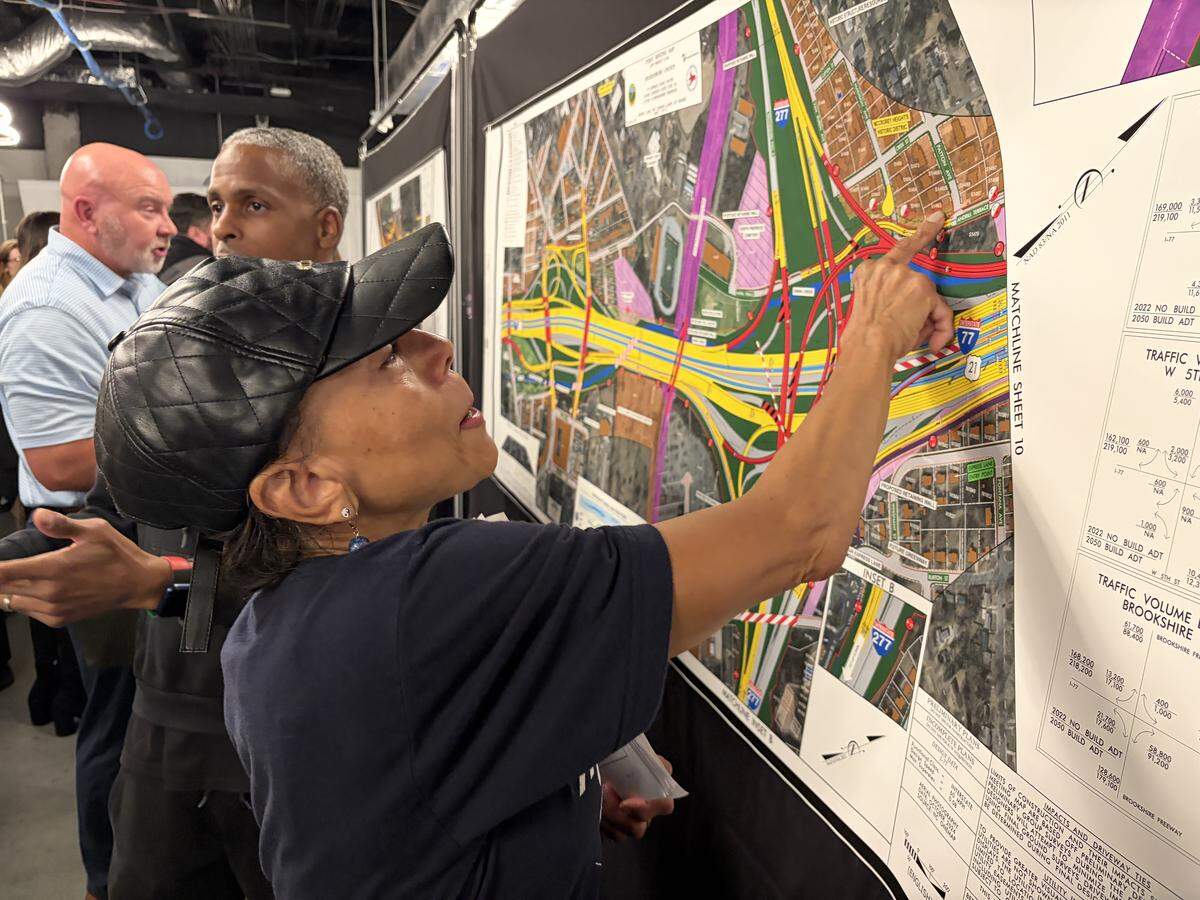
The commissioners agreed, expressing disappoint with NCDOT’s transparency on the impact of the I-77 project.
“We’re getting smacked in the face with this information,” said Commissioner Susan Rodriguez-McDowell.
Commissioner Leigh Altman agreed. Altman serves on the region’s transportation board, which approved the funding mechanism for the project in 2024.
The board had until August to rescind its decision, according to the resolution. But that was three months before NCDOT released the design for the project. Now, the project’s design and fate are in the hands of only NCDOT.
“This is very much not over,” Altman said, “and I can’t overstate how disappointed I am.”
What’s next for the I-77 South toll project?
The transportation board’s attorney has said the group no longer has control over the project. But Altman said she’d discuss the matter at the board’s next meeting on March 25.
Last week, the Black Political Caucus of Charlotte-Mecklenburg and several residents of McCrorey Heights filed a motion for a temporary restraining order against NCDOT requesting a halt to the project.
NCDOT has said it would continue working with residents, along with city and county officials. The agency said that the delayed request for proposal will give residents time to have a say in the project.
Next month the agency will open a community engagement center, where residents can drop by during office hours to ask questions and get information.
But the message is clear from residents and county commissioners: they want NCDOT to start over.
“I’m really sick of the words minimize and mitigate,” said Commissioner Elaine Powell “I don’t know how you minimize or mitigate this in any healthy way. It has to stop.”
This story was originally published March 11, 2026 at 5:10 AM.