‘Let us speak’ I-77 toll meeting leaves residents unheard and unclear on impact
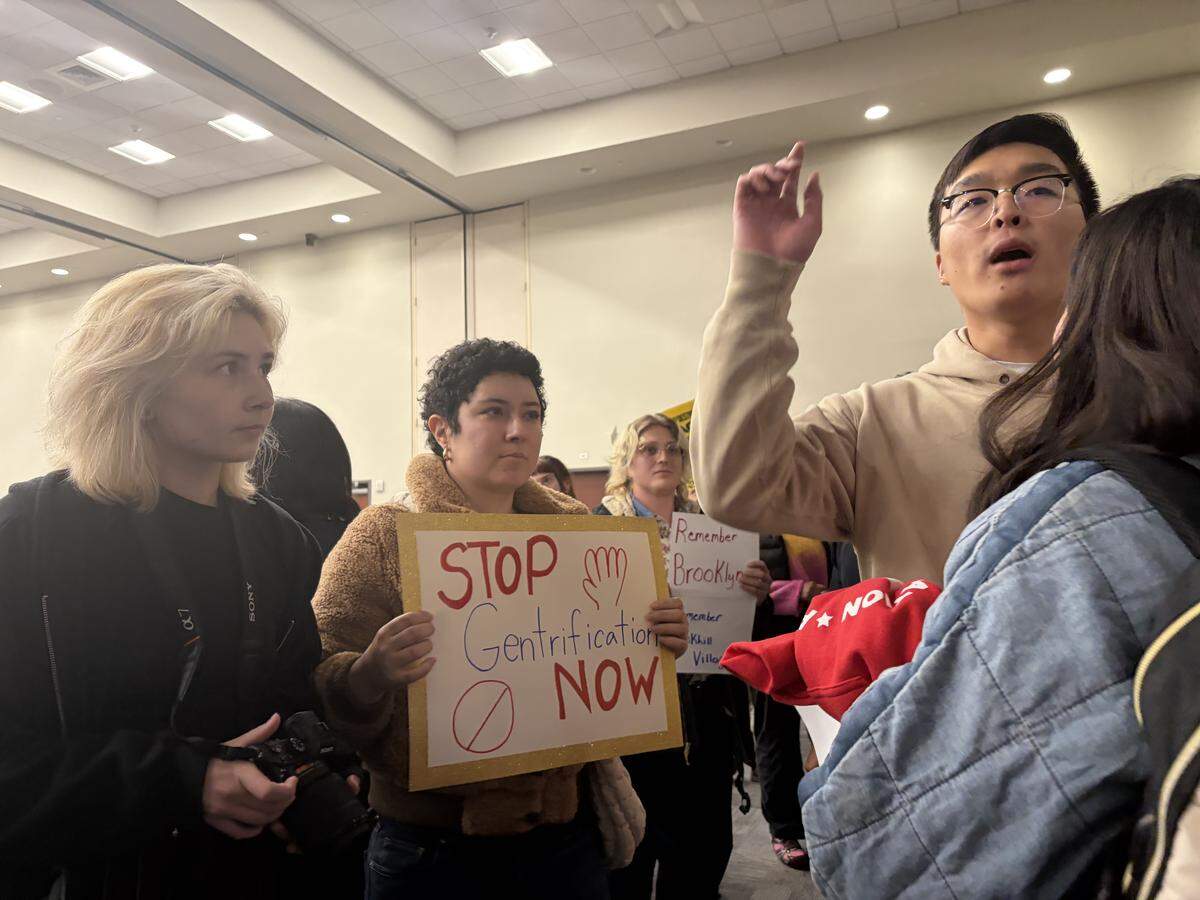
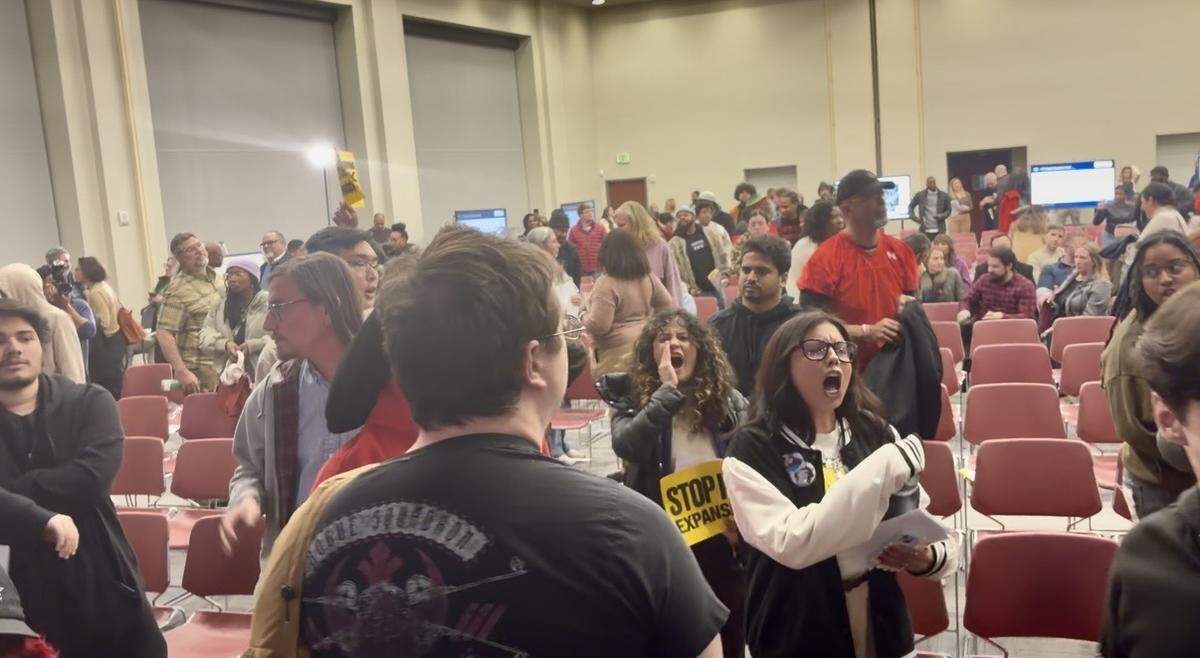
“Let us speak! Let us speak! Let us speak!”
Those were some of the last words that reverberated through Friendship Missionary Baptist Church Thursday night after the abrupt end of Charlotte City Councilman Malcolm Graham’s town hall meeting.
The roaring chant also represented how residents have been feeling as of late: unheard.
Over 175 people packed the church to discuss the state’s plan to widen and add toll lanes to Interstate 77 from the Brookshire Freeway exit to the South Carolina border.
The plan, dubbed the I-77 South Express Lanes project, has been heavily opposed by residents across Charlotte but especially in the historic Black neighborhoods of Biddleville, McCrorey Heights, Oaklawn Park and Wesley Heights.
Whether through noise, pollution or eminent domain, all those neighborhoods would be impacted by the I-77 plan in some way.
Thursday’s town hall was advertised as an opportunity for residents to voice their concerns on the project.
But with less than 30 minutes left of the two-hour meeting, the North Carolina Department of Transportation was still giving its presentation on the plan.
Not a single resident had been given a chance to speak.
And Synceer Johnson had enough.
“Why do you guys not let us speak,” Johnson said, standing up and cutting into the presentation. “As a resident of District 2, you guys have done this before. In Brooklyn Village. In Greenville … Stop minimizing our voices. The people want to speak. We see you destroy Black neighborhoods, Black schools, Black businesses. How can we take your word that you won’t do this again?”
Johnson was backed up by shouts of “Let us speak!” He was also told to sit down by Graham, who tried to settle the meeting. But in two minutes, Graham ended the town hall.
While the crowd continued to voice their concerns to an emptying room, that unheard feeling seemed to intensify.
And it has been a growing sentiment among residents since NCDOT announced its plans in October.
An I-77 South Express Lanes project refresher
State and regional transportation planners began discussing the addition of toll lanes to the I-77 corridor in 2007.
The agencies conducted a “Fast Lane Study” to determine whether existing and planned highways would benefit from express toll lanes to ease congestion, especially because of Charlotte’s potential growth.
A local project first goes through the Charlotte Regional Transportation Planning Organization, which looks at urban transportation improvements in Iredell, Mecklenburg and Union counties.
After several stages of rankings and approvals, the I-77 South Express Lanes project was approved last year.
The plan: add toll lanes to the 11-mile stretch from the Brookshire Freeway exit to the South Carolina border.
The goal: reduce traffic and crashes.
More than 160,000 vehicles travel the project length, and this section of I-77 has a crash rate 2.5 times higher than the state average, according to NCDOT.
It’s the most expensive highway project in state’s history at $3.2 billion.
I-77 impact on historic Black neighborhoods
In November, NCDOT released proposed maps of the project’s design.
Some of the maps showed roadways going through people’s homes, like Shauna Bell’s house in McCrorey Heights. There were also encroachments on the grounds of Pinewood Cemetery, a historically Black cemetery, and Frazier Park in uptown.
The maps gave residents a feeling of deja vu.
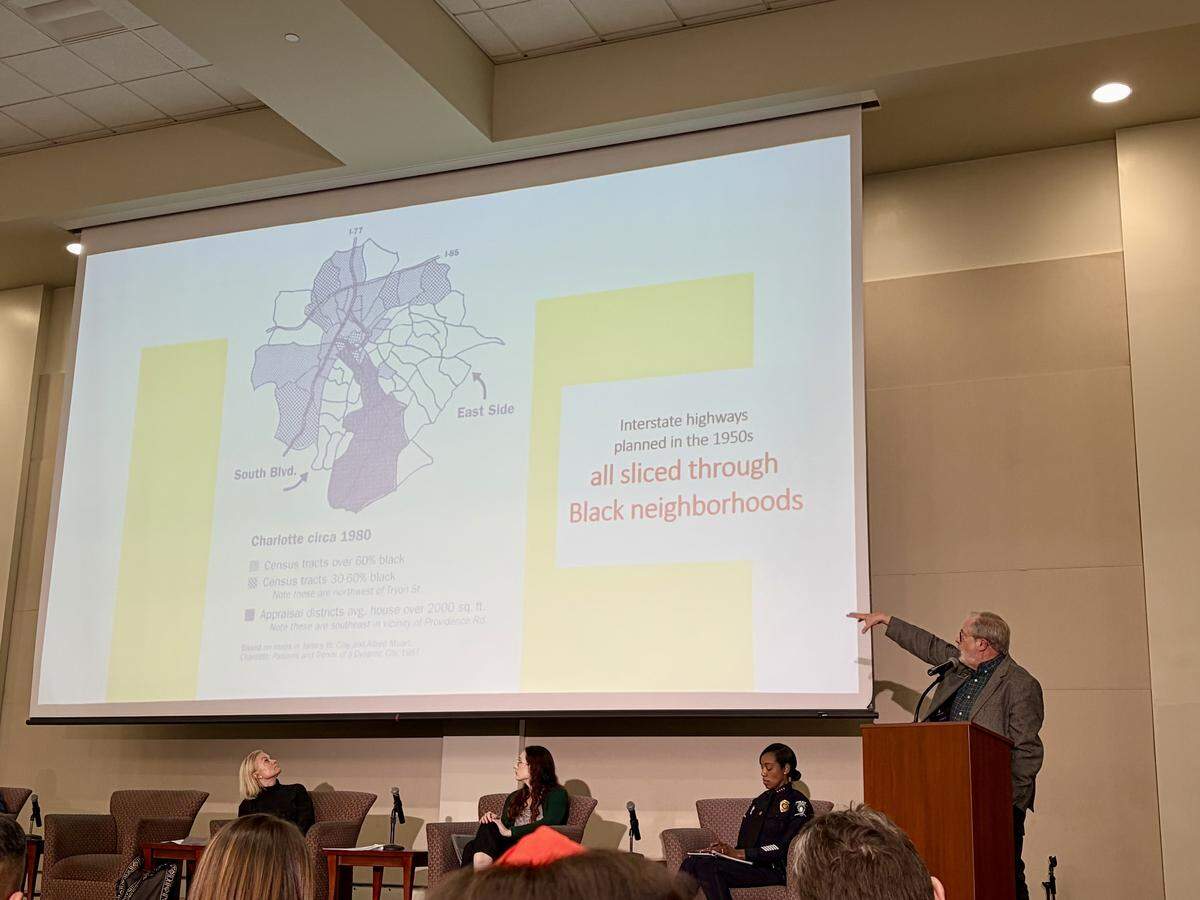
Using eminent domain in the late 1960s, more than 240 families were displaced in the West End to make way for the Brookshire and Interstates 77, 85 and 277.
It fragmented the Black neighborhoods in the area, separating them from each other and the rest of the city. And if the proposed roadways cutting through the neighborhoods were selected, it would further isolate those residents.
Elevated I-77 toll lanes
Another option for the I-77 plan included elevated toll lanes in the uptown portion of the project near McCrorey Heights.
Late Wednesday, NCDOT announced it would be going with the elevated plan, which would see the construction of express lanes either over the existing interstate or to the side of the existing interstate.
That plan was chosen to reduce property impact to the McCrorey Heights and Wesley Heights neighborhoods, NCDOT said. It would also minimize impact on Frazier Park and Pinewood Cemetery.
But it’s still unclear whether NCDOT will need to take homes in order for the plan to come to fruition.
The agency added that the decision came after meeting with almost 30 small groups and two public events, where participants looked at maps and submitted their comments via a written survey.
“NCDOT’s priority is to deliver transportation improvements in partnership with the region that respect the history of the neighborhoods along this project corridor,” NCDOT Division 10 Engineer Felix Obregon, said in the news release. “Community feedback has been critical in shaping this project.”
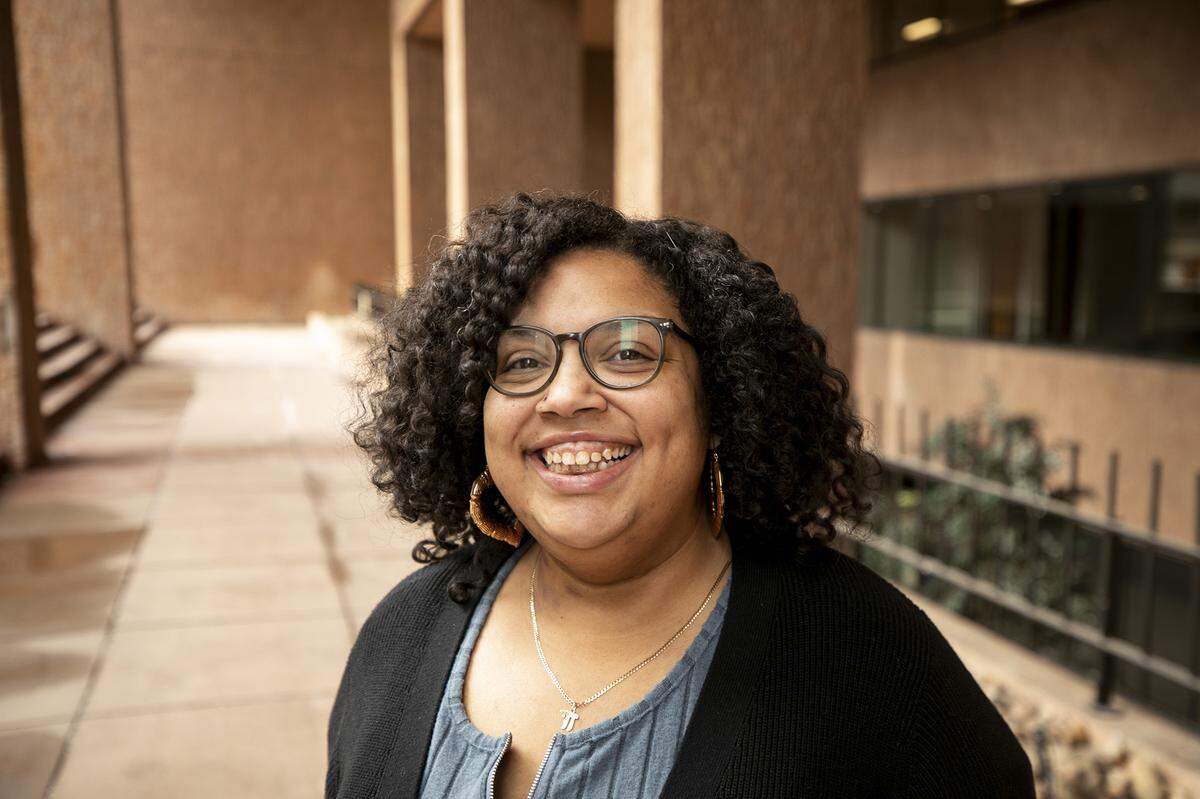
Bell disagrees. As do several neighborhood and activist groups including Sustain Charlotte and the local chapter of the Party for Socialism and Liberation.
Residents have been questioning NCDOT’s engagement efforts and transparency on the project.
In October, when NCDOT presented the toll lane idea to residents in McCrorey Heights, they felt blindsided. When NCDOT released the proposed maps in November, residents felt blindsided.
And Bell said she felt the same way after hearing NCDOT chose the elevated toll lane design.
“It feels like they had these engagement events to check a box,” Bell said. “It feels like you presented these two bad options and knew one was worse than the other. So you could do the one thing that comes back as, look, we saved houses… We’re not getting rid of these historic homes in this historically Black neighborhood.”
Residents and activists have asked NCDOT to pause the project for more engagement and to research other options. One proposed option was to consider underground roadways instead of the elevated lanes.
NCDOT said that would cost 10 to 20 times the entire state transportation budget and have an annual maintenance expense of $50 million.
But again, residents said NCDOT wasn’t transparent in its assessment of the capped highway nor did it seem like the agency truly looked at other cities and how they’ve expanded highways, according to Sean Langley, president of the McCrorey Heights Neighborhood Association.
NCDOT noted that it looked at and compared other underground projects, including the Big Dig in Boston, which was completed in 2007 after 16 years of construction.
But Langley said, what are similar cities doing now?
“None of these cities are building elevated interstates,” Langley said. “Portland destroyed theirs. Seattle, San Francisco, St. Louis, Chattanooga. They built those in the fifties and they’ve demolished every single one of them. Why would we go back to something that we know most cities aren’t looking at?”
Graham’s District 2 town hall
Graham’s town hall was originally set for Jan. 24 but was rescheduled to Thursday because of the winter weather.
It’s unclear why NCDOT announced the chosen lane design the night before the meeting.
But Graham said he was disappointed that he found out about the decision via a tweet.
“There’s room for more transparency,” Graham said. “For them to gain trust, they have to be able to work with their partners. And I think I’m a partner. … But, as I told NCDOT, I have a job to do and I stand solely and strictly with my neighborhood leaders who oppose the plans as first rolled out, who have questioned the process in reference to how we are getting information and who was disappointed that we found out on a late Wednesday dump that they made a decision when I’ve been speaking with them for three weeks.”
While the meeting noted that there would be a discussion on the I-77 project, council town halls typically cover all news regarding the district, including crime statistics (which are down) and ongoing development projects (which are plenty).
The I-77 discussion didn’t start until about an hour into the meeting.
And Obregon gave a presentation residents have seen before. He discussed why the project was needed and reiterated that the elevated toll lane decision was a result of community input.
The impact of the project on the nearby neighborhoods remains unclear.
He added that NCDOT would establish a community engagement center for residents to continue commenting and asking questions.
“We want to hear from the community,” Obregon began as one participant shouted, “How about you hear us now?”
Synceer Johnson then began to ask why residents hadn’t been given the opportunity to speak yet.
Graham said there were speakers lined up to discuss residents’ concerns, including Langley, but Johnson said they didn’t speak for all the residents.
“You said a public hearing,” Johnson told Graham as the councilmember attempted to bring the meeting to order. “Every voice should be heard.”
What’s next for I-77 South?
After Graham ended the meeting, several people stood on chairs to continue speaking.
Taylor Marshall said the city is watching history repeat itself.
“Families will still lose their homes. Communities will still be torn apart,” Marshall said. “Building upward doesn’t erase the impact. It creates a literal shadow over the communities.”
Langley said he wished the meeting was structured differently to allow for more public comment. He understood that town halls usually include information on crime and development but people were there to talk about I-77.
“They wanted to be able to voice their concerns and their voices have to be seen as valid,” Langley said. “We need to make sure we can get them at the chambers speaking to the county and city council.”
NCDOT will host another public meeting later this year after an environmental study is completed.
During the meeting, historian Tom Hanchett gave a presentation on the history of McCrorey Heights, Oaklawn Park and Charlotte’s highway system.
He noted that all of Charlotte’s interstates planned in the 1950s sliced through Black neighborhoods.
NCDOT said plans for I-77 South are still being finalized. But the impact will continue to heavily affect Black neighborhoods, Bell said.
“Nobody’s taking the interstate through SouthPark,” Bell said. “It’s disrespectful on so many levels. NCDOT’s relationship with McCrorey Heights, Greenville and all these other Black neighborhoods were fractured in the sixties. This was the perfect opportunity to try to rebuild that relationship with meaningful engagement … and you just further fractured the relationship with a whole new generation of people.”
This story was originally published February 6, 2026 at 11:25 AM.