Rising I-77 toll lane concerns force March 5 Charlotte meeting about what’s next
AI-generated summary reviewed by our newsroom.
- Majority of City Council members want to pause I-77 project to assess impacts.
- Plans show roadways encroaching on historic Black neighborhoods.
- Council can’t unilaterally pause project; influence rests with NCDOT/governor.
A majority of Charlotte City Council members want to put the brakes on a controversial Interstate 77 toll lane project until they better understand its impact on surrounding communities.
They plan to discuss their next steps — and whether they have any authority to pause the project — in two weeks.
Mayor Vi Lyles referred the issue to the council’s transportation committee that will meet on March 5. She invited representatives with the North Carolina Department of Transportation to attend and explain the process, she said in a statement on Friday.
The NCDOT is in charge of the project, but local officials granted initial approval in 2024 so NCDOT could begin working on plans.
The City Council cannot unilaterally stop the project, Lyles said. But she shared community concerns with Daniel Johnson, the NCDOT secretary, who committed to meeting with impacted neighborhoods.
There’s still time to incorporate their feedback and find “solutions that best serve everyone,” according to a letter from Johnson that Lyles posted online Friday. NCDOT is working on a Community Engagement Center, where residents can drop by to talk to the project team and ask questions.
“We hear the concerns surrounding the project and are committed to doing things differently than they were done in the past,” Johnson said in the letter to Lyles.
City leaders will use the March 5 meeting to “level set” with residents and the NCDOT, Councilman Malcolm Graham told The Charlotte Observer.
The plans, released in November, showed roadways encroaching on landmarks and fragmenting neighborhoods in historically Black parts of the city. In some cases, roads went directly through people’s homes.
One option, which NCDOT said it would move forward with, included elevated toll lanes in the uptown portion of the project near McCrorey Heights. That involves the construction of express lanes over the existing interstate or to the side of it, the Observer previously reported.
The City Council hasn’t weighed in on the latest plans in an official capacity. The council’s power might rest in its influence at the governor’s office and NCDOT, Graham said.
“There has to be a meeting of the minds, and right now the residents feel they have not been listened to. I tend to agree,” said Graham, a transportation committee member. “How we engage our community is maybe a little different from how NCDOT does it.”
The future toll lanes would start at the South Carolina border and connect to existing toll lanes running from Lake Norman to uptown. The northern toll lanes generated similar community pushback during the planning phase, with some residents upset a foreign-owned company would set and manage toll rates.
Charlotte City Council members respond to I-77 concerns
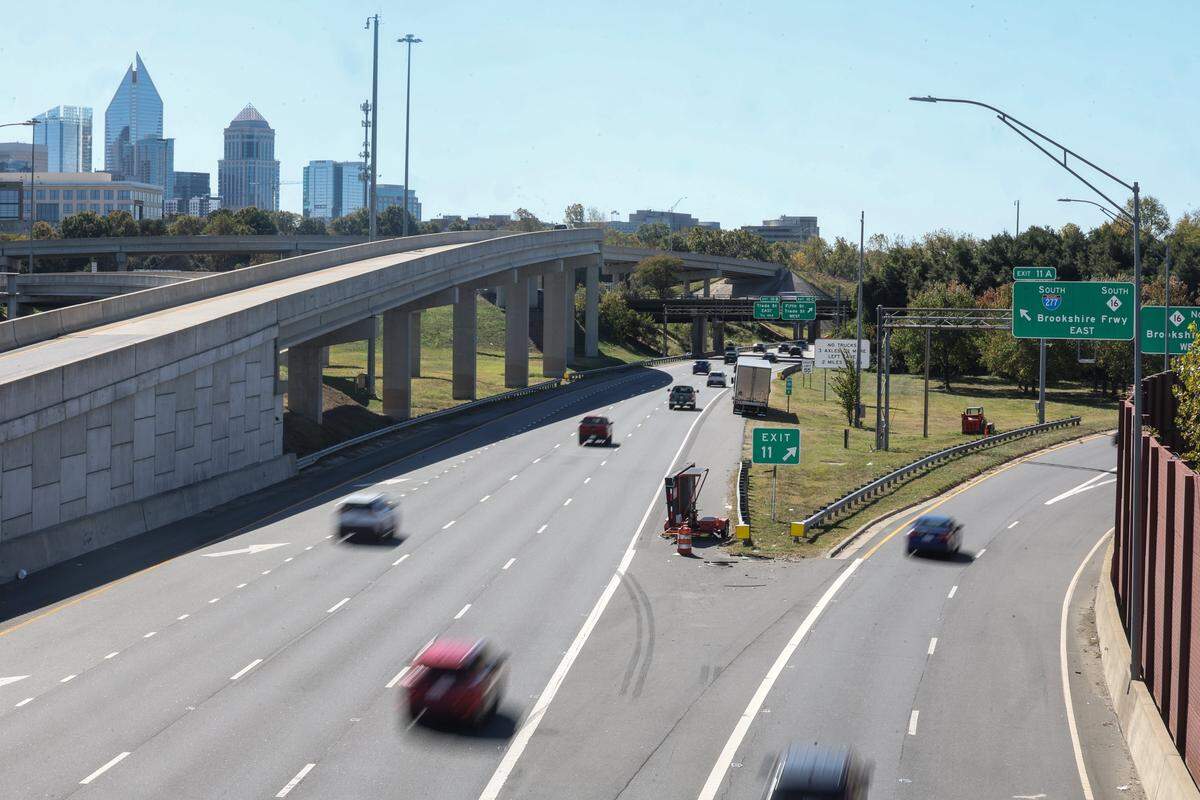
The goal of the I-77 project is to reduce crashes and traffic congestion, but residents have advocated against the anticipated displacement it would cause.
Six of 11 council members shared their concerns in an article Tuesday from nonprofit Sustain Charlotte, which works on transportation and other growth-related issues. Among them are Mayor Pro Tem James Mitchell, at-large Councilwoman Victoria Watlington and District 2’s Graham, all of whom initially voted to move the project forward. They were joined by recently seated council members Joi Mayo of District 3, J.D. Mazuera Arias of District 5 and Kimberly Owens of District 6.
At-large Councilwoman Dimple Ajmera separately joined their calls in a written statement to the Observer.
“Pausing this process is about making sure we move forward responsibly,” Ajmera said. “This is a generational investment, and we have a duty to get this right — for the residents who live here today and for future generations.”
Shannon Binns, founder and executive director of Sustain Charlotte, has called for more active leadership from the city. He said the mayor’s statement on Friday was “deeply disappointing” because it positioned Charlotte as a passive observer while downplaying its political sway.
“Blaming state jurisdiction at this stage feels less like a legal constraint and more like an abdication of responsibility,” Binns said in a statement to the Observer. “The Mayor is right about one thing: our community has serious concerns.”
The cost of the project ballooned to an estimated $4.3 billion, according to the NCDOT 10-year investment plan, as first reported by Sustain Charlotte. That’s up 34% from an earlier estimate of $3.2 billion, which NCDOT continues to cite. The state has committed to pay $600 million of the total cost, with the remainder coming from a private developer.
Given the magnitude of that investment, Mitchell told Sustain Charlotte his constituents need a better picture of the project. He wants to “review the options” before continuing along the process.
Councilwoman Joi Mayo’s district in west Charlotte contains most of the affected part of I-77. She wants the transportation committee and city staff to consider “strong protections” for those in the project’s path. Leaders will consider next steps from there, she said.
“Charlotte’s future should be built with our residents, not around them,” Mayo told Sustain Charlotte.
In their comments on new tolls, council members pointed to historic development patterns across the city and beyond that have displaced Black residents.
More than 240 families were displaced in the West End in the late 1960s, for example, to make way for the Brookshire Freeway and Interstates 77, 85 and 277.
“We know this story because we have lived this story. Across this country, highways were once driven through Black and working-class neighborhoods in the name of progress, leaving division, displacement, and lost wealth in their wake,” Watlington told Sustain Charlotte. “We cannot allow history to repeat itself here.”
History of I-77 toll lane
State and regional transportation planners studied adding I-77 South toll lanes since 2007 but made little concrete progress.
Then, in October 2024, the City Council unanimously voted to support a public-private partnership to add the lanes along 11 miles of I-77 stretching from the South Carolina border to uptown Charlotte.
The plan next went to the Charlotte Regional Transportation Planning Organization for a vote, which approved the project in a split vote. It had the ability to rescind its support “at any point” until the North Carolina Department of Transportation started soliciting interest from contractors via requests for qualifications, according to the motion approved by the group.
NCDOT began advertising for those requests last fall.
The City Council has not voted on the project since handing it off in October 2024 and did not weigh in on the plans before their release.
Graham said that’s why he’s calling for a pause now: The project was conceptual when he cast his vote a year and a half ago, and specific plans and designs only came out after the fact.
“We have to do something to relieve bottleneck congestion on the highway, but we’ve also got to make sure the community has their say,” Graham said. “Two things can be true at the same time.”
This story was originally published February 19, 2026 at 2:53 PM.