Charlotte region transit board will revisit I-77 toll project vote
The Charlotte Regional Transportation Planning Organization will reconsider its decision to end support for the funding agreement for the Interstate 77 South toll lane project in September.
“I would encourage you to take the time to study the issue and go back and talk to your boards,” CRTPO Chair and Stallings Mayor Pro Tem Brad Richardson said. “That night we will be voting on reestablishing support for the 2024 MOU.”
The Charlotte City Council and CRTPO voted in May to rescind support for the controversial, $3.2 billion project. But the recently approved state budget includes a provision that would force Charlotte and other local governments to be on the hook for millions of dollars unless CRTPO reverses its decision. According to Richardson, the deadline to change that decision is Oct. 5.
The North Carolina Department of Transportation committed $600 million to the project and has already spent around $64 million. Representatives of Charlotte, Mecklenburg County, Davidson, Monroe, Cornelius, Matthews, Mint Hill, Huntersville and the Metropolitan Transit Commission voted to rescind support.
Monroe announced plans to reverse its decision after the looming threat from the state legislature became public. On Wednesday, Cornelius Mayor Pro Tem Michael Osborne announced his municipality will make a similar move.
“We thank you for putting a vote back on the agenda in September to afford us the opportunity to state this position,” he said.
However, Matthews, Charlotte and Mecklenburg County reaffirmed their stances have not changed for now.
“Our original vote was no, and it remains the same at this point until such a time that there is additional information that would cause the board to change,” Mecklenburg County Commissioner Arthur Griffin said.
What’s next
Charlotte City Council member Ed Driggs, who represents the city on CRTPO, is among the local officials who have called for an independent study to assuage residents’ concerns. He said the stakes remain high, and it’s still critical that something is done to address congestion on I-77.
“There’s definitely a tight constraint,” Driggs said. “The question is what can we get in the time frame that might meet the requirements of the people who haven’t supported the project so far.”
He said he believes it would be shameful if the city lost out on the opportunity the project provided, but he will continue to vote in accordance with the wishes of the city council. He added a discussion with NCDOT is needed to provide clarity on what possibilities exist.
“I think one of the issues we had was that some people thought we were locked into one particular solution,” he said. “And they didn’t like the fact that it hadn’t been vetted properly with the public.”
Driggs said any suggestion that the city wouldn’t have to pay the money back is a dangerous assumption.
“I think the General Assembly, if it puts its mind to making us responsible for those costs, will find a way to do so,” he said. “So I don’t take that lightly at all.”
How we got here
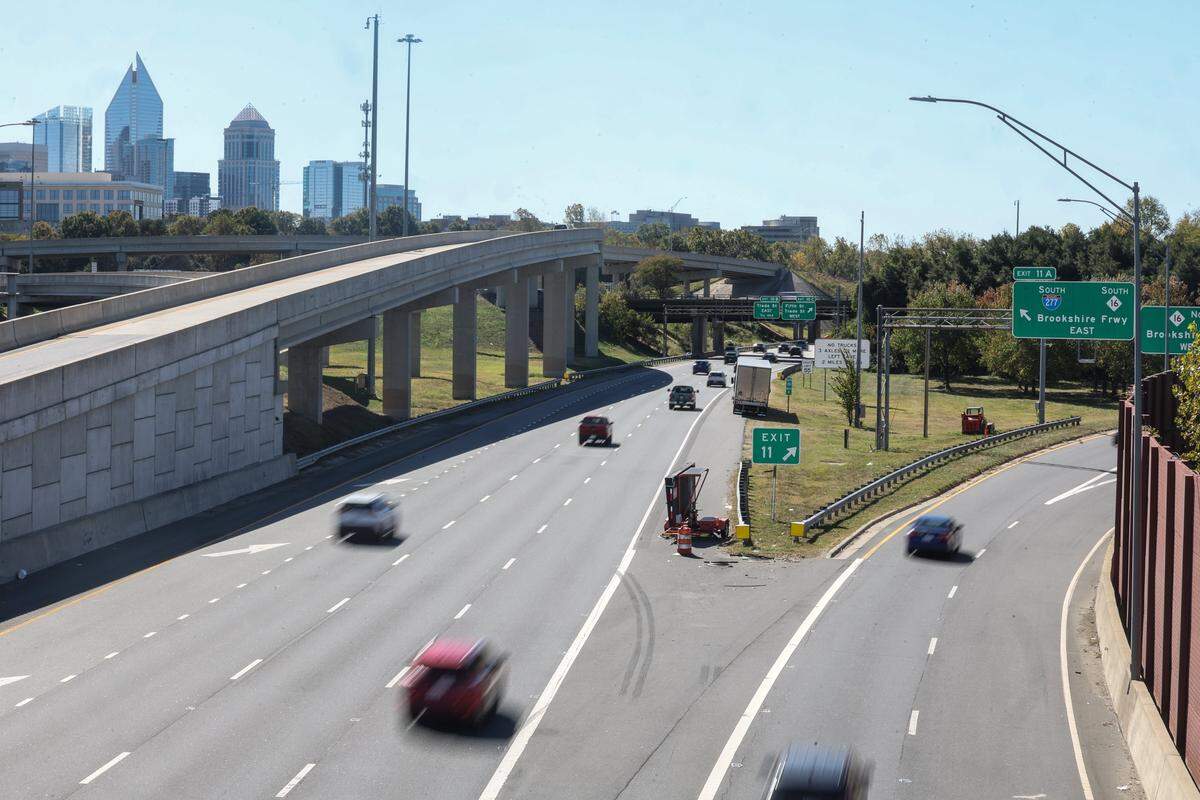
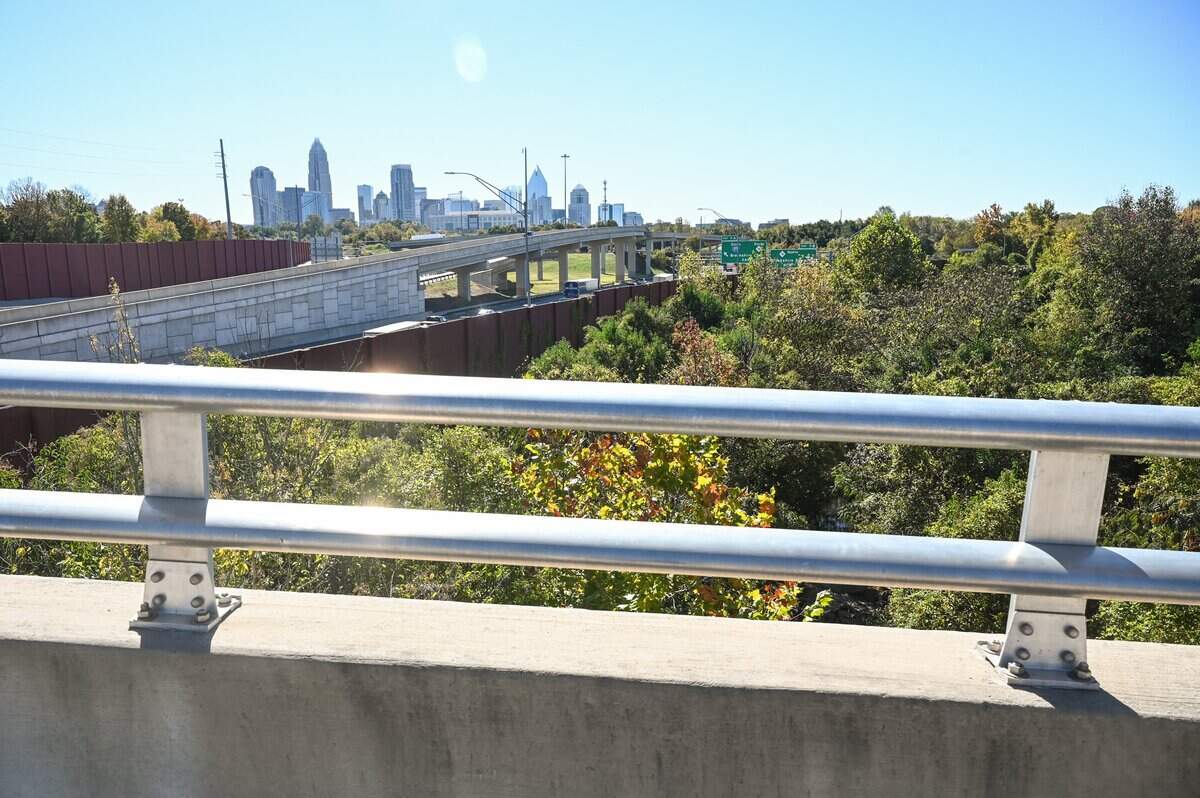
The state Department of Transportation planned to add toll lanes to an 11-mile stretch from uptown to the South Carolina border in order to address congestion. The long-discussed project had been in the works since 2007.
I-77 South, according to NCDOT, has the state’s highest congestion levels, seeing over 160,000 cars a day. The agency estimates that, with or without toll lanes, I-77 will see a 25% increase in traffic by 2050, meaning the roadway will see over 200,000 cars a day.
Local officials approved a public-private partnership to pay for the project in 2024. But scrutiny of the project intensified after preliminary designs were released late last year. The project’s opponents also raised concerns that communities that bore the brunt of growth would once again be at risk.
Residents have continued to say that addressing congestion on the major thoroughfare is needed, but toll lanes should not be pitched as the sole answer.
Resident Damian Smith said CRTPO members’ responsibility is to not only represent their respective municipalities, but to also advocate for what their communities need.
“For places like Charlotte, Mecklenburg County that’s not more roads,” he said. “That’s more buses, that’s trains, the ability to bike, the ability to walk and doing things that don’t require you to have a car.”
Smith said the board’s decision to rescind support for the project should be respected by the state. He added that residents would continue to speak out as long as the conversation continued.