With reforms passed, Charlotte City Council moves ahead. Activists say it’s too soon.
After dedicating the last five months to “reimagining” Charlotte Mecklenburg Police, the city’s Safe Communities committee will return in December to addressing violent crime.
Last month, the Charlotte City Council unanimously passed a slate of reforms for the Charlotte-Mecklenburg Police Department. The policy changes, which were summarized in a report, were the result of the city’s 90-day plan to “reimagine” policing after a month of civil unrest over the police killing of George Floyd in Minnesota.
While City Council members generally were supportive of the report, reform activists felt the changes are only a start, and a broader look at police accountability and the justice system was left off the table.
And with that, some fear the council will consider its job done.
“What I worry the city will say is, ‘Look, y’all got all this unanimously done. We’ve closed the book on it. For now we’re moving on,’” longtime Charlotte civil activist Robert Dawkins said.
The committee’s report, issued Oct. 23, made recommendations on change — which the city is now working to implement — the most prominent being handing off some calls for service to civilians or trained mental health clinicians.
Specifically, the council voted to expand CMPD’s Community Policing Crisis Response Team, which allows trained clinicians to respond to calls where someone who is homeless or going through a mental health crisis needs help. Low priority calls — like noise complaints or reports of illegal parking — also will be handed off to trained civilians. CMPD officers currently spend around 66,000 hours or $3.4 million a year on these duties.
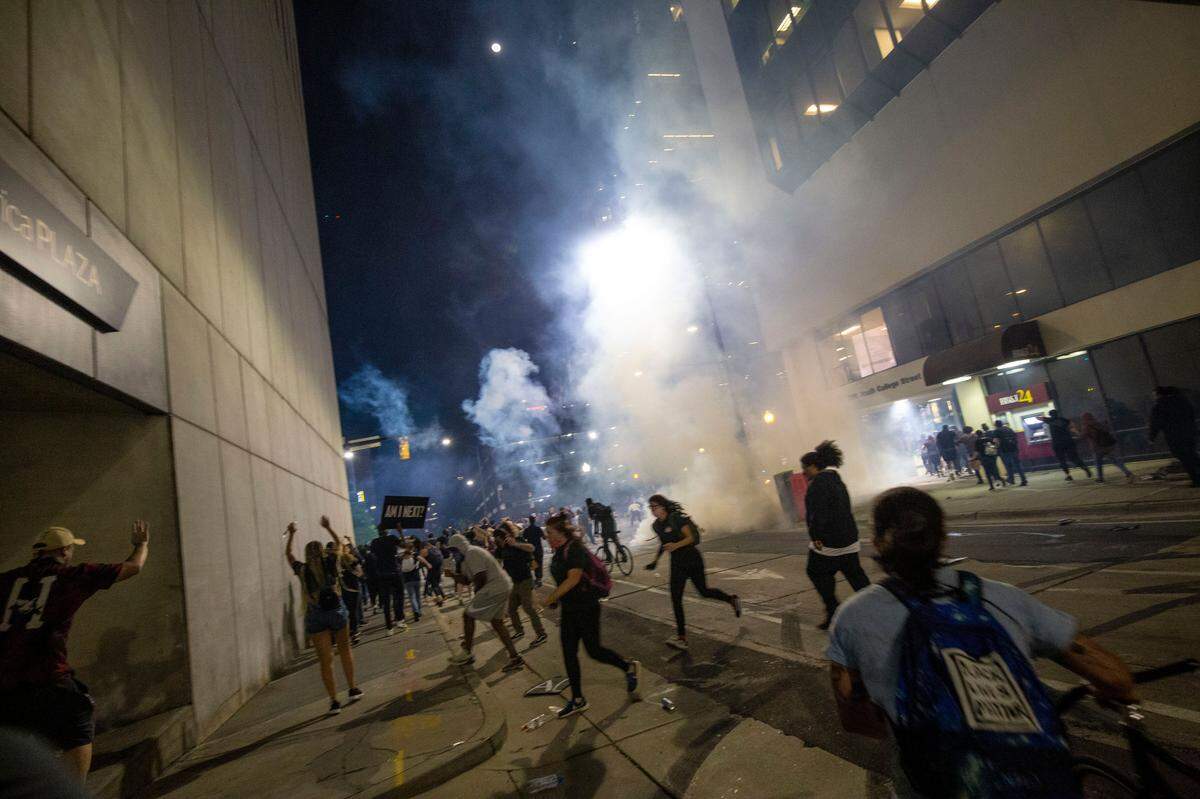
The report also took a broader look at safety and summarized changes related to affordable housing and economic development, and outlined policy changes CMPD has made since June, such as the department’s compliance with Campaign Zero’s “8 Can’t Wait” policy platform and the decision to eliminate the use of tear gas or “CS gas” during protests. The “8 Can’t Wait” policies were designed to reduce police brutality and deaths, including when an officer uses lethal or non-lethal force.
“This is a milestone,” Charlotte Mayor Vi Lyles said at an October City Council meeting.
Committee chair and council member Larken Egleston said in an interview that the City Council reviewed the fine print of police policy after a month of protests in June. The effort — which was mirrored by cities across the country — was a rare instance of the council taking a close look at police policy.
In December, the Safe Communities committee will continue their work on implementing a violence interruption program and working with the county to address violence as a public health crisis.
With over 100 homicides for the year so far, Egleston said it would be “negligent” for the committee to ignore “the anger in the community around the rash of violent crimes and homicides.”
Charlotte is on track to surpass its homicide total from last year, which was the worst homicide rate in a decade. As of the third quarter, violent crime has increased 11% while overall crime has fallen 10%. That uptick is largely driven by a 23% increase in aggravated assaults and 13% increase in homicides.
“We need to feel safe walking up and down our streets and so for us to ignore ... that there is a rash of violent crime going on ... is an abdication of our responsibility,” Egleston said.
City Council members in support
The reforms were largely embraced by City Council members, City Manager Marcus Jones and Police Chief Johnny Jennings.
Jennings said while the last five months since the protests have been “tough,” surveys of CMPD officers show there was overwhelming support for change within the department.
He also felt council members worked in collaboration with CMPD to improve policing, while in other cities the police have felt punished and had their budgets cut.
“We pumped the brakes here,” he said in October.
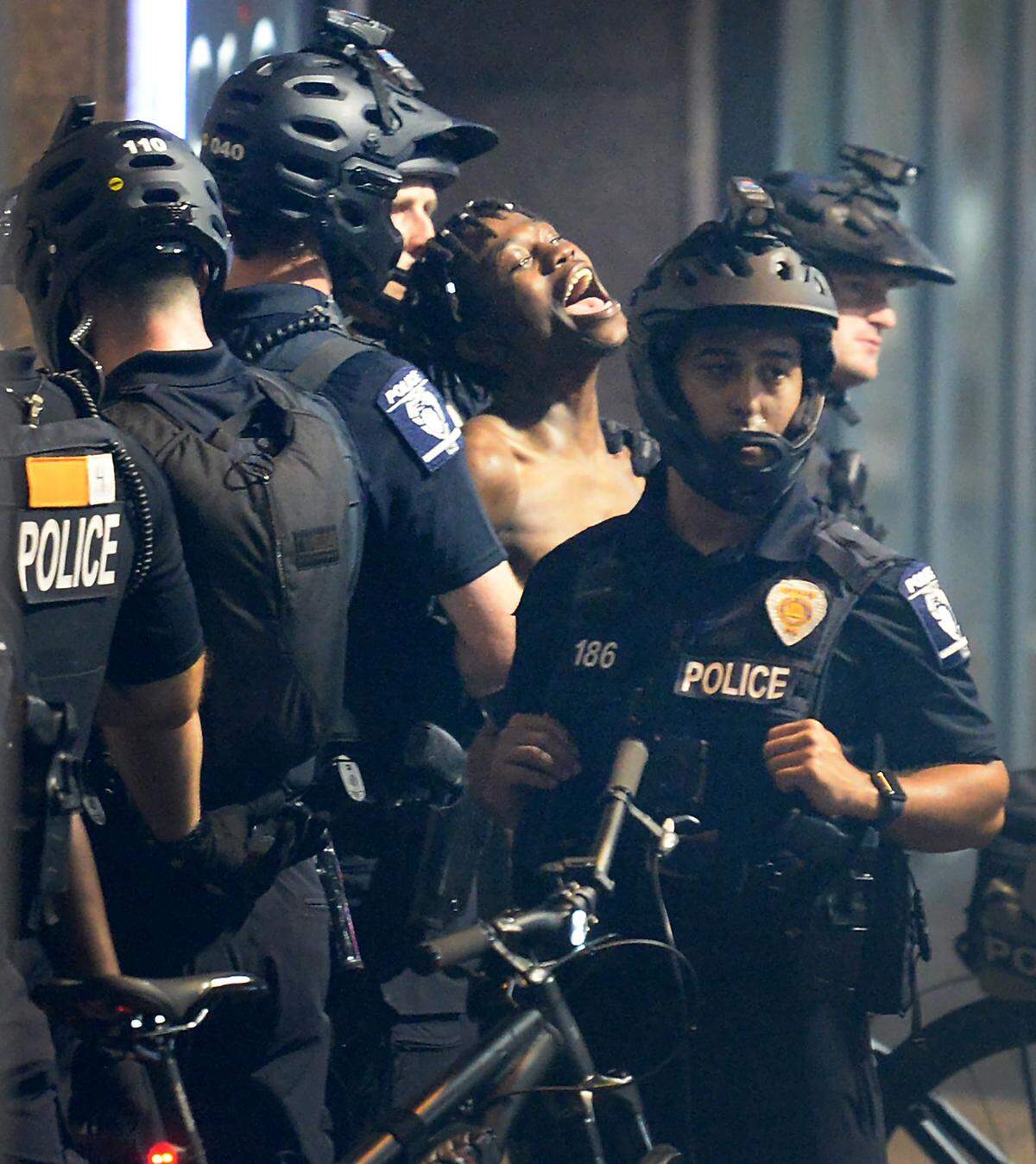
Even City Council member Ed Driggs, who had expressed “apprehension” in July over the review, said before voting in October that none of the changes find “fault with the police” or take away enforcement powers.
“The council process became more about reimagining ... or reform of the police department,” he said. “We did not take up the call for ‘defunding.’”
Driggs also pointed out that a 2016 external review of CMPD found it was an “exemplary” police department.
City Council member Braxton Winston, who has criticized CMPD’s use of chemical agents during protests, said in the vote that the changes are a good start to scrutinizing the government’s role in community safety.
“This is not mission accomplished and this is not mission complete,” he said.
What activists say was missed
At the start of the review, Charlotte activists Kass Ottley and Dawkins said they were skeptical that the effort would yield substantive changes to the police, especially in a short 90-day period.
The 22 people invited to submit feedback to the council were split into groups and tasked with discussing different topics — from police oversight groups to recruitment to protest policing. The community input group included a wide swath of stakeholders, including local professors, people from CMPD’s ambassador program and community activists.
While not everything that was asked for was able to be addressed, Dawkins and Ottley said they were glad to see the start of the implementation of a program similar to the “CAHOOTS” program in Eugene, Oregon, which pairs medics with trained crisis workers to answer calls for service without law enforcement present. Both activists have said they have lobbied for such a program for years.
Activists also are glad to see that CMPD has achieved compliance with the “8 Can’t Wait” policy platform, though Dawkins and Ottley are quick to point out that CMPD initially claimed they were in compliance in July before walking back the statement later.
However, to Meko McCarthy with SAFE Coalition NC, the City Council process was no different from previous efforts of police reform, and police accountability has largely been left out.
“We keep getting the same question, it’s just worded differently,” she said. “When we tell you the response, we’re not getting a proper response.”
The reforms passed are progress, Ottley said, but they don’t address the sweeping change protesters demanded when they took to the streets in June, including qualified immunity — which shields government officials from civil liability — and eliminating cash bail.
Dawkins, who had submitted a list of policy changes at the start of the process, said there was not enough scrutiny placed on disproportionate policing when it comes to traffic stops and marijuana arrests.
Minority communities are still living in fear of police officers, Dawkins said. He added it will take the next major police incident to see whether the mentality and culture around CMPD has changed.
“The skepticism is well-placed, to be frank,” said pastor Peter Wherry, who participated in the process.
Some reforms are out of the council’s control, Egleston said, and the Safe Communities committee has acknowledged that some changes — like eliminating cash bail or giving subpoena power to a citizens review board — must be granted through the county or state.
“We knew there was a need to take action pretty quickly,” Egleston said. “And I think we found the places we thought that we could do that, and we did.”
This story was originally published November 27, 2020 at 6:00 AM.