‘The illusion of democracy’: Frustration grows over Charlotte City Council appointment
Charlotte City Council’s selection of a former colleague out of over 100 applicants to fill a vacant seat has stirred controversy over whether the decision-making process was transparent.
On Monday, City Council chose former council member Greg Phipps for the seat previously held by James “Smuggie” Mitchell, who resigned abruptly last month to take a job at a private construction firm that does business with the city. Mayor Vi Lyles broke a 5-5 tie in favor of Phipps.
Phipps, who served on the council in 2005 and again from 2013-19, was chosen from among 107 eligible applicants.
Council members who supported him said they wanted someone who could quickly adapt as the city held its first budget workshop this week and will consider expanding transportation, overhauling its zoning codes and other initiatives.
But several council members and community advocates say they are frustrated by what they see as a decision that was predetermined in Phipps’ favor. And they question why City Council went through the process of taking applications at all if it only wanted to select someone with prior political experience.
“They want to give the illusion of democracy,” said Kristie Puckett Williams, a community advocate who works in areas like police reform and criminal justice. “But true democracy doesn’t mind engaging in the democratic process.”
Because Charlotte holds partisan elections, and Mitchell is a Democrat, his replacement had to be a Democrat. But the actual process and timing of appointing the person is left up to the City Council. While the council must vote in public, there is no requirement that it hold a candidate forum or take applications.
City Council members approved the timeline and procedure for filling the seat last month.
Ed Driggs, one of two Republicans on the council, said the public weighs in on decisions like Phipps’ appointment by voting for council members.
“The whole intention is that these chosen representatives will reflect the view of the people that elected them in the actions they take,” he said.
If members wanted someone who had previously served on the council, council member Victoria Watlington said, they should have listed that in the application.
“I feel as though we did a disservice to the community,” said Watlington, who did not vote for Phipps. “This was an opportunity to equip ourselves with future talent, and we did not do that.”
Phipps’ experience
In a press conference after he was sworn in Tuesday, Phipps said he holds no grudges and is ready to get to work. He said he has “big shoes to fill.”
But Phipps did not speak at the public forum last Friday that attracted more than 60 candidates, each of whom got two minutes to speak. This drew the ire of critics who say it shows the public was not considered in the vetting process.
That council chose Phipps despite the fact that he didn’t address the community suggests a number of council members had already made their minds up before the process began, said Jorge Millares, founder of nonprofit Queen City Unity. Millares ran unsuccessfully for an at-large City Council seat in 2019, and said he is weighing another run.
“The entire process was a formality,” Millares said. “They have appointed somebody who didn’t even speak at the forum, and didn’t take the time to address the community, as if the game was won already.”
But a number of council members dispute that assertion.
Driggs said Phipps earned his status as one of the frontrunners because of his years of service on council. He said the only leg up that Jessica Davis, the other finalist council members voted on, had over other applicants was an endorsement from the outgoing Mitchell.
“It wasn’t some sort of cronyism, it wasn’t some sort of deal-making,” he said. “Phipps had established a resume, a track record.”
When asked about why he didn’t address the public during the forum, Phipps said he missed the deadline to sign up to speak. But he doesn’t believe it would’ve changed the outcome.
“If that’s what it comes down to, two minutes versus your time of service to the community over several years, some people can look at that and weigh it for the importance that it is,” he said.
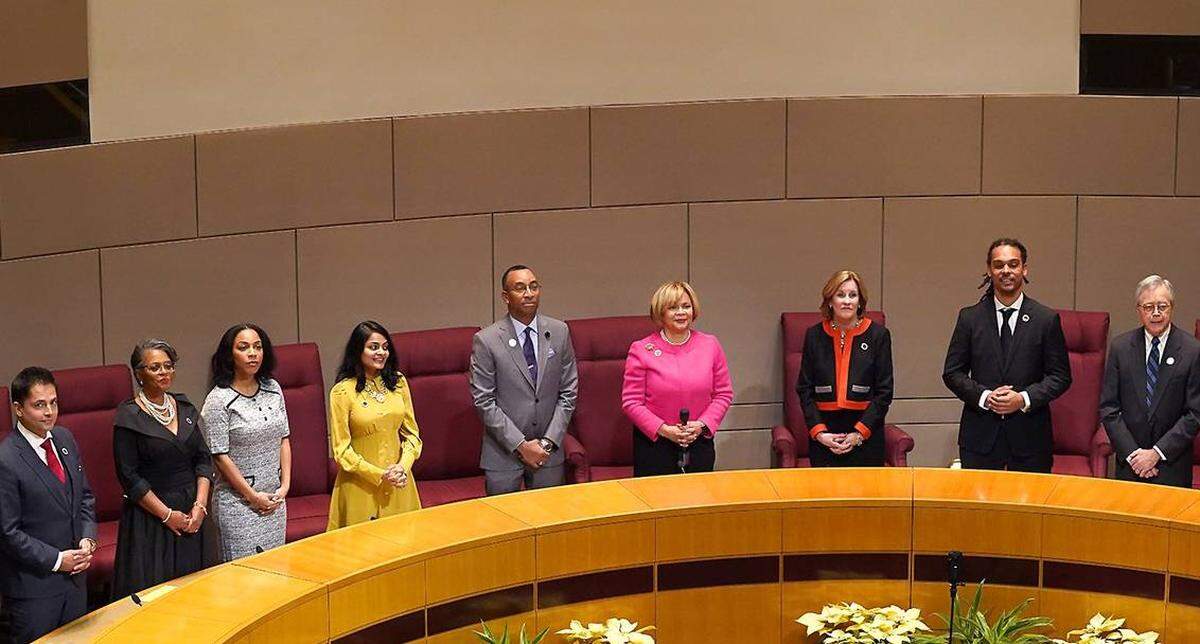
Several council members had also said they would prefer a candidate who did not plan to run for the seat in the fall. Phipps and Davis have both said they will not run.
Davis, who ran unsuccessfully for Council District 2 in 2019, said she was hurt by the comments that were made, including the suggestion that it would be difficult for someone new to adapt quickly in the role and learn about the budget process.
And she said it was frustrating that she and other applicants took Friday off to prepare and speak at the meeting, only to have prior council experience become a prerequisite.
“To put people through that, it’s disheartening — it’s a lack of transparency,” she said.
But Republican council member Tariq Bokhari said the choice came down to the fact that a majority of council members decided prior experience was a priority.
“It’s a difference between requirements and preferences,” he said. “And if lo and behold there happen to be at least six of us that share a preference, that is how decisions get made.”
Changing the status quo?
While some council members argued they wanted someone who wouldn’t have a learning curve, critics say the decision to select Phipps was a continuation of the status quo in Charlotte politics.
“They talk about changing and challenging racial inequities but at the same time talking about tradition — tradition is what led us to 50 out of 50 (in economic mobility),” said Puckett Williams. “You can’t say that you want to move forward while continuously reaching back to the past.”
Phipps is a Democrat, but he has held some controversial positions in the past, voting against the nondiscrimination ordinance that led to the North Carolina General Assembly’s passage of House Bill 2, often referred to as the “Bathroom Bill.” The now-defunct law reversed Charlotte’s ordinance and required people to use the bathroom in public facilities that matched the gender on their birth certificate. It also prevented municipalities like Charlotte from enacting LGBTQ+ protections.
This time, as Charlotte works on another nondiscrimination ordinance, Phipps said he’s ready to work with other leaders to craft it. He said in an interview that the main difference now is that the bathroom provision was “taken out of the mix.”
“I think the whole debate, somehow it got hijacked to that was the main focus of the conversation,” he said.
As City Council contemplates a one-cent sales tax increase for transit, Phipps said his views on the issue have evolved. In 2015, he told the Observer he did not support an increase in the sales tax for transit projects, but this week he said in an interview that the council should consider it.
“A lot has happened and the city has been growing tremendously since then,” he said. “Our current transportation system, as good as it is in some respects, it’s still woefully inadequate.”
Watlington, who supported Davis, criticized the fact that some of her colleagues expressed a desire for efficiency and cohesion in making their decision.
“That can come off as what’s easier and more comfortable for me,” she said. “Critical conversations are not always comfortable. If our public servants aren’t willing to do that work because it’s inconvenient, they’re prioritizing themselves over the public.”
This story was originally published February 4, 2021 at 1:18 PM.