A guide to the three gerrymandering lawsuits challenging NC’s political maps
READ MORE
Maps Under the Microscope
At least once a decade, state lawmakers rebuild North Carolina’s election maps. This process of redistricting carries a set of rules. But those rules – and how well mapmakers follow them – get intense scrutiny from the courts almost as soon as the maps become law. This is The N&O’s special report: “Political Maps under the Microscope.”
Expand All
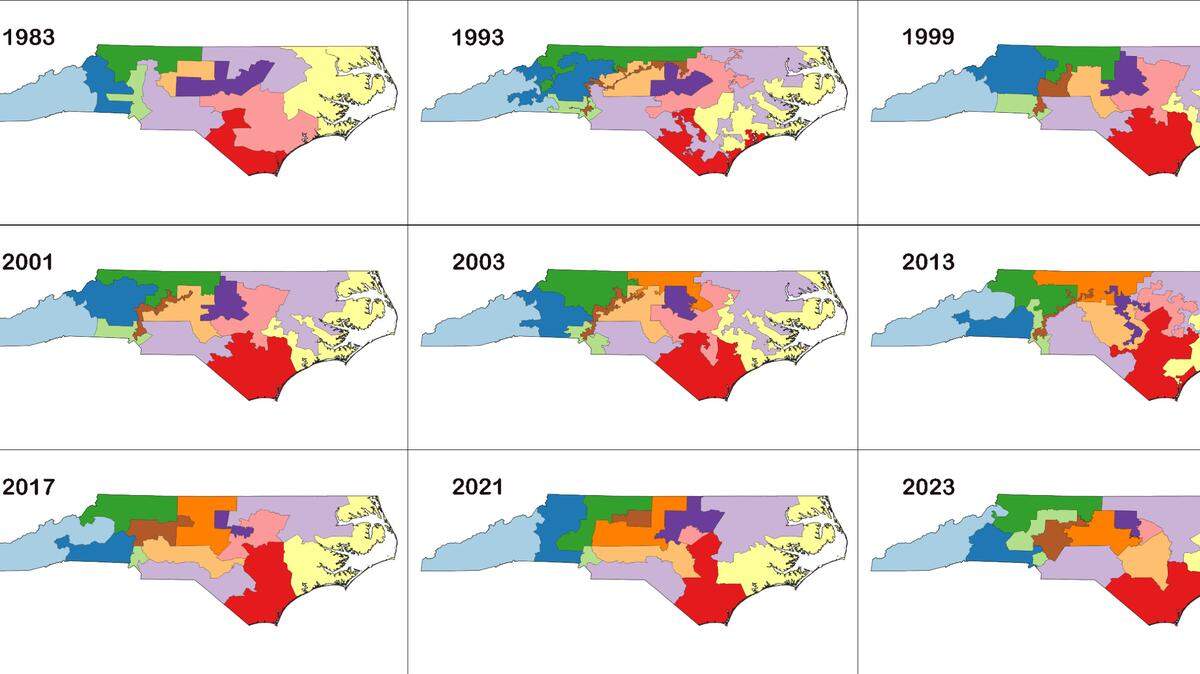
Gerrymandered or no? How will courts judge new North Carolina political maps?

A guide to the three gerrymandering lawsuits challenging NC’s political maps
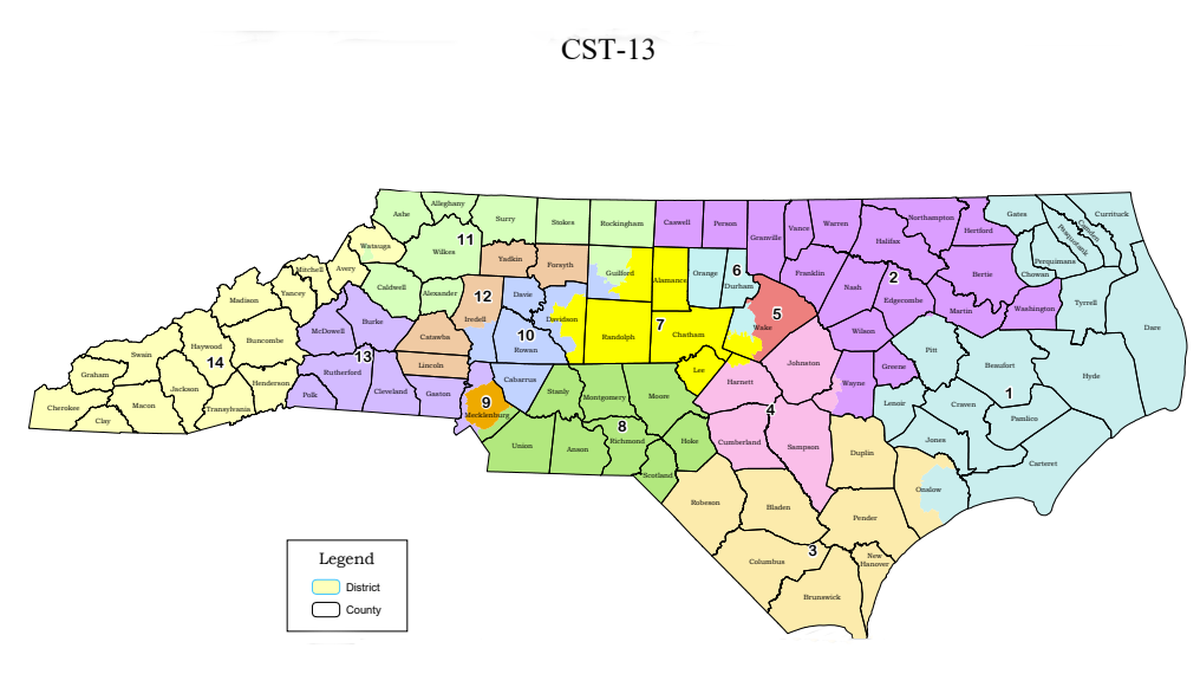
Meet the judges who could soon rule on North Carolina’s redistricting lawsuits
Podcast: Explore North Carolina’s long history of gerrymandering election maps
Want to design NC redistricting maps? Here’s an app to draw your own political lines.
North Carolina’s political district maps are in flux as legal challenges backed by state and national liberal groups threaten to undo what the Republican-led General Assembly passed last fall.
The current GOP-drawn maps would give Republicans a large advantage in races for Congress and the state legislature.
Three separate lawsuits, for now, are seeking to get the maps thrown out. All have that same ultimate goal, but each has different backers, different ways of getting there and some different requests of the judicial system should they win.
A trial is scheduled for this week, due to a massively sped-up schedule that the N.C. Supreme Court ordered in early December. In the interest of time, all three lawsuits have been bundled together — even though they do have some differences.
While previous redistricting lawsuits have taken years to reach their final conclusion, the Democratic-majority Supreme Court appears interested in trying to settle this challenge within just a few months. The court recently ordered the state to move the primary elections from March to May in order to allow more time for the trial and any appeals.
The redistricting cases and their arguments
▪ NC NAACP v. Berger: This doesn’t challenge the maps themselves but rather the rules that undergird the whole process. Republicans chose not to use racial data when drawing the maps, a decision Democrats and civil rights groups strongly opposed. There has long been a legal requirement — due to the state’s long history of racist voter suppression — that North Carolina draw some majority-minority districts to more or less guarantee at least a certain level of Black political representation.
Republicans said when drawing the new maps last fall that there isn’t evidence of racial polarization and so they shouldn’t have to still intentionally draw majority-minority seats. This lawsuit disagrees and argues that any maps drawn under such circumstances are inherently unconstitutional.
▪ Harper v. Hall: This is the continuation of a successful 2019 lawsuit that got different GOP-drawn maps struck down as unconstitutional partisan gerrymandering. Using mostly the same lawyers and legal arguments, it seeks to prove that even though Republicans drew less skewed maps for the 2020 elections because of that 2019 lawsuit, lawmakers then went back to drawing unconstitutional maps again last fall once the new census data came out.
▪ NC League of Conservation Voters v. Hall: This is possibly the most ambitious of the lawsuits, since it seeks to not only have the GOP-drawn maps thrown out but also proposes its own maps to replace them. Republicans have criticized it as an attempted Democratic gerrymander, since the replacement maps it proposes could potentially create an 8-6 split in favor of Democrats in the state’s congressional delegation, rather than the 10-4 or 11-3 split in favor of Republicans that the current maps will likely create.
One of the challengers’ expert witnesses, University of Michigan professor Jowei Chen, drew 1,000 different maps to use as comparisons. Chen’s report found an 8-6 or 9-5 GOP split was the expected outcome in about 93% of those 1,000 maps — and Republicans have pointed out that an 8-6 Democratic split happened in 0% of his hypothetical maps. The challengers will point to other findings in Chen’s report, like how the potential 8-6 split in favor of Democrats features multiple competitive seats, unlike the current congressional map, or that an 11-3 GOP split also happened in 0% of Chen’s maps. Chen also found that the GOP-drawn maps are outliers in numerous other ways of testing partisan gerrymandering.
What’s next for NC voters and officials?

If the Supreme Court finds the maps unconstitutional, then there could be additional legal battles — or, at least, additional questions the court will have to find answers for. The biggest ones would be who draws the new maps and when those maps go into place.
▪ Would there be enough time to institute new maps for the 2022 elections?
▪ Would any changes have to wait until 2024?
▪ Does the legislature get a second chance to draw new maps?
▪ Does the court hire an outside expert to do the work?
▪ Will the maps proposed in the League of Conservation Voters lawsuit be used?
A relatively new legal question
The question of whether politically skewed maps are unconstitutional is still relatively unsettled in state courts, where all three of these lawsuits are moving forward. Don’t expect to see any similar lawsuits in federal court, though. The U.S. Supreme Court ruled in 2019 that partisan gerrymandering lawsuits aren’t a matter for federal court but could be for state courts, since their constitutions are different than the U.S. Constitution.
At the state level, the courts here ruled years ago that partisan gerrymandering is acceptable, unlike racial gerrymandering. But then, in 2019, came the ruling by a panel of Superior Court judges that extreme partisan gerrymandering is unconstitutional. This year’s lawsuits could determine whether the Supreme Court agrees.
The lawsuits might also establish how exactly future courts should distinguish between maps with an acceptable level of partisan bias and those with an unacceptably extreme skew in favor of one party over another.
For more North Carolina government and politics news, listen to the Under the Dome politics podcast from The News & Observer and the NC Insider. You can find it at link.chtbl.com/underthedomenc or wherever you get your podcasts.
This story was originally published January 2, 2022 at 6:00 AM with the headline "A guide to the three gerrymandering lawsuits challenging NC’s political maps."