Charlotte’s unaffiliated voter population has boomed. Who are they?
READ MORE
The Charlotte Observer Voter Guide 2022
Information on where to vote, the candidates, how to vote and more.
Expand All
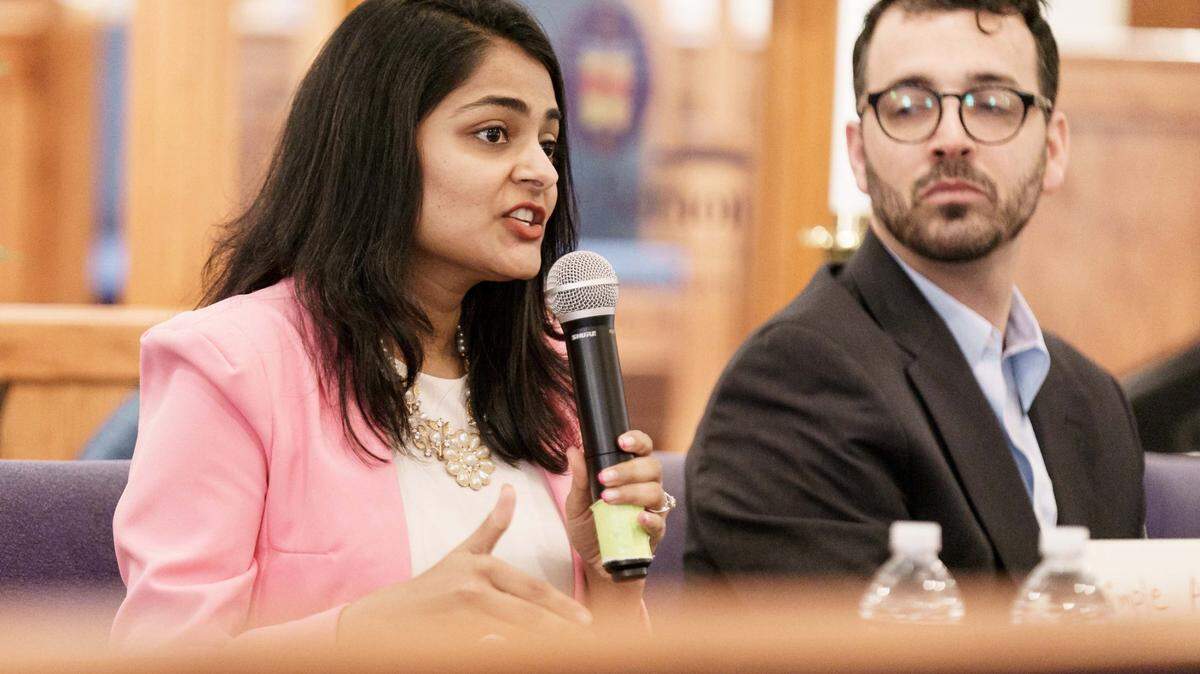
For about two and a half weeks, Charlotte City Council hopeful Jennifer Moxley has been talking with voters and trying to gather enough signatures to land a spot on the ballot.
Many of those voters, like her, are “unaffiliated,” or not registered to vote with any political party. That group ballooned in the previous two decades, are now a plurality in North Carolina and just six points away from a plurality in Mecklenburg County.
But who are they? It’s a question political scientists have chipped away at for years, but that parties have ignored to some extent, says Moxley and Western Carolina University political science professor Chris Cooper.
The broad answer is the growing crowd isn’t easily defined. Some regularly vote in Democratic primaries; some vote in Republican ones. Many are young and recently moved to Charlotte; others are older and feel disconnected from their previous partisan allegiance.
Moxley, 44, registered as unaffiliated when she was young because she worked as a news reporter and didn’t want to appear biased. Her professional reasons then align with her feelings now about the nature of partisan politics.
“The parties don’t want to admit that they’re failing everyone, that we see through it and we’re tired of it,” she said. “There is a large space for gray area, and I think more and more people are saying ‘I am this, but I am also that.’”
Voters, for example, can be fiscally conservative and believe in social programs, she said.
From 2004 to 2022, the percentage of unaffiliated voters in Mecklenburg County grew from 21% to 36%.
The shift can be attributed to a few things, foremost that North Carolina allows unaffiliated voters to cast a ballot in any primary they want. Until the mid-1990s, that wasn’t the case, said Gerry Cohen, former N.C. General Assembly legislative director.
People who are registered with a party can vote only in the primary they’re affiliated with.
Kristin Mavromatis, spokeswoman for the Mecklenburg County Board of Elections, said at least some part of the increase in unaffiliated voters can be attributed to voters accidentally not picking a party when they register to vote. It is impossible to know exactly how many people fall into that category, Mavromatis said.
Moxley says it’s more than that. People feel disenfranchised by representation from both parties, she said.
“(Political parties) just can’t believe that people have independent thought,” she said.
Jane Whitley, chair of the Mecklenburg County Democrats, said the party reaches out to unaffiliated voters in its get-out-the-vote drives. The party can usually figure out how a voter leans, Whitley said.
“We have a message and that message plays well with unaffiliated voters,” she said. “We respect their rights and we’re going to tell them what the Democratic Party stands for.”
Most unaffiliated voters still have partisan leanings, Cooper said. For example, among the unaffiliated voters who cast a ballot in the 2020 Republican primary, 85% of them also voted in the 2016 Republican primary, signaling that they lean conservative despite their unaffiliated registration.
Trends of NC’s independent voters

This month marked a big moment for unaffiliated voters in North Carolina.
Data from the State Board of Elections show for the first time the number of unaffiliated voters surpasses both Democrats and Republicans. Locally, Democrats maintain a plurality of nearly 43%.
The number of unaffiliated voters topped Republicans in Mecklenburg County in 2013, according to data from the local Board of Elections. While the percentage of Republicans in the county decreased over time, unaffiliateds continue to grow.
The percentage of Democrats increased during the Obama years, but has fallen slightly since then.
Cooper said two main factors are at play in the trend: in-migration, or people moving to Mecklenburg County, and generational replacement, or people dying and being replaced by younger generations.
Fewer people actually leave their political party to become unaffiliated, he said.
How do they vote?
Citing past election results, Cooper argued in an academic paper he co-authored in 2021 called “The Rise of the Unaffiliated Voter in North Carolina” the group’s voting habits tend to align with other characteristics. Younger people living in urban Charlotte tend to vote Democrat, even if they’re unaffiliated, while older, rural unaffiliated people tend to vote Republican.
Charlotte’s suburbs are harder to pin down.
Across the state, suburban voters are more likely to be unaffiliated and move between partisan primaries than their counterparts in the city centers and rural areas.
“Those are the swingiest places of our swingy state,” Cooper said.
In 2022, that could have interesting implications. Cooper said he expects many unaffiliated Charlotte voters in the suburbs to vote in the Republican primary because it seems more consequential.
Cooper made a distinction in the academic paper between the suburbs within urban counties and the surbuban counties that surround big cities. Unaffiliated voters in the suburbs within urban counties such as Mecklenburg are more likely to swing from party to party; suburban county voters are more likely to vote in Republican primaries.
In Mecklenburg County, unaffiliateds in the suburbs may choose the Republican primary in 2022, Cooper said.
Democratic primaries for Mecklenburg County’s congressional districts are not expected to be competitive, with incumbent Alma Adams favored to win in one district and state Sen. Jeff Jackson favored to win in the other. Neither is the Democratic primary for U.S. Senate, where former state Supreme Court Chief Justice Cheri Beasley is expected to win handily.
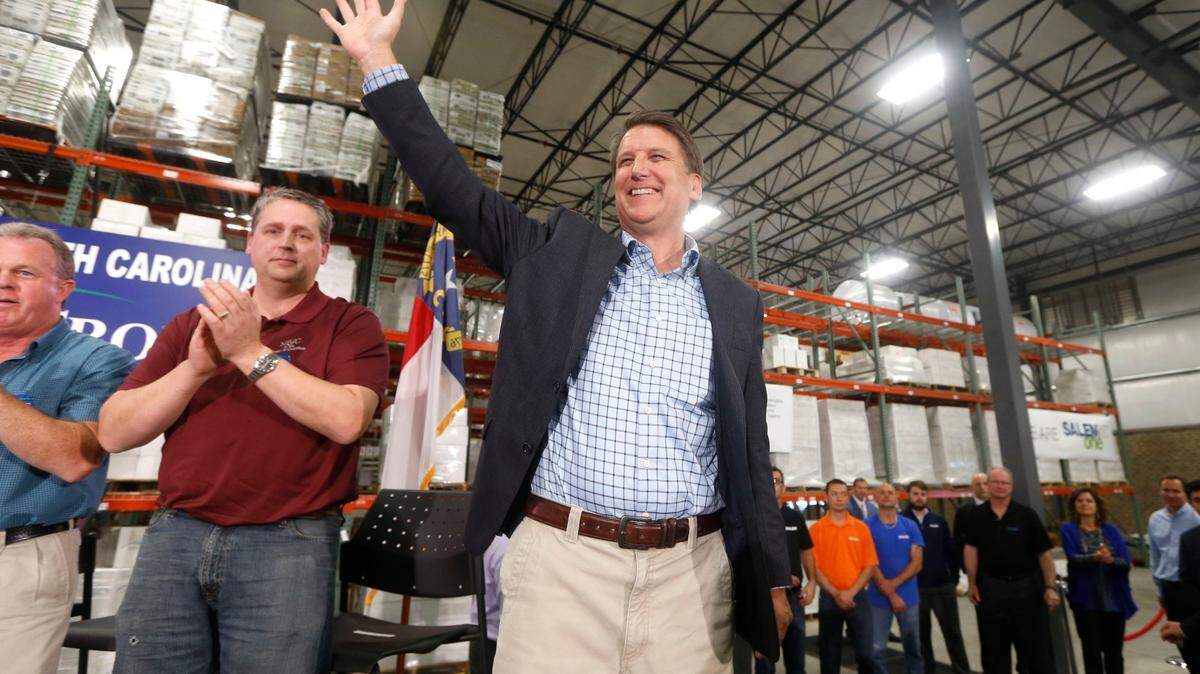
The Republican primary for Senate, though, is hotly contested, with better-known candidates including former Gov. Pat McCrory, Rep. Ted Budd of Davie County, Marjorie Eastman of Cary, and former Rep. Mark Walker of Greensboro.
“If you’re a strategic voter and you want to vote where it matters the most, you might very well choose the Republican primary,” Cooper said.
Being unaffiliated also offers people the possibility to vote in a strategic way outside of their party. If an unaffiliated voter wants a particular Democrat to win in the general election, the person may vote in the Republican primary for the candidate they think is most likely to lose in the general.
Cooper said Mecklenburg County unaffiliated voters choosing the Republican primary could affect local elections such as the Charlotte City Council, where Democratic candidates may not receive votes they would otherwise count on in the primary.
Data show unaffiliated voters often choose the more hotly contested primary.
In 2008, 76% of N.C. unaffiliated voters chose the Democratic primary, when Barack Obama was up against Hillary Clinton. In 2012 and 2016, more than half chose the Republican primary, according to the paper co-authored by Cooper.
Unaffiliated voters are more likely to be young. More Millennials — people born between 1981 and 1996 — and Generation Z — born in 1997 or later — are unaffiliated than associated with any one political party, according to Cooper’s academic paper.
Why does it matter?
Political insiders argue about whether the rise in unaffiliated voters makes a difference.
Some argue people vote based on other characteristics anyway, so whether they’re formally aligned with a political party doesn’t make a big difference.
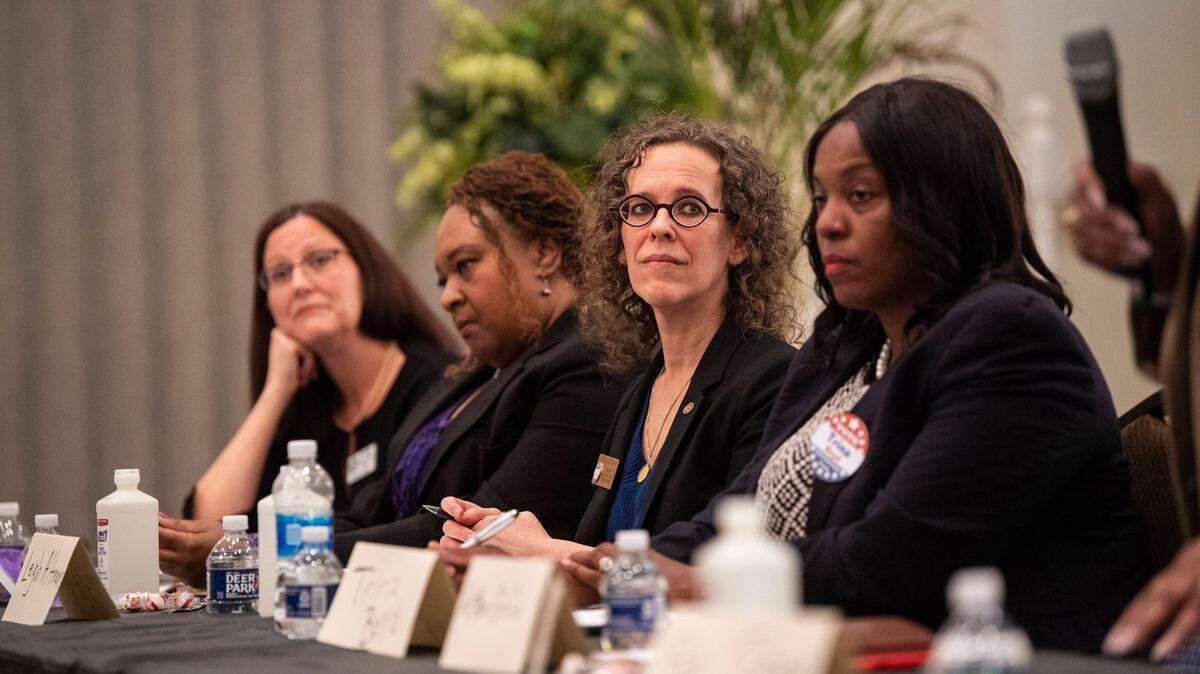
Leigh Altman, an at-large Mecklenburg County commissioner, said political affiliation doesn’t change the strategy for candidates like her in getting their vote or delivering on campaign promises.
In local elections particularly, she said people tend to be more interested in issues that impact their day-to-day life. She cited recent investments by the county in early childhood care, parks and infrastructure and behavioral health.
“That matters to Democrats. That matters to unaffiliated. That matters to Republicans,” she said. “That’s what I’m focused on. I’m excited for any voter that registers to vote, that studies the candidates and that shows up to vote on election day.”
Cooper said the bigger implication may come when recruiting candidates. As the percentage of voters aligned with either major party shrinks, so will the pool of eligible candidates to recruit.
“As parties want to get younger people to run for office, (younger candidates) are simply not going to be there,” he said.
Getting on the ballot
Moxley said running as an unaffiliated candidate has been hard. Just to get on the ballot, she must collect signatures from 1.5% of the registered voters in her district — in District 1, that’s 1,323 signatures.
So far, she’s gathered just 90 and spent about 25 minutes talking to every person she’s gotten a signature from. She says it’ll be hard to find the time to go out and get the remaining 1,233 as a small business owner and mother of two grown children.
The chances of changing the statute that regulates how unaffiliated candidates get on the ballot are slim, Cooper said, because both the Democratic and Republican parties benefit from having fewer competitors.
Still, Moxley said she won’t switch to one of the two major parties to make it easier to get on the ballot.
“We are independent thinkers,” she said.
This story was originally published March 28, 2022 at 6:00 AM.
.jpg)
.JPG)