
Party and power: Are Charlotte’s leaders fixing the city’s most troubling issues?
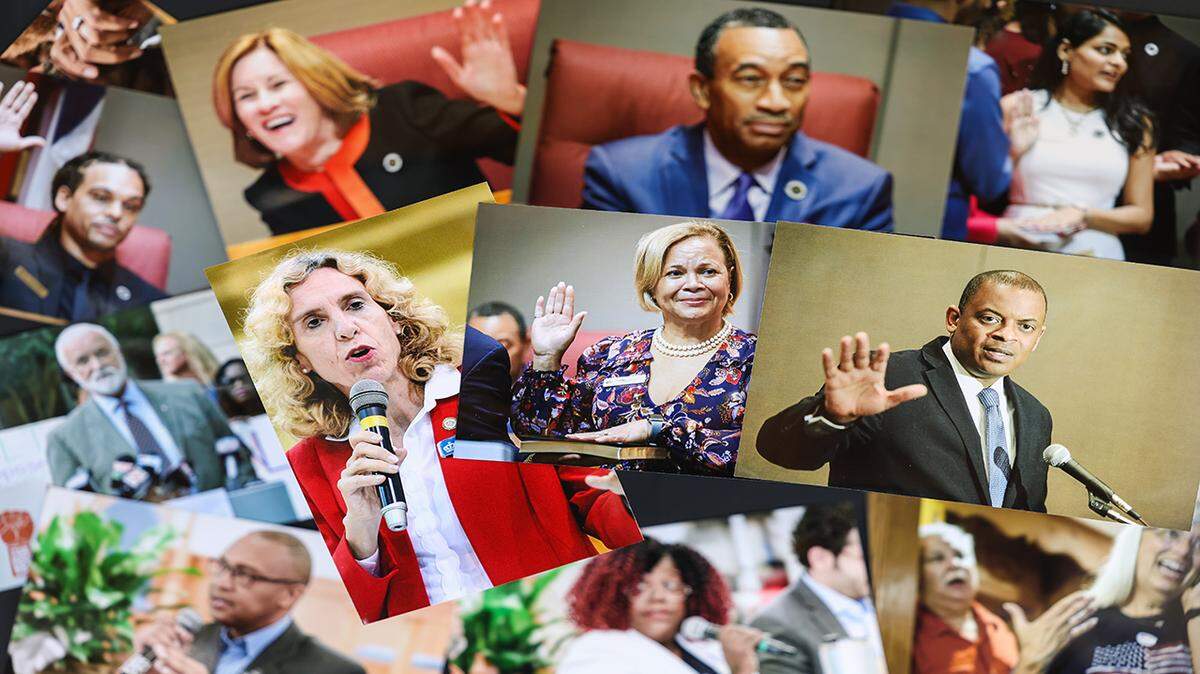
In a city dominated by Democrats for more than two decades, some key priorities have remained elusive in Charlotte.
Amid all of Charlotte’s growth — and despite nearly complete single-party control — data from the city, county and U.S. Census Bureau show Charlotte has yet to achieve some key outcomes. Housing has become less affordable. Data show violent crime has increased over the past several years. Median income is a mixed bag because of increased housing prices.
To be sure, the issues Charlotte faces are not unique to the city, and council people said their power to greatly influence trends is limited.
The Charlotte Observer has compiled data on a few of these key issues:
▪ Housing: Lower-income households struggle more now than they used to to pay rent. 76% of Mecklenburg County households in 2012 making between $20,000 to $34,999 annually were “cost burdened” by rent. By 2019, 93% of households in that income bracket were cost-burdened.
▪ The number of offenses recorded by CMPD as violent crimes increased by about 15.3% from 2015 through 2019. The county’s population grew by roughly 7% over the same time period, according to county data.
▪ Median incomes have risen substantially in Charlotte, from less than $50,000 in 2010 to more than $65,000 2020 (in inflation-adjusted dollars). Still, more households have struggled to afford housing.
As a new City Council settles into power and with a county commission election in November, local leaders face a slate of issues that have been priorities for years, though with mixed success on outcomes.
Housing, public safety and wages were particular focal points in 2016 after a police officer shot and killed Keith Lamont Scott at a University City-area apartment complex. The shooting raised questions about racial inequities across the board, not just in policing. Charlotte officials designated those three priorities — housing, wages and public safety — as intertwined and critical to the future of the city in a Community Action Plan.
On Tuesday, the six-year anniversary of Scott’s death, Mayor Pro Tem Braxton Winston said the progress on such ingrained problems will take time.
“There’s gonna have to be generational work that changes that,” said Winston, who rose to power after becoming a visible participant in the 2016 protests. “What I’m most grateful about is that I think for a large part the city and the community has bought into the generational scope of the work.”
Charlotte’s own supermajority
Like councils before it, Charlotte’s new one has a supermajority of Democrats.
Republicans last controlled the City Council in 1997, when former Gov. Pat McCrory served as mayor and Republicans held a 6-5 majority. McCrory, Charlotte’s last Republican mayor, held veto power until he left office in 2009. Republicans last held the Board of County Commissioners in 2002.
Mecklenburg County’s legislative delegation has also become increasingly Democratic, from six Republican legislators in 2016 to one in 2022.
Some Republican politicians say the party’s lack of power has stunted debate over key policies, including housing and public safety. With more diverse arguments on the dias, they said, come better outcomes. During the July City Council election, a slate of Republicans ran on the premise that despite years of Democratic control, the city hasn’t seen the level of progress that’s been promised.
“We’ve segregated ourselves,” McCrory said. “The strength of Charlotte used to be that we had political diversity.”

Ed Driggs, one of two Republicans on the City Council, said many city actions are nonpartisan and do not reflect the divisiveness of national politics. Still, he said, there are “some areas such as the amount of investment in affordable housing or public safety in which we have different perspectives.” Republicans might be less inclined to put $50 million into the housing trust fund, for example.
There’s no partisan way to pick up the trash, says City Council member Malcolm Graham, a Democrat who also served 10 years in the legislature.
“The issues that we deal with on a local level are really as partisan as we make them,” Graham said.
Charlotte’s key priorities
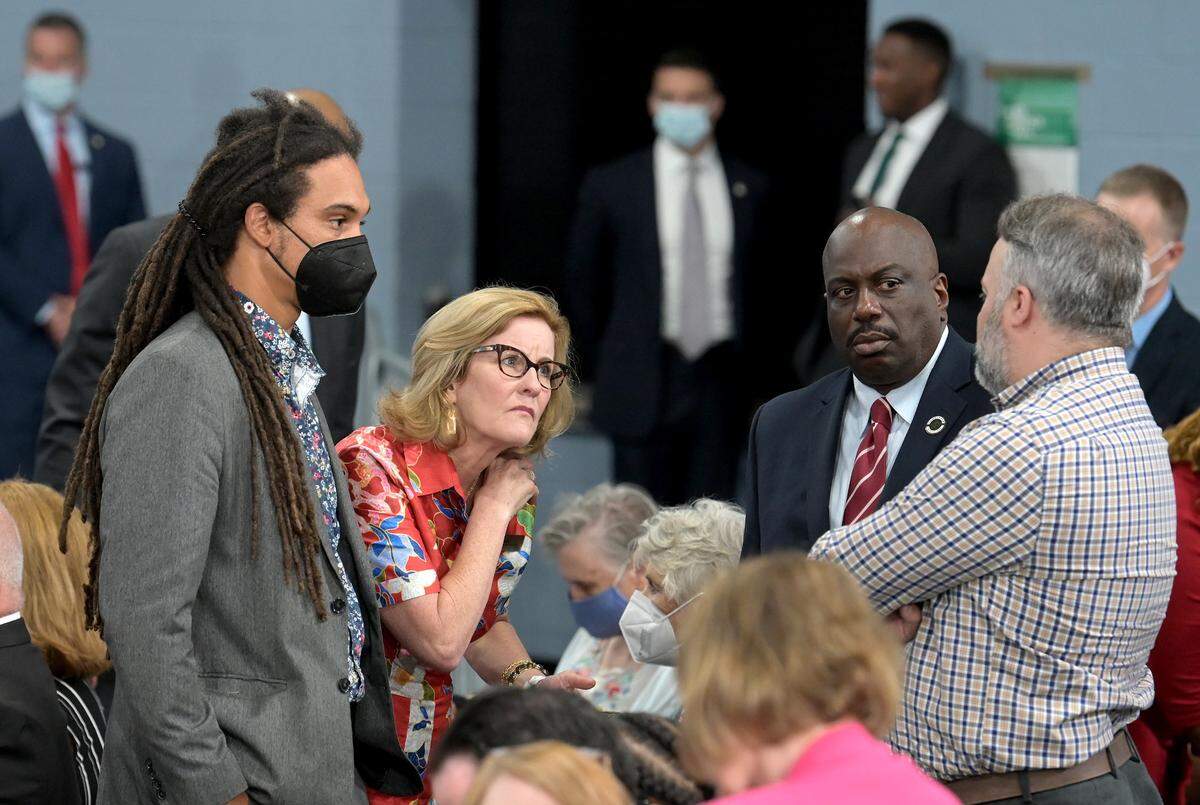
The city’s 2016 Community Action Plan included a review of CMPD, a renewed focus on housing by boosting the number of affordable housing units the city helps create and more money toward workforce development.
Current and former officials told The Charlotte Observer the power local officials wield is often limited in areas where progress has come slowly or not at all.
On creating a more affordable city, for example, Charlotte government faces a mammoth housing market dominated by the private sector. On crime, national economic trends and the availability of firearms stand largely outside local control. And on wages, businesses can generally pay what the market allows, current and former officials told the Observer.
“The city is limited,” said former mayor and county commission chair Jennifer Roberts. “It cannot do for housing what needs to be done and it can’t always do for the workforce what needs to be done.”
Housing and wages intersect
One of the most important outcomes of the 2016 action plan, Mayor Vi Lyles told the Observer, has been tackling the affordable housing crisis.
The city promised to create 5,000 affordable units over the next three years. Previously, the goal was to create 5,000 units over five years.
The city accomplished that a few dozen units at a time and made big investments. From 2001 to 2021, Charlotte pumped $218.8 million into its Housing Trust Fund, creating and preserving 10,869 affordable units and 888 shelter beds, according to the city.
Along with new developments, the trust fund helps preserve existing affordable housing. This month, the council approved $8 million to help a developer buy and renovate Peppertree Apartments on Central Avenue. County commissioners followed suit Tuesday, approving $4 million for the same project.
Last year, the council approved a $700,000 investment to develop 22 for-sale units in the Druid Hills neighborhood. In another project last year, the city approved an investment of $3 million to help a developer create more than 130 units for older adults and families. The rents for that project, on Shamrock Drive, range from $415 to $1,445 per month, according to the city’s website.
All those investments are still ”a drop in the ocean,” councilwoman Dimple Ajmera said.
A 2021 report from the Urban Institute at UNC Charlotte found 76% of Mecklenburg County households in 2012 making between $20,000 to $34,999 annually were “cost burdened” by rent. (Households paying 30% or more of their income on housing qualify as cost burdened).
By 2019, the most recent year available in the report, 93% of households in that income bracket were cost-burdened.
Just 27% of households making $35,000 to $49,999 were similarly cost-burdened in 2012, the report found. By 2019, the number rose to 62%.
“There is no magic solution to this,” Ajmera said, “but there needs to continue to be a balance on how we tackle, how we address these priorities while creating a city that is affordable, that is safe and that is sustainable.”
Home ownership declines
While the city has created more than 10,000 affordable units, the median home sale price in Charlotte has continued to soar, even before current inflation. In 2015, the median sales price in Charlotte was less than $200,000. It jumped the $390,000 mark in April 2022.
Meanwhile, home ownership rates have declined. Those rates typically fall as communities become denser, said Aaron Houck, the UNC Charlotte Urban Institute Director of Regional Policy.
From 2010 to 2020, the percentage of homes occupied by the owner declined from 58.6% to 52.8%, according to Census data.
As Charlotte becomes more dense, Houck said it’s not surprising to see that trend.
Graham said the city “has to be more intentional in the efforts we’re making to make home ownership more affordable.” He pointed to home ownership as a key to building generational wealth.
The city has made investments on that front, including through its House Charlotte program. But compared with the money spent subsidizing affordable rental units, the investment is small, Driggs said.
Incomes rising, but affordability still lags
From 2010 to 2020, the median income in Charlotte increased by 31%, from less than $50,000 to more than $65,000 in inflation-adjusted dollars, according to data from the U.S. Census Bureau.
Raleigh’s median income increased by nearly 40% over the same time period.
Asked about the increase in home prices in Charlotte, Lyles emphasized the city has little ability to regulate the housing market.
Other leaders have pointed to the same problem. In a candidate forum ahead of the May primary, Winston said the city can’t tell developers to include affordable units unless the city is selling the land or gives the developer a subsidy.
The result, he said at the time, has been a developer-dominated market.
Violent crime has risen

Some issues have been at the top of Charlotte’s agenda since before the 2016 action plan.
During the City Council’s annual retreat in 2011, city leaders said they no longer wanted to be the safest large city in America, according to meeting minutes. They wanted to be the safest community of any size.
More than a decade later, in September, CMPD Police Chief Johnny Jennings told council members and Mayor Lyles that CMPD faces hard problems, including court backlogs, a massive shortage of officers and policies that have made re-offending more common.
The number of offenses recorded by CMPD as violent crimes increased by about 15.3% from 2015 through 2019. The county’s population grew by roughly 7% over the same time period, according to county data. These statistics represent the number of crimes recorded by CMPD, but do not include unreported crime.
“Everywhere I go in the city,” councilman Graham said in an interview this month, “people feel that Charlotte’s not a safe place to live anymore.”
If people don’t feel safe then they’re not safe, he said.
Violent crime increased from 2019 through 2020 by about 17%, according to CMPD, and declined from 2020 through 2021 by about 7%.
Graham said the city is taking steps to address public safety.
Its Alternatives to Violence program received an additional $1 million from the Department of Justice in 2021. That program aims to ease tensions before they lead to violence and connect high-risk individuals with opportunity programs in employment and other support networks.
Graham said he hopes that program will expand to more parts of the city from its current focus in the Beatties Ford and LaSalle area. He added that CMPD has also worked on building relationships between officers and the communities they police, including by engaging neighborhood organizations.
To aid recruitment and retention, the city also gave 10% raises to officers in its budget this year. The department had 260 vacancies for sworn law enforcement officers as of September, CMPD Chief Johnny Jennings told the City Council.
“The council can’t solve (rising crime rates) by itself. It takes all the entities working together,” Graham said. “I do think the council has a responsibility to speak truth to power, and one of the things that frustrates me is every day I wake up there’s another shooting somewhere.”
Winston pointed back to the city’s multi-pronged approach to housing, wages and creating economic opportunities. Violence, he said, “is a symptom of bad policy decisions over time,” including the razing of the Brooklyn neighborhood during urban renewal.
“I do believe that we have been passing policy that is going to address that over time,” he said. “But until that happens we’re still feelings the effects” of these legacy issues.
Gavin Off contributed to this story
This story was originally published September 23, 2022 at 6:00 AM.
.jpg)