
Charlotte’s ‘access to control power’ dwindled as Democrats won in GOP-controlled state

Don’t cut off the hand that feeds you, Chairman George Dunlap told his fellow Mecklenburg commissioners Sept. 7 as they waded into criticism of state government.
All issues affecting residents are “fair game” for discussion, Dunlap said, but when commissioner Mark Jerrell brought up teacher salary funding being withheld from Mecklenburg and four other counties, Dunlap suggested they tread lightly.
From House Bill 2 to disagreements over redistricting, tension between Raleigh and Charlotte has ebbed and flowed but been ever-present.
“We’ve always had that issue,” said former governor and Charlotte Mayor Pat McCrory, “but it’s compounded because we have no Charlotte representation (in the majority party).”
Commissioner Vilma Leake didn’t see the criticism as fruitless, she said in the Sept. 7 meeting. Questioning the legislature has historically been a necessary pathway to progress, Leake told commissioner Jerrell.
In solving the problem Jerrell raised, though, County Manager Dena Diorio said they’d run into another: As the county’s Republican representation in Raleigh as has dwindled, Diorio said, so has Mecklenburg County’s sway.
Charlotte is North Carolina’s largest municipality, but its relationship with the state has long been characterized as an “us vs. them” dynamic — the great state of Mecklenburg vs. the Raleigh state government.
In a few years, Republican representation dwindled
In 2010, six of Mecklenburg County’s 15 delegates were Republicans. In 2014, there were eight Republicans and nine Democrats. By 2016, six were Republicans and 11 were Democrats. Today, there is one Republican to 16 Democrats.
The lone Republican, John Bradford, represents the state House district for Cornelius and Huntersville. There are no members of the majority party representing Charlotte in the state legislature.
Bradford said he doesn’t think Mecklenburg County is at a disadvantage just because it has only one Republican.
“I would love company, don’t get me wrong,” he said, but ideological differences between largely rural Republican legislators and urban Democrats play a larger role.
The trend is mirrored on the Charlotte City Council, where there are only two Republicans, and Mecklenburg Board of County Commissioners, where there are none.
That has come with consequences, good or bad depending on who you ask. And it’s likely November is likely to bring a continuation of the trend. Just one Mecklenburg legislative district, Bradford’s, leans Republican according to the partisan calculator Dave’s Redistricting App.
One state House seat, District 103 in Matthews, is close to even in its partisan lean but leans Democratic. Almost all of the legislative districts bordering Mecklenburg County are Republican strongholds.
Current and former officials disagree about the effect of Charlotte’s move to blue.
Charlotte targeted
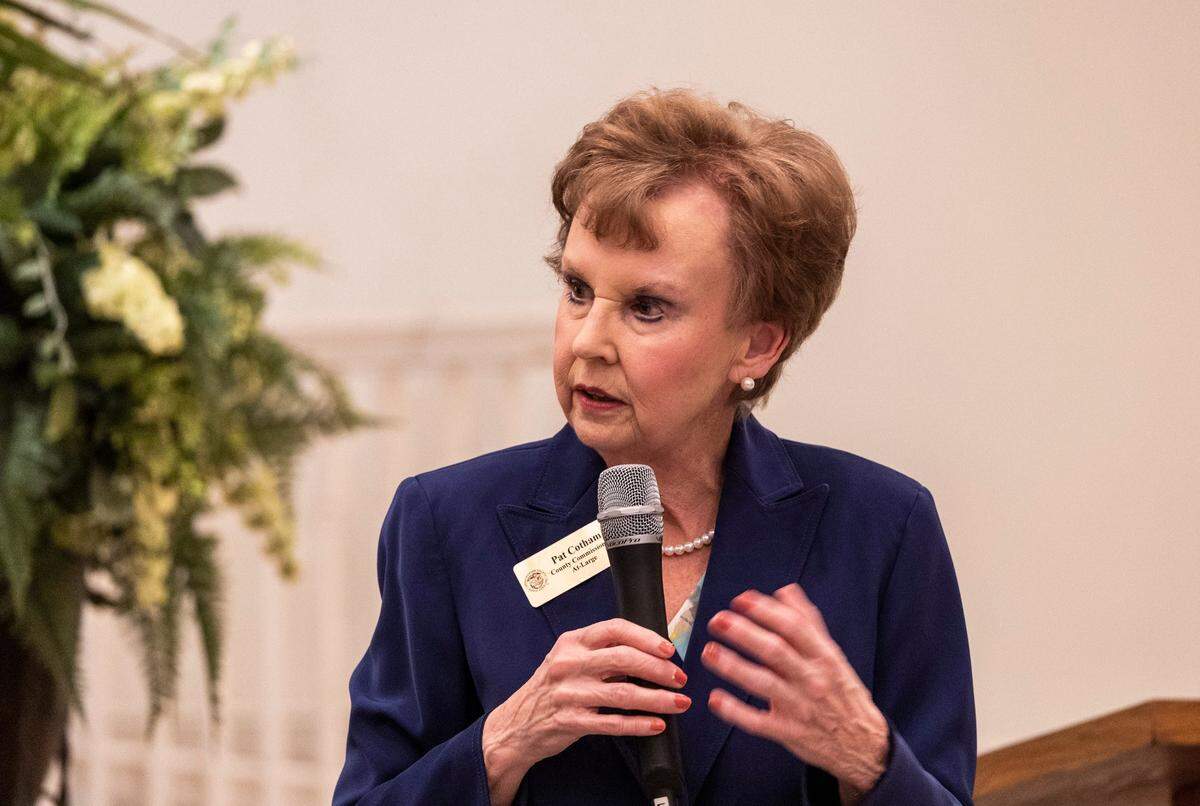
During the Sept. 7 Board of County Commissioners meeting, commissioner Pat Cotham brought up a proposed change to sales tax distribution that would have cut Mecklenburg County’s revenue substantially.
In 2015, the N.C. General Assembly introduced a proposal to redistribute the state’s sales tax revenue in a way that would have hurt Mecklenburg, Durham, Buncombe, Watauga and four coastal counties.
The proposal aimed to spread wealth across the state, from wealthier counties to more rural ones. The bill would have led to a 7% revenue decrease for Mecklenburg County, the Raleigh News & Observer reported at the time.
In the end, a compromise was reached that avoided the potential funding crisis for Mecklenburg. Diorio said Republican legislators from Mecklenburg County, some of them in leadership positions, were helpful in avoiding the pitfall.
In 2015, Mecklenburg County had nine Democrats and eight Republicans in the legislature.
“We had some ability and some leverage that we just don’t have today,” Diorio said.
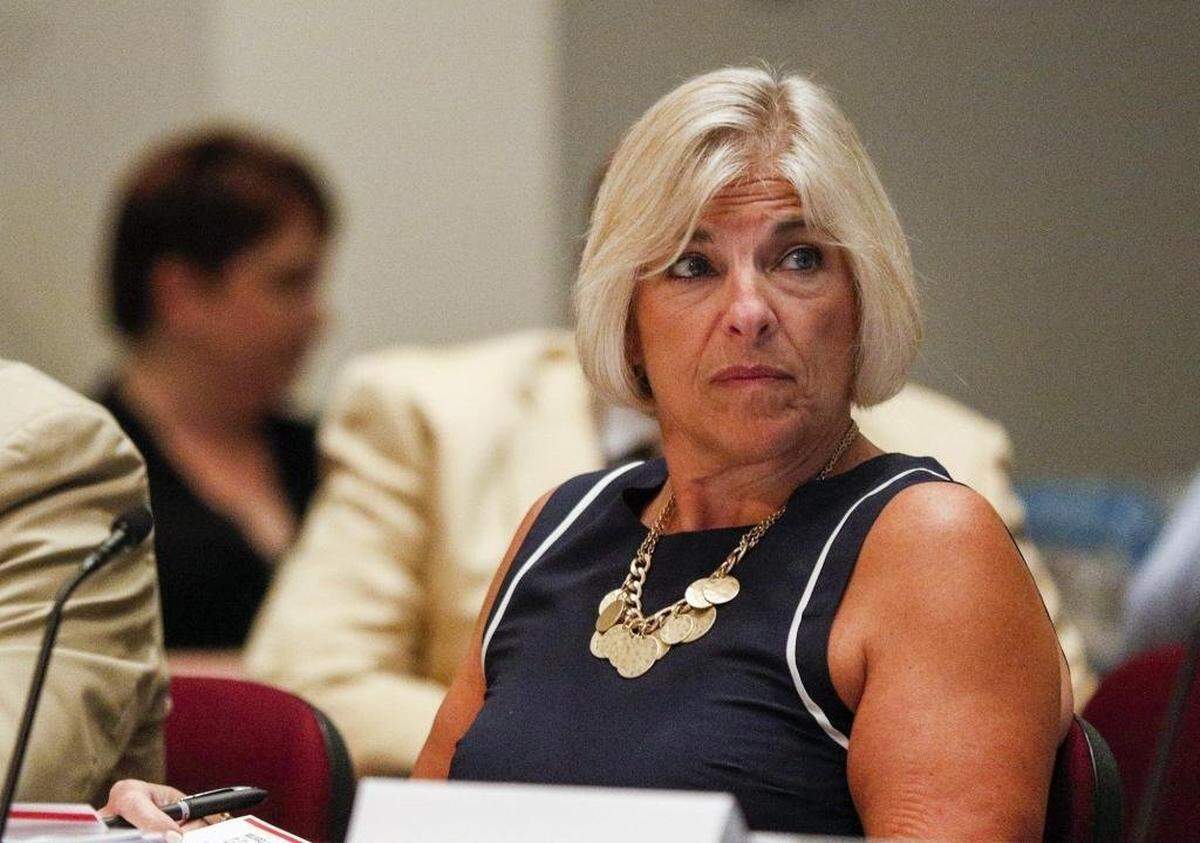
The high-point of tension came in 2016, when Charlotte passed an ordinance providing nondiscrimination protections to gay and transgender people. Gov. Pat McCrory, in March 2016, signed House Bill 2, which reversed the ordinance.
The blowback was intense. An Associated Press analysis at the time estimated that the state lost more than $3 billion after private companies and events pulled out of the state as a result.
A partial repeal was signed by Gov. Roy Cooper in 2017. Then-state Sen. Dan Bishop, a Mecklenburg Republican and key author of HB2, was the only senator to speak against the partial repeal on the Senate floor, the Observer reported at the time.
Bradford said Mayor Vi Lyles has improved the relationship since then, including by supporting plans to host the Republican National Convention in 2020.
Historically tense relationship
Democratic state Sen. Natasha Marcus pushed back on the idea that more Republican representation could give the county more leverage.
She pointed to the teacher supplement, which was withheld from five Democratically-controlled counties during the Republican-led budgetary process.
Republicans said the supplements, which totaled $100 million, were meant to help teachers in rural, underserved areas.
“There is a long-standing tradition of Raleigh Republicans wanting to penalize urban areas, Democratic areas,” she said, even when high-profile Republicans represented Mecklenburg County, like now-Sen. Thom Tillis and U.S. Rep. Dan Bishop.
Mecklenburg County accounts for 10% of the state legislature — 10% of the House and 10% of Senate.
Former GOP state Rep. Charles Jeter, who now works for Charlotte-Mecklenburg Schools, said a primary problem with limited Republican representation is that Charlotte legislators don’t have access to caucus meetings where the majority party determines what legislation moves forward.
“You’ve got nobody — nobody — in Raleigh from the city of Charlotte ... that has any access to control power or influence in those chambers,” Jeter said.
That’s not criticism of Mecklenburg County’s delegation, several of whom “are beloved and respected,” but their access to power in a GOP-controlled legislature is extremely limited, Jeter said. Voters often incentivize their legislators to be loud opposition voices even if that might hurt their relationships with the Republicans who do wield power, he said.
Bipartisanship penalized?
He pointed to Joel Ford, the former Democratic state senator for District 38 in Charlotte. Ford lost in the 2018 Democratic primary to Sen. Mujtaba Mohammed. A Charlotte Observer editorial in 2018 said Ford “has become a little too unpredictable for Democrats.”
Ford said he tried to use bipartisanship to get things done, including finding funding for road projects and a community health center in his district. That bipartisanship, he said, was used against him.
“Having a relationship with the leadership all of the sudden became a bad thing because of hyper-partisanship,” Ford said.
Relationship improving?
City Councilman Ed Driggs, a Republican, also said Lyles “has substantially improved the relationship between Charlotte and Raleigh since the dark days of HB2.”
But Jennifer De La Jara, a Democrat and member of the school board, said there is ”no indication that more Republicans here locally are going to convince (House Speaker Tim Moore) and (Senate President Phil Berger) to stop doing the things they’re doing.”
Asked how she sees the county’s power shifting over time, Marcus said she believes North Carolina will turn more blue as time goes on. Some suburban counties are already seeing that shift, Marcus said.
A state House district in Cabarrus County, which has historically been represented by Republicans, is poised to be competitive this fall.
As Charlotte grows and the region becomes bluer as a result, “we can vote as a region,” she said.
This story was originally published September 23, 2022 at 6:00 AM.
.jpg)