Mecklenburg County has $32.5M to help curb the opioid crisis. How should it be spent?
In 2010, 66 people died from Mecklenburg County from reported drug overdose deaths. With fentanyl flooding the streets, that number more than tripled to 236 a decade later.
Charlotte was no exception to the opioid epidemic, and Mecklenburg County will receive $32.5 million spread over the next 18 years to work toward addressing the crisis. So, far it has received $4 million.
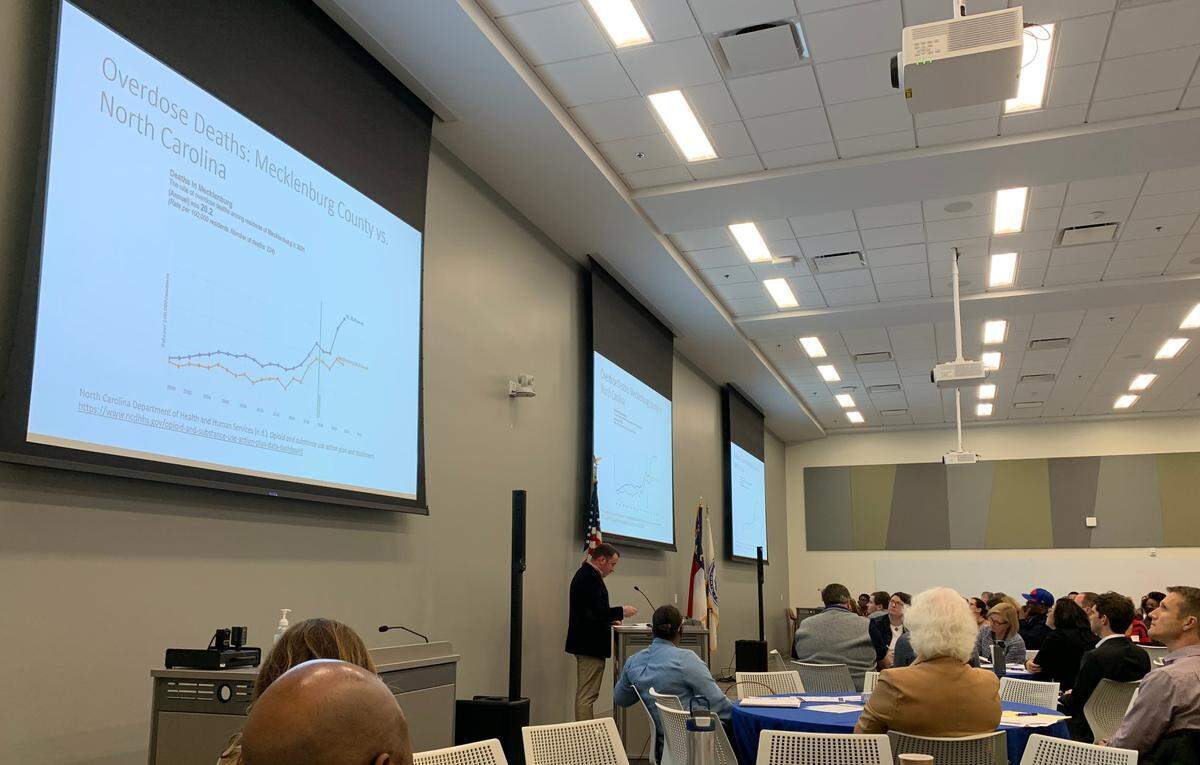
County leaders met with community members Thursday morning to get feedback on how the money should be spent.
Where did it come from and where will it go?
In the late 1990s, pharmaceutical companies assured health care providers the opioid pain relievers they were selling were not addictive and providers began to prescribe them more, according to the U.S. Department of Health and Human Services. The increased number of prescriptions led to misuse of the opioids — prescribed and unprescribed — leading HHS to declare the opioid epidemic a public health crisis.
In response to the effects of the opioid epidemic, thousands of local governments teamed up, including 76 counties and eight municipalities in North Carolina, to file lawsuits against pharmaceutical companies, County Manager Dena Diorio said.
Four pharmaceutical companies agreed to a $26 billion settlement last year, including $32.5 million for Mecklenburg County and $8 million for the city of Charlotte, to be front loaded and distributed over 18 years, Diorio said.
The four companies paying out are Johnson&Johnson, AmerisourceBergen, Cardinal Health and McKesson.
County leaders held a community meeting to discuss the best uses for the funds in the following areas:
Prevention
▪ A program to allow people to return used syringes
▪ Distributing Naxalone, an overdose reversal agent
Treatment
▪ Evidence-based addiction treatment
▪ Addiction treatment for incarcerated persons
Recovery
▪ Post overdose response teams
▪ Criminal justice diversion programs
▪ Re-entry programs after incarcerations
▪ Recovery support services
▪ Recovery housing support
▪ Employment related services
Recovery resources could benefit people like Anna Fiscus-Surita, who attended the community meeting. She started using heroin at 14 years old.
“I was on a 20-year journey of addiction that included homelessness and incarceration,” Fiscus-Surita said. “I am very hopeful for the future and the work to help people struggling with opioid addiction.”
County Commissioners will consider recommendations, create a special revenue fund from the settlement and adopt a resolution authorizing strategies and funding.
“I am excited that the community has responded so well to having this conversation,” Diorio said. “We will work together to find solutions and strengthen Mecklenburg County for all of us.”
The county plans to hold other public events events, with county staff using feedback and work from the Substance Use Disorder Task Force to give recommendations to the Board of County Commissioners. Dates for additional public events have not been set.
Understanding the opioid issue in Mecklenburg County
The opioid issue has its roots in 1971, when President Richard Nixon declared a war on drugs, said Lauren Kestner, associate director of Harm Reduction Services at the Center for Prevention Services.
“This destroyed neighborhoods, targeted minority communities, youth and families,” Kestner said. “It spent billions to protect and prevent and has instead killed, oppressed, red-lined and perpetuated fear and stigma in our own cultures and habits that are not necessarily bad or more immoral, but far often misunderstood.”
There have been 688 opioid overdose emergency room visits this year in Mecklenburg. There were 636 in the same time frame last year, according to data presented by Travis Hales, assistant professor at the UNC Charlotte School of Social Work. Last month, 11 of the 75 opioid overdose emergency department visits were because of fentanyl, compared to 39 unspecified narcotics and 18 “commonly prescribed opioids.”
Mecklenburg County health care providers also have decreased the number of opoids prescribed from 185,000 in 2016 to 118,000 in 2020, Hales said.
Those most affected by the epidemic are white and Black people ages 25 to 44, Hales’ data show. Though Black residents make up less than 40% of the county’s population, they account for almost half of the emergency department visits for overdoses.
In Mecklenburg County, poisoning death rates from drugs including fentanyl are higher than traffic crash death rates, Kestner said.
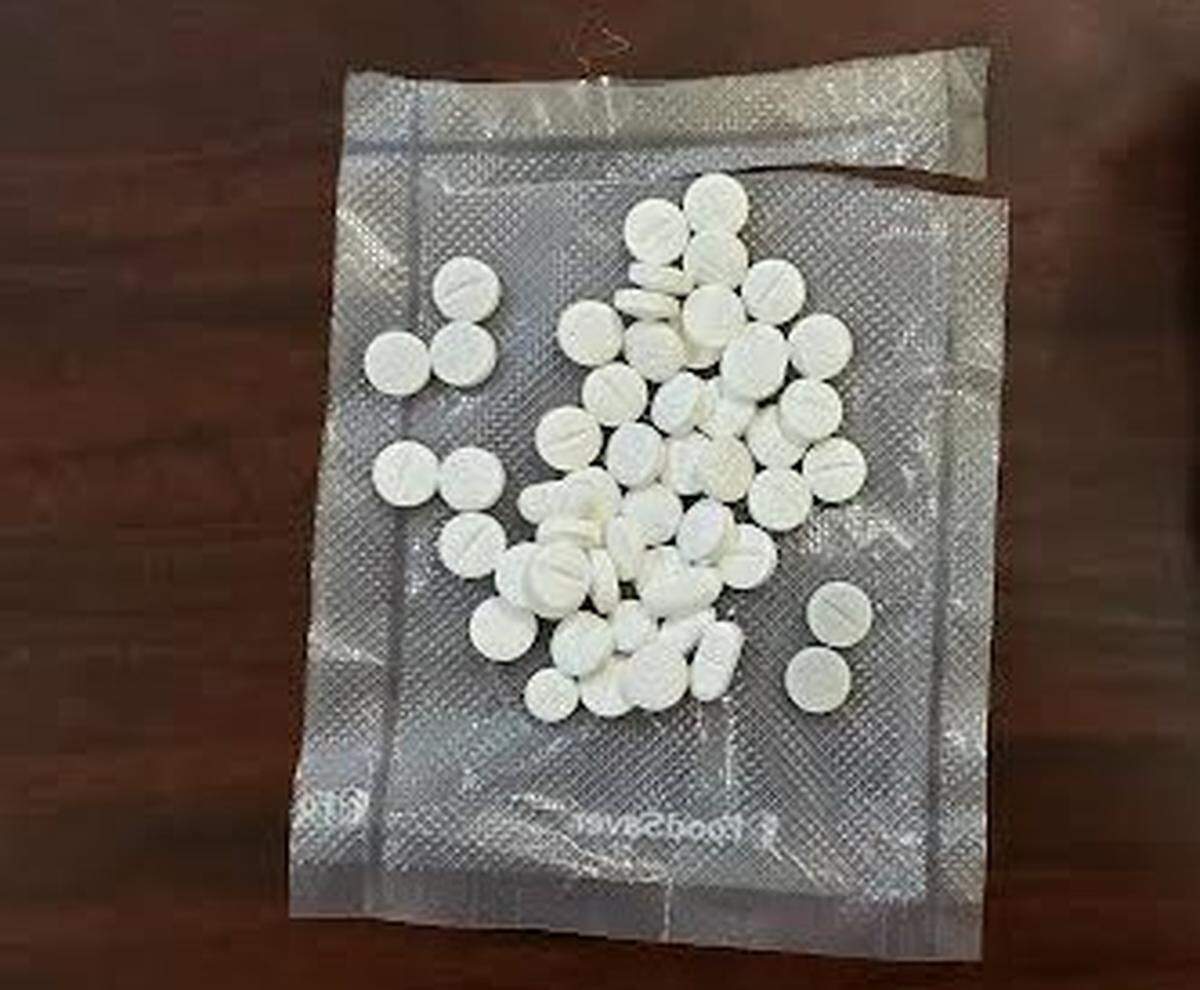
Fentanyl is a synthetic opioid that is approximately 50 times more potent than heroin and 100 times more potent than morphine, according to the Drug Enforcement Administration. The DEA says fentanyI is inexpensive, widely available, highly addictive and potentially lethal.
Just across the state border last week, police seized more than 65 pounds of fentanyl in a raid that officials described as the largest-ever seizure of illegal opioids in York County.
This story was originally published October 28, 2022 at 9:12 AM.