Historically Black Greek organizations march to polls to encourage voter turnout in Charlotte
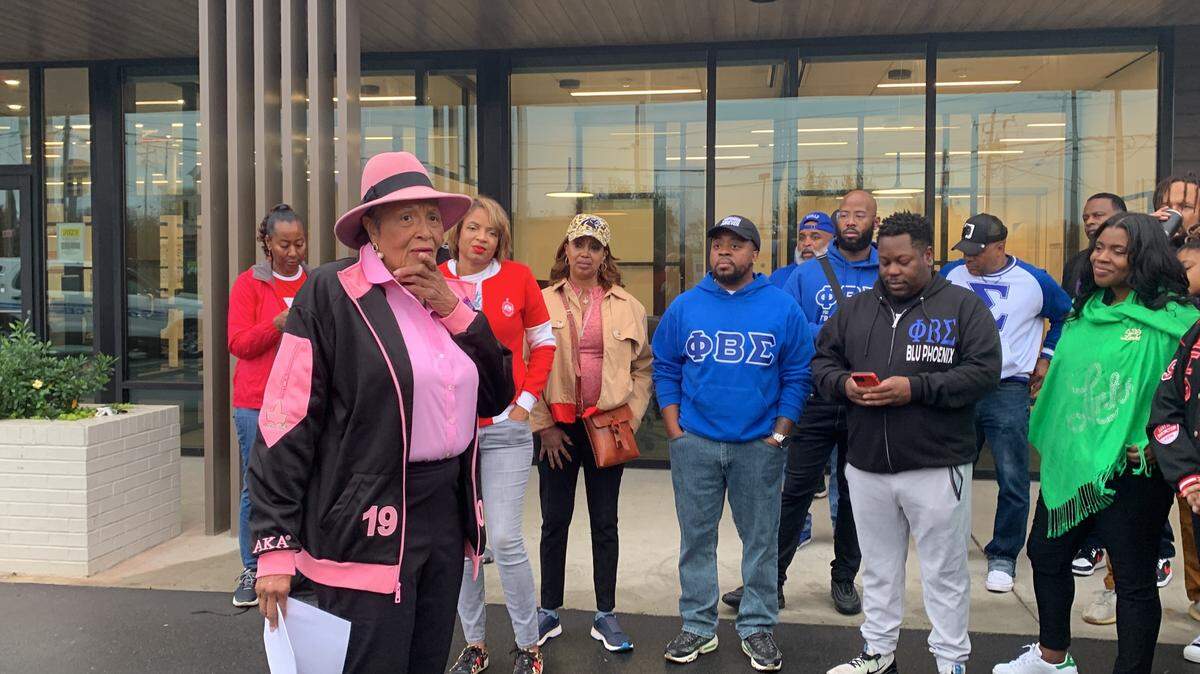
Rep. Alma Adams’ voice was quiet but strong as she sang out Saturday.
“There’s power, power, power in our vote,” Adams sang to the tune of a hymn, as she was dressed in pink from her hat to her Converse.
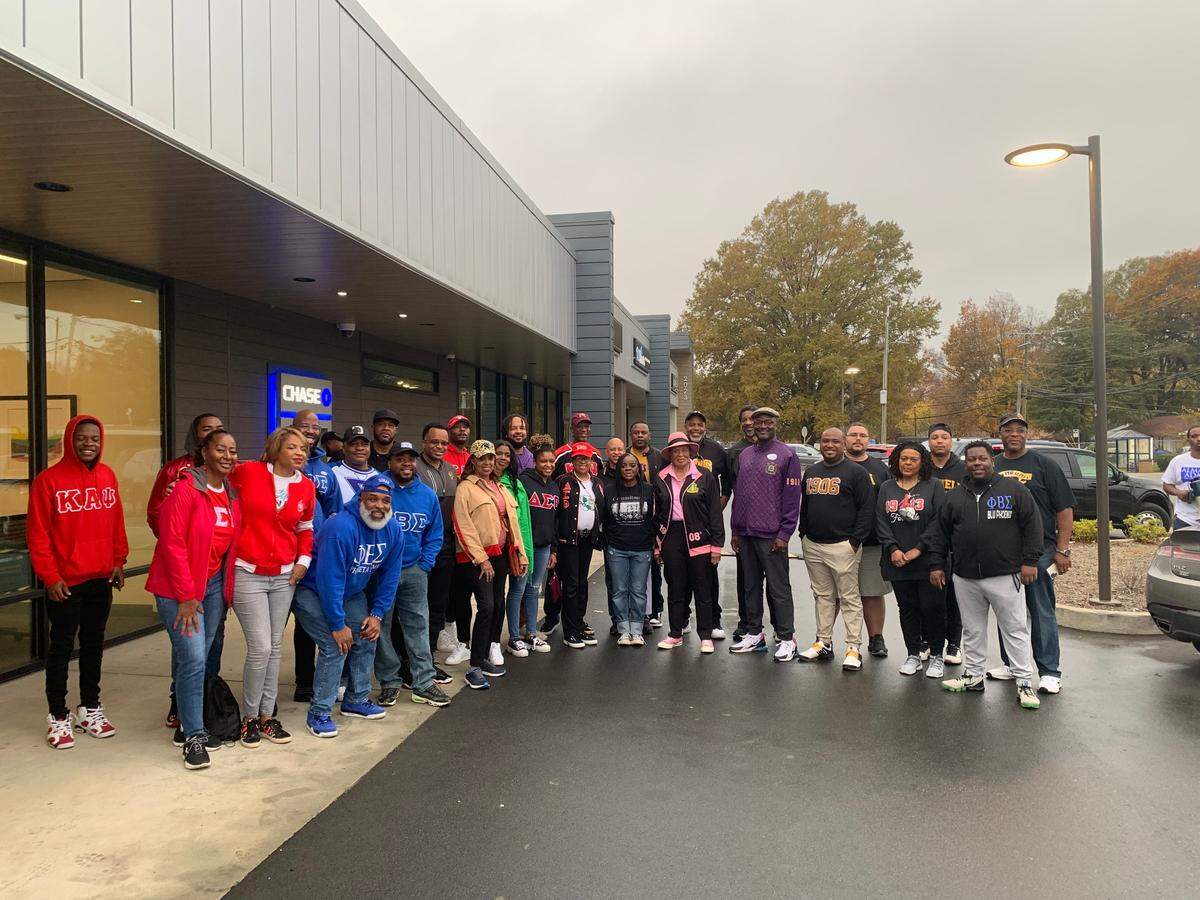
She was representing her sorority, Alpha Kappa Alpha, while surrounded by about 50 members of historically Black Greek organizations in Charlotte on Beatties Ford Road, preparing to march to the polls.
The nonpartisan march, organized by former local Black Political Caucus Chair Colette Forrest, was to encourage voter turnout among Black Charlotte residents.
Data from the North Carolina State Board of Elections shows as of Nov. 1, 16% of Black registered voters had cast ballots early, either in person or via mail. Of white registered voters, 19.8% voted early.
Saturday is the last day of early voting ahead of the 2022 midterm election Tuesday, Nov. 8.
In 2020, 68% of Black registered voters cast ballots. Leaders in Charlotte Saturday urged the community to keep up momentum as numbers lag this year with no presidential race on the ballot.
“The Black voter turnout, it’s so low right now,” Forrest said. “And so we’re trying to excite and energize the base.”
Adams warned those in attendance that with this election, democracy is at stake.
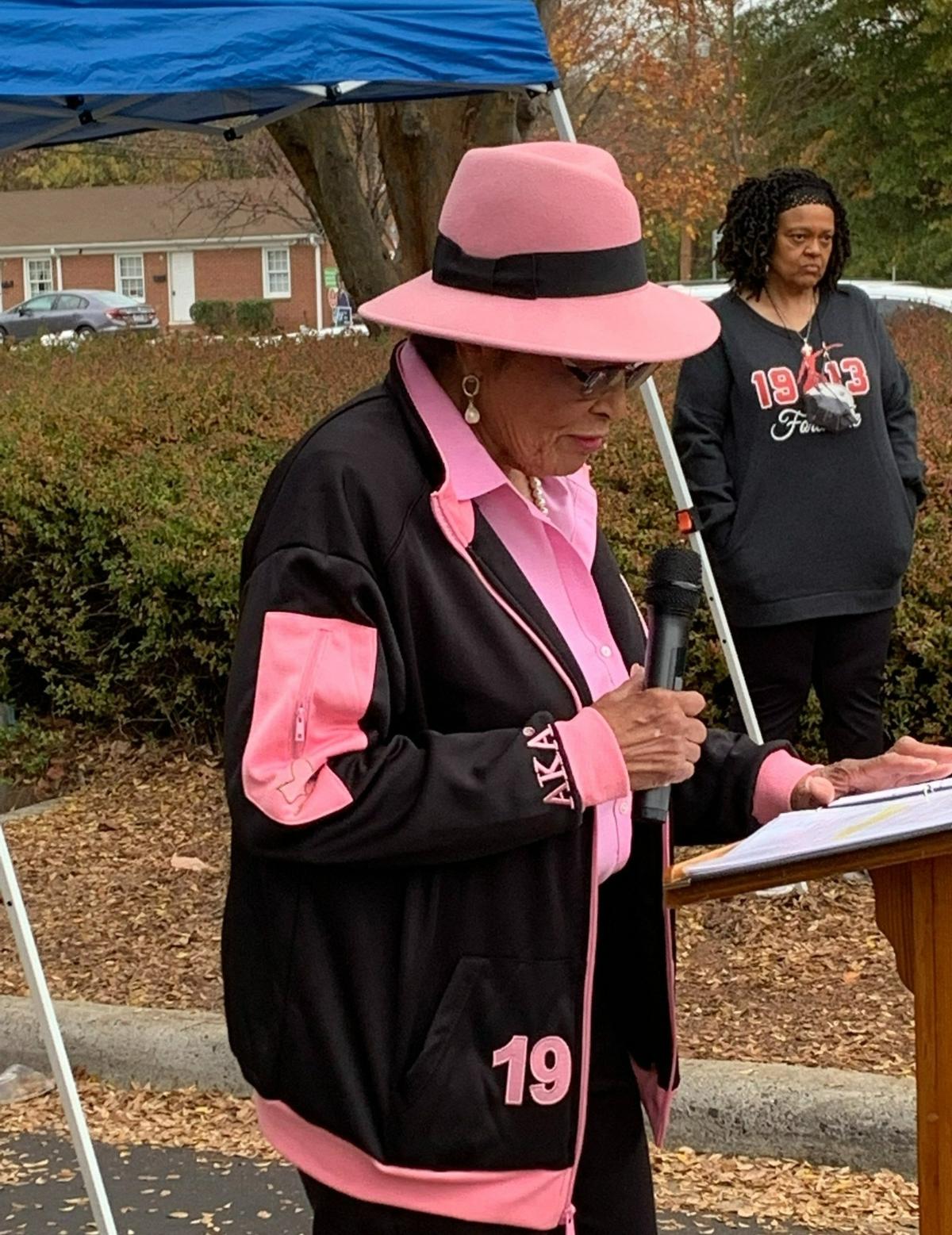
“I know that you remember Jan. 6. Well, I was in Washington on Jan. 6 and I remember that dark and frightening day,” Adams said, recalling the 2021 insurrection at the U.S. Capitol. “And time is winding up, Charlotte. We don’t have much time. We’ve got four days to spread the word that this election is the most consequential election of our lifetime.”
After marching down Beatties Ford Road to the library, an early voting site, local leaders spoke of the importance of voting.
Speakers included: District 4 County Councilman Mark Jerrell, District 2 Charlotte-Mecklenburg School board candidate Monty Witherspoon, District 3 school board candidate Gregory “Dee” Rankin, District 4 school board candidate Stephanie Sneed, District Court Judge Rickye McKoy-Mitchell and North Carolina Rep. Terry Brown.
“When you think about our ancestors and those people who came before us who sacrificed, and many have bled and many have died, to allow us this opportunity that we have today,” Jerrell said to the crowd outside the library. “And for us to squander it as a people, as a community would be shameful. It would be disrespectful to our ancestors.”
Charlotte native Ryan Mitchell attended the march after hearing about it through the National Pan-Hellenic Council, a collaborative council composed of historically African American fraternities and sororities, known as the Divine Nine.
“This is the election that affects us here in our every day lives,” Mitchell said.
Early voting in Mecklenburg County, NC
As of Friday, 185,903 had cast ballots early in Mecklenburg County, either at an early voting site or through absentee by-mail ballots, according to the Mecklenburg County Board of Elections.
Mecklenburg Elections Director Michael Dickerson had a goal of getting half the voting base to the polls this year. As early voting concludes Saturday, about 200,000 more voters will need to hit the polls Tuesday to reach 50% of Mecklenburg’s 800,786 registered voters.
Mail-in ballots exceeded Dickerson’s expectations with 15,821 approved by the board as of Friday, almost 4,000 more than the elections director expected.
Mecklenburg County Democrats, who hold a majority in the local government, have doubled the early voting numbers of Republicans.
So far, 46% who voted early countywide were registered Democrats, 23% were registered Republicans and 31% were unaffiliated.
The most popular early voting precinct so far is the University Area precinct at 9315 N. Tryon St. As of Tuesday, almost 13,000 voters cast ballots at the precinct. Other popular voting sites include:
▪ Cornelius Town Hall — 12,204 voters
▪ South Park Regional Library — 12,027 voters
▪ South County Regional Library — 11,420 voters
▪ Matthews Library — 10,319 voters
Statewide, Generation Z and millennials — ages 18 to 41 — make up 40% of the voting base but less than 15% of voters as of Nov. 1.
Baby boomers (ages 58-78) make up 50.6% of early voters across North Carolina, Generation X (42-57) accounts for 20.2% and the remaining 15.2% of early votes come from the Silent Generation (77-111). The average age of people who have cast a ballot in North Carolina is 61.
This story was originally published November 5, 2022 at 2:18 PM.