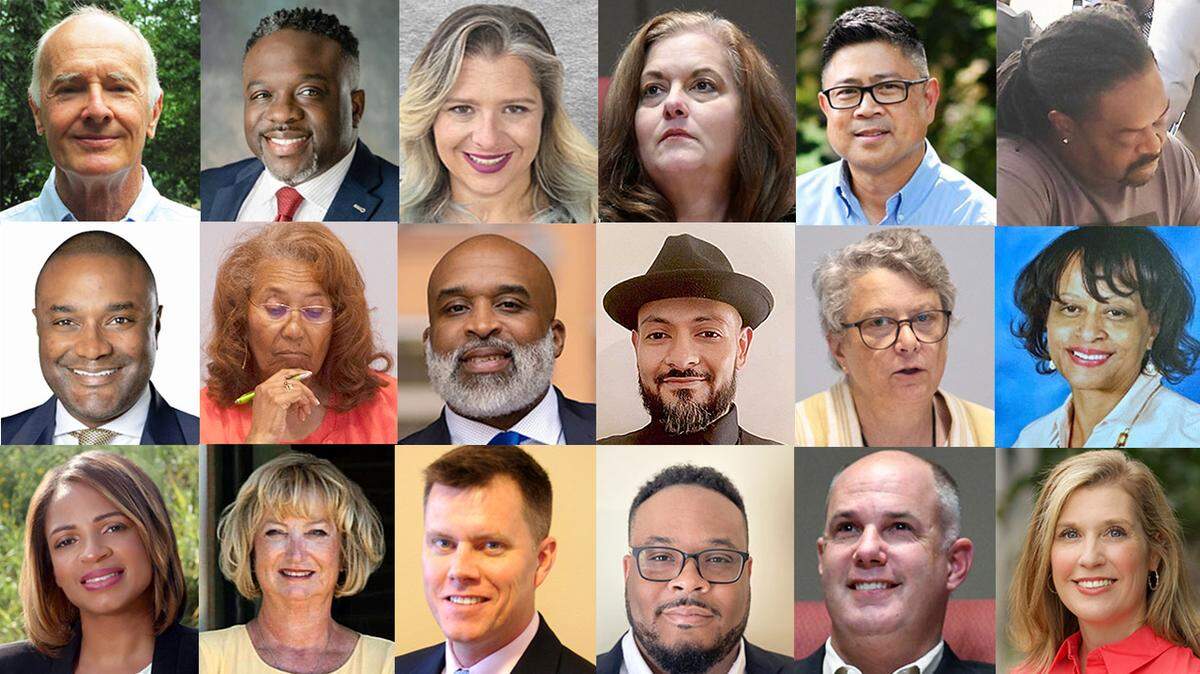
18 candidates seek 6 CMS school board seats. What would they do if elected?
READ MORE
Mecklenburg Voter Guide 2022
Before you cast your vote, use this guide to research what’s on the ballot.
Expand All
Low test scores, achievement gaps and school safety — the agenda of issues facing the Charlotte-Mecklenburg Schools Board of Education is as packed as the races themselves.
All six district seats on the board of education will be contested in the Nov. 8 general election. Four incumbents, former educators, two pastors and political newcomers round out the 18 candidates vying for seats.
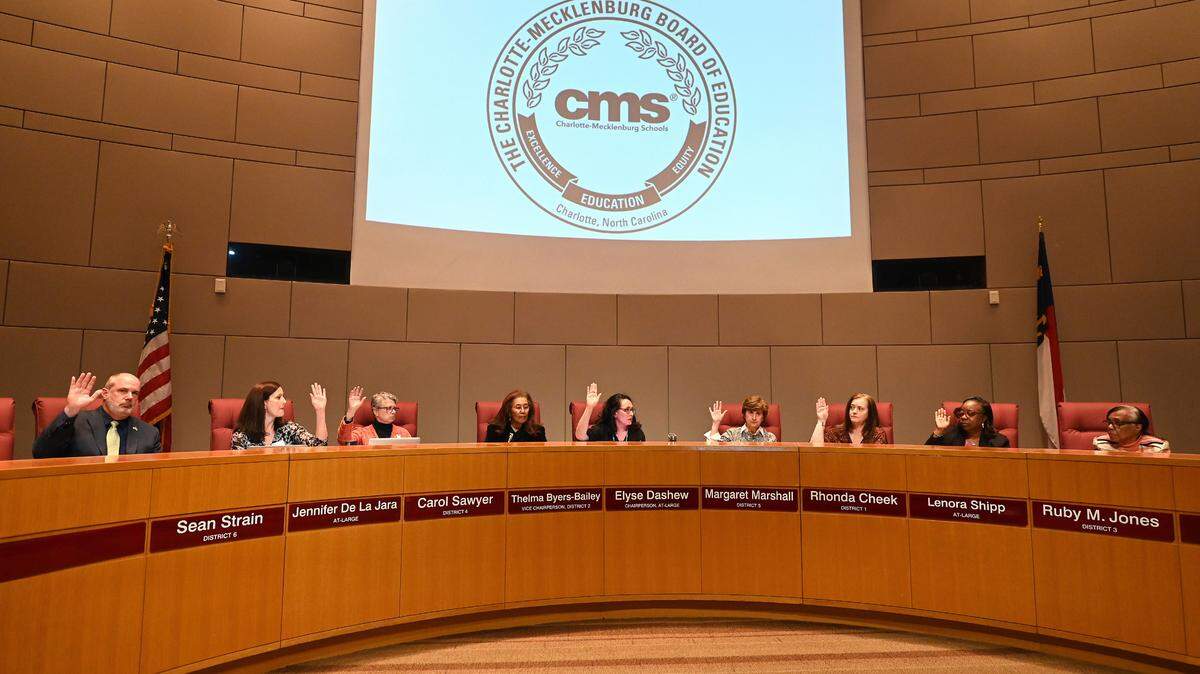
For Charlotte-Mecklenburg Schools district seats, voters pick one person. The at-large seats — held by board chair Elyse Dashew, Jennifer De La Jara and Lenora Shipp — are not up for reelection this cycle.
The challenges awaiting the new board include recruiting and retaining teachers, how to improve dismal test scores across the district — CMS has 50 low-performing schools — and ensuring school campuses are safe.
Perhaps most importantly, the new board will hire a new superintendent.
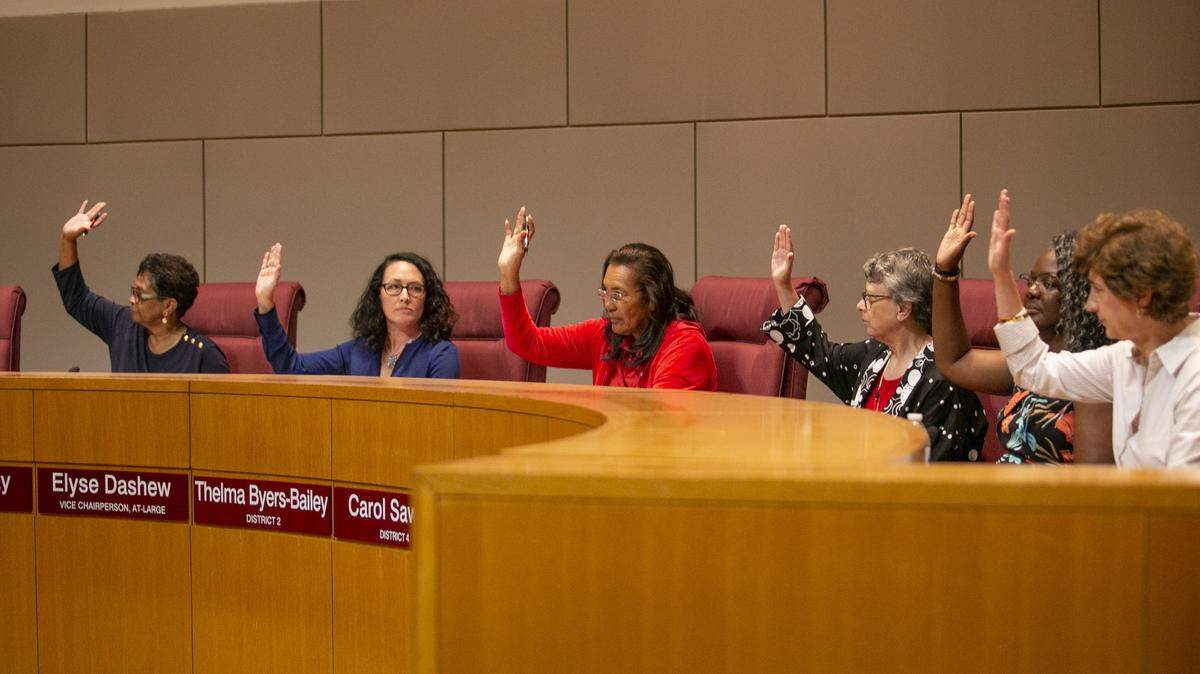
In a 7-2 vote last April, the BOE fired former superintendent Earnest Winston. On the same day, they signed interim Superintendent Hugh Hattabaugh to a one-year contract.
District 1
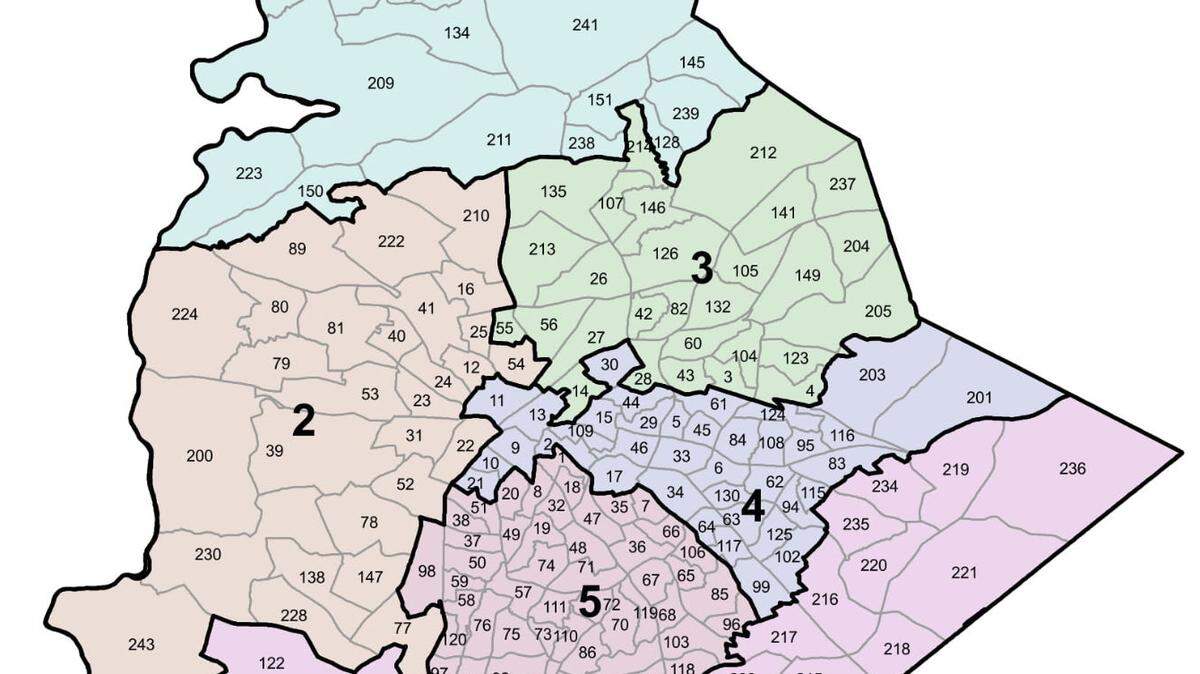
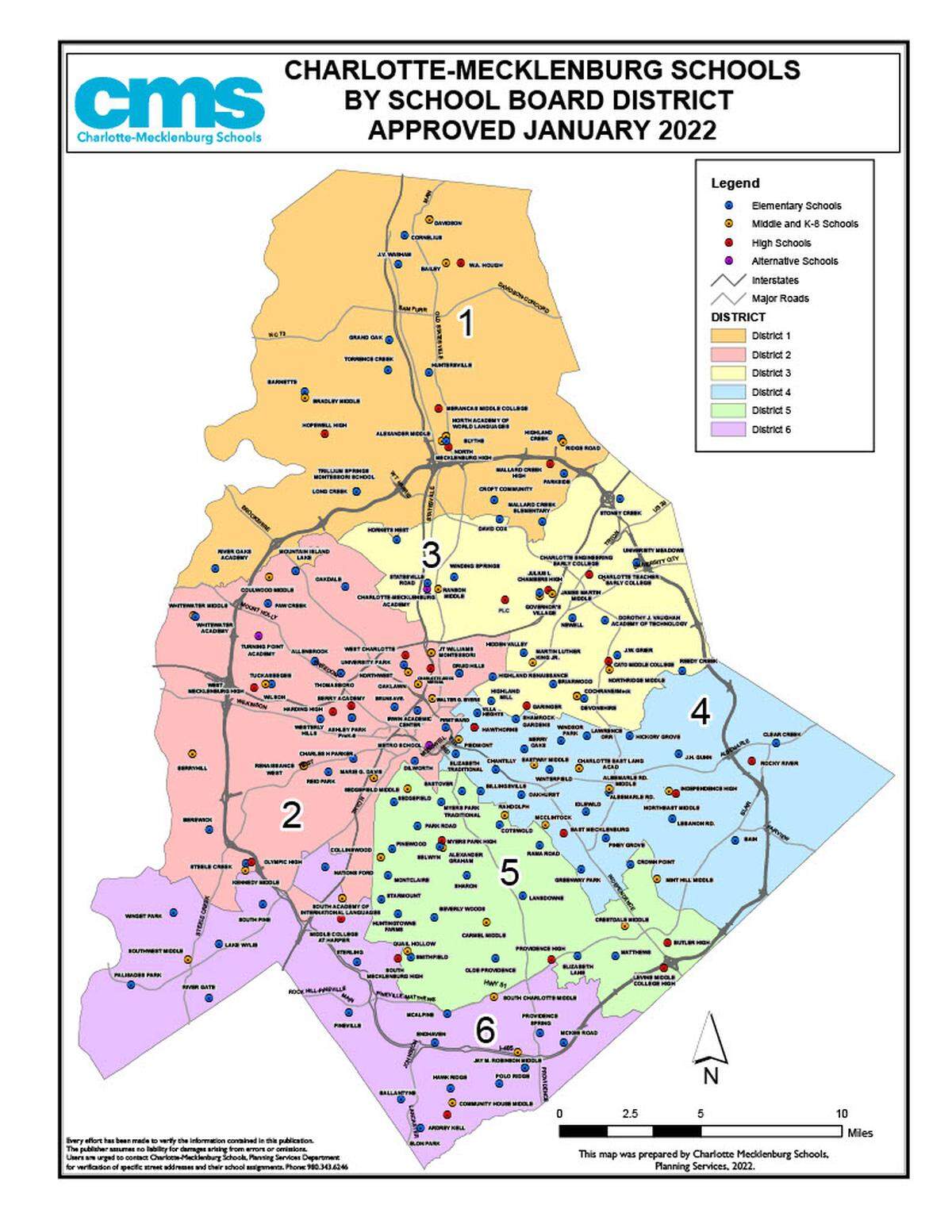
A handful of candidates are vying for this seat, making it the most crowded school board district race in 2022. Northern Mecklenburg County makes up District 1.
The slate includes incumbent Rhonda Cheek, who was elected to the board in 2009. She started Families United for North Mecklenburg Education (FUME) in 2003 and has served on several education-related committees and the board of Charlotte Advocates for Education.
Cheek faces challengers Melissa Easley, Hamani Fisher, Ro Lawsin and Bill Fountain.
Cheek, 61, says her priorities are improving academic outcomes for all students, ensuring safe schools and making sure “we are being good stewards of the taxpayers’ money.”
“Having an experienced and effective representative from District 1 is essential to get the work done,” Cheek said. “We will be hiring a superintendent, reviewing student assignment policies and developing a capital plan. Having a strong, experienced voice on the board, with a history of building relationships and consensus will be essential in representing the needs of CMS.”
Easley, 39, is a new face to the Charlotte political arena. She was an educator for 14 years — 10 of which were in CMS. Easley is the co-founder of North Carolina Teachers United — a pro-public education support and resource group in the state.
“Our focus should be repairing relationships with our teachers, staff and community and bringing equitable resources to our lowest-performing schools,” Easley said.
Fisher, 46, is also a political newcomer. He is a member of Mecklenburg County Task Force to Stop the Violence, member of CMPD Chief Johnny Jennings’ Faith Leaders and Community Roundtable, the senior director of the Young Scholars Summer and Winter Enrichment camps, and helped create the Feast of Freedom Mobile Food Distribution Initiative.
“I have served in the space of education and advocacy for children and families for a very long time,” Fisher said. “I desire to collaboratively work with other board members, community residents and partners to reconstruct a bridge of trust with CMS and construct a system of advocacy that will reflect the educational values of our community.”
Lawsin, 53, and Fountain, 79, are both running for public office for the first time.
Lawsin is the former president of the Filipino American Community Carolinas, former vice president of the NC Asian American Coalition and a member of the Huntersville American Legion.
“I will be the voice and advocate for parents who only want their children to receive a good education in a safe school,” Lawsin said. “Safety, student outcomes and accountability and transparency are my three main issues I will be fighting for.”
Fountain is a frequent speaker at CMS school board meetings about “the invasion of woke culture.” He volunteered as a search and rescue pilot and cadet orientation pilot for the North Carolina Civil Air Patrol and was an Air Force fighter pilot.
“I’m the only candidate challenging the woke culture in our schools,” Fountain said. “Woke is the reason for low performing and unsafe schools. It’s robbing students of self-esteem and purpose. I’ve also managed $100 million programs, taught high school for 10 years, and been a team leader at the Pentagon. I also have demonstrated my concern for CMS’ failures by speaking at the school board meetings for over a year.”
District 2
Incumbent Thelma Byers-Bailey, 79, who was elected to the school board in 2013, will be in a competitive race with minister Monty Witherspoon, 43, and Juanrique Hall, who was a volunteer coach at West Charlotte High. Hall is an outreach worker for the city’s Alternatives to Violence program and helps assess at-risk students and offenders returning from the court system integrate back into the community. Hall has a lengthy criminal record.
District 2 stretches from uptown to the Gaston County line.
Byers-Bailey is president of the Lincoln Heights Neighborhood Association, serves as a member of the Friendship CDC Board of Directors and the African American Community Fund’s Board of Directors. She has served as an after-school math tutor for fourth- and fifth-grade students.
She listed her achievements as including two new replacement schools on a 2017 bond referendum.
“I have advocated for both West Charlotte and Harding to maintain their IB magnets when proposals were to eliminate both or at least choose between them,” Byers-Bailey said. “I have advocated for the re-opening of Lincoln Heights Neighborhood school.”
Witherspoon ran for school board in 2019. He’s running this term because of the disparities in the school district.
“Students who have less at home need more resources at school,” Witherspoon said. “Local governing agencies must work collaboratively to meet students needs both at home and at school. I will be laser-focused on student achievement.”
Hall, 50, says his campaign is built on a simple principle: “serving students not sides.”
“We believe that the key to a student’s success is rooted in an equal partnership between the student, their family, their educators and the administration of their school,” Hall said. “We place a high value on every student in our district. Our campaign’s mission is to destigmatize students with disabilities, support those within the LGBTQ+ community all while respecting the rights and roles of parents in their children’s education.”
District 3
Gregory “Dee” Rankin and Steven Rushing will face off for a district Ruby Jones has represented since 2015 — when she was appointed to serve the unexpired term of District 3 representative Joyce Waddell, who resigned after being elected to the North Carolina Senate. Jones announced this year she would not seek reelection.
District 3 covers parts of northern and eastern Charlotte and extends to the Cabarrus County line.
Rankin, 47, is making his first run for elected office. But he’s the former chair of the Mayor’s Mentoring Alliance, former chair of the Education Committee for the Black Political Caucus of Charlotte Mecklenburg. He’s also a member of the CMS Equity Committee.
“I have been an education advocate for years,” Rankin said. “I have the experience, understand the importance of effective policy, and believe student performance and experience are important in order for students to be successful.”
Rushing, 48, also is running for a public office for the first time. He said CMS achievement gaps can be closed by first removing all distractions from classrooms, including cell phones and making learning fun by bringing back pep rallies and award recognition for students who meet the criteria in both academics and attendance.
“No more of the ‘everyone gets a trophy for just showing up,’” Rushing said.
District 4
Incumbent Carol Sawyer, who’s served District 4 since 2017, is seeking her second term on the board. The 64-year-old previously served on the board’s Equity Committee and is co-founder of the advocacy organizations OneMECK and Mecklenburg ACTS. OneMECK is an alliance of Mecklenburg County organizations and individuals that advocates for equitable access to economic opportunity and housing. Mecklenburg ACTS a coalition that works for equity in all CMS schools.
She now serves as the chair of the board’s Policy Committee.
“I work with staff and my colleagues to ensure that our policies reflect the vision and values of our community,” Sawyer said on her campaign website page. “I don’t want CMS families to face barriers that marginalize and exclude. My mom showed me how can policy transforms institutions and lives. And that’s why I want to continue this work that will make our system stronger, more accountable, and more equitable.”
Sawyer faces Stephanie Sneed, who previously ran for a school board seat, and Clara Kennedy Witherspoon, who is a retired support specialist with CMS and school counselor.
District 4 starts on the east side of I-77 and stretches to the county line in eastern Mecklenburg County.
Sneed, 47, was chair of the Charlotte Black Political Caucus until declaring her run for office.
“District 4 has now become the lowest performing, with 65% of the schools deemed as low performing,” Sneed said. “It is time for new leadership that will have a laser focus on student outcomes and ending educational gaps.”
Witherspoon, 65, says her experience in schools and collaborating with community partners around Charlotte brought value to connecting resources and services for families and children.
“Achievement gaps are linked to equity, equality for all students, and a lack of resources to run an effective school,” Witherspoon said. “Research has shown that a robust implementation of a multi-tiered support system (MTSS) will provide the interventions needed for students needing remediation due to academic skill deficiencies. However, low-performing schools face challenges in implementing the framework due to a lack of resources.”
District 5
Trent Merchant and Lisa Cline will square off after Margaret Marshall, who was elected in 2017, announced she won’t seek reelection.
District 5 encompasses the Myers Park area, Providence High and Matthews.
Merchant, 52, joined what he called a broken CMS board in 2006 and served as an at-large member until 2011. During his stint, CMS won the top national prize for student achievement gains. He’s an executive search consultant who said his work experience will help in the superintendent search.
“I bring unmatched experience and expertise to the role,” Merchant said. “.I am a strong independent voice with broad bipartisan support from numerous leaders. I’m a talent expert who will hire the right superintendent.”
Cline, 62, is a newcomer to public office. She’s a retired educator with more than 39 years of experience in the field.
“I have also been a parent in CMS,” Cline said. “My main focus is about the children, teachers, and parents in CMS. We must look for a major change in the board, not a repeat of what we already have had. I bring that fresh viewpoint.”
District 6
Incumbent Sean Strain, who was elected to the board in 2017, faces newcomers Summer Nunn and Michael Watson.
District 6 covers the southern part of Mecklenburg County.
Strain, 50, serves on four nonprofit executive boards and advisory committees in Mecklenburg County and said he likes using metrics and data analysis when making decisions on the school board.
“(I’m) a consistent voice of reason, voice for students and their futures,” Strain said. “(I have) a track record of service, setting expectations necessarily high and holding individuals, teams and the organization accountable.”
Nunn, 39, works in marketing and says she brings leadership and the ability to drive performance in a large organization.
“Some of the main functions of the board are to pick a superintendent who is going to drive change and managing complex budgets for operating and capital needs,” Nunn said. “I have that experience that is missing today.”
Watson, 41, is an IT executive who has served on various teams and PTAs of a pair of district schools. He also served as a member of the Diversity, Equity and Inclusion Advisory Board for the College of Engineering at the University of Missouri-Columbia.
“It is time for a fresh perspective, I am committed to data driven analysis, creative solutioning and corporate partnership,” Watson said. “I have served extensively on every level of CMS schools and have experience working with parents and administrators alike. I am committed to improving student outcomes district wide.”
This story was originally published October 14, 2022 at 6:00 AM.