Will taxes go down in Mecklenburg County? Here’s what commissioner candidates think
READ MORE
Mecklenburg Voter Guide 2022
Before you cast your vote, use this guide to research what’s on the ballot.
Expand All
Property values are expected to go up, but Mecklenburg County tax rates could go down depending on who’s elected to the Board of Commissioners.
An initial review by the Mecklenburg County Tax Assessor’s Office shows the median value of real estate has increased about 48% since 2019. After the assessor’s office completes a process called revaluation, local officials in 2023 will decide whether the rising value of real estate also brings higher property taxes.
Tax rates set by local governments could be lowered in favor of a revenue-neutral rate — the rate needed to bring in the same amount of money as the previous year’s budget. By law, local governments are required to publish the revenue-neutral rate, but can choose to set it higher.
The Charlotte Observer asked candidates how the revaluation would inform their stance on the tax rate for the 2023-2024 fiscal year, which starts July 1.
Why are property values going up now?
Mecklenburg County completes the revaluation process to redistribute the property tax base fairly and equitably, said Tax Assessor Ken Joyner in an August presentation to the Mecklenburg County Commission. The process also updates property tax valuations to current market levels.
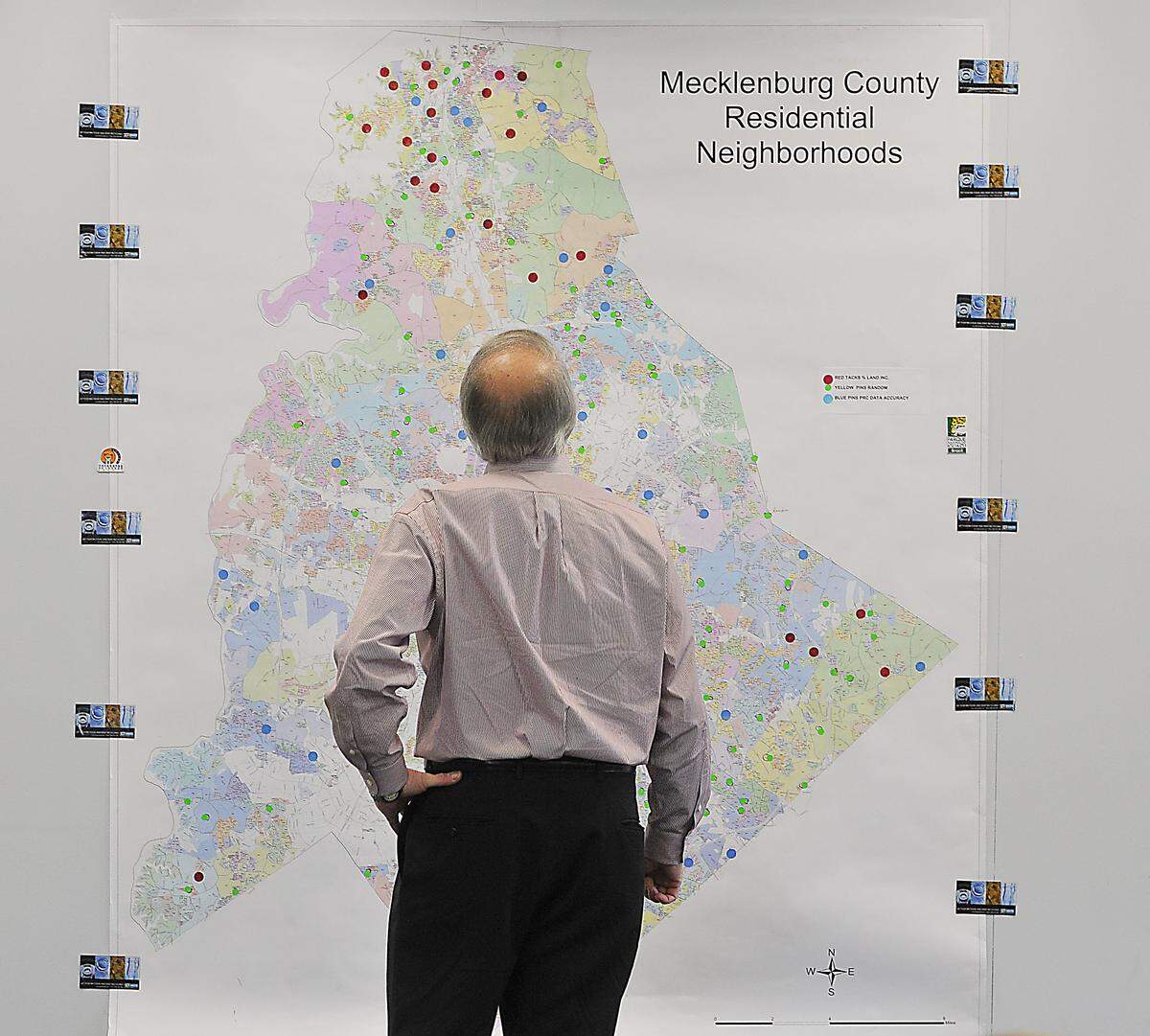
Appraisers visit sites and use a property record card that shows land and building value, the last sale price, when the home was built, how many stories it is and square footage. On some visits, appraisers use a laser or a tape measure to help measure a home’s dimensions.
Appraisers check to make sure information is accurate, sometimes working with the homeowner. They go over thousands of data points to ensure property sales in a neighborhood generally match up with the average price.
A revaluation is not meant to increase property tax revenue, Joyner said, but it could increase property taxes for some people regardless of the rate.
Since the 2019 revaluation, residential property saw a median increase of 48% in value and commercial property saw an increase of around 36%, an initial review showed. Commercial values could change because that review didn’t yet include uptown and parts of South End, Joyner said in August.
Whether your property tax bill goes up depends partially on how much your property appreciated when compared with the average, said Aaron Houck, director of regional policy at the UNC Charlotte Urban Institute.
If local governments choose a revenue-neutral rate, people whose properties appreciated at or below the average county rate will likely not see any increases to the amount they pay in taxes, Houck told the Observer in August.
It’s those who live in neighborhoods with significantly higher rates of appreciation than the average who should expect bill increases — even with local governments lowering the tax rate to revenue-neutral.
Will the tax rate decrease?
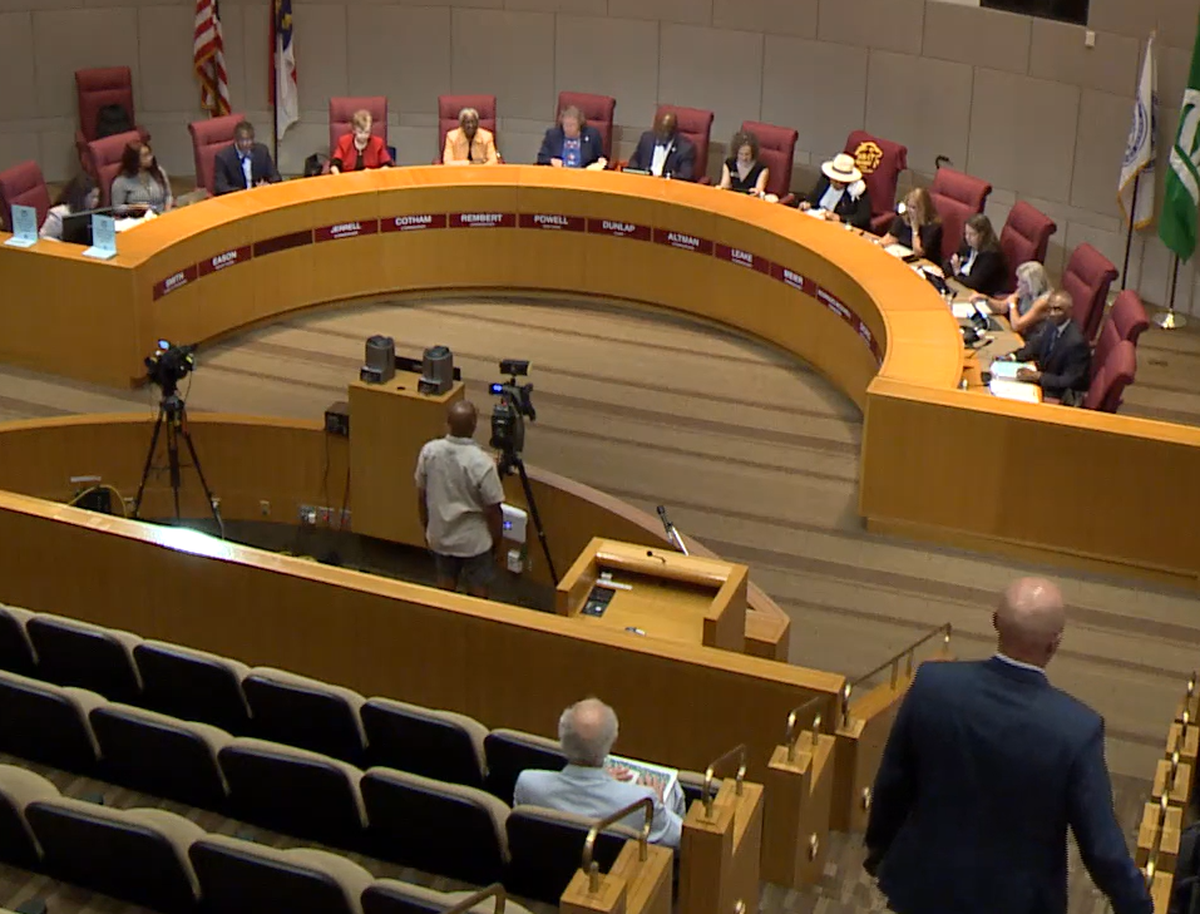
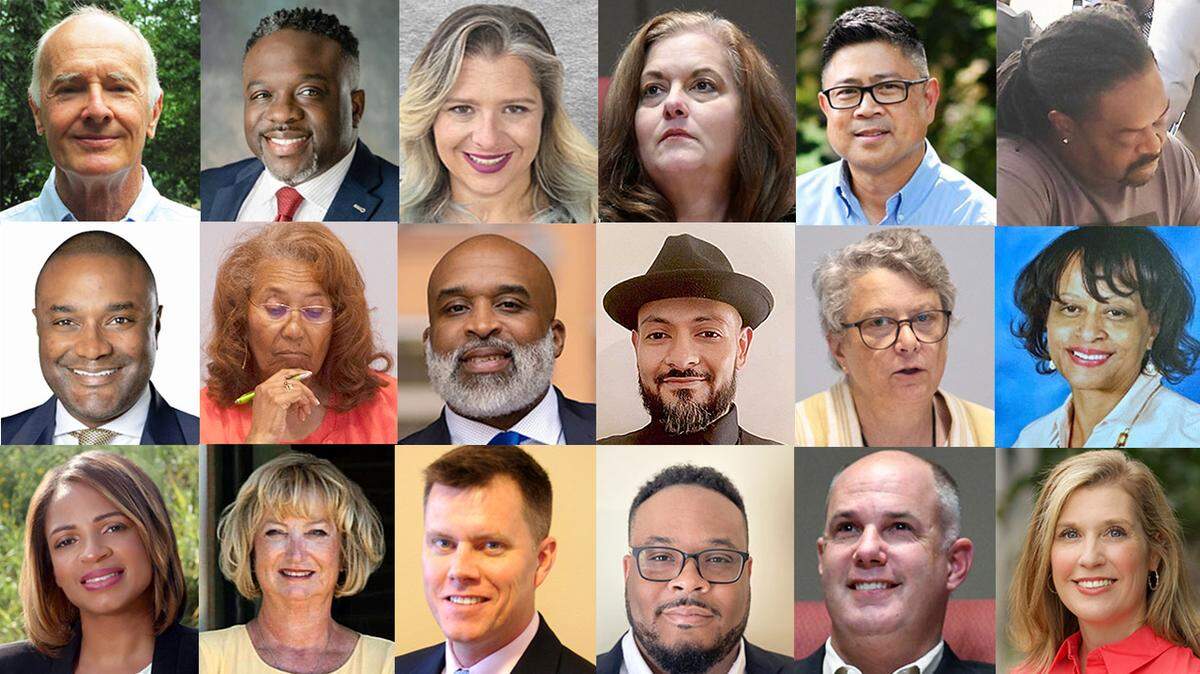
Five candidates explicitly expressed a desire to reduce the property tax rate in their response to a question about revaluation. Four of the five candidates were Republicans.
“Inflation is single largest threat to individual county residents,” said Republican Jeremy Brasch, District 6 candidate. “Individual spending power continues to diminish. A dollar does not go as far as it used to. Now is the time to lower the property tax rate.”
The latest inflation report from the Bureau of Labor Statistics shows consumer prices shooting up 8.3% from August 2021 to August 2022. Driven by the cost of energy and food, consumer prices are the highest they’ve been since the 1980s.
Republican Matthew Ridenhour, running for the District 5 seat, agreed with Brasch, saying he doesn’t want a repeat of the 2011 revaluation — when 12% of property owners appealed their revaluations due to value and tax increases.
Ridenhour, a county commissioner from 2012 to 2018, said he was instrumental in pushing the county to “re-do the reval” in 2012, when Mecklenburg County returned more than $100 million to taxpayers.
“I will use the lessons from 2011 to ensure we have a fair, equitable, and transparent revaluation next year,” Ridenhour said. “Next year the rate must be significantly lowered in order to keep taxes affordable.”
District 1 candidate Republican Ross Monks’ response was similar.
“Unless we take action to reduce property tax rates, home and business owners in Mecklenburg County will face thousands of dollars in additional annual taxes, exacerbating inflation and our affordable housing challenges,” Monks said. “The county must ensure that the property tax rate is reduced to completely offset this imminent financial pressure.”
The 2022 Mecklenburg Community Survey presented to commissioners Tuesday showed 40% of respondents couldn’t find suitable housing for their needs and 32% struggled with a down payment.
The only Republican running at-large, Tatyana Thulien, agreed with those in her party, saying it’s “imperative” commissioners don’t increase taxes and consider reducing them.
But it’s not just Republican candidates pushing to lower the tax rate. At-large incumbent Pat Cotham, a Democrat, said she’s worried, too.
“My starting point is we will likely need to lower the rate so owners can afford their homes and places of business,” Cotham said. “I expect some of my colleagues will disagree.”
2019 revaluation plays a role for some
None of Cotham’s Democratic colleagues explicitly disagreed, but some took a more meticulous approach in their response.
“Although I am not inclined to raise taxes, my approach to the upcoming revaluation would include, but not limited to addressing the county’s priorities, equity to property owners and taxpayers, and limiting the regressive impact on seniors,” said at-large Democratic candidate Arthur Griffin III.
Griffin also pointed out property taxes generate revenue for the county to support services, including Pre-K, parks, environmental protections and health services.
At-large Democratic incumbent Leigh Altman didn’t take a stance on next year’s tax rate. She focused on the objectivity of the revaluation process.
Along with 2011, Mecklenburg County also faced revaluation controversy in 2019. Then, county commissioners switched to a four-year cycle of real estate revaluations instead of eight to ease the burden on property owners after seeing a dramatic spike in property values.
“As we go forward in this process, I will be listening closely to resident feedback to evaluate whether the Tax Assessor’s Office continues to live up to all our expectations for objectivity, fairness, and professionalism,” Altman said.
Democrat Susan Rodriguez-McDowell, District 6 incumbent, said she would use her knowledge from the 2019 revaluation to influence her stance on the tax rate this year.
“The county currently has a large amount of cash reserves, which is a sign of positive fiscal management,” Rodriguez-McDowell said. “This indicates that a stable property tax rate is in order for FY24. I am keenly focused on the financial impact to residents.”
District 1 incumbent Elaine Powell, a Democrat who serves as the board’s vice chair, said she would listen to community input and carefully review the county manager’s recommendation on the tax rate.
Republican Ray Fuentes running for the District 4 seat also didn’t say if he was in favor of lowering the tax rate, but that he understood the financial stressors on residents.
“Our families and businesses need time and stability to recover from COVID and inflation. Families are suffering, especially our elderly, our poor and our minority families. I see, hear and feel their anguish,” Fuentes said. “Property taxes are hidden in everything we eat, drink, wear, buy, rent or own. No one is exempt.”
Other candidates responses
Republican candidate Dianna Benson, running for District 3, kept it short: “No to little increase.”
District 3 incumbent George Dunlap, a Democrat serving as the county commission chair, said it would be unwise to predict his stance.
“There are too many factors to consider when deciding what the rate should be, such as the growth of the county, community needs, as well as the needs of CMS, the public library, the Sheriff’s office; all funded by the county,” Dunlap said. “I will say that over the years Mecklenburg County has not raised taxes between revaluations, once the tax rate has been adopted.”
District 4 incumbent, Democrat Mark Jerrell, said his priority is fairness and equity.
“My approach to revaluation includes educating property owners of the goal of revaluation, which is to distribute the overall tax burden in a way that is fair and equitable, to inform property owners of their rights and ensuring consistency and transparency,” Jerrell said.
Like her opponent Ridenhour, District 5 incumbent Laura Meier mentioned inflation and a potential future recession.
“Before we put more of a burden on our residents, we should first look at utilizing some of our fund balance, which is money the people of Mecklenburg County expect us to use for the services we should be providing, such as more investments in affordable housing, education, mental health and green space,” Meier said.
This story was originally published October 12, 2022 at 6:00 AM.