Mecklenburg’s Black voters neglected in 2024 Democratic plans, some precinct chairs say
Mecklenburg Democratic Party leadership failed to heed warnings about lackluster grassroots organizing in communities with large numbers of Black voters, which thwarted efforts to boost turnout, some precinct chairs say.
Party leadership says a change in organizing strategy doesn’t mean communities of color are going ignored.
Earlier in election season, local Democrats expressed optimism Mecklenburg could turn around its traditionally low turnout in 2024 with new leadership, outreach and record fundraising. But the heavily Democratic area once again trailed the rest of North Carolina in turnout as the battleground state once again voted Republican in the presidential election.
A trio of Mecklenburg Democrat precinct chairs, volunteers responsible for organizing and energizing voters assigned to certain polling places, told The Charlotte Observer they repeatedly raised concerns to party leaders about the need for more organizing, especially in precincts with a large population of Black voters. They were met with “indifference” and opposition that prevented them from fully mobilizing their turnout efforts, the precinct chairs said.
“Organized precincts have much greater interaction with voters and tend to have higher turnout than unorganized precincts,” said Tanya Lewis, who chairs a precinct in east-central Charlotte.
The precinct chairs claimed party leaders aren’t interested in stronger precincts because that could lead to more people vying for their leadership positions.
“There’s an arrogance and a privilege, and it is to preserve the current power infrastructure. There’s this lip service to inclusion, but it’s only an inclusion that keeps the status quo,” Lewis said.
Their comments came days after the party made news with the resignation of its executive director, who alleged she faced “intolerable” working conditions.
Party Chairman Drew Kromer pushed back on the precinct chairs’ claims, saying the party is focused on advancing new strategies for organizing and outreach.
Mecklenburg Democrats 2024 strategy
Kromer, who was elected in 2023, told the Observer when he took office his key goals were to increase the party’s community presence and increase fundraising to pay for an executive director and additional staff to “professionalize” the party.
The party succeeded in flipping local seats in north Mecklenburg in 2023 and brought on 23 paid employees in 2024, the Observer reported previously. It also launched a Latino outreach campaign, Mecklenburg Unidos.
Shortly before Election Day, the party boasted about raising more than $1.8 million from July through mid-October and about $2.7 million for the entire 2024 election cycle, “shattering all records for Democratic county party fundraising in North Carolina.”
But county turnout still lagged statewide levels: 73.09% statewide vs. 69.65% in Mecklenburg. Another Democratic stronghold and population center, Wake County, surpassed statewide levels with 75.69% turnout. Preliminary early voting data showed an almost 40% drop in Black turnout statewide, though the State Board of Elections has not yet released a complete demographic breakdown of voter turnout in the general election.
The county party’s executive director, Monifa Drayton, resigned just days after the election. In a letter, first reported by Axios Charlotte, Drayton compared her experience to that of “professional Black women during the Jim Crow era.”
In a previous statement on Drayton’s exit, Mecklenburg Democrats said the party doesn’t comment publicly on personnel matters but “remains steadfastly committed to the principles of a diverse workforce and opportunity for all people.”
‘Indifference’ to concerns about precinct-level organizing
Lewis, who moved to the area in 2017, said she had positive experiences with the Mecklenburg Democratic Party in Huntersville. Things changed when she moved to Charlotte and took over her current precinct. She was disheartened to see how many of Mecklenburg’s nearly 200 precincts lacked leadership actively working in their areas, especially in “majority minority” communities.
“It’s the African-American electorate in Mecklenburg County that has been disenfranchised,” she said.
Lewis said she’s “frustrated” and at times “extremely angry” with “indifference” from party leaders when she and other precinct chairs raised their concerns and asked for additional support and funding. She said Kromer, who cut his teeth in the Davidson area, is rigidly committed to strategies that worked in north Mecklenburg and won’t hear arguments about how those strategies don’t work as well in more diverse communities.
“In some respects, it’s Trumpian,” she said.
Precinct chair Janice Robinson, who lives in the Ballantyne area and got involved in county politics after the 2016 election, became more interested in precinct-level organizing after success increasing Democratic turnout in her south Charlotte precinct. She contacted party leadership about working with more precincts to replicate the success but says she faced “barriers” getting funding and institutional support.
S.Y. Mason-Watson, the first vice president of Mecklenburg Democrats’ African American Caucus and a precinct chair, described working with current party leadership as “challenging.”
The caucus laid out a plan years ago to lead organizing precincts where 30% or more of the voters are Black, she said, but has “not received appropriate funding.”
“We have met with some resistance to our efforts,” she said.
Kromer said the county party follows state party rules about allowing the African American Caucus to approve and/or recommend precinct officers for areas that fall within the 30% or more parameter.
“It’s a two-way street as far as I’m concerned,” he said.
He contended the party also made significant investments in appealing to Black voters this election cycle, including opening an office on Beatties Ford Road and donating to the Black Political Caucus of Charlotte-Mecklenburg.
Kromer noted his rise in Democratic politics began with precinct-level organizing, but he doesn’t believe its an effective strategy for all of Mecklenburg due to its size. Under his leadership, the party chose instead to break up the county into 22 “area groups” based on established communities, a plan Kromer said led to more neighborhood events and record volunteer turnout in some areas.
The number of organized precincts has increased from 128 to 134 since Kromer took office, he said, including 41 African American precincts, up from 34.
“The party historically has not had success with precincts themselves being a vehicle by which turnout is increased,” he said. “... We have, for strategic reasons, decided to take a different approach.”
The precinct chairs who spoke to the Observer say party leaders have little incentive to encourage stronger precinct-level leadership because those chairs could then seek higher office.
“It’s really all about power,” Lewis said.
Kromer called the chairs’ claims about party leadership trying to keep power “ridiculous.”
“Anybody is welcome to run against me for whatever they like,” he said.
Will 2024 defeats change Democratic strategy in NC?
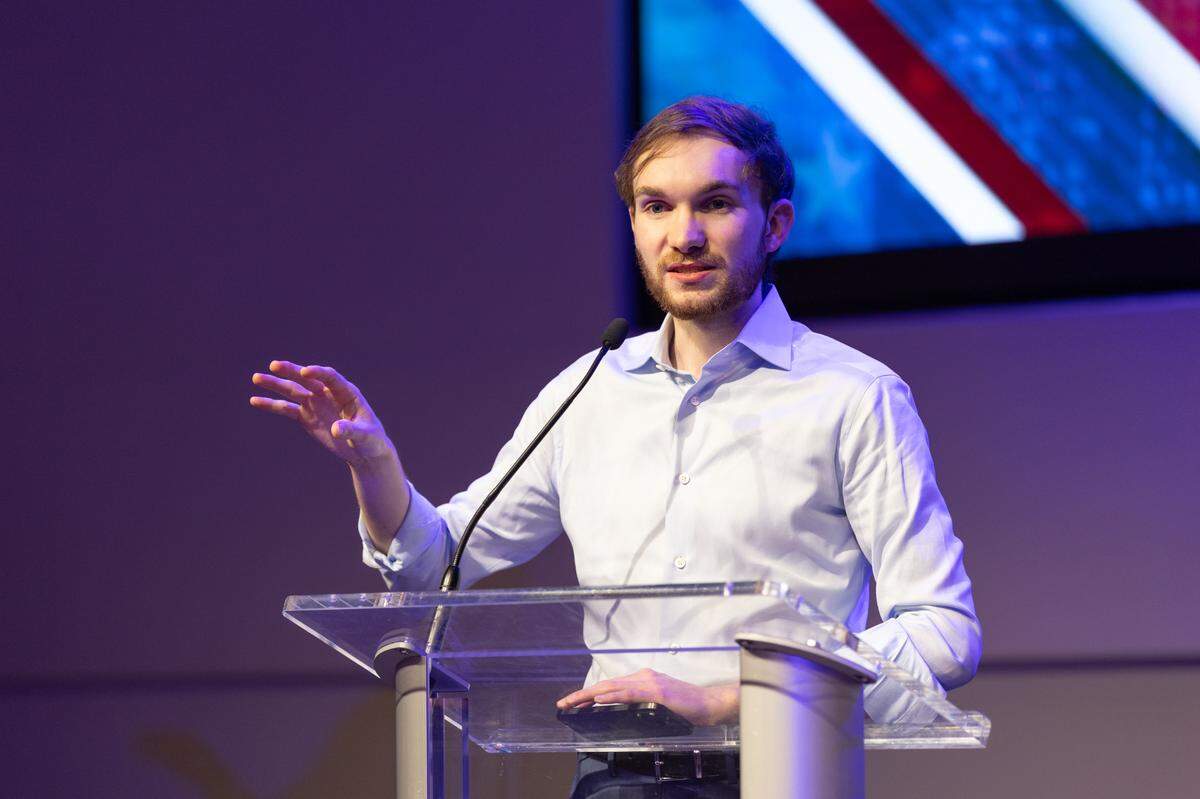
Lewis said the lack of organizing in African-American precincts leads to apathy or even anger towards Democrats in the Black community who tell her they feel taken for granted.
She “hopes” the 2024 turnout numbers and Democrats’ failure to flip the state in the presidential election will serve as a wake-up call for party leaders to reevaluate strategies and behaviors.
It’s frustrating, Lewis added, to see the local and state parties bring in “consultants” who put an emphasis on courting other voting blocs, such as white suburban women, but don’t appear to be concerned about appealing to or energizing the party’s African-American base.
“Black people are not in the room,” she said.
Mason-Watson said repairing damage in the African American community and increasing excitement about Democratic candidates will take around-the-clock outreach — not just reaching out close to an election.
She wants to see county leadership “prepared and willing to sit down with a vast number of community members to listen first and foremost, and to listen to the concerns and the proposed recommendations and strategies that we believe will be successful.”
Kromer said it’s difficult to assess the party’s performance in 2024 without having more comprehensive voter turnout data but that he wants to avoid a “circular firing squad” among Democrats disappointed by Harris’ loss. That data will be released once election results are finalized.
“I can’t, with any level of credibility, say what the impact was or wasn’t (of 2024 strategy) and how we might change our approach going to the next cycle,” he said. “What I can tell you is that we continue to be dedicated to increasing turnout all across the county.”
Kromer said he wants “to support and enable” any strategies that will increase turnout.
“What we’ve seen from the national results is that the party has a lot of work to do to connect with voters and to ensure that our candidates can win up and down the ballot,” he said.
This story was originally published November 14, 2024 at 5:00 AM.