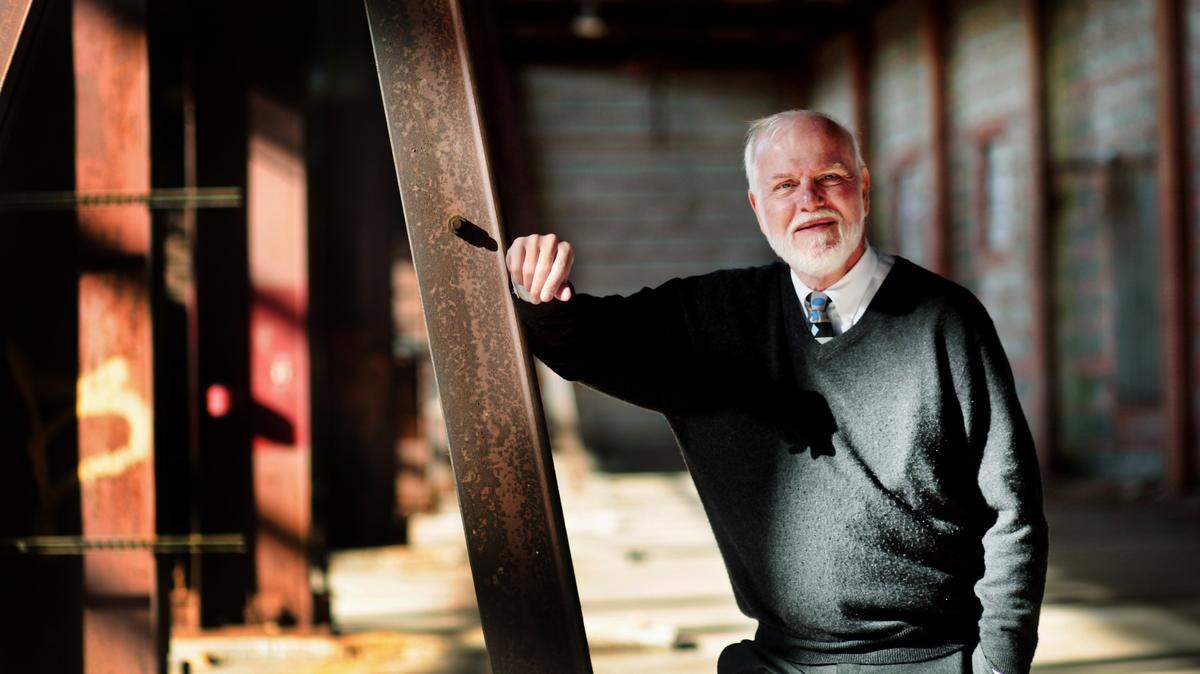
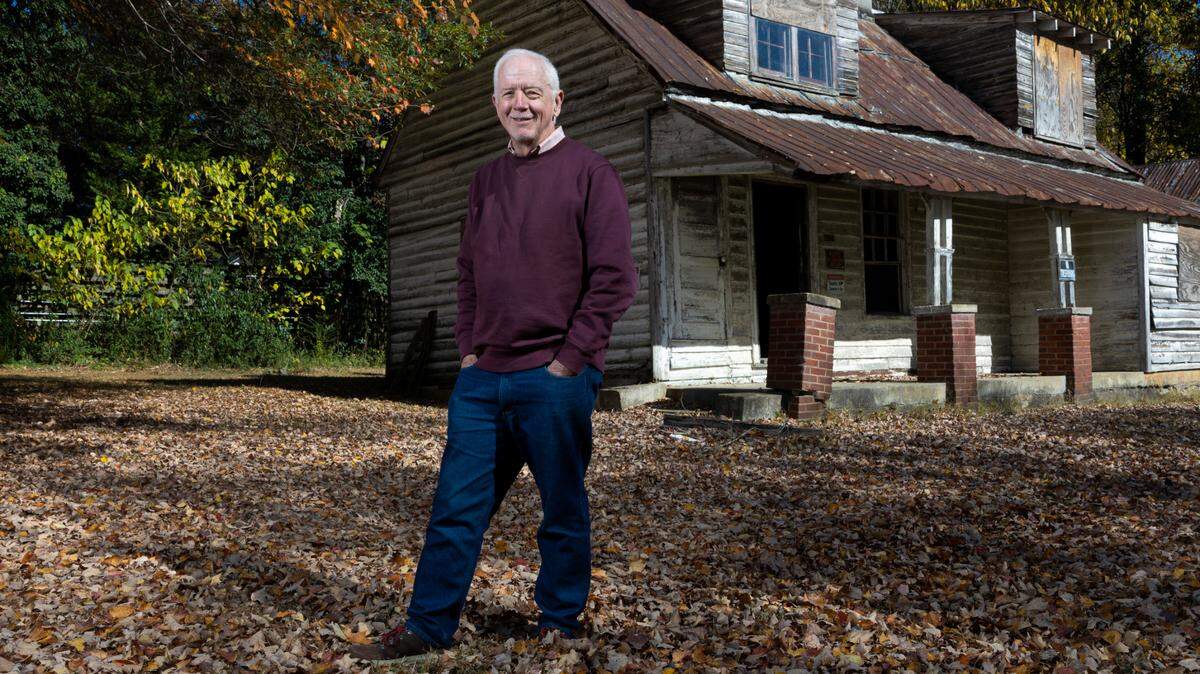
Longtime Triangle developer made dreams come true. Now, he’s Tar Heel of the Year.
READ MORE
The News & Observer’s Tar Heel of the Year
The News & Observer recognizes North Carolina residents who have made significant contributions in the last year and beyond. These people have made a difference in our region, state and elsewhere. Here are our stories.
Expand All
In the 1970s, the City of Raleigh created a nonprofit called Downtown Housing Improvement Corp. to fix up run-down houses and build new ones in older neighborhoods surrounding downtown.
For a decade or so, it was the closest thing the city had to a housing department.
Then the city decided to create its own housing department, taking on not only Downtown Housing Improvement Corp.’s mission but also many of its employees. In 1985, Downtown Housing Improvement faced an uncertain future with a staff of only two, including its new, 35-year-old executive director, Gregg Warren.
Rather than muddle on, Warren decided to scale up. Instead of single-family homes here and there, Downtown Housing Improvement began to build apartments, using low-interest loans, grants and federal low-income housing tax credits to keep them affordable. And it branched out, building homes and apartments for low-income families in other parts of Raleigh and outside the city.
The organization has built or rehabbed more than 400 single-family homes and owns 2,700 apartments in 44 complexes it has developed over the years. Having long ago transcended its downtown origins, the group now known as DHIC has built and owns homes in eight counties, most of them in the Triangle, but also in Bayboro and Williamston, Greenville and Southern Pines and in Kannapolis near Charlotte.
DHIC’s growth has all come under Warren, but starting next year the organization will have to carry on without him. After 34 years with DHIC, and 11 years working in housing before that, he will retire in March.
Warren’s long commitment to affordable housing is why The News & Observer chose him as its Tar Heel of the Year. The honor comes as the need for housing affordability has emerged as a top issue in the Triangle, and concerns arise about gentrification displacing existing residents. Voters in Durham just approved a $95 million bond for affordable housing, and Raleigh’s new City Council is expected to put a bond before voters as well.
“I think there’s an understanding that growth in our region is dependent on many who don’t earn a lot of great wages,” Warren says. “And I think that if we can’t deal with the wage issue, perhaps at least we can make some impact with the housing cost issue, which is the largest single cost that people typically incur.”
People who have worked with Warren over the years describe him as an astute businessman with a passion for helping people of modest means.
“He’s tenacious. Smart. He knows what he’s doing,” said new Raleigh Mayor Mary-Ann Baldwin, who was a liaison to DHIC during a previous stint on the City Council. “And he really has a heart for what he does. It’s like all these great management qualities combined with the right heart.”
Warren, 70, says he has dedicated his career to affordable housing partly because of the idealism and desire to help people he embraced as a college student in the late 1960s and early 1970s. But that’s only part of it. He also loves being a developer.
“We come up with the development concepts. We prepare insanely complicated finance schemes to get them built, which I enjoy doing,” he says. “It’s fun to negotiate. It’s fun to convince a lot of other people to finance our vision and dreams. We get to hire the architects and finally watch the development come out of the ground. I love building things.”
Warren knows he could have built housing with any number of for-profit development companies. But that just wasn’t part of his DNA, he says.
“I really wanted to stay in the nonprofit world,” he says. “I love being a developer with a white hat.”
A planner is born
Warren was born and raised in Toledo, Ohio, where his father worked as an engineer for a glass company. When Warren went off to college, at Ohio University, he considered following in his father’s footsteps.
But after a few false starts, he took a year off to work for a construction company in Hawaii, where he was alarmed at what development was doing to the islands. He returned to Ohio University determined to become a planner.
He applied to UNC-Chapel Hill for graduate school, because the city and regional planning department had a good reputation. He knew little about the South and thought it would be an interesting place to live before heading back to his native “Rust Belt.” On his first day of classes, he met his future wife, Debby.
“She was probably the most highly recruited individual in the planning program, coming from the University of Chicago,” he says. “And me from Toledo, probably the last one on the waiting list admitted to the planning program.”
The couple set out to work for social and economic change together. Debby Warren, who now runs a consulting firm for nonprofits, was named a News & Observer Tar Heel of the Week in 1990 for her economic development work with the N.C. Legal Services Resource Center, now known as the N.C. Justice Center. Gregg Warren himself was a Tar Heel of the Week in 2004.
One of the Warrens’ first projects was the Pittsboro Herald, the fledgling community newspaper that they and some friends took over in 1974. Debby served as editor, and Gregg pitched in while working as a regional planner for the Triangle J Council of Governments, which helps governments in a seven-county region plan for growth.
While at Triangle J, Warren asked Chatham County commissioners if they would consider creating a housing authority to take advantage of federal grants. They did and asked if he would be its executive director.
Rescuing a mill village
In his new role, Warren approached John London, the owner of the cotton mill in the village of Bynum, where the modest worker housing had become dilapidated and a burden. The Warrens lived across the street from London in Pittsboro.
“We were the people running the newspaper,” he said. “And he thought we were just the craziest radical communist hippies that he ever knew.”
The housing authority bought and fixed up 44 houses in Bynum, replacing outdoor privies with indoor plumbing. The community’s water system was hooked up to the town of Pittsboro’s system, and the state was persuaded to take over and fix the streets. Then the housing authority sold the houses to the people living in them for an average of $7,500, Warren says.
In Raleigh, Downtown Housing Improvement did similar work of fixing up old substandard housing for those who couldn’t afford to do it themselves.
But the nature of the affordable housing problem has changed; instead of substandard housing, now it’s an affordability problem. As population growth drives up the demand for housing, the cost has risen and often exceeds the ability of low- and even middle-income people to pay.
The median sales price for a home in the Triangle was $279,900 in November, up 3.7% from last year, according to Triangle MLS listing service. The average sales price was $321,142 that same month, up 3.9%.
“We’re still relatively affordable compared to our peer group of Austin and Nashville and Atlanta,” says Gordon Grubb, a DHIC board member and head of Grubb Ventures, which develops office and residential properties. “But we need to get out in the forefront, because with the gentrification we’re seeing in Southeast Raleigh, people are clearly getting displaced, and that is a concern.”
The demand for affordable housing is evident when DHIC opens up a new project, Warren says.
When DHIC began taking applications for Greenfield Place, an 80-unit apartment complex that opened in Chapel Hill last year, all the homes were spoken for in a few hours, he says. At Washington Terrace in Raleigh, the line began forming at 3 a.m. on the March day DHIC began taking applications for 72 apartments for seniors. DHIC stopped taking applications at 11 a.m.
‘How could you be against something like that?’
Even developers with white hats can draw people’s ire sometimes. Not only does DHIC bring change to neighborhoods where it builds apartments, but the notion of affordable housing prompts some people to imagine crowded tenement buildings or austere public housing complexes.
Baldwin remembers opposition from nearby residents when DHIC proposed redeveloping the Water Garden, an 11-acre campus off Glenwood Avenue once owned by landscape architect Dick Bell. DHIC built 60 apartments for families making 60 percent or less of the area median income ($45,480 for a family of four when the homes were finished in 2014) followed by 88 apartments for seniors.
In addition to a playground and laundry rooms at Water Garden Village and Water Garden Park, there’s a community building, fitness centers, computer labs and a swimming pool.
“People were against that project when it came up,” Baldwin said. “When you see what’s there now, how could you be against something like that?”
DHIC’s response to concerns about its projects is to encourage people to look at what it has built in the past, Warren says. To help assure that its rental properties don’t become run down, DHIC doesn’t sell them, in contrast to many for-profit builders of low-cost housing.
One of the first projects DHIC took on under Warren was Jeffries Ridge, 32 apartments off Poole Road near Raleigh Boulevard finished in 1989. Warren says DHIC just spent $1 million on renovations at Jeffries Ridge, including new windows, siding, roofs, kitchens and HVAC systems.
Danny Coleman, a community activist in Southeast Raleigh who has followed Warren’s work from the beginning, says the quality of DHIC homes and apartment complexes has helped calm opposition.
“Gregg always, always had a nice-looking product,” Coleman said. “Because of that, his products were more acceptable in communities that might otherwise not have accepted them.”
DHIC builds partnerships
DHIC rarely builds anything on its own. Most of its projects are done in partnership with local governments or other nonprofits.
This month, DHIC and The Presbyterian Homes Inc., a nonprofit that operates homes for seniors, announced plans to build apartments on a former church property on Raleigh’s New Bern Avenue, their second joint venture.
That same day, Warren joined Chapel Hill Mayor Pam Hemminger at an open house at Greenfield Commons, a 69-unit apartment for seniors completed this year. Chapel Hill invited DHIC to build both Greenfield projects on land the town had once reserved for a cemetery and provided $1.3 million to help get them started.
The City of Raleigh is helping finance the redevelopment of Washington Terrace, which will be the largest project in DHIC’s history. The 23-acre apartment complex off Raleigh Boulevard, near St. Augustine’s University, was built for middle-class African-Americans in the segregated Raleigh of the 1950s, but had become worn as it passed through a series of private owners.
The city granted DHIC $8.6 million to help build 162 apartments at Washington Terrace and made a low-interest loan of $2.2 million for Booker Park North, 72 apartments for seniors there. Altogether, the first phases of Washington Terrace cost $44.6 million to build, with low-interest loans and grants coming from a dozen different sources.
Warren and his team have become experts at cobbling together financing like this, said Grubb, who contrasts it with what he does as a private developer.
“It’s more complex than what I do,” he said. “And I feel like what I do is very complex.”
Washington Terrace includes a day-care center, operated by Methodist Home for Children, and a community building, with on-site management, fitness and laundry rooms and space for classes and other events. The apartment buildings — more than a dozen of them — vary in size and design, something Warren insisted on, said Jeff Davis, founder of JDavis Architects, the firm that designed them.
“One of the things about affordable housing is that the rules are very, very strict,” said Davis, who has worked with DHIC since Jeffries Ridge in the late 1980s. “And there’s a tendency to just fall into old habits and design things the way you design them because it’s the path of least resistance, and the budgets are really, really challenging.”
Warren doesn’t want any of DHIC’s properties to look like affordable housing projects. But at Washington Terrace, he told the architects at JDavis that he was looking for a “signature development,” Davis said.
“When he saw that they were starting to drift toward old formulas, he was incredibly emphatic,” he said.
The redevelopment of Washington Terrace created some anxiety in East Raleigh. Existing residents worried about losing their homes when the old complex was razed. DHIC promised no one would be forced to leave and moved some residents to one section of the older homes while the first phases were built, then moved them into their new apartments.
“They kept their word,” said Octavia Rainey, who heads the citizens advisory council for the neighborhood.
Rainey said there also was concern that North Fisher Street, which runs through the center of Washington Terrace, would be connected to Delany Drive, a street lined with single-family homes. Residents there worried there would be too much traffic, she said, so DHIC arranged to have a traffic island built to prevent through traffic between the two streets.
“They had a lot of discussion,” Rainey said. “Gregg Warren, he was a gentleman during the whole debate. That is very unique in this day and time.”
Leaving DHIC in great hands
Warren doesn’t look 70.
“It’s the hair,” he says, and though receding a bit, it does, indeed, retain its dark color. But he is also trim, the result, perhaps, of a lifetime of cycling. He also owns two motorcycles that he likes to ride, and a sailboat and camper he hopes to make more use of when he retires.
Since 2000, the Warrens have had an old farmhouse on 10 acres near Meadows of Dan in Southwest Virginia that they visit on weekends. But they also like to travel, including a motorcycle trip around South Africa with a group of friends last winter that included hiking, camping, wineries, safaris and something a little more daring.
“I didn’t expect to see a video of him bungee jumping off a bridge,” says Beth Voltz, an attorney who heads DHIC’s board of directors.
Voltz says DHIC has begun a national search for a new executive director, but probably won’t find someone with all the experience and skills Warren has.
“I don’t think there is replacing Gregg,” she said. “Gregg has just been the face and the voice and guiding hand of this organization. We’re not going to find another Gregg Warren. He is unique.”
Warren doesn’t have any grand plans for retirement, except to cycle more often and try to persuade his wife to retire, too. He recently agreed to join the Raleigh Housing Authority board and expects to remain active in the community, though probably not with DHIC unless he’s asked.
“I think I am leaving DHIC in great hands,” he said. “We have a great staff right now. We have a great pipeline of developments underway, and we’re financially strong. That to me is the gift that I will give to my successor.”
Tar Heel of the Year: Gregg Warren
Occupation: Executive director, DHIC
Age: 70
Hometown: Toledo, Ohio
Family: Wife, Debby Warren, who heads a consulting firm for nonprofits; daughter Louisa, director of State Strategies and Engagement at the Center on Budget and Policy Priorities, and son Roberto, a student at Wake Tech.
Education: Bachelor’s in general studies, Ohio University, 1971; master’s in city and regional planning, UNC-Chapel Hill, 1974.
Accomplishments: Has led DHIC, a regional affordable housing nonprofit based in Raleigh, for 34 years. Was also a regional planner for the Triangle J Council of Governments, the first executive director of the Chatham Housing Authority and worked for the N.C. Division of Community Assistance.
Tar Heel of the Year Finalists, 2019
▪ J. Cole, Grammy-nominated rapper and CEO of the Dreamville label, who brought 40,000 people to Raleigh’s Dix Park for the inaugural Dreamville Festival
▪ Sandi Macdonald, president and CEO of the North Carolina Symphony, who has helped triple its endowment, improve its performance venue and grow the number of educational programs for students in preschool through college.
▪ Bob Phillips, executive director, Common Cause of North Carolina, who has led anti-gerrymandering efforts in North Carolina, leading to transparency in how voting districts are created
▪ Tim Sweeney, founder and CEO of Cary-based Epic Games, which created the “Fortnite” video game. The company has a valuation of $15 billion. Sweeney has used his considerable personal wealth to preserve thousands of acres of forestland across North Carolina.
2019 Tar Heels of the Month
This year, we highlighted newsmakers and people making a difference each month. They were considered nominees for Tar Heel of the Year.
January: Maggie Kane, founder and executive director of A Place at the Table, Raleigh’s first pay-what-you-can cafe in downtown
February: Bill Ferris, folklorist and Grammy Award winner for Best Historical Album, for “Voices of Mississippi: Artists and Musicians Documented by William Ferris”
March: Patricia Timmons-Goodson, former justice on the N.C. Supreme Court, and the first African-American woman on the Supreme Court, and vice chairwoman of the U.S. Commission on Civil Rights
April: Samantha Meltzer-Brody, founder and director of UNC Perinatal Psychiatry Program of the UNC Center for Women’s Mood Disorders. She was the academic lead investigator for the clinical study of Zulresso, which the the FDA approved as the first drug to treat postpartum depression.
May: Leigh-Kathryn Bonner, entrepreneur and founder of Bee Downtown, which creates sustainable habitats on corporate campuses and in urban environments to save the bee population.
June: Rod Brind’Amour, former NHL player and Carolina Hurricanes captain who, as first-year coach of the Hurricanes, led the team to its first Stanley Cup playoff berth since 2009.
July: NC Courage soccer players Samantha Mewis, Crystal Dunn, Jessica McDonald and Abby Dahlkemper, who played on the U.S. team that won the 2019 FIFA World Cup
August: Astronaut Christina Koch, who grew up in Jacksonville and graduated from N.C. State. She has been living on the International Space Station as a NASA flight engineer since March and is expected to be the first woman astronaut to stay in orbit for more than 300 days.
September: Kia Baker, executive director of the nonprofit Southeast Raleigh Promise, which coordinates the groups planning a one-stop village off Rock Quarry Road, with a new joint elementary school and YMCA as well as affordable housing and commercial space.
October: 9th Wonder, born Patrick Douthit, a Grammy-winning music producer and CEO of Jamla Records, professor, member of the Kennedy Center Hip Hop Culture Council and new inductee into the North Carolina Music Hall of Fame.
November: Torry Holt and Terrence Holt, N.C. State graduates and former NFL players who own Holt Brothers Construction and run the Holt Brothers Foundation to support the Triangle cancer community. Torry was inducted into the National Football Foundation College Football Hall of Fame Dec. 10.
This story was originally published December 24, 2019 at 5:29 AM with the headline "Longtime Triangle developer made dreams come true. Now, he’s Tar Heel of the Year.."
.jpg)
.jpg)