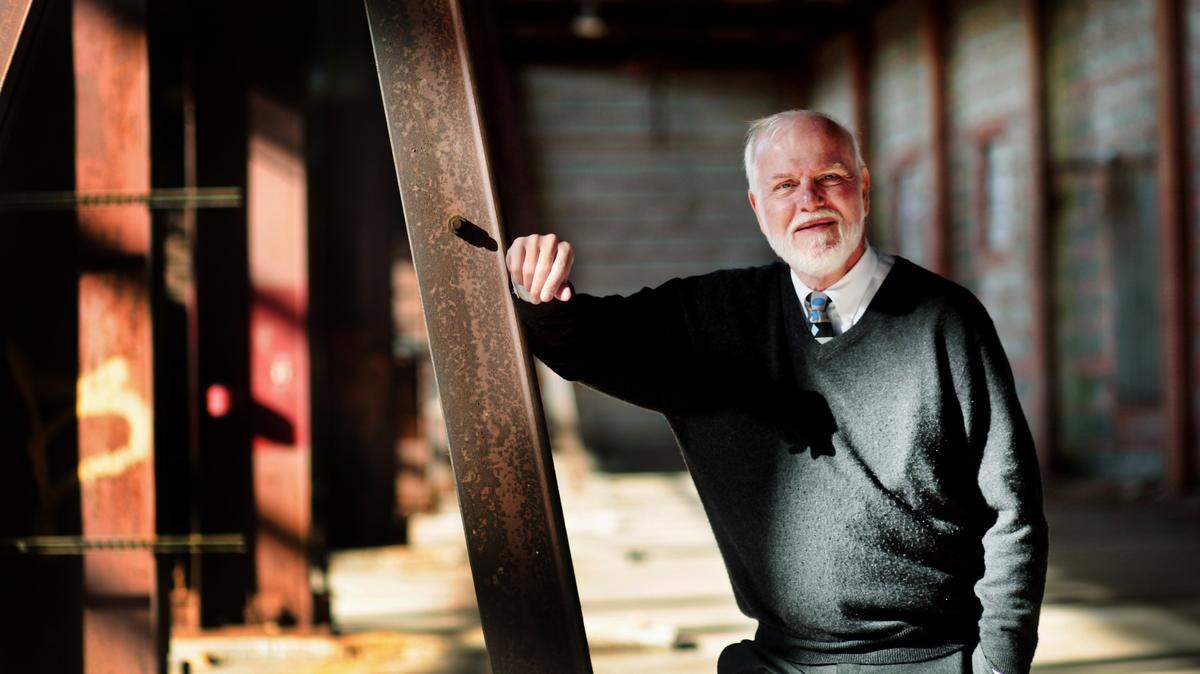
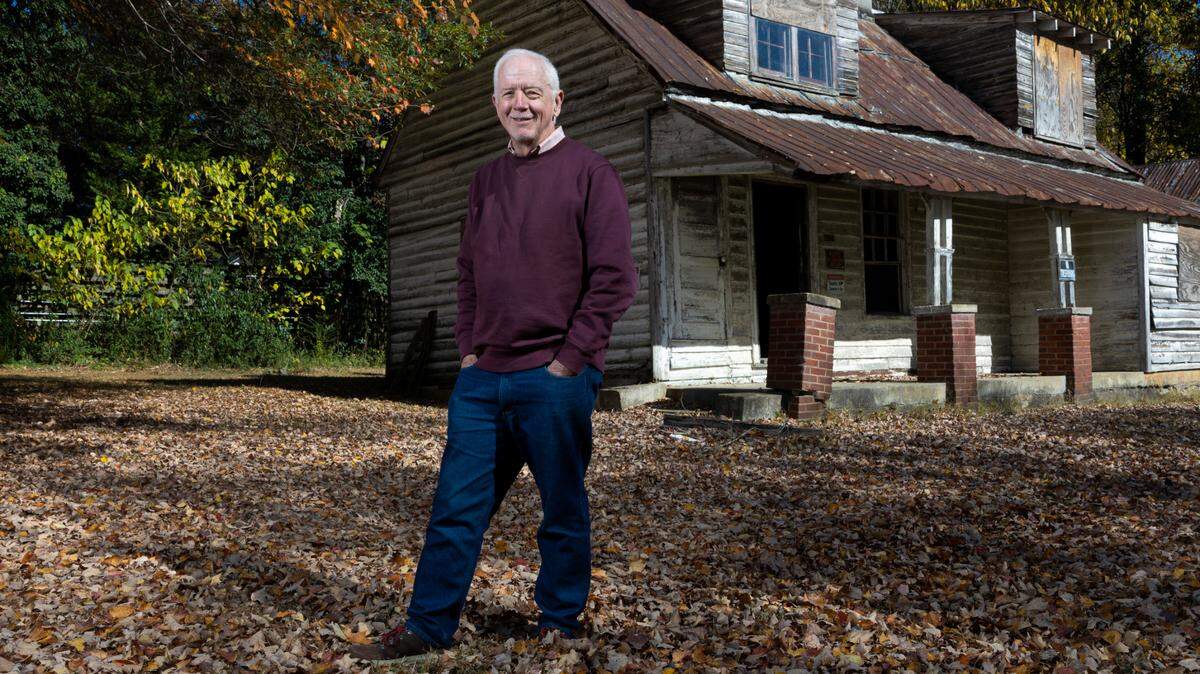
Bob Phillips, Tar Heel of the Year finalist, is a voice for open elections and reform
READ MORE
The News & Observer’s Tar Heel of the Year
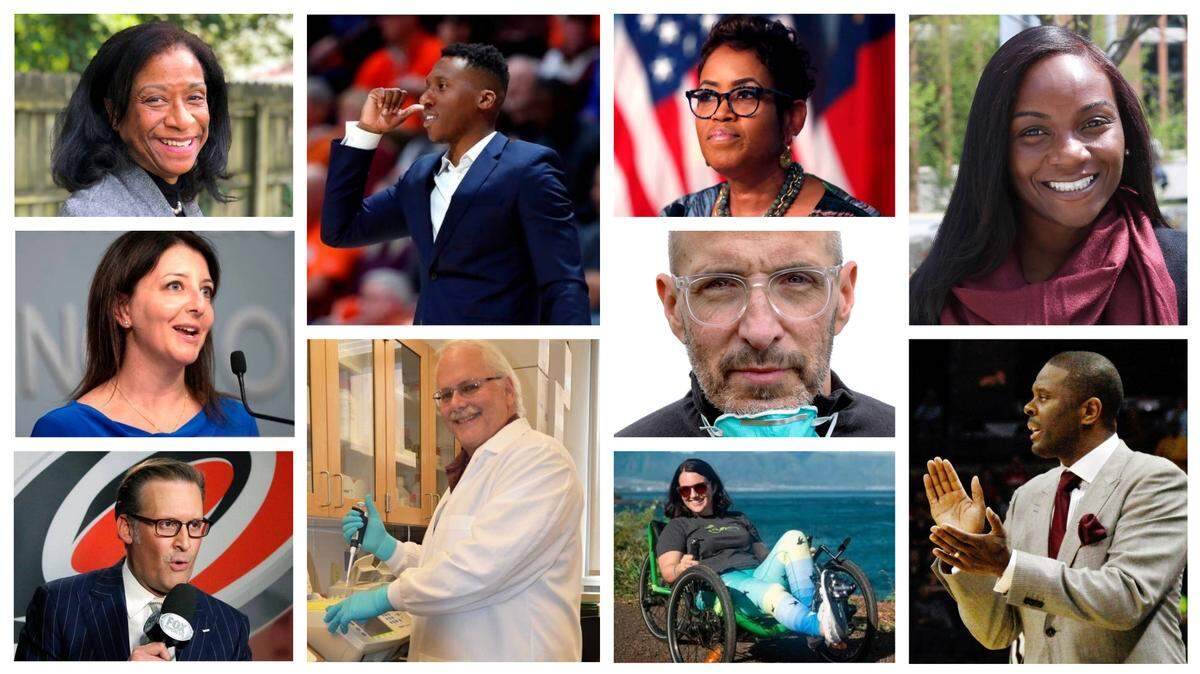
The News & Observer recognizes North Carolina residents who have made significant contributions in the last year and beyond. These people have made a difference in our region, state and elsewhere. Here are our stories.
Expand All
In a courtroom overlooking downtown Raleigh earlier this summer, Bob Phillips testified about feeling tricked by some of the politicians who were once among his most vocal allies for reforming state government.
Phillips has been the executive director of the North Carolina branch of Common Cause, a national government watchdog group, for the last 18 years. He knows well the powerful lawmakers he was accusing of unfairly rigging the state’s legislative districts.
They included Republican leaders like Senate President Pro Tem Phil Berger, House Speaker Tim Moore and Rep. David Lewis. In the mid-2000s, when Democrats controlled the legislature, Phillips teamed up with them and other Republicans to advocate for ending partisan gerrymandering.
“To make a reference to Charlie Brown and Lucy, Charlie Brown tries to kick the football, Lucy yanks it away,” Phillips, 62, told the panel of state superior court judges overseeing the lawsuit Common Cause and others brought against the legislature over gerrymandering.
North Carolina redraws its Congressional and legislative districts after each U.S. Census. So when Republicans swept into power in the 2010 elections, they were perfectly poised to use the same lax rules Democrats had used to orchestrate the maps in their own favor. They suddenly lost the appetite for reform.
“I kind of felt like that was how the legislature was yanking away the opportunity for us to pass redistricting reform,” Phillips testified. “So we felt like litigation was a remedy to actually get something done.”
People had told Phillips not to sue — that it might not work, and he would risk destroying his old relationships with Republican leaders. But Phillips turned out to be right.
In a ruling that made national headlines, the three judges unanimously agreed: The state legislature districts had been drawn to give Republicans such a lopsided advantage that they violated the North Carolina Constitution’s guarantee of free elections.
Republican lawmakers did not appeal the ruling. Instead, they went on to conduct what was unquestionably the most transparent redistricting process in state history, drawing new legislative districts with the public allowed to observe. They did it again just weeks later, using similar rules to redraw North Carolina’s 13 Congressional districts.
It was a major win for government reform advocates. The 2020 elections, for both the state legislature and the U.S. House of Representatives, will play out under more equitable maps that were drawn with historic transparency.
For Phillips’ work in bringing about that change, as well as spending the past two decades pushing for government reforms even as both political parties have pushed back, Phillips was a finalist for The News & Observer’s 2019 Tar Heel of the Year. The honor recognizes North Carolina residents who have made lasting and significant contributions in the state and beyond. He was a finalist, and the Tar Heel of the Year, Gregg Warren, executive director of DHIC, will be published Sunday.
“He’s what’s good about politics,” Dennis Wicker told The News & Observer in an interview. Wicker, a Democrat, served as lieutenant governor from 1993 to 2000 and considered Phillips a trusted advisor, then and now.
“He understands public service starts with fair elections and open elections,” Wicker said. “He’s a true believer that great public service is born from a strong and fair democracy.”
Bipartisan efforts
While Phillips worked with Wicker in the ’90s, he spent much of the 2000s working with Republicans — or on his own — trying to convince wary Democratic leaders to pass reforms. It’s that history of bipartisanship, as well as Phillips’ ability to make convincing arguments using facts and logic, instead of emotion, that makes him so good at what he does, said Sanford economic developer Bob Joyce.
Joyce is the former head of the Chamber of Commerce in Lee County, a conservative, blue collar area southwest of Raleigh. Phillips has come to speak with local business leaders multiple times, Joyce said, and is always well-received by people across the political spectrum.
“That skill, of being able to support your position with facts, is the main currency of successful lobbying, and I think Bob was always trusted by people on both sides of the aisle,” Joyce said.
Phillips grew up steeped in public service. His mother was a teacher, and his father was the deputy superintendent of schools in Charlotte during integration, after the civil rights movement.
While spending years working on technical, often controversial topics like campaign finance and gerrymandering reforms may seem exhausting, he remembers the examples set by his parents. And he makes sure to remain physically up for the task, too. He has run marathons, and earlier this year he proudly completed a high-altitude, multi-day trek through the rainy mountains of Peru to Machu Picchu.
To keep from getting too bogged down in the day-to-day struggle of trying to make politics more open and fair, Phillips likes to get out of the legislature and work with students from local historically black colleges about what he calls a “more than just voting” approach to civic engagement.
“That’s the piece that really, sometimes — when I just get so distraught at what’s happening and thinking like, ‘We’ll never get anything done’ — having that and being and to lean on that is helpful to kind of keep me going,” he told The News & Observer in an interview.
From insider to reformer
The other thing that takes his mind off politics is UNC basketball. A framed photo of Dean Smith peeks out from behind an anti-gerrymandering sign in his cluttered office. He graduated from UNC in 1979, and until 1991, he was a TV reporter for WPTF, which is now an AM radio station.
After the TV station shut down, he approached Wicker and offered to be his spokesman. At the time, Wicker was a state legislator running for lieutenant governor. With Phillips’ help, Wicker won. Today, Wicker calls him “tenacious, honest, hard-working” and a “godsend.”
And although Phillips is best known for his reform work outside of government, Wicker said he was one of rare political staffers who tried to reform the system from the inside, too.
In the 1998 elections, a political candidate ran an ad falsely implying that Wicker had endorsed him, according to The News & Observer archives. Phillips was quoted criticizing the ad.
Phillips used his clout in the lieutenant governor’s office to push for reform in political advertising, Wicker said, as well as others related to transparency and campaign finance. The next year, the state legislature passed a new law called “Stand By Your Ad,” which strengthened regulations around political ads and served as a model for a bill that passed the U.S. House of Representatives the next year.
When Wicker’s political career ended in 2000, with a loss to future governor Mike Easley in the Democratic primary for governor, Phillips also left politics. He was hired as the executive director of Common Cause in 2001 and has remained the group’s leader since then.
And while in recent years he’s often been outspoken in criticizing Republicans, Phillips says they’re just the party in power now. In the 2000s, Phillips wasn’t afraid to take shots at Democrats, despite having just spent almost a decade working for one of the state’s most prominent Democrats.
He was frequently quoted in the media in the mid- and late-2000s, invoking Easley’s various ethics scandals as reason to pass new reforms, or criticizing former Democratic House Speaker Jim Black for giving lobbyists too much power.
Phillips’ disapproval then was warranted. Both Easley and Black were later convicted of felonies. While Easley received a fine, Black served three years in prison for secretly taking thousands of dollars from special interests.
Democrats eventually passed some of the ethics reforms pushed by Phillips. But they did not listen to him when it came to redistricting reform.
The fight against gerrymandering
As the 2010 census was approaching, and a new decade’s worth of redistricting was just around the corner, Phillips started working with then-marginalized Republicans on gerrymandering reform. Democratic leaders resisted those calls, however — a decision they regretted.
“Many times, they’ve said, ‘Ah, we blew it,’” Phillips said.
Republicans took control of the legislature a few months later, in early January, and immediately got to work drawing GOP-friendly maps that have been used in all the elections since then, albeit in various forms due to multiple constitutional violations.
Now, a decade later, Democrats have warmed up to the idea of gerrymandering reform even as Phillips’ one-time GOP allies have had a change of heart. Berger — who as the Senate leader is arguably one of the most powerful politicians in North Carolina — supported redistricting reform bills while in the minority, but not since rising to power. Through a spokesperson, Berger declined to be interviewed for this story.
But with the 2020 elections and new redistricting fast approaching — combined with the new, less GOP-friendly maps and low approval numbers for Republican President Donald Trump — there’s a chance Democrats could take back at least one chamber of the legislature next year.
Phillips wants to capitalize on the uncertainty, convincing both sides to hedge their bets by making the process less partisan before the elections. He says he just wants a system where whoever wins in 2020, or beyond, won’t have carte blanche to run roughshod over the losers.
“There’s a lot of uncertainty coming up,” Phillips said. “And I’d love to say lawmakers will do this for the right reasons. But I think it’s going to be more of the uncertainty and the fear of, ‘Are we going to be in charge?’ that will motivate them.”
Wicker said he can’t think of anyone better suited for the task than Phillips to convince grudging, distrustful opponents to work together to give up their chance at wielding future power.
“On the gerrymandering thing, I’ve got to say I’m proud of the momentum he’s picked up on it,” Wicker said. “He stuck by it when it wasn’t popular, and he made a lot of people mad, but he stuck by it. And he’s made a big difference on public perception and public opinion.”
Business community buy-in
While the legislature is returning in January, Phillips said legislators might not act on redistricting reform immediately. In 2010, he was still calling up Democratic leaders in the summer, just a few months before the election, trying to get them to pass some sort of legislation.
He’s anticipating — and dreading — what he calls a similar “last-minute, fourth-quarter, ninth inning, whatever” scenario in 2020. But he hopes to grow support before then, getting business leaders on board. He said he has called Chamber of Commerce leaders across the state for years, trying to get permission to speak at events about the issue, with less-than-great success.
Joyce, the former Lee County chamber leader, is now the executive director of the Sanford Area Growth Alliance. He said business people are often wary of the appearance of taking political stances. But he sees Phillips as pushing for something more than that.
“When reasonable people, regardless of which side of the aisle they’re on, listen to the argument that we should approach elections sacredly in our country — that fair elections are the bedrock — it’s very well received,” Joyce said.
And as Phillips tries to convince more business people to have an open mind, he can turn to at least a few prominent business people on the front lines, spreading the message that government reforms are good for businesses’ bottom lines.
One of them is David Meeker, who co-owns several Raleigh companies, including Trophy Brewing, and is on the Common Cause Board of Directors. In 2017, he commissioned a large mural at his brewery near downtown with the words “Gerrymandering is vandalism.” It shows an elephant and a donkey defacing a map of North Carolina — a nod to the fact that both parties have drawn unfair maps.
Meeker said he acknowledges why more people from the business community haven’t jumped in on gerrymandering reform. But, he said, he thinks the mindset is short-sighted.
“Historically, businesses don’t like getting involved with politics because they don’t want to piss anybody off who’s in office,” said Meeker, whose father is former Raleigh mayor Charles Meeker.
But he said he’s not asking business owners to make statements on every controversy that makes headlines.
He said many of those issues wouldn’t make headlines in the first place if North Carolina had more moderates in office. But he said gerrymandering has not helped that happen. When politicians get to draw their own maps, Meeker said, they create as many safe districts as possible, where elections are often won in the primary by appealing to the base.
Meeker said that leads to laws like House Bill 2, the so-called “bathroom bill” of 2016, which among other things, required people to use the bathroom that corresponded to the gender on their birth certificate. The legislature eventually undid the law after a national backlash cost the state millions of dollars.
“If businesses would stand up on this one issue, of gerrymandering, then they could solve the fringe issues of partisan politics forever,” Meeker said.
Phillips agrees that while gerrymandering reform might seem niche or partisan, it’s something that affects everyone.
“It’s disturbing that we do see not only the partisan Democrat-Republican, urban-rural divide,” he said, “but an inability to try to kind of listen to each other and understand what their concerns are.”
Bob Phillips
Occupation: Executive Director, Common Cause of North Carolina
Age: 62
Hometown: Born in Winston-Salem, raised in Charlotte
Family: Kathy Phillips, wife; two children, Jake Phillips and Clare Phillips
Education: Bachelor’s degree in political science, UNC-Chapel Hill
Accomplishments: In addition to the government reforms he has helped get passed into law, Phillips says some of his proudest accomplishments are running the New York City Marathon and finishing the multi-day Inca Trail hike to Machu Picchu in Peru, which he did earlier this year.
This story was originally published December 23, 2019 at 5:30 AM with the headline "Bob Phillips, Tar Heel of the Year finalist, is a voice for open elections and reform."
.jpg)
.jpg)