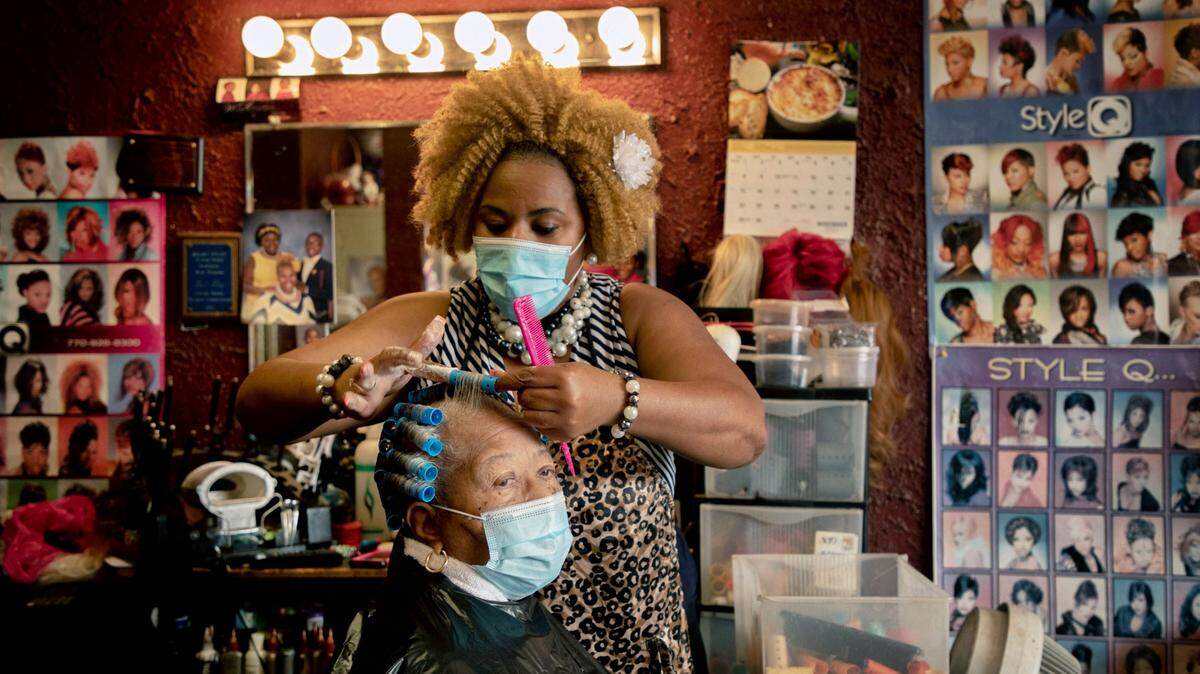
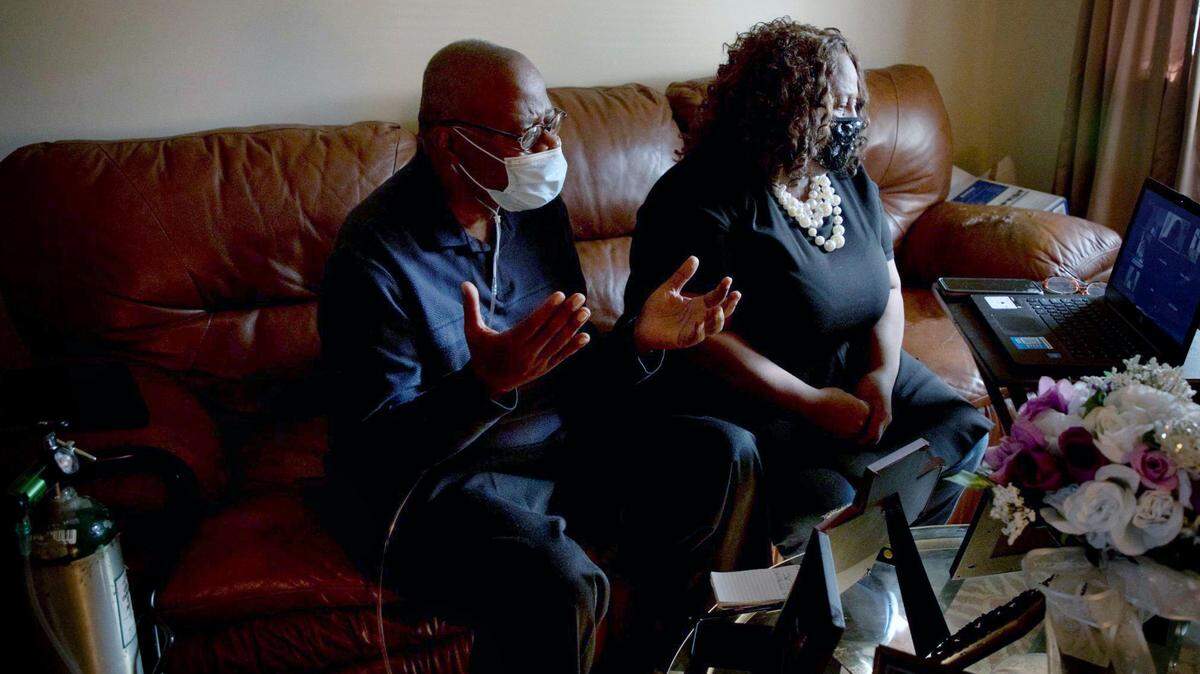
Life Disrupted: 24 hours of coronavirus in North Carolina
READ MORE
20 News & Observer stories to read from 2020
A sampling of the News & Observer’s journalism from 2020.
Expand All
In some ways, this is like any other North Carolina springtime.
Pollen coats cars like frosting. Choruses of spring peepers fill the air in wooded areas, while the hum of lawn mowers drones on all day in suburbia. There’s frost on the ground one morning, a heat wave two afternoons later.
But in almost every other way, the state of North Carolina looks and feels like nothing we’ve ever experienced, with the vast majority of residents hunkered down for their fourth weekend under a sweeping stay-at-home order brought on by the coronavirus pandemic.
We wanted to show you how starkly different life has become here, through the eyes of more than two dozen people from a variety of callings, cultures, and corners of the state, all captured over the course of one 24-hour day.
This is Tuesday, April 14, 2020, in a North Carolina we’re still not quite used to — and one that, we hope, will return to the way it used to be before long.
12:00 a.m.
For a normal person, a midnight wake-up call would be like a gunshot. But when Georgette Charles’s alarm goes off in the bedroom of her Huntersville home, she springs out of bed like it’s nothing. After all, she’s been waking at this odd hour for the past 16 years.
Charles, 52, is the supervisor of a custodial crew that cleans the federal courthouse in Charlotte on West Trade Street. Her shift starts at 2 a.m. and runs till 9, and for the past week, she’s also been doing a new job: sitting in on every criminal court hearing and scrubbing down the courtroom before the next session starts.
It’s taken her out of her routine, which has had its pros and cons. One downside? Charles likes to plan ahead. She thinks about what is supposed to happen versus what could. But in the week she has worked more closely with the judges, clerks, attorneys and IT specialists, she’s realizing how much differently the rest of the world tends to operate.
Some things, clearly, can’t be planned out.
5:32 a.m.
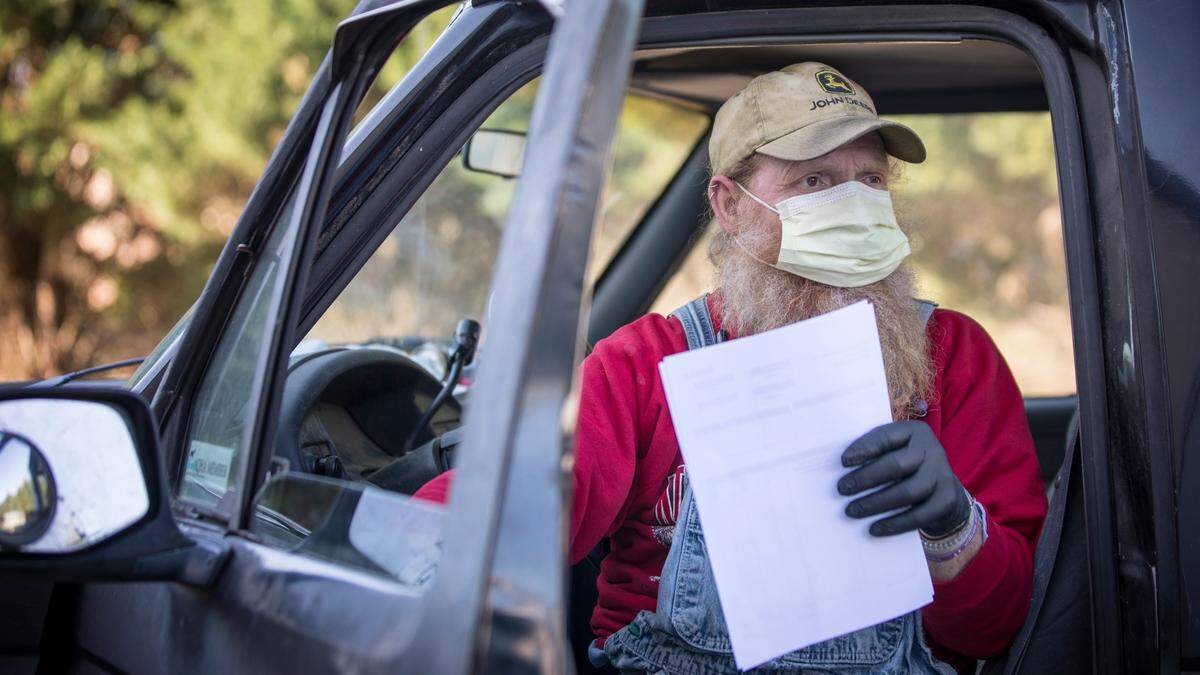
Randy Lewis, 59, steps out of his farmhouse in the largely Quaker community of Snow Camp (45 miles west of Raleigh) wearing overalls, work boots and a red N.C. State sweatshirt. A reddish-brown braid pokes out of his John Deere hat.
The sun isn’t up yet and Lewis is loading a black 1992 pickup with coolers of milk for delivery. It’s a new routine forced on him by the coronavirus, which knocked out half of Ran-Lew Dairy’s business when restaurants were ordered closed for dining.
“We’re chasing down every dollar we can, trying to make sure that the retail stores don’t run out,” he says.
But the life of a farmer is filled with mechanical glitches. A cooling unit in a trailer holding the milk isn’t working properly.
He pulls out his cellphone and calls two nearby Lowe’s supermarkets. One takes nine gallons of milk; the other 16.
“Pretty small order,” he says.
Maybe the afternoon will pull the numbers up, when the farm offers milk and ice cream at a curbside stand, another new venture. But first, he has to chase down a cooling unit.
6 a.m.
Equashia Mumin goes to a corner of her son’s Durham apartment and faces east to recite Fajr — the first Muslim prayer of the day. She would do this in her own home in Buffalo, N.Y., but she was here visiting when the coronavirus struck. Now, she’s temporarily out of work from her two jobs, and spending the time instead caring for her 3-year-old grandson Hassan, who loves sucking on popsicles and watching TV with grandma.
Ramadan starts next week and Mumin will miss her Muslim community in New York, but looks forward to cooking evening meals, or Iftar, for her son.
“Maybe he’ll invite some of the Muslim brothers over, and we’ll do as much as we can on our part, but it is going to be a challenge trying to get people fed,” Mumin says.
She thinks often about her family in Buffalo. Her husband, who is Jordanian, has been out of work because no one in New York needs a cab under a stay-home order. He’s also facing deportation because his documents expired. The court hearing was supposed to be today but the pandemic forced a delay.
6:58 a.m.
At 19, Johnny Grizzard has been working three years at Carlie C’s IGA in Angier. He loves his job, he says.
He walks in just before the store opens, making sure everything was scrubbed the night before and popular items — milk, sugar, eggs, bread — are on the shelves. He starts bringing out stock from the back.
Tuesdays are his easiest days now, just nine hours. One recent Friday, Grizzard started a shift at 11:30 a.m. and didn’t leave the store until 2 p.m. on Saturday.
Carlie C’s started offering online ordering with pickup and delivery three or four months ago. The spread of the coronavirus has increased demand for the service and now, filling orders takes a lot of Grizzard’s day.
As he works, he sees familiar names on his list. He stops to help customers find things they need. He estimates 80% of shoppers wear masks now. They’re being cautious. So are his coworkers.
“They aren’t scared,” he said. “I mean, everybody’s scared, but you know what I mean.”
7:42 a.m.
Sharay Timmons is getting ready for her 8:30 shift at Food Lion, while her 12-year-old son and 7-year-old daughter get ready to spend a day with a family friend, since their school and the Boys & Girls Club are closed indefinitely due to the coronavirus.
The room Timmons and her children have been staying in at this Charlotte Super 8 is small and the kids are feeling cooped up, she says. There aren’t decent areas to play outside here and because they can’t play with the other kids whose families are staying at the motel.
She’s also been rising earlier and getting less sleep than usual because she now has to make time for the dropoff at her friend’s house before heading to the grocery store.
“I know that I got to go to work,” she says.
“... I need a house. I need to get into something comfortable, my own space. I’m drained, though. I’m not even going to lie.”
8:45 a.m.
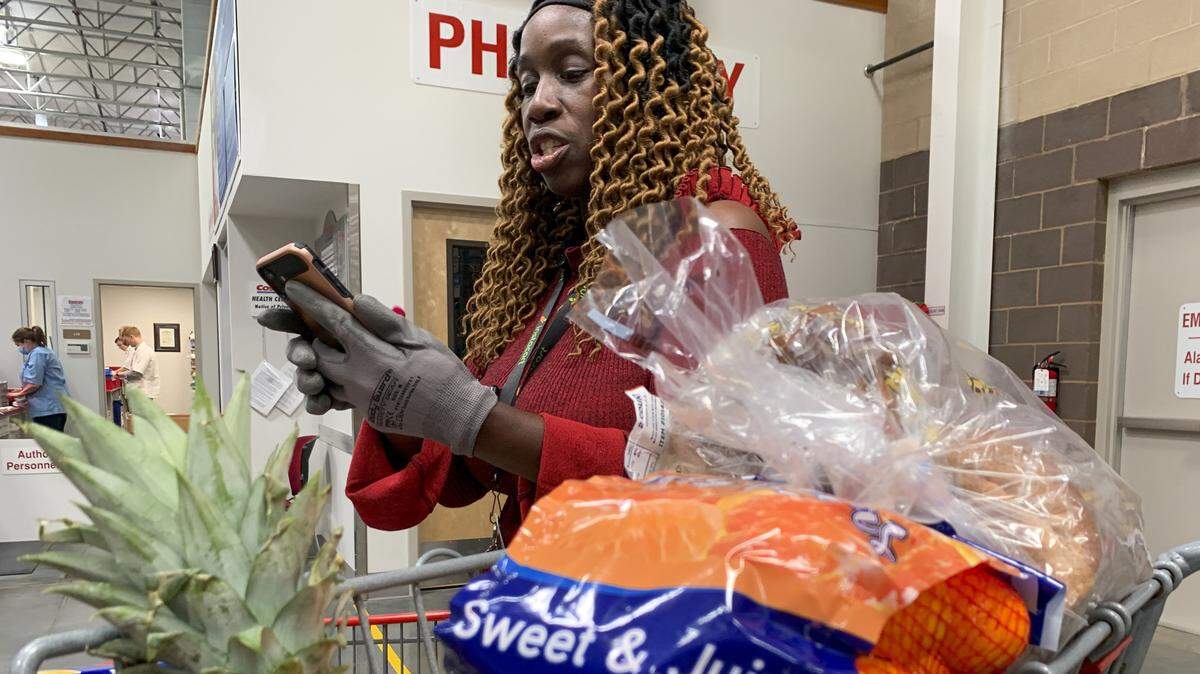
Jennifer Jones pulls into the Costco parking lot in Apex, as she has most mornings during the pandemic. She recognizes other shoppers by their Instacart lanyards, which grant hired personal shoppers access through a separate entrance.
Jones, 42, wears gloves and brings hand sanitizer. The mask she ordered hasn’t arrived. She takes a wiped-down cart and strolls through the familiar aisles.
Jones tries to keep her distance from people as she picks out fresh vegetables, paper plates, dishwashing liquid, pineapple teriyaki meatballs. She texts with her customer through the Instacart app, noting what’s out of stock and searching for replacements.
“I’m just making sure I stay away from people,” Jones says. “Some people just get too close.”
In and out quickly, she loads the groceries into her black Chevy Malibu and drives off to deliver them, usually on the customer’s porch. Then she’ll start another order and try not to think about the risk to her own health.
“I was in the military,” she says. “I’m a veteran, so I’ve seen a whole lot of worse situations than doing this.”
8:59 a.m.
Katrin Wesner-Harts, the director of the student health center at UNC-Wilmington, is on the phone with the school’s lead athletic trainer — another in a long line of calls about preparing for the day when there will once again be thousands of students on campus, instead of just five or six dozen.
In “normal” times, a conversation like this would be rather routine, an opportunity to make plans for the fall sports season, including setting dates for each team’s athletes to come in for their required preseason physical exams.
But with so much up in the air for the university, which already has announced all summer courses will be online, their chat — like many she’s having with colleagues these days — generates far more questions than answers.
“Usually, you have a Plan A and a Plan B,” Wesner-Harts says. “I feel like now we need everything down to Plan Q. … We need a whole bunch of choices, and then at some point we’ll get to pick one.
“But not until we know a little bit more about what’s going on.”
9:30 a.m.
Kaye Pierson once made a habit of being up before sunrise to mow grass. A lot of grass.
A retired nurse, Pierson is a member of the golf grounds crew at Pinehurst Resort and Country Club. She mows fairways and greens.
Or she did, until part-time staff was laid off last month. Now she has time to fill.
She sleeps later. She has sewn masks for workers at a Harlem, N.Y., hospital. She plays her vintage Gibson, along with the piano and harmonica. She’s planning a “virtual concert” on her deck.
Through her many contacts in golf, Pierson has worked on the grounds of the world’s most famous courses: Augusta National, St. Andrews in Scotland and her home course, the historic Pinehurst No. 2.
The coming of the coronavirus has her thinking about the environment.
“I’m a conservationist,” she says. “Look at all the rivers and waterways in the world that have cleared up. I would never wish the human suffering we are seeing. But we needed a wakeup call, for sure.”
10:15 a.m.
It’s technically Dr. Jessica Salzman’s day off — or, at least, a day when she’s not physically working inside the emergency department at Atrium Health Carolinas Medical Center in Charlotte — but she has virtual meetings scheduled pretty much wall-to-wall. “I have been working more,” Salzman says, “than I’ve ever worked in my entire life.”
Not everything on her to-do list today is COVID-19-related. Salzman also has a meeting for a grant to continue caring for victims of domestic violence. Things like that don’t stop just because there’s a pandemic, and she says doctors here and across the country have seen an increase in domestic abuse.
That’s why Salzman keeps working, even on her “day off.”
“For me, the way I’ve been dealing with it is by action and by helping others,” she says. “… I’ve always been that type of person. This is how I deal with things, is to try to help others. And it keeps me busy.”
10:32 a.m.
William Sturkey usually spends Tuesday mornings meeting with colleagues and students at UNC, where he teaches history of African Americans and of the South. It’s harder when he’s confined to his home office in Chapel Hill.
“I’m a type of person that likes to look a person in the eyes and connect on that basic human level,” Sturkey says. “It’s a struggle to have a good back and forth over Zoom or email.”
Tuesday afternoons, he would normally lead an honors seminar on the history of the Civil Rights Movement, with 22 undergraduates engaged in tense, emotional discussions. The students are still doing research and writing assignments, but their conversations are limited to the class website.
It’s not the same, Sturkey says.
“The highlight of the class is young people talking about race in ways that empower them,” he says. “It’s just so powerful to sit in a room together and have those conversations. I just don’t think you can recreate that in an online forum.”
10:40 a.m.
Vimala Rajendran has struggled the past month to keep her restaurant open, so today, she’ll reward herself with a relaxing day off on her porch in Chapel Hill.
Vimala’s Curryblossom Cafe on Franklin Street has been a favorite since 2010. But business is down 75% due to the coronavirus.
“All we can do during this time of uncertainty is face our challenges full on,” Rajendran, 61, says. “Try to stay as safe as possible. Prevent the spread ... and hope for the best.”
Rajendran, a native of India, has moved to a “ready to heat” model. The food is cooked and quickly chilled for customers to take home.
She also makes meals at cost for the non-profit Marian Jackson Cheek Center to give to the elderly because, “We are all shut-ins at this time.”
Rajendran and her husband aren’t getting paid, she says, but they make sure their workers are.
She hopes some of the good will she has felt for Chapel Hill comes back to her now.
She has a feeling, she says, “we will survive.”
11 a.m.
Real estate broker Jonathan Osman arrives at the ranch-style house in Lincolnton, hopeful that things will start turning around.
The house went under contract the day it was listed, as is common in the area’s burgeoning real estate market. But as the pandemic worsened in the state, the purchase fell through. Another interested buyer made an offer, but was laid off and had to pull out. So for now, the home is languishing.
He climbs out of his car, puts a glove on one hand, and uses his phone to open the Bluetooth-enabled lockbox as he approaches. Once inside, he wipes down the countertops, faucets, doorknobs and other areas people might touch during a showing.
Unlike with other houses he’s listed, under the stay-at-home order Osman is able to show this particular property in person because it’s vacant. But he knows you can’t be too careful these days.
“It’s almost like everything is on fire,” he says, “and how do I make sure that I don’t end up in the fire?”
11:57 a.m.
Melissa Lopez Mayer is sitting in her room at the Quality Inn Biltmore in Asheville surrounded by packages of disaster-relief supplies — not ones she’s preparing, but ones she’s the recipient of.
A little over a week ago, she tested positive for COVID-19 in Cabarrus County, and though she originally was quarantined in a Concord hotel, Mayer got special permission to relocate with her 20-month-old son Joey to western N.C., where she had lived previously.
Mayer just got off the phone with a health worker who was checking up on her, and she starts going through the five boxes an Asheville police officer dropped off for her last night. Soup, crackers, peanut butter, juices, fruit cups, toothpaste, toothbrushes, socks.
She explains that although she’s had coughing spells intermittently since her diagnosis, she generally hasn’t felt sick. (Her son has shown no symptoms.)
What she does feel, she says as she goes through another box, is thankful.
12:07 p.m.
Randall Hitt is standing outside the Urban Ministry Center, surveying the sea of 50 or so colorful tents that have become part of the landscape on the grounds that belong to the organization, which is now part of the Men’s Shelter of Charlotte.
It’s funny, says the shelter’s chief engagement officer: When the center started distributing donated tents and sleeping bags to the homeless last month, staffers didn’t know — and didn’t ask — where the folks they refer to as “neighbors” would take them. Fairly quickly, “they just began sprouting up” next to the building, Hitt says.
“In normal times, they would not be allowed. But these are not normal times.”
Of course, there will come a time again when this won’t be feasible. Which begs the question:
“What do all these people on our property do,” Hitt asks, “when we say the crisis is over?”
12:17 p.m.
Sammy Sewell is munching on bites of hot dog and forkfuls of tater tots and coleslaw that he washes down with sweet tea.
The only thing he doesn’t like? Eating it alone in his room. Communal dining at Carteret House in Newport was suspended at the end of March — when the staff upped its vigilance regarding social distancing due to the high risk at assisted-living communities in general. So were the 68-year-old stroke survivor’s restaurant outings with the group he and his friends call ROMEO (short for Retired Old Men Eating Out).
In a couple of hours he’ll see some of them at “hallway bingo,” in which masked staffers call out numbers to residents who stand or sit in their doorways with their cards. But for now, Sewell has only Fox News and the staff members who come in to check on him as lunch companions.
“I miss being in the dining room with everyone,” he says, “but know we need to stay safe.”
2 p.m.
Stephany McMillan sits at her sunlit kitchen table in Greensboro. The front door is open so Camille, her rescue mutt, can see outside.
McMillan is working on two webinars: introduction to yoga and mindful meditation. Meditation is big now; people want to know how to start, whether they need a special mat, cushion, or chair. They don’t, McMillan says. Meditation focuses on awareness of the body and breathing.
McMillan owns Rise & Flow yoga studio. She suspended in-person classes before the stay-at-home order was issued and now offers online instruction.
“Rise & Flow is my sanctuary space. When I go there, I’m always at peace. I’m just so happy when I’m there.”
This afternoon, she’ll lead a class from her living room using simple props — a pillow, a blanket — for students with a range of yoga experience. If they need a block, they can grab a book.
The online classes are so popular, said McMillan, she’ll continue them when the pandemic ends. People will try yoga where there is “comfort and no judgment.”
3 p.m.
It’s been a promising day for Guilford County Schools science and social studies teacher Brandon Morrison. His students seemed more engaged than usual, responding to the class discussion boards much more consistently than in previous weeks.
But suddenly, there’s an unexpected problem: After preparing a 15-minute video lesson for his sixth-graders, Morrison realizes his camera’s battery had died and that he’ll have to run through the whole thing again later.
“I utterly failed,” he says, with a laugh. “Note to self and all teachers: Check the battery on your recording device.”
He has a serious reminder, though, too, as his thoughts turn to the parents of his kids who might be feeling added stress in these extraordinary times.
“I just want parents to realize they don’t have to substitute for us,” Morrison says. “I don’t want them to think they have to be the professor that knows everything. We teachers, we’re behind the parents and the students — and we are here for you.”
3:13 p.m.
Bryan Till returns from a walk, pushing his 8-month-old daughter Brynley in her stroller around their Rockingham neighborhood, and even though it’s not football season — not any sports season, of course, right now — the Richmond Senior High School head coach is thinking a lot about football this afternoon.
His break is over, so Zoom meetings with his staff and with college coaches are next. And fortunately, he has electricity and an internet connection to make those happen; others in the area are still without it thanks to the storm that blew through the previous day.
Till has quickly come to realize during the pandemic just how vital staying connected is for his athletes. How much their futures can depend on it.
“That is a huge concern we have,” he says. “Those kids ... they’re not seeing each other, so … I’m concerned with the positive impacts (they’re missing out on), that give them a chance to go to college, give them a chance to get that job later on.”
3:30 p.m.
Chris Harward breaks from his work-at-home job providing tech support for doctors who use digital X-ray systems, and changes into jeans, long sleeves and Wolverine boots.
He steps into a beautiful day and climbs onto his silver and black Indian Chieftain motorcycle.
Riding rural roads gives him a chance to think about things, like how to handle his mother’s estate.
Judy Harward’s death on April 3 was the first in Durham County attributed to COVID-19. Harward had found his 74-year-old mom standing in her bathroom repeating his name: “Chris, Chris, Chris…”
The EMS crew went into her bedroom, found she had a fever, left and came back in masks, gloves and gowns.
Harward never saw his mother alive again.
He sees people in the grocery store not taking precautions and wants to warn them.
Around 8 a.m. tomorrow, when he’s back at his desk, he’ll watch reflexively for the text his mom sent nearly every day.
“The joke was she would say, ‘I am alive.’”
4:20 p.m.
Elizabeth Forbes is in the middle of writing yet another email to yet another concerned citizen — in this case a woman who has two sons in prison and is upset at Gov. Roy Cooper, who she doesn’t think has done enough to protect inmates from COVID-19.
Forbes is the current executive director of NC CURE, the criminal justice reform organization she’s led for 13 years. But she should be the former executive director; earlier this year, she submitted her resignation and planned to move away from North Carolina with her husband.
But NC CURE had trouble finding a new successor. Then the pandemic exploded, and Forbes’s plans changed, indefinitely.
So she’s in her home office, responding to calls and emails from family members who have incarcerated loved ones, reading inmate letters (most of which are about health issues), and talking to other criminal-reform groups.
“I kind of landed back in the driver’s seat,” Forbes says. “I have the time, and I feel morally obligated to help families.”
4:30 p.m.
Payton Little has Zoomed through her Tuesday afternoon class and is thinking about what she’s missing of her freshman year at Duke University.
More than anything, it’s her track and field teammates who, if not for the campus getting cleared because of the coronavirus, she would be practicing with this afternoon.
But she was sent home from the dorm like nearly everyone else and now, instead of throwing the discus and shot put at the Williams Track and Field Stadium, “I have to drive around to find an abandoned field to find a place to throw,” Little says.
Earlier today, she took a two-mile run through her hometown of Hampstead, “Just to social distance and have an excuse to get out of the house.”
Converting in-person classes to online lectures may have reduced the workload for some students, but it has increased tedium and stress. Payton finds this remote life tiring.
“It’s really just do busy work for Zoom class all day with intermittent exercising and rarely leaving the house,” Little said. “It’s really exhausting.”
6:02 p.m.
Adamo Riascos walks into his house directly from the garage and starts to strip, spraying his boots with bleach and hanging his Mecklenburg EMS Agency uniform on a coat rack, hoping that “whatever is on it can have enough time to die.” Then it’s a beeline to a hot shower.
His team responded to one call during his shift that was possibly COVID-19-related, but in any case, always better to be safe than sorry.
“We have never faced anything so contagious, so aggressive, as this coronavirus that we’re currently dealing with,” he says.
Riascos has a wife and two children. His oldest is overseas in the military, but he also has a son at home, “bored out of his mind,” Riascos says, now that high school is closed. So — like all health-care workers and medical personnel on the front lines — he’s as anxious as anyone about keeping his family safe.
“That’s always in the back of your head,” he says. “‘I’m not feeling sick — but what if I’m actually carrying this virus?’”
6:05 p.m.
Patricia Timmons-Goodson is cooking dinner in her Fayetteville home.
The first African-American woman to serve as a North Carolina State Supreme Court Justice is running for Congress as a Democrat in the 8th district, which stretches from Cumberland County in the east to Cabarrus County in the west. Online video calls with activists, community leaders and staff members is not how she envisioned the campaign playing out. But she says, proudly, she’s picking up the new technologies.
Right now, however, she’s a daughter.
Beulah Timmons lives alone a few miles away, and Timmons-Goodson has promised to bring dinner. It falls to Timmons-Goodson to physically check in with her mom, and they talk several times a day.”
“I go sit with her while she eats,” says Timmons-Goodson, 64. “She loves to know about the campaign. ‘How’s it looking, Pat?’ It gives her something to engage in. And she has friends, too. She will sit and write a little note, ‘You know Pat’s running for Congress,’ and put my materials in the envelope.
“She’s wonderful. That’s my Momma.”
8:44 p.m.
“Man,” Norberto “Betto” Herrera thinks to himself, “I need to dance.”
It’s what he does, normally, for a living, as owner of Mambo Dinamico Dance Company in Apex. But with the business temporarily closed because of the pandemic, Herrera is spending more time with his family.
This morning, he took his two young children and two dogs to the park. It was early, but he was happy to let his wife, Jenny, sleep in, since she’d been working so much in her job for an education tech company. They’ve been swamped since the public schools moved online.
Tonight, Herrera is online himself, trying to figure out his taxes and see if he can get any small business relief from the government.
For 16 years, Herrera has hosted Tuesday night Latin dance parties at Carmen’s Cuban Cafe. Now he’s not sure people will ever truly feel safe again in his dance classes and parties.
“Some people will be afraid to be up close and personal with other people,” he fears, “especially in Latin dances where we dance with close embraces.”
9:05 p.m.
As a professor and North Carolina’s poet laureate, Jaki Shelton Green sees her role in this epidemic as a “gleaner,” gathering stories into her spirit and heart, waiting for the moment when they are ready to distill.
“All of us are documentarians in some way, those of us who are artists,” she says. Safe at home in Mebane, “I’m recording it in my bones and spirit right now. My freakout will be on paper.”
She journals a few words at a time, a line that occurs to her, an image. They form when she is chopping vegetables or stirring a broth, or reading on her “poetry porch,” about families who cannot hold funerals, or a nursing assistant fired for wearing a mask.
“We have to speak on behalf of those babies that have died,” she says, “the elders who were not ready to die, the 30-year-old who thought, ‘I’m too young to die.’”
For now, the stories are like a yeast starter, slowly growing, becoming art to feed the world.
10:55 p.m.
It had been a pleasant evening and Susan Harden was able to decompress for most of it, eating dinner on the patio with her family and hanging out with her kids as they watched the last “Harry Potter” movie.
But now she’s feeling a little unsettled again as a question echoes in her brain: “How are people going to make it?”
It’s been a familiar refrain since their afternoon meeting, when Harden and her fellow Mecklenburg County commissioners were given the sobering news that coronavirus cases are now forecast to peak in June here, not at the end of April or mid-May as previously predicted.
As she gets ready for bed, exhausted, she does what she can to try to spin her thoughts back in a positive direction.
“The one thing that I can say is that the longer we do these social-distancing and physical-distancing strategies … the longer we give scientists a chance to innovate,” she says — which will put us in a position to move closer to returning to a world in which we don’t have to obsess about social distancing.
11:45 p.m.
Cassandra Elder craves 30 minutes’ rest. She’s halfway through a 24-hour on-call shift for City of Oaks Midwifery, helping mothers bring new life into a pandemic.
She started the day checking on two women who had just given birth at Raleigh’s UNC Rex Hospital. Family visits are limited because of the coronavirus and the women want to be discharged, fast.
Elder finds it harder to comfort them with the masks.
“You don’t have the ability to read lips and read the expression in people’s faces,” she said. Elder doesn’t want to spread illness to her patients or her family in Person County. Every surface is a potential vector for infection.
Usually she can leave the hospital to eat or drive home for a few hours between calls. She can’t do that now.
There won’t be much rest tonight. In a few hours, Elder will be summoned to help one of her patients deliver her baby, a healthy boy.
It’s a happy moment in the middle of a worldwide storm.
Contributors to this project were The Charlotte Observer: Ames Alexander, Alex Andrejev, Rick Bonnell, Danielle Chemtob, David T. Foster III, Alaina Getzenberg, Michael Gordon, Théoden Janes, Alison Kuznitz, Lauren Lindstrom, Annie Ma, Joe Marusak, Jim Morrill, Catherine Muccigrosso, Gavin Off, David Scott, Jeff Siner, Hannah Smoot, Austin Weinstein, Langston Wertz Jr., Amanda Zhou; and The News & Observer: Ashad Hajela, Chip Alexander, Jonathan M. Alexander, Lynn Bonner, Virginia Bridges, Carli Brosseau, Trent Brown, Brooke Cain, Andrew Carter, Zachery Eanes, Tammy Grubb, Ethan Hyman, T. Keung Hui, Drew Jackson, Dan Kane, Travis Long, Brian Murphy, Kate Murphy, Jonas Pope IV, Aaron Sánchez-Guerra, Josh Shaffer, Lucille Sherman, Richard Stradling, Casey Toth, Dawn Baumgartner Vaughan, Adam Wagner, Julia Wall, Robert Willett and Steve Wiseman.
This story was originally published April 18, 2020 at 5:00 AM with the headline "Life Disrupted: 24 hours of coronavirus in North Carolina."

.JPG)


.JPG)