In harm’s way: NC homes for frail, disabled fail to prepare for foreseeable disasters
READ MORE
20 News & Observer stories to read from 2020
A sampling of the News & Observer’s journalism from 2020.
Expand All
As Hurricane Florence menaced the North Carolina coast two years ago, a National Weather Service meteorologist cautioned against underestimating the threat:
“This will likely be the storm of a lifetime for portions of the Carolina coast. ... I can’t emphasize enough the potential for unbelievable damage from wind, storm surge, and inland flooding with this storm.”
But several facilities housing the state’s oldest and frailest residents failed to heed the warning.
The operator of Ashe Gardens Memory Care, a facility in Burgaw surrounded on three sides by a floodplain, decided to ride out the hurricane in place. They even invited the residents of an evacuated sister facility to hunker down with them.
The management of Lake Pointe Assisted Living, a Lake Waccamaw facility that government maps showed had a high chance of flooding, chose to shelter in place too. The administrator, Laura Hardison, went to the grocery store and bought a few packs of hot dogs and macaroni and cheese, said Willette Mason, a cook at the facility, who brought a propane grill from home in case the electricity went out. The generators that Hardison brought from home were just enough to power the refrigerator and medication cart.
The operators of Highland Acres Nursing and Rehabilitation Center in Lumberton also opted to stay, despite the devastation Hurricane Matthew had brought to the city two years before. With meteorologists predicting “catastrophic” rain, a nearby car dealership cleared its lot, and families of some residents began asking staff about evacuation plans.
Doris Vaught, who visited her husband, William, at Highland Acres almost every day he lived there, said she was so alarmed by the lack of preparation that she had her husband taken to the hospital. Other residents would later leave the nursing home on boats, disoriented and scared, protected from the torrential downpour by only a cotton sheet.
An investigation by The News & Observer found that despite a long history of hurricanes in North Carolina and regulations that require emergency planning, many facilities were unprepared for Hurricane Florence, relying on vague plans and low-paid staff with neither the time nor training to carry the plans out, putting thousands of the state’s most vulnerable people in danger.
Two years later, long-term care residents are at no less risk, advocates say. Scientists predict slow-crawling, super-drenching storms like Florence will be more common due to climate change. But proposals to ensure more thorough planning and require generators have stalled. Staff shortages have worsened.
Administrators and emergency managers are already overwhelmed from responding to the COVID-19 pandemic, and the logistics of preparing for extreme weather are now only more complicated.
Among the thorny questions: Where will COVID-positive residents go? PruittHealth-Trent in New Bern, for example, has three dozen infected residents and is located in a flood hazard zone.
Dealing with a ‘nightmare scenario’
The possibility of colliding disasters has Lauren Zingraff, executive director of the advocacy group Friends of Residents in Long Term Care, “gravely concerned.”
“We do not have in place the type of emergency preparedness, safety plans, funding and resources to adequately prevent a repeat of what we experienced in 2018,” she said. “It’s scary to think about what the nursing shortage will look like when you have the devastation of a hurricane and a pandemic on top of it.”
Iris Green, a supervising attorney with Disability Rights North Carolina, has called on the state to ensure that facilities have “concrete, effective disaster preparedness and evacuation plans that take COVID-19 concerns into account.”
So has Roger Manus, the director of the Senior Law Center at Campbell University and chair of the Governor’s Advisory Council on Aging. In a letter to the governor, he wrote, “Planning ahead (including drills) for this nightmare scenario is a must.”
State health and emergency management officials say they have offered training and drill opportunities, but did not reveal how many long-term care facilities signed up.
The N.C. Health Care Facilities Association, a nursing home trade group, said last week in a written statement that it is gathering guidance from state agencies and putting together a list of equipment and supplies, including personal protective equipment and oxygen, that it hopes the state can stockpile for them.
Hurricane season began June 1. Tropical Storm Isaias is swirling off the coast of Florida, projected to head this way.
Do you have a news tip? Send it securely to our journalists. Go to bit.ly/nandotips.
Last-minute evacuations
In its examination of the 2018 hurricane season, The News & Observer compiled data on evacuations, generators, flood hazard zones and inspections; analyzed emergency plans submitted to emergency managers in 10 counties; and interviewed more than 50 researchers, first responders, industry executives, care workers, advocates, residents and their families.
The investigation revealed that at least six elder-care facilities were evacuated only after Hurricane Florence made landfall — including Ashe Gardens, whose staff summoned government help after a lake formed in the parking lot.
More than 1,400 people evacuated from care facilities stayed for some period in public shelters or churches, which are generally not equipped to care for people with special needs. The people evacuated from Ashe Gardens stayed overnight in a Pender County elementary school. At least 200 elderly North Carolinians were moved more than once.
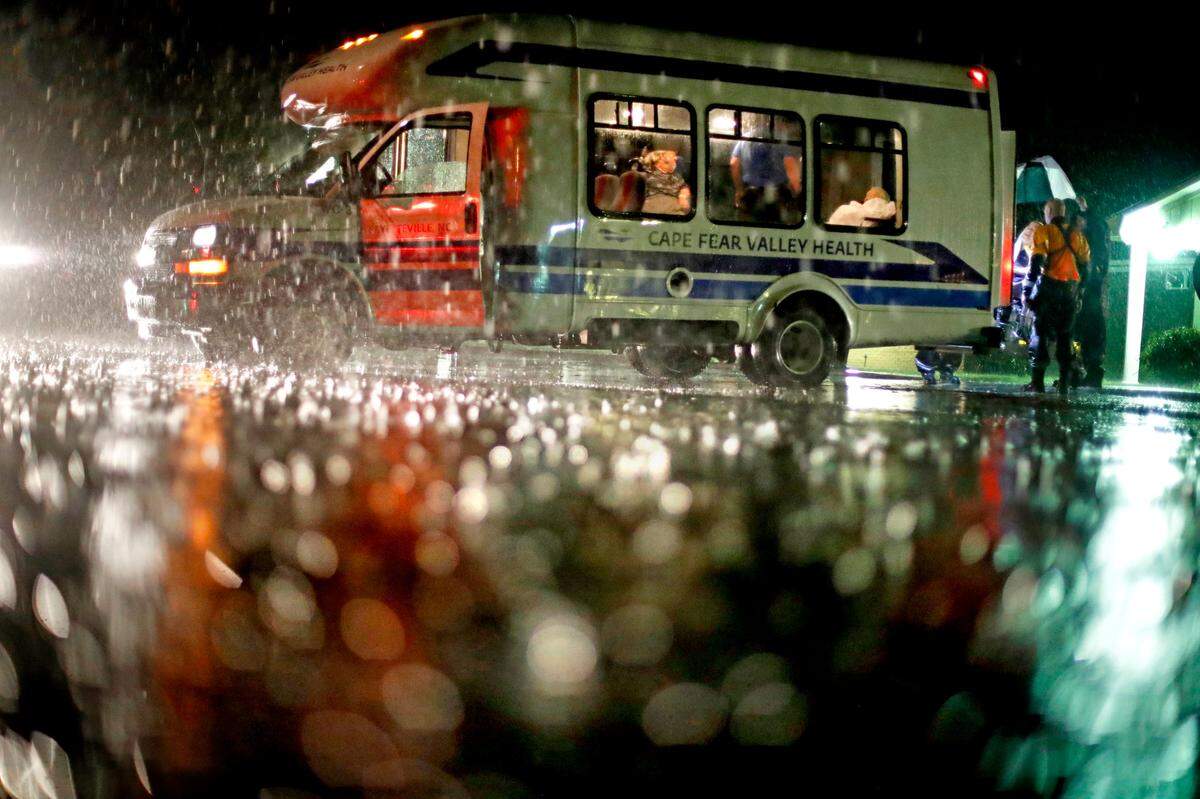
The residents of at least one care facility, Lake Pointe, were left at times with no assistance at all. The staff was spread so thin during the hurricane that Mason, the cook, was enlisted in patient care. Staffing dwindled toward zero in the aftermath. Workers said they weren’t being paid what they were owed and stopped showing up. The administrator quit too. On Oct. 14, 2018, the last staffer standing told a 911 dispatcher that she was alone with about 60 residents who needed their medicine, which she had no way to give.
Interviews and a review of emergency managers’ records in six eastern North Carolina counties revealed that many assisted-living facilities, including Lake Pointe, shirked the regulatory requirement to turn in their disaster plans and some submitted documents lacking basic information such as whether the facility was likely to flood. Local emergency managers said they have no authority to compel facilities to turn in a plan or mandate improvement.
No one has counted the resulting deaths. The state Department of Health and Human Services did not respond to requests for Florence data from at least three researchers and declined to do its own study.
But anecdotal evidence suggests that bodies quickly piled up.
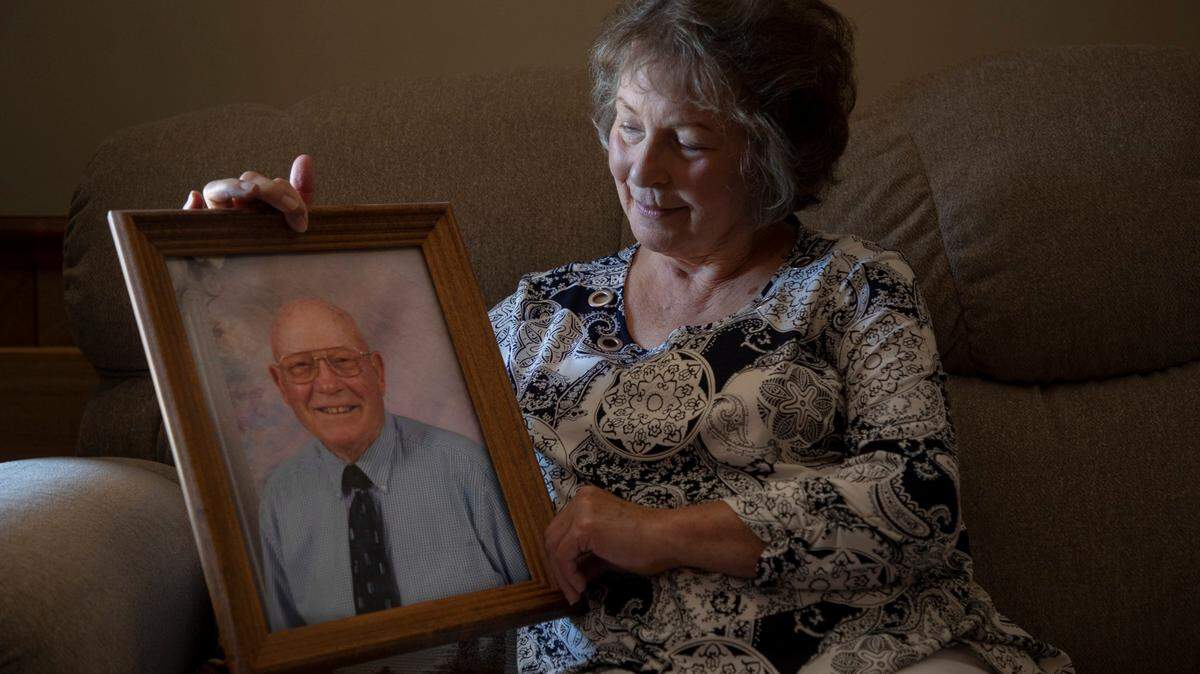
In the months after the residents of Highland Acres were evacuated, Vaught amassed a stack of funeral programs as she attended one memorial service after another. In December 2019, Chris Pittman, a former resident of Highland Acres who rode out on a boat, counted on his fingers the names of people who died. “I think the trauma was too much,” he said.
The high risk of moving elderly residents
To be sure, disaster decision-making is difficult, and the line between a good decision and a bad one can be blurry.
Researchers Kathryn Hyer of the University of South Florida and David Dosa of Brown University found in studying 2005’s Hurricane Katrina and subsequent Gulf Coast storms that hurricanes increased death and sickness among nursing home residents regardless of whether they were evacuated and that moving residents posed the greatest risk.
Denis Rainey, a senior vice president who oversees emergency preparedness for ALG Senior, the Hickory-based company that owns Ashe Gardens, said the researchers’ findings influenced his company’s decisions.
“We know that if you evacuate a 60-bed assisted-living facility, you can expect two or three people to be hospitalized and two or three people to expire,” Rainey said.
The other major consideration was the facility’s history.
“Water had never gotten into the building, and it didn’t that day,” he said. The county’s emergency manager recommended evacuation because of how fast the water was rising, but residents were soon able to return.
ALG Senior, which has roughly 140 assisted-living facilities in the Southeast, has improved emergency planning based on lessons from past storms, Rainey said.
After Florence, for example, the company readied buses across the coastal plain in case facilities suddenly needed to evacuate. Workers at Ashe Gardens now know to clear the parking lot’s storm drains. To bolster staffing, ALG Senior sends corporate staff and workers from sister facilities.
In Lake Waccamaw, where the police chief found the care home’s residents left alone, staff were overwhelmed even before the storm. A woman hired to do laundry told an inspector she was pressed into work as a patient care aide due to short staffing on her very first day.
Hardison, the former administrator, said she couldn’t get the owners, Tony and Edith Bigler, to provide enough toilet paper, let alone adequate generators in preparation for the hurricane. “There was zero support and zero concern for the residents,” Hardison said.
A resident died after falling on condensation-slick floors during the power outage that followed the storm. About a month later, regulators shut down the building, dispersing residents to new homes.
The Biglers did not respond to phone calls, emails and social media messages requesting an interview. They continue to operate other facilities.
In Lumberton, the building that used to be Highland Acres sits empty, discarded commodes in the parking lot.
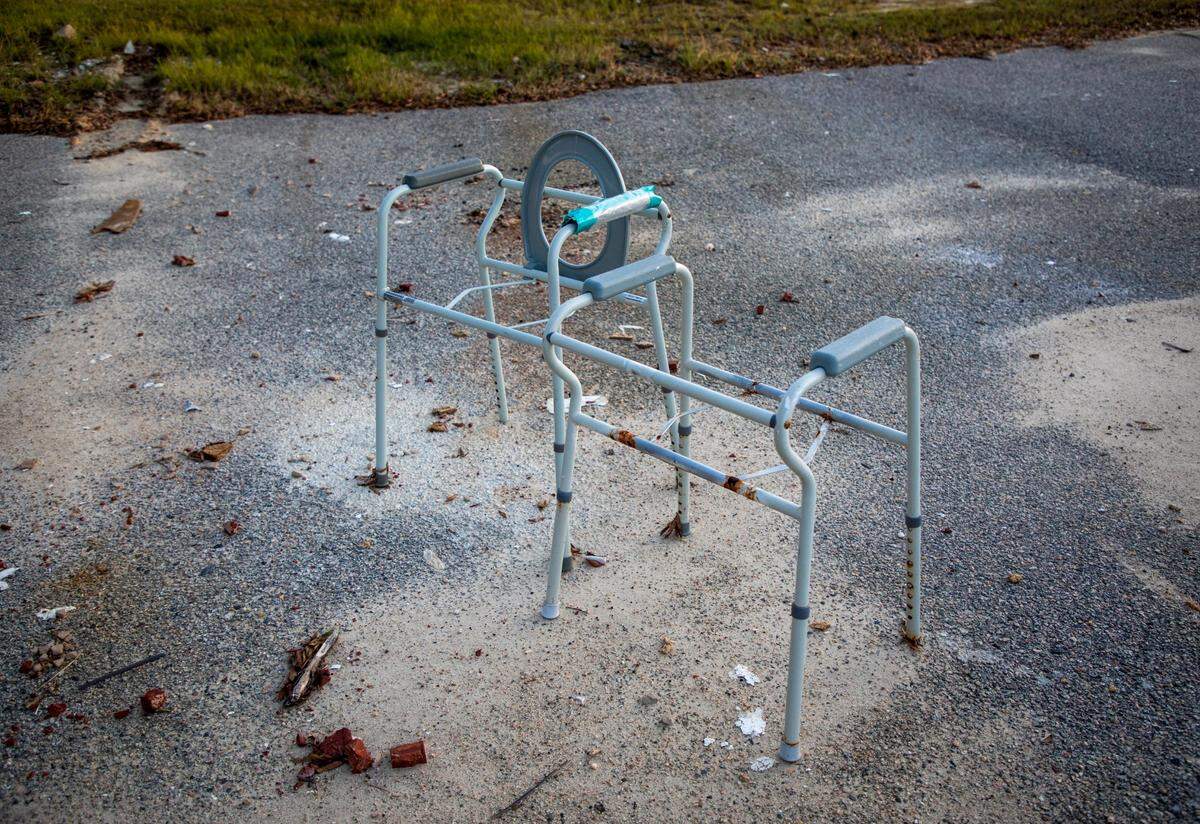
Executives with Principle Long Term Care, part of the Kinston-based Hillco. enterprise whose affiliated companies operated the facility, did not respond to emails and calls. Neither did Syreeta Parham, the former Highland Acres administrator who now oversees a nursing home in Sanford.
But for the building’s former occupants the catastrophe goes on.
‘We had issues everywhere’
Chris Pittman remembers being barefoot and wearing only a hospital gown when firefighters arrived at Highland Acres the afternoon of Sept. 15, 2018. He figured the nursing home was evacuating, but no one told him where he was going.
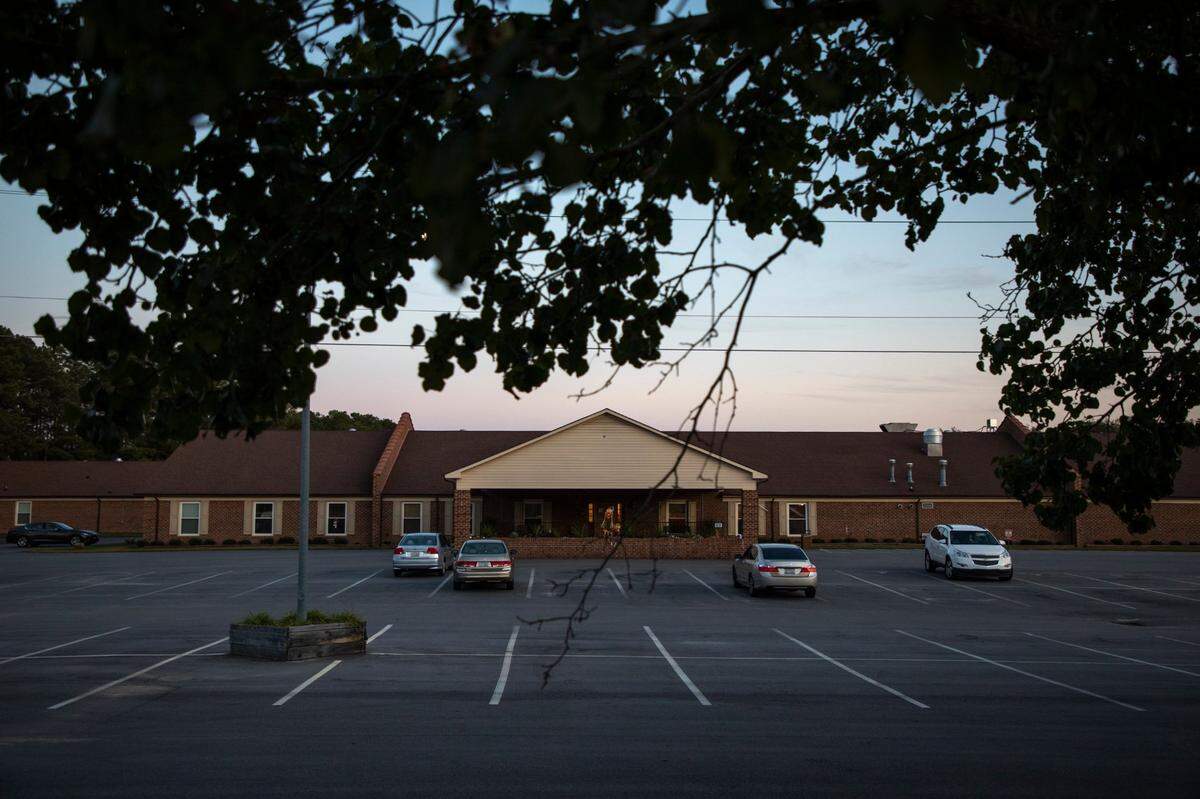
Hurricane Florence had stalled over the city. The ditches were already full.
To firefighters and the volunteers who showed up to help them, the administrator and her corporate supervisors seemed to have no plan. They resisted leaving, then asked for residents to be taken by ambulance to a sister facility two hours away, Chris West, Lumberton’s assistant fire chief, recalled.
The fire department had only about eight ambulances, and more than 80 residents needed to be evacuated. “We had issues everywhere,” West said. “There’s no way we could tie up those ambulances to move these patients. It was just impossible.”
One executive “threatened us, said we were kidnapping his patients and hijacking his facility,” Lt. Jarrod Hendren said. Corporate staff “were throwing things and fighting and arguing” with the volunteers who showed up to help firefighters, Dr. Andrea Simmons, the nursing home’s medical director, wrote on Facebook.
Meanwhile, the floodwaters rose more than two feet.
Hendren said he eventually told the executive to go into an office and stay there and told the nurses who wanted to leave that they couldn’t. If they tried, Hendren told them, he would bring in the National Guard.
Residents who could walk were loaded onto a bus. The rest were strapped to backboards and covered with sheets.
Pittman wasn’t helped into his specially outfitted van as he expected. Staff asked to use his van to transport certified nursing assistants, and he agreed because he knew he needed their help. He was loaded onto a boat, which amateur rescuers from Louisiana hauled across a flooded field to a gas station, where an ambulance picked him up.
Rain was coming down so fast it was hard to breathe. Flatwater stretched from the nursing home to the horizon.
Highland Acres residents stayed overnight in the St. Paul’s High School gym with other people using the community shelter. In the morning, the nursing home residents, some of them diabetic, were served ice cream and an energy bar for breakfast, Judy Parker, a long-term care ombudsman, noticed. A caravan of ambulances marshaled from as far away as Kentucky then carried the evacuees to other Principle-owned facilities.
Pittman arrived at his new home, Richmond Pines Healthcare and Rehabilitation Center in Hamlet, still in his hospital gown and without any shoes. Though he had been soaked in the boat ride, it would be more than a day before anyone changed him, Pittman said. He waited a week for new shoes, longer for a new wheelchair.
Without a wheelchair, Pittman said, he was trapped in his room, which smelled of urine. His roommate would urinate on the floor, and the overworked nursing aides had no time to clean it up. There were just two aides, he said, on his 30-person hallway.
Pittman, 60, soon learned that he had landed in a special focus facility, a designation that means a nursing home is one of the state’s worst, with a pattern of poor quality care. He and other former residents of Highland Acres complain that a lack of adequate staffing at Richmond Pines keeps them from getting better and sometimes puts them in danger.
“It was like leaving the suburbs and coming to the projects,” Pittman said. “We didn’t know where we were going, and we’ve been stuck here ever since.”
Inspection records from 2018 detail repeated falls and several types of medication errors, including administering antipsychotic medication to a resident for three months without a doctor’s order. Electronic medication records were inaccurate, staffers told an inspector, because they had been overwhelmed by hurricane evacuees.
Last April, an inspector found there wasn’t enough staff to help residents with eating and personal hygiene.
Emotional scars
It’s difficult to measure the effects of an evacuation on a population so fragile, but the emotional marks live on in the families of those caught in the chaos.
Connie Lattie and Deborah Williams noticed a steep decline in their 87-year-old father’s health once he got to Richmond Pines.
Roland Pittman looked like he had lost weight. The once-hearty preacher and farmer, no relation to Chris Pittman, was sequestered in a back room and seemed to be very thirsty.
Lattie asked him about the evacuation in terms she thought he could understand. His dementia made communication difficult.
“Did you see a lot of water?” Lattie asked.
“Yes,” he said, sobbing.
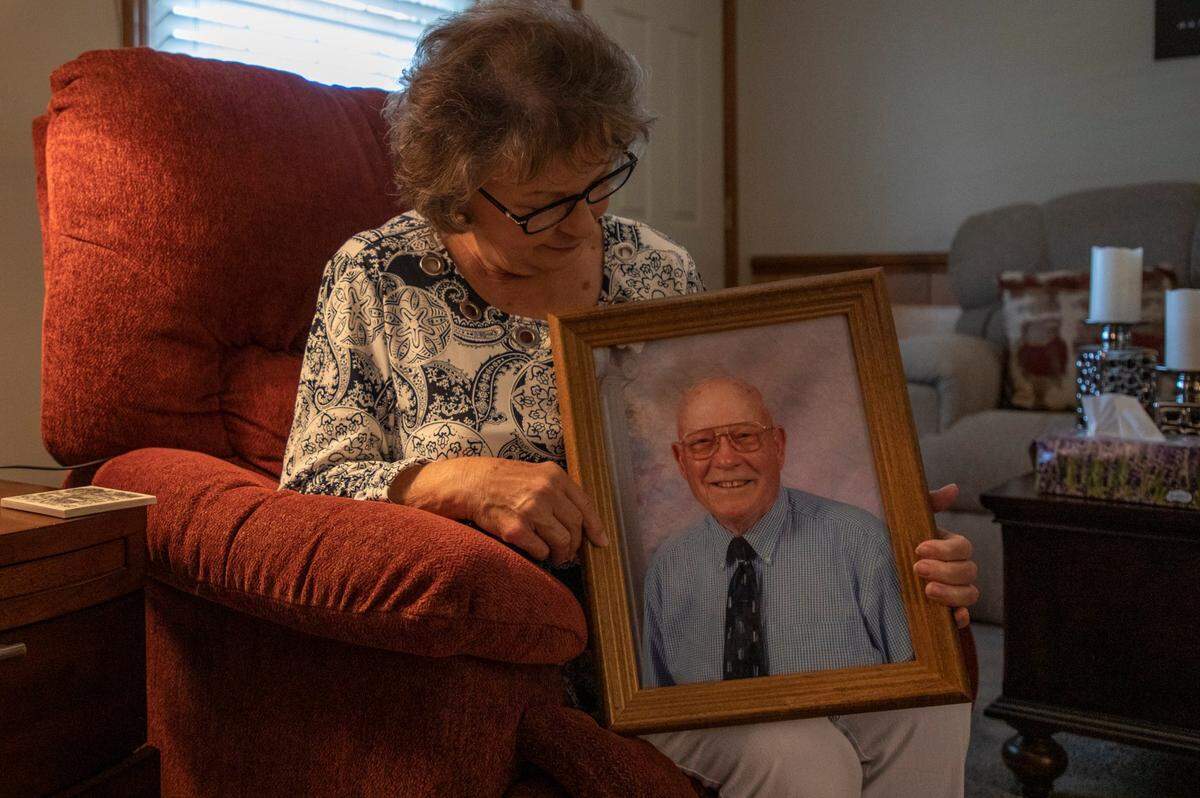
The sisters wondered: Was their father ailing because of the trauma of the evacuation? Or was it shoddy care at his destination? He died within weeks.
Williams sought answers by requesting health records, but the documents Richmond Pines sent were full of blanks. Some belonged to another patient.
The family didn’t hire a lawyer, but legal action in such cases isn’t unexpected. Lake Pointe, for example, is facing a class-action lawsuit. However, legislators recently gave long-term care facilities immunity from most legal claims until the COVID-19 state of emergency is declared over.
Lattie thinks back to the day of the evacuation, the empty car lot she passed on the way to the nursing home.
“If they thought to move every car out of the lot at a car dealership, I can’t believe they wouldn’t have thought to move people,” she said.
Bill Shotwell, the vice president of Lumberton Chevrolet Buick GMC Cadillac, thought that was curious too. He had lost 88 vehicles to flooding in Hurricane Matthew, so he found a secured lot on high ground to store cars for the next big storm.
“Days later, we were able to move them back,” Shotwell said.
BEHIND THE STORY
MOREWhy did we do this story?
North Carolina is one of the most disaster-prone states in the country, with calamities ranging from wildfires to ice storms and more damaging tropical storms since 1980 than any state but Florida. Recent research suggests North Carolinians should brace for more extreme precipitation and more inland flooding. Is the state ready?, we wondered.
We decided to take a close look at the emergency preparedness of nursing home and assisted-living facilities because they house people who are in great need of protection but often overlooked.
Read more by clicking the arrow in the upper right.
How did we do this story?
We overlaid nursing homes and assisted-living facilities on floodplain maps to identify at-risk buildings and reviewed evacuation data collected by the state Department of Health and Human Services in relation to hurricanes Florence and Dorian. Then we double-checked the state’s data by contacting facilities, local emergency managers and long-term care ombudsmen.
Kathryn Hyer and Dylan Jester of the University of South Florida helped us add information about nursing home quality ratings and past rule violations to our analysis. We then used data from the U.S. Centers for Medicare and Medicaid Services to compare emergency-preparedness citation rates in North Carolina nursing homes to other states. We also reviewed assisted-living facility quality ratings, inspection findings and penalties issued by the state Division of Health Service Regulation.
To get a sense of the emergency plans facilities were relying on, we requested the plans submitted in 2017 and 2018 to emergency managers in 23 counties on the coastal plain, plus Wake County and the city governments of Fayetteville and Lumberton. Some emergency managers kept a record of every plan they signed off on, allowing for an analysis of who turned one in and who didn’t. We reviewed 84 plans in total and interviewed emergency managers in seven counties.
Among the helpful academic sources were Sandi Lane at Appalachian State University, Bill Gentry at UNC-Chapel Hill, and Eleanor Covan and Elizabeth Fugate-Whitlock at UNC-Wilmington, all of whom have discussed emergency preparedness with North Carolina facility administrators.
We researched individual facilities and certain chains using property records, business ownership records, administrative law judge decisions, lawsuits and interviews with current and former employees and residents. For details of how they responded to Hurricane Florence, we reviewed records compiled by local emergency managers, police and fire departments, and requested interviews with the people involved. We read obituaries and death certificates in the counties that received evacuees to identify lives lost and asked the families we interviewed to share medical records.
For information about past and prospective regulatory change, we reviewed draft rules, proposed legislation and recordings and notes from related meetings. The state health department repeatedly declined to make anyone available for an on-the-record interview.
This story was originally published August 2, 2020 at 1:47 PM with the headline "In harm’s way: NC homes for frail, disabled fail to prepare for foreseeable disasters."


.JPG)



.JPG)