
Here’s how to stay safe against toxic fumes on planes (+ know the signs)
Hopping on a flight is a popular choice for long-distance travel, with more than 3 million passengers flying in and out of U.S. airports daily, according to the Federal Aviation Administration.
Air travel is generally the safest when it comes to getting from point A to point B, although it comes with less obvious risks — including exposure to contaminated cabin air.
Mechanical issues, like leaky engine seals, can allow noxious “fumes from oil and hydraulic fluids” to enter the cabin, sickening passengers and flight crew on board, The Charlotte Observer recently reported, citing industry experts.
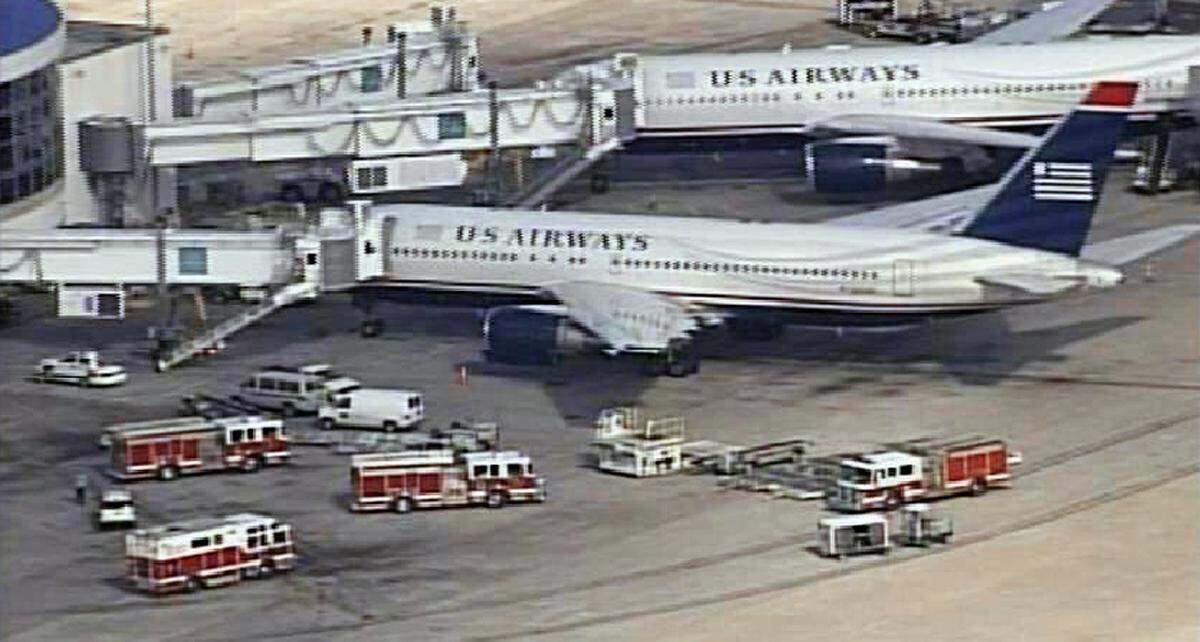
The FAA said these events are uncommon and noted that cabin air quality on commercial flights is comparable to homes and offices. However, recent studies suggest they’re occurring more often.
The Observer pointed to a recent Wall Street Journal investigation that estimated there were “possibly as many as 800 fume events per million flights” in the U.S. in 2024. That’s, at minimum, a handful of toxic air events every day.
“When people pay for their airline tickets, they totally trust the system,” Tristan Loraine, a former British Airways pilot, told The Observer. “Aviation is very safe, but on this specific issue — this is aviation’s Achilles heel. And (the industry) knows it.”
Here’s what travelers should know about cabin air contamination.
What’s a fume event?
A fume event occurs when “either engine oil or hydraulic fluid contaminates the ventilation air flow” to the passenger cabin, according to the Air Safety, Health and Security Department for the Association of Flight Attendants-CWA, a union representing more than 50,000 flight attendants.
There’s generally no smoke or haze, experts say. Rather, passengers may notice an unusual, foul odor similar to wet dog or musty socks.
Electrical issues, engine exhaust and de-icing fluid can also sour cabin air. But fumes from oil or hydraulic fluid can pose serious health risks to passengers and crew and impact flight safety, the union said.
“The industry has not properly addressed this hazard,” Judith Anderson, an industrial hygienist for the AFA-CWA and leading expert on fume events, told The Observer.
“It’s been known about for decades,” Anderson said. “They carry on business as usual, and that’s not right. And people get hurt and get seriously injured in some cases.”
Signs of fume exposure
Aside from an unpleasant odor, there are no tell-tale signs you could be breathing contaminated air.
“There are no (air) sensors on these airplanes, so it’s an impossibility for pilots, flight attendants or airlines to know if the airplane is actually airworthy,” Loraine, the former pilot, told The Observer.

What’s more, the fumes can be faint and have the potential to impair or “totally incapacitate” crew members, Loraine said.
Toxic airplane air symptoms
Recent studies show symptoms vary but include:
- Burning/irritation of the eyes, nose and upper airways
- Headache, dizziness, lethargy and confusion
- Coughing, difficulty breathing and shortness of breath
- Nausea, vomiting and diarrhea
Repeated or prolonged exposure to toxic fumes can cause chronic neurological, gastrointestinal and respiratory issues, according to a 2023 report published in BMC’s Environmental Health journal.
Loraine noted that cabin air is generally safer in Boeing 787 jets because the air isn’t supplied by the compression section of the plane’s engine, as is the case with smaller jets, including the Airbus A320 and A321.
“Most of these (fume) events in the U.S. in recent years have occurred on smaller aircraft,” he said.
I was exposed to toxic fumes. Now what?
Though troubling, fume events are generally rare and vary in severity based on factors like the engine’s temperature, The Observer reported. Some exposure events “pose little to no threat” to passengers and crew.
If you think you’ve been exposed, however, experts suggest writing a letter to the airline and the FAA.
It’s important to detail the source of the fumes, the type of smell, where it occurred and if you experienced any symptoms, per the AFA-CWA.
“If you develop any health issues in the future, at least there’s a record that you did highlight this at the time of the event,” Loraine said. “Have a paper trail.”

How do I protect myself from toxic plane fumes?
The short-term solution is a familiar one: mask up.
Wearing a mask, especially one with a filter or respirator, can help keep out harmful elements while flying, experts say.
“That one will filter out ultra-fine particles and stuff like that, so I would use one of those,” Loraine said. “It’s not a perfect solution ... but it’s better than nothing, and it’s something you can just have in your pocket.”
Théoden Janes and Ames Alexander’s reporting contributed to this story.
This story was originally published October 29, 2025 at 5:04 PM.