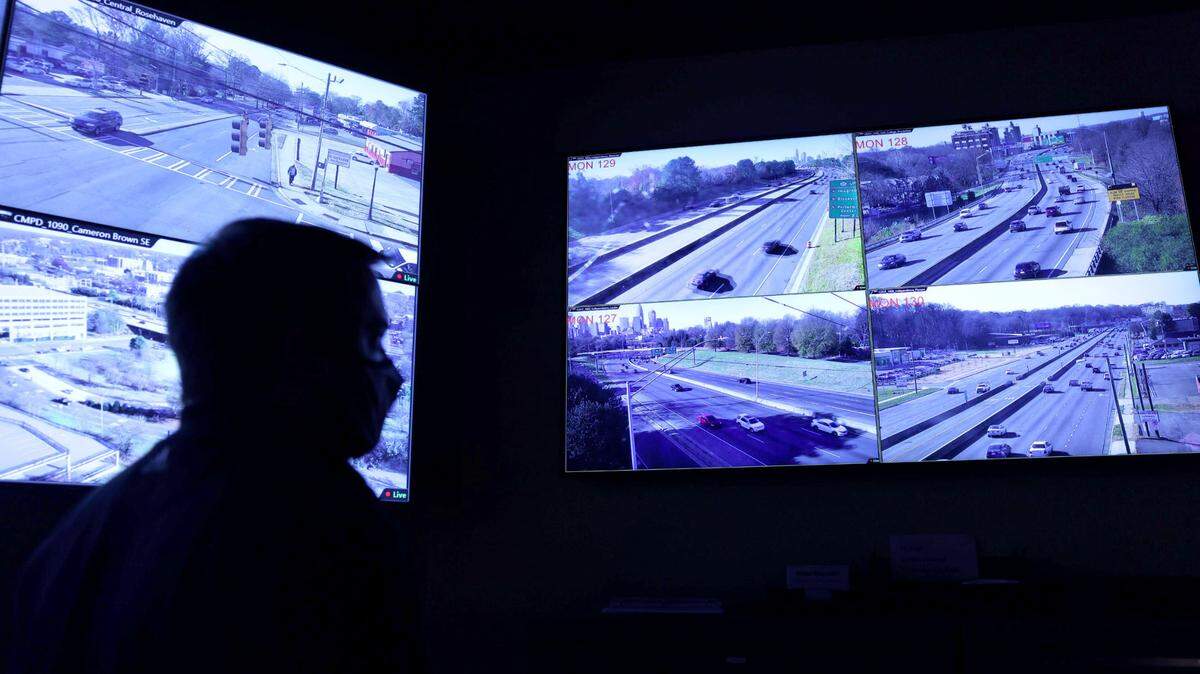
Is it too late for Charlotte to be a truly transit-friendly city?

READ MORE
Can Charlotte escape traffic hell?
Expand All
Getting from point A to point B in Charlotte is no easy feat.
If you want to travel by car, well, good luck, because so does everybody else. You could opt for public transit, but the light rail system only goes so far, and the bus might not come when you need it. And besides, who wants to take the bus when you can get there faster by car?
Such is Charlotte’s dilemma.
Ours is one of the fastest-growing cities in the nation, but its transit system is lagging. Before the pandemic, more than 76% of Charlotte workers drove alone to work, while less than 5% walked, biked or took public transit. That’s a lot of cars on the road, and it makes driving a pain. In 2019, each Charlotte commuter wasted 53 hours sitting in traffic, according to the Texas A&M Transportation Institute’s Urban Mobility Report. That’s an estimated cost of $1,271 per commuter in lost productivity and wasted fuel due to congestion.
Charlotte leaders have recommended a $13.5 billion plan to improve public transit and reduce congestion. But the plan, which includes new light rail corridors, bus system improvements and greenway and bicycle networks, has an estimated construction period of 18 years and faces significant hurdles from voters, surrounding towns and the state legislature. Meanwhile, the city’s population boom shows no signs of slowing down, pushing an already-strained system well past its limit.
As long as Charlotte’s transit system grows at a slower rate than its population, can Charlotte ever become a truly transit-friendly city? Or will we always be stuck playing catch-up?
“There is no alternative,” Jarrett Walker, a renowned public transit planning consultant and author based in Portland, Oregon, told me. “Either congestion strangles your economy and livability, or you do the only thing that works, which is to provide people with attractive ways to travel that don’t generate congestion.”
While rail systems are impressive — and sometimes great for economic development — they often prioritize investment over true mobility. One example of that: the proposed Silver Line, a 29-mile light rail corridor, will bypass the heart of uptown and stop about a mile short of the airport terminal, two hot spots that could certainly benefit from increased rail access. The Silver Line is one of several rail projects in the city’s plan, which some have criticized for focusing too much on light rail and not enough on other modes of transportation.
Walker said the most successful cities haven’t sacrificed bus developments for light rail, but rather grown both at the same time.
“The key is to think about the total transit system and not just the rail system,” Walker said. “Only the buses can reach most of the city, and people will use them if the service is designed to be useful.”
Allie Thomas, assistant professor of city and regional planning at UNC-Chapel Hill, shared a similar perspective.
“Public transit, you know, we need it, but what kind of public transit do we need?” Thomas said. “Light rail expansion is great, but because you’re talking about such rapid growth and development, buses are better in terms of addressing some of this because they’re flexible.”
Even if Charlotte gets more trains and more buses, Thomas said, there’s no guarantee that it will reduce congestion. Traffic is frustrating, but people with cars will continue to choose cars as long as it remains faster and more reliable. What Charlotte has to do is make public transit the better option.
“You can’t tell people, ‘Don’t drive your car, but we’ve got a crappy transit system.’ That’s not going to work, because they’re still going to drive because it saves them time,” Thomas said.
Increasing the quality of public transit is what will make people want to ride it. The city’s plan includes improvements such as bus rapid transit, bus priority corridors and additional “high-frequency” routes in key parts of Charlotte. But if you want to markedly reduce the number of cars on the road, high-frequency, priority bus service can’t be limited to select corridors. It has to be a network that helps people from all over the city get where they need to go. Houston is a great example of a city with a robust bus system, Walker said.
Any project — bus, rail or otherwise — requires a significant amount of time, money and political will, and those things can be hard to come by. A transit-friendly city isn’t out of the question, but as Charlotte knows well, getting there is the hardest part.
This story was originally published December 19, 2021 at 6:00 AM.

.JPG)