‘Kaizen!’: Why a Japanese philosophy has been so important to Duke’s success this season
READ MORE
2025 NCAA Tournament
The latest results, news, notes and analysis from the 2025 NCAA Tournament.
Expand All
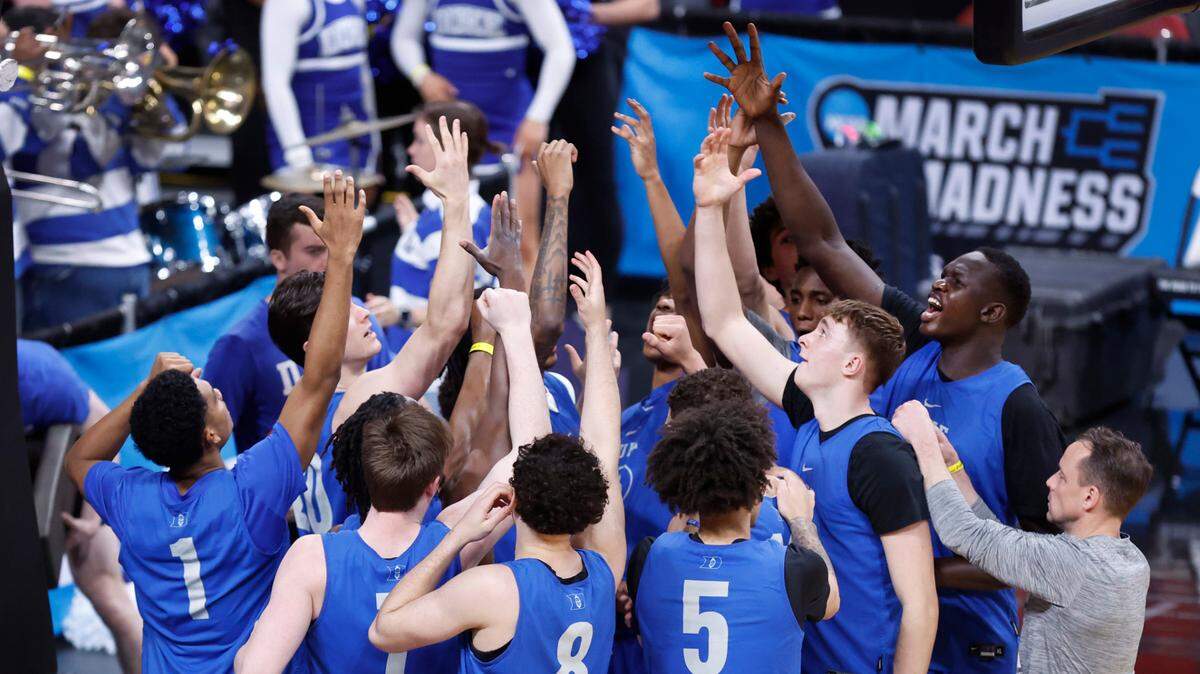
Duke basketball players gathered in a circle, hands joined at the center — a scene familiar in gyms across all levels of basketball.
With final words of instruction or encouragement from the coaches fresh in their minds, the players counted it down. But instead of “Go team,” “Duke,” or even “Brotherhood,” a different call rang out:
“Kaizen!”
Borrowed from Japanese, “Kaizen” translated to English means “improvement,” or “change for the better.”
For the No. 1-ranked men’s basketball team in the country, one with aspirations of a national title, it’s an appropriate mantra, one to which head coach Jon Scheyer has subscribed for some time.
And it has helped Scheyer — and the Blue Devils — achieve their current level of success, on step at a time.
For the past 12 months, Scheyer has embraced Kaizen while tearing apart and rebuilding the Blue Devils’ roster.
Last summer, he introduced the Kaizen philosophy to the newly assembled team, with many of the players having to learn exactly what their coach was talking about.
“It’s about 1%, getting 1% better every day,” said Cooper Flagg, Duke’s 6-9 consensus all-American freshman forward. “You know, just taking every day to get better in some way. So that’s really what it embodies, it’s just trying to get better every single day.”
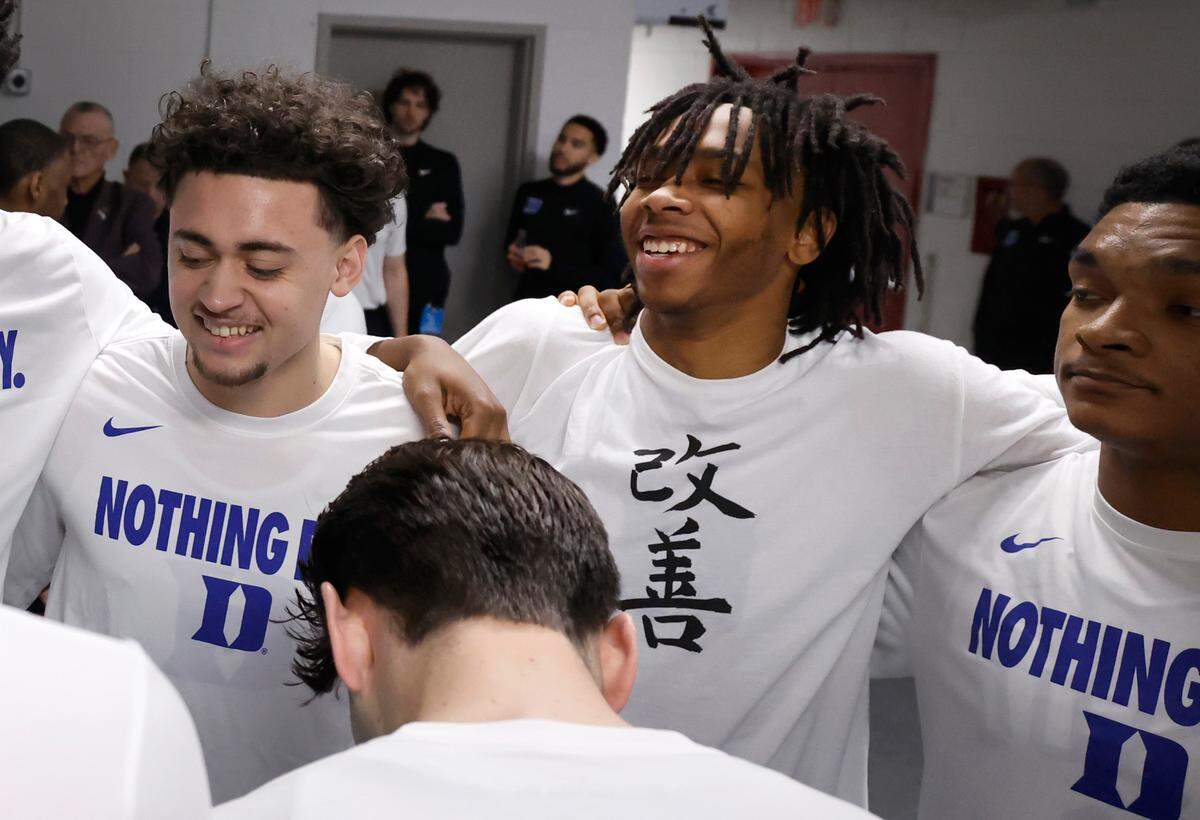
‘Something we say every day’
The Blue Devils (32-3) have reached the portion of their season when goals are reached. They’ve posted an unbeaten home season at Cameron Indoor Stadium. They won the ACC regular-season and tournament championships, earning the right for two more banners to appear in their home arena.
They are three wins away from reaching the Final Four, and five wins away from a national championship.
But they’ve reached this point incrementally, a little bit every day, by focusing on the journey and not on the destination.
“Kaizen,” indeed.
“I wanted to make sure I could be the best I could for these guys, and it started with learning, reading,” Scheyer said. “I came across something, just a philosophy about Kaizen, this Japanese philosophy basically talking about getting better every day, not getting caught up in results but being caught up in the process and what you’re doing every day to get better.
“I told our team right away, I believe if we approach it the right way, one day at a time, when we have opportunities to win a championship like this, we’ll be ready for it. Not to put up on day one San Antonio or ACC regular season championship or ACC Tournament championship.
“Our guys have taken it to heart.”
They’ve done it so much so that they insisted it be a regular part of the numerous huddles that occur in games and practices.
“We said it the entire preseason,” Scheyer said. “The first day of practice, I broke our huddle with something else, and they said, `No, no, no. Kaizen.’ So we’ve kept that, and that’s been something we say every day.”

‘We’re in March now’
Kaizen is popular in the business world. The Kaizen cycle of continuous improvement includes these steps: Identify problems, analyze current processes, create solutions, test solutions, measure and analyze results and standardize the solution.
NBA teams have utilized its principles as well. Former Boston Celtics coach Brad Stevens, now the team’s general manager, and former Duke player and current Atlanta Hawks coach Quin Snyder are Kaizen practitioners.
After hearing about Kaizen from Scheyer and learning more about it, Duke graduate student guard Sion James said the team’s embrace of it has paid off. It doesn’t matter if they were playing Auburn or Kentucky last fall, or Louisville in the ACC title game, or Mount St. Mary’s in Friday’s NCAA Tournament opener, the Blue Devils played to their standard.
“It’s just our standard of getting better every day,” James said Friday after Duke hammered Mount St. Mary’s, 93-49, to advance to meet Baylor in Sunday’s second round.
“We’re in March now, so there’s only so many games left, so many practices left. And a lot of people from the outside might think that now it’s just about performance, but it’s really just playing to the standard, improving on something every single day.
“We played really well today, but we didn’t play perfect, which means I still have steps to take, and throughout the year, as we’ve had a lot of success and we’ve had some falls, our thing is just getting better every day.”

‘We’re never really satisfied’
It’s Duke’s way of staying centered. The Blue Devils use a variety of non-traditional mechanisms to achieve this. Meditation is a big thing for them, too, with players having an app on their phones to aid with that.
Mason Gillis, a graduate student forward who transferred to Duke from Purdue last summer, had heard of the continuous improvement idea, but never Kaizen before Scheyer brought it up. He’s seen it’s impact this season.
“It’s understanding that you’re not going to win the game, you’re not going to get better or whatever it is, in one day,” Gillis said. “You’ve got to take it day by day, and then that turns into week by week, and then month by month, and year by year. In three years, you can surpass so many people if you just focus on the day by day and what you can handle in that day and then move on to the next day rather than thinking, `Oh, I gotta catch up. I gotta get so much better.’ You just gotta simply focus on each day. How can I improve today?”
Duke has practiced that philosophy enough that it’s among the nation’s top teams. When his Blue Devils lost, 76-64, to N.C. State in last year’s NCAA Tournament to fall one win shy of the Final Four, Scheyer said it was “a terrible feeling in my life.” He;s worked every day to improve since then.
His team has done the same since he introduced Kaizen to them.
“I think it just speaks to our team,” Flagg said. “It’s the kind of the guys that we have. It’s just been a really competitive group and a team that’s always trying to get better, always working hard, and we’re never really satisfied.”
This story was originally published March 23, 2025 at 5:30 AM with the headline "‘Kaizen!’: Why a Japanese philosophy has been so important to Duke’s success this season."



















































.JPG)
.JPG)