
Charlotte bonds for housing, neighborhoods and streets cruise to an easy victory
Unofficial results show Charlotte’s three bond referendums passed easily Tuesday, as voters overwhelmingly approved a combined $197.2 million for transportation, affordable housing and neighborhood improvement.
Election results are still unofficial, and mail-in ballots are accepted in North Carolina through Nov. 12, if postmarked by Nov. 3. But leaders from the bond campaign declared victory Tuesday evening as all three issues passed with wide margins.
“We’re very, very happy because this is a win for all of us who love Charlotte,” said Kieth Cockrell, a co-chair for the bond campaign and executive with Bank of America. He praised the cooperation between city leaders and business community to support the measures and encourage voters to as well.
The transportation bond seeks $102.7 million for work to improve traffic flow, expand bike and pedestrian routes, and build or repair bridges and sidewalks. With mail-in and early vote totals, and 100% of precincts reporting, the measure passed 77% in favor, with 23% opposed.
Among the projects designated for bond funds are efforts to reduce congestion and improve traffic flow in University City, Steele Creek and South Charlotte. The bond would also pay to resurface streets and upgrade traffic signals, according to the campaign’s website.
The $50 million request for the city’s Housing Trust Fund will build or preserve existing affordable housing for low- and moderate-income households. With mail-in and early vote totals, and 100% of precincts reporting, voters approved the measure with 77% in favor and 23% opposed.
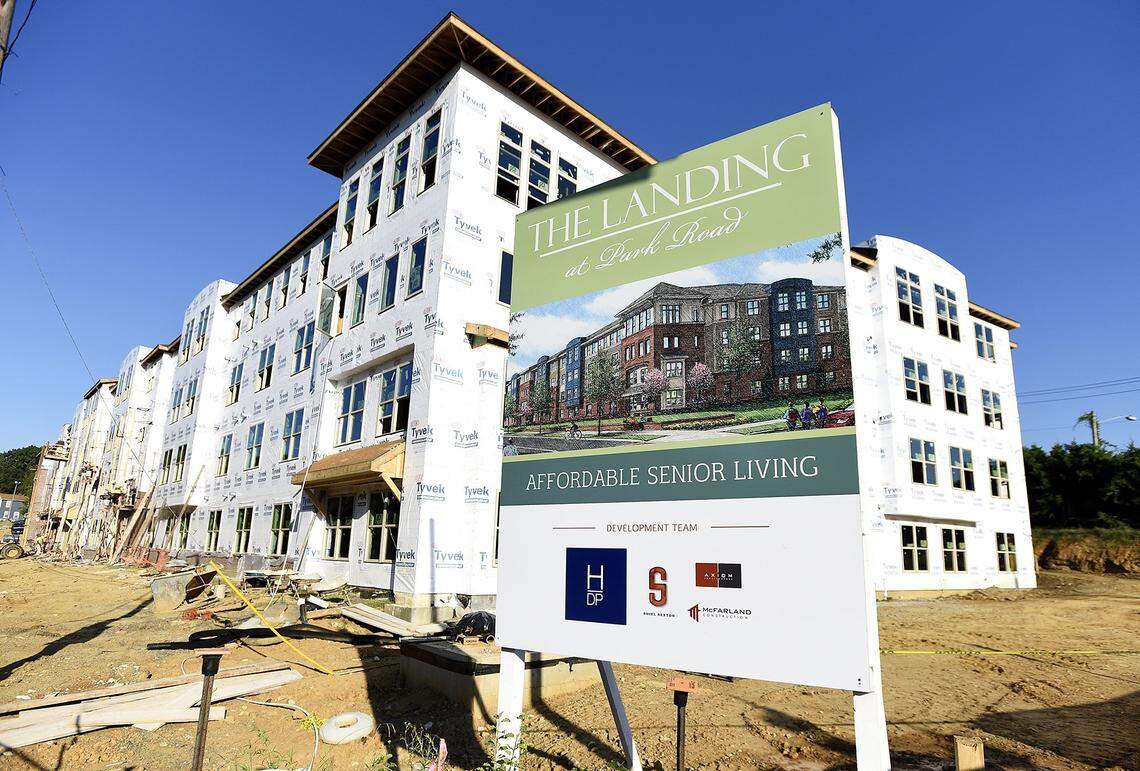
This is the second time that city leaders have asked voters to approve $50 million for affordable housing. Before 2018, voters approved $15 million every two years but officials increased that bond request to $50 million, citing Charlotte’s shortage of affordable housing.
The $44.5 million for neighborhood infrastructure improvements will be used for sidewalks, bike lanes, lighting, storm drainage and landscaping in distressed neighborhoods. With mail-in and early vote totals, and 100% of precincts reporting, 79% of voters were in favor; 21% opposed.
The city is targeting six “corridors of opportunity” for investment: Beatties Ford Road-Rozzelles Ferry Road; Central Avenue-Albemarle Road; Freedom Drive-Wilkinson Boulevard; Interstate 85-West Sugar Creek Road; North Tryon-Graham streets; and West Boulevard.
‘The necessary investments’
Cockrell said the wide margins of support show residents care about the city’s future for livability and growth. Financing costs for the bonds are included in the city budget, so property taxes won’t be increased to pay for them.
Leaders from the Charlotte Regional Business Alliance, which supported the bonds, also lauded the result.
“Tonight’s passing of the city bonds sends a clear message: Charlotte must continue making the necessary investments in our infrastructure. These bonds will provide funding for key projects that help with the city’s growth in vital areas,” said alliance senior vice president of government affairs Joe Bost.
This is the last of four referendums planned by city leaders.
Voters approved bond proposals in 2014, 2016 and 2018. Charlotte voters approved transportation, neighborhood and housing bonds in 2018 by margins of 2-to-1 or greater.
This story was originally published November 3, 2020 at 8:41 PM with the headline "Charlotte bonds for housing, neighborhoods and streets cruise to an easy victory."
%20Cropped.jpg)