Savor tidewater cuisine with Jimmy Pearls’ Virginia-style croaker and potatoes
READ MORE
The Skillet: How Black Cuisine Became America’s Supper
For the past six months, we have been interviewing North Carolina-based chefs, who generously shared their expertise in making recipes from Nigeria, the American South, Brazil, and Puerto Rico for a one-of-a-kind journey into how our plates came to look the way they do. Explore food of the African diaspora here:
Expand All
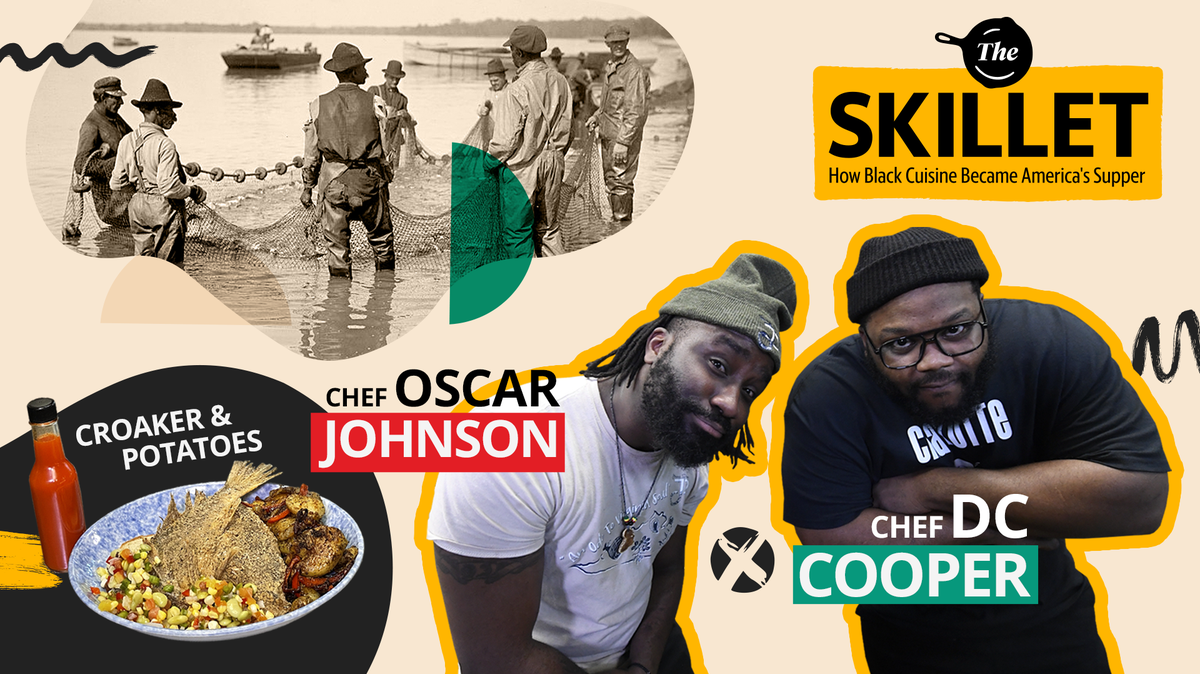
The salt of Old Bay, fragrance of celery seed and cayenne pepper heat – you can’t get much more Tidewater than this. It mingles on the air, as much a hallmark of the region as the views of the Chesapeake Bay. And chefs Daryl “DC” Cooper and Oscar Johnson are committed to bringing these authentic tastes of Virginia to land-locked Charlotte.
Cooper hails from Newport News, while Johnson calls Hampton home. The co-owners of Jimmy Pearls Virginia Soul Spot say even the company name reflects their heritage: a male blue crab is called a Jimmy, and of course pearls come from oysters.
“It really says Virginia,” Johnson said.
The region’s culinary tradition is older than the United States itself and can arguably be traced back to Jamestown in 1619, when the first enslaved Africans from Angola stepped foot on the land. Their influence shaped culinary and cultural traditions that reverberate to this day.
“Our ancestors came through Point Comfort, the port area. We are paying homage, channeling that energy that they left in the food. We’ve got a big history in food because we did all the cooking,” Cooper said. “The dishes on our menu are giving a lesson, telling our families’ histories.”
The history of croaker
Fried fish, specifically croaker, and skillet-fried potatoes is one such dish. The Atlantic croaker is plentiful in the Chesapeake Bay and distinctive for the loud croaking sound it makes. Its reputation as a bottom-feeder and many bones made it a poor man’s delicacy, but a delicacy nonetheless.
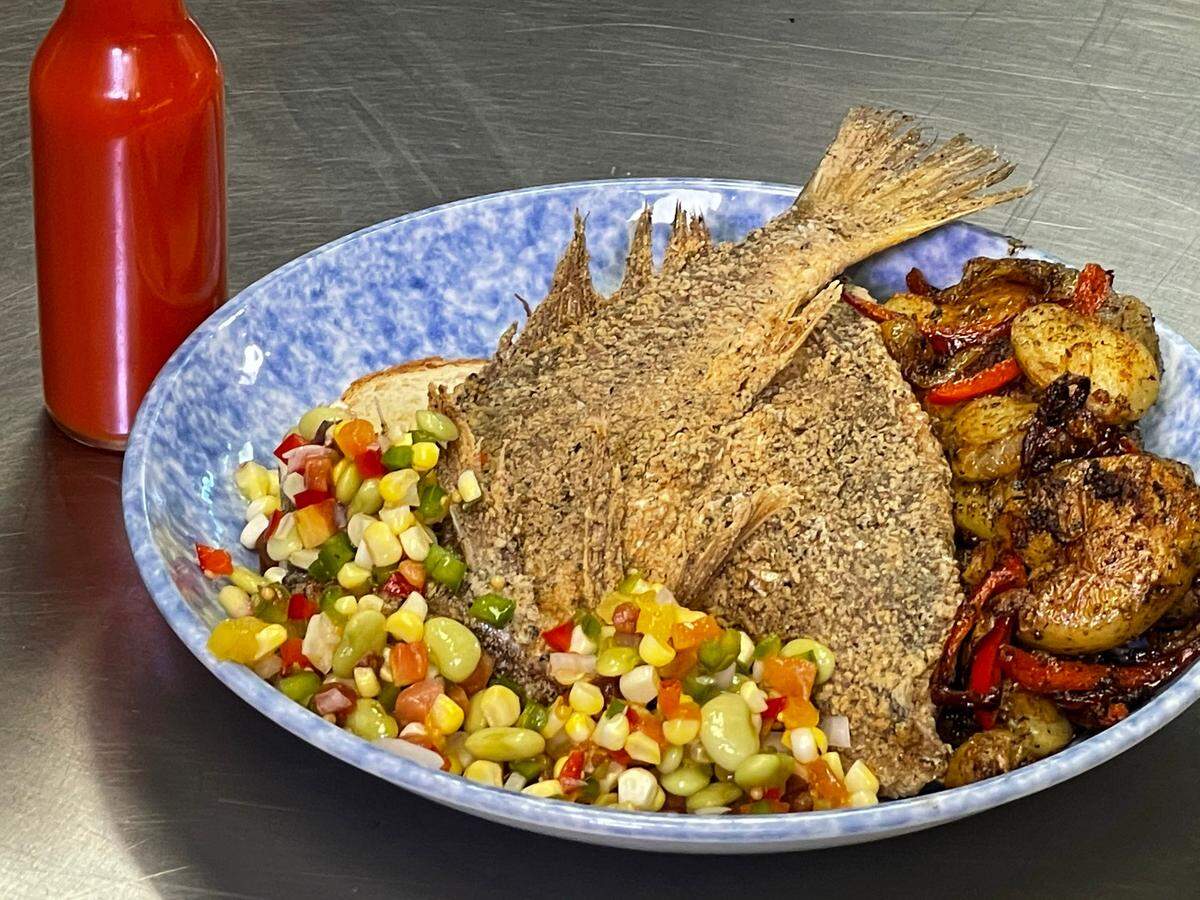
In antebellum times, Black captives would supplement their diets with fish they caught, cooked and ate together. Enslavers allowed it as a “free” meal they didn’t have to provide. To this day, the fish remains a community staple, sold on Friday nights outside of beer halls and on Sunday afternoons to fundraise for churches.
Several fish sandwiches have found their way onto the Jimmy Pearls menu, from Skate to Ma’s Catch, but the favorite is Uncle Gene’s fish sandwich: a local catch of the day dressed in field pea slaw and Jimmy sauce, a bright sweet-potato tartar with chow chow.
“I owe to my late Uncle Gene how clean I am, how polite I am,” Johnson said of his mentor, a deacon known for his excellent fried fish. “So we wanted this to be the best. So what makes a good sandwich: sauce, something acidic, fried nicely. And the slaw’s colors and flavors make it a nicely decorated dish that gives Uncle Gene the proper sendoff. With fish peppers, every inch of it is super Virginia.”
Representing Tidewater culture
Another super Virginia item that periodically appears on the menu is yock, a hybrid noodle dish born of Chinese-American immigrants and African-American sailors. Consisting of yockamein noodles (Johnson and Cooper swear by Fiber Foods Inc., which has been producing them in Norfolk, Va., since the 1930s), tangy broth and some kind of chipped meat, yock is automatically Tidewater.
In addition to waterfront culture, Jimmy Pearls makes sure to represent Virginia’s agricultural character. Boiled peanuts, apples and chicken share the spotlight with pink- and purple-hulled peas, pickled cabbage, kale and bell peppers for a surprising harmony of flavors.
“When people eat our food they ask, ‘Where are y’all from?’” Johnson said.
Johnson and Cooper met in 2010 at Johnson & Wales University in Charlotte and clicked even before learning they came from the same place. Johnson was a creative wild spark, Cooper was stable and consistent. Since then, their careers have taken complementary paths: Johnson working under master chefs and at country clubs, Cooper in institutional environments such as schools, where dietary restrictions and the structure of food costs take consideration. Altogether, it’s a good partnership.
“Coop lets me do whatever, and then I’ll get to the halfway mark and say that didn’t make sense, and we pull back. But the very next time I’m knocking it out of the park,” Johnson said.

Tell us what you think.
We'd love your thoughts on our food series, highlighting connections between foods of the African diaspora and Southern cuisine. Please let us know using our Google Form.
Croaker and Potatoes with Pickled Succotash
Chefs Oscar Johnson and Daryl “DC” Cooper of Jimmy Pearls
Vegetables - pickle ahead of time
¼ cup white onion, diced
1 cup baby lima beans
1 cup corn
2 garlic cloves, thinly sliced
½ cup heirloom tomatoes, diced
½ cup red and green bell peppers, diced
Pickling Liquid
½ cup red wine vinegar
2 cups apple cider vinegar
½ cup sugar
1 ½ tablespoons pickling spice
2 tablespoons salt
1 cup water
Method of Production
Start with pickling liquid, placing all liquid ingredients in a small pot. Bring to a boil over medium-high heat until salt and sugar are dissolved.
Remove liquid from heat and set aside to cool for 20 minutes.
As liquid cools, combine all diced vegetables for succotash in a 32-ounce (1 quart) lidded, airtight container.
Strain pickling liquid into another container to separate pickling spices. Discard spices.
Pour pickling liquid over mixed succotash vegetables, enough to cover them.
Place uncovered mixture in fridge and cool for about 4 hours, then cover container with lid. Allow to pickle for at least 8 hours. For the best results, pickle for several days before use.
Fried Croaker
Ingredients
2 whole, bone-in croaker, gutted with head removed
Juice of 1 lemon
Flour-based breading of choice, enough to completely dredge fish
2 cups frying oil
Salt and pepper to taste
Method of Production
Generously season croaker fillets on both sides with salt, pepper and lemon juice.
In a shallow, size-appropriate container, add the breading mixture and dredge the entire croaker fillet. Place on a separate plate.
Heat frying oil on medium-high heat until temperature reaches 350 degrees.
Once frying oil is at temperature, gently place croaker fillet in skillet and fry for 3-4 minutes on each side until golden brown and crispy. Transfer to a paper towel-lined plate to soak up excess oil. Repeat frying procedure with remaining fillets.
While fillets are piping hot, season with salt and squeeze of lemon juice.
Skillet-Boiled Potatoes
2 pounds creamer potatoes or baby red bliss
1 can light beer
¼ cup Old Bay or crab boil seasoning
1 gallon water
⅛ cup sugar
1 small lemon, sliced
2 tablespoons oil or butter
Method of Production
Rinse potatoes and place in a pot with seasoning, beer, water, sugar and lemon slices.
Bring to boil for 5 minutes. Turn off heat and let potatoes sit in liquid for 15 minutes.
Drain potatoes and chill in the fridge for 30 minutes.
Heat pan with oil and add potatoes. Cook until browned and crispy.
Transfer to a plate and sprinkle with seafood boil seasoning or salt and pepper.
This story was originally published May 23, 2021 at 5:20 PM.
.jpg)