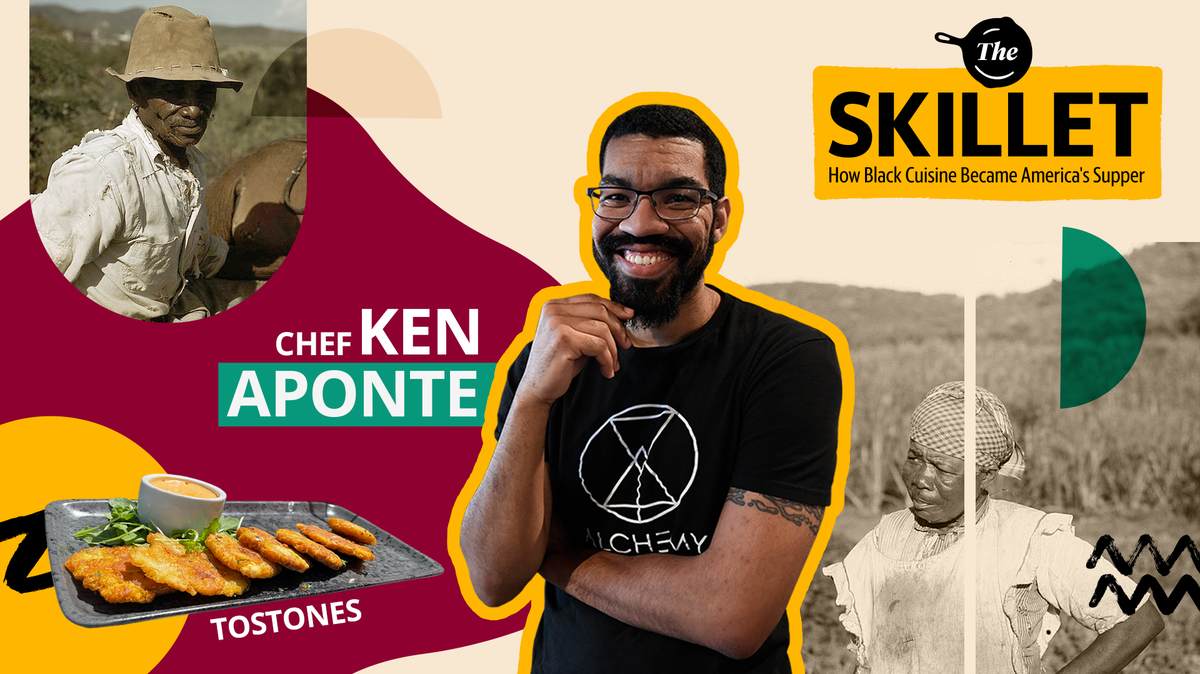
Charlotte chef Ken Aponte drops the science behind the perfect ‘simple’ tostones
READ MORE
The Skillet: How Black Cuisine Became America’s Supper
For the past six months, we have been interviewing North Carolina-based chefs, who generously shared their expertise in making recipes from Nigeria, the American South, Brazil, and Puerto Rico for a one-of-a-kind journey into how our plates came to look the way they do. Explore food of the African diaspora here:
Expand All
Chef Ken Aponte is a bit of a mad scientist in the kitchen.
Shocks of creativity and flights of fancy are tempered by a rigorous adherence to rules and a strict philosophy of how things should be done. Even his restaurant, Alchemy at C3 Lab, is a site of experimentation, sharing space with a full art gallery.
“That’s what alchemy is — taking a set group of elements and transforming them into something else entirely,” he said. “I’m one of those people who always likes to push the envelope. It’s only going to go one of two ways: terribly or awesome. So why not take the chance?”
Surprisingly, Aponte had no great love for food growing up. He didn’t even eat much as a kid.
“My mother was a terrible cook,” he said. “But there was one thing she’d make that I always loved: chicken in a broth with potatoes, olives and tomatoes. It would come off the bone. That was the only time I’d eat dinner. When she tried to get creative and do what she saw on TV, it was downhill.”
Plantains cross cultures
There was one other dish so foolproof that even his mother could make it.
Plantains, the green, starchy vegetables that resemble an oversized banana, are the ubiquitous side dish of Africa, Latin America and the Caribbean. Spread across hemispheres through the Trans-Atlantic Slave Trade, people eat them young and savory or mature and sweet, and prepare them boiled, steamed or fried. Ghanaians garnish it with peanuts as kelewele, while Dominicans mash them with garlic and pork for mofongo.
“Wherever Black people went in the world that was hospitable, they took plantains and other cooking measures with them,” Aponte said. “African roots are so deeply entwined in Puerto Rico. This is one of the ways the culture has persevered, and we’ve done it through food.”
The Bayamon, Puerto Rico-born chef loved his plantains fried twice and finished with garlic oil, the classic method for savory, crispy tostones. As a kid, he’d mix up ketchup and mayonnaise as a dipping sauce and have it almost daily. Otherwise, though, the young Aponte was more intrigued by science. He’d create concoctions in the backyard of water, mud and plants that he called potions. He’d try to get his mother to taste them, but she never would.
“Maybe that drove me to want people to eat my food,” he said, chuckling.
As he got older, he attended a magnet high school that had many courses of study, from STEM to the performing arts. Rather than chemistry, Aponte decided to try the culinary route and hasn’t looked back.
His analytical approach to cooking comes through in his restaurant’s vegetarian-focused menu, which includes options for meat eaters. The offerings take into account many dietary restrictions, whether meatless, gluten-free or food allergies, and he clearly labels the categories for each dish.
And despite his penchant for adventurous forays in the kitchen, tostones is one dish Aponte plays straight. The process looks easy, but there are a few tricky areas that he shared tips for navigating.
Tips for cooking plantains
Keep your plantains refrigerated until they’re ready to cook. It helps them stay “young” longer. On the counter, they’ll turn into maduros quickly, which are soft, brown and sweet when fried — the preferred preparation for plantains in Africa and much of the Caribbean, but not the desired effect for tostones.
Warm your plantains before peeling them. Score the peel and give them a quick soak in hot water. It makes the peel pull away much easier without losing a lot of flesh.
Add a bit of salt to the bath. This will not only thaw the plantains faster but will add an extra crisp.
Use a neutral flavored, high smoke point oil like grapeseed for frying, and heat it up slowly.
Cut tostones about an inch thick and smash according to taste. Some like them thin, some thick — experiment with both to find your liking.
Have fun!
“It’s a simple food,” Aponte explained. “Making it fancy is really the only way to make a mistake or mess it up. It doesn’t need to be fancy.”

Tell us what you think.
We'd love your thoughts on our food series, highlighting connections between foods of the African diaspora and Southern cuisine. Please let us know using our Google Form.
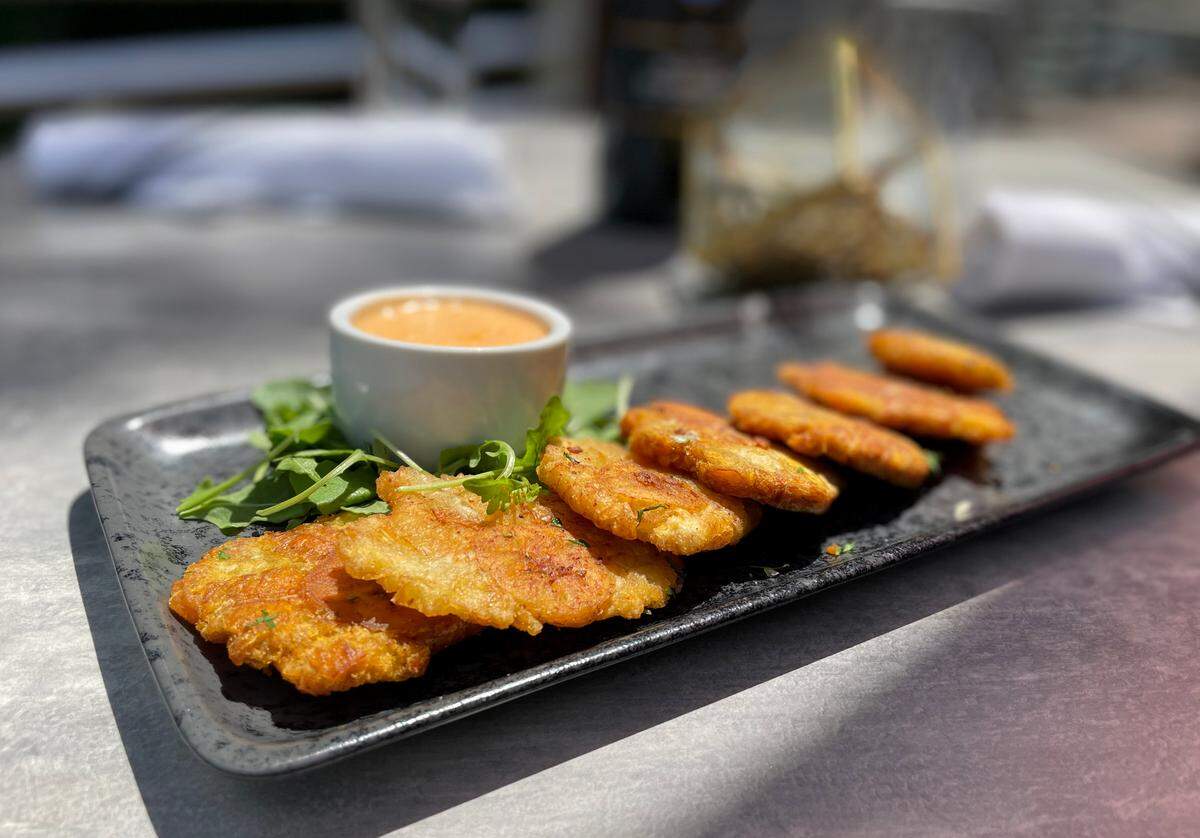
Tostones with Aioli
Chef Ken Aponte of Alchemy at C3 Labs
Ingredients
1 plantain
1 tablespoon adobo seasoning
1 tablespoon garlic, chopped
1 tablespoon chopped herb, such as parsley
Method of production
Soak unpeeled plantain in hot water until warm, about 2 minutes.
Score sides of plantain and peel. Cut peeled plantain into 2-inch slices.
Fry plantain slices in a pan or deep fryer at 350 degrees, 4-5 minutes or until golden brown.
Remove plantain slices from fryer. While hot, smash with bottom of plate or pot. There should be a medallion shape in the middle of the smashed piece.
Fry smashed slices again for 2 minutes.
Lightly saute garlic in a pan.
Season plantain slices to taste with adobo seasoning and sauteed garlic.
Vegan aioli
Ingredients
2 tomatoes
½ red onion
1 tablespoon garlic
1 cup white wine
2 cups soy milk
2 cups vegetable oil
Salt and pepper
Method of production
Peel and cut tomatoes and red onion.
Place vegetable oil in a saucepan at high heat.
Add garlic and onions and cook until translucent. Add tomatoes and white wine. Allow mixture to reduce by half.
Add soy milk and allow it to reduce by 25 percent. Remove from heat and let cool
Place all ingredients in a blender on high, slowly adding oil until mixture becomes thick. Xanthan gum may be used in place of oil.
Add salt and pepper to taste.
This story was originally published May 23, 2021 at 5:16 PM.
.jpg)