Queen City Quarter struggles to regain visitors despite rebranding in uptown
More than two years after undergoing renovations, an ownership change and a rebrand, Queen City Quarter is still struggling to attract consistent foot traffic to the uptown entertainment complex formerly known as the Epicentre.
This portrait of the uptown Charlotte complex is based on interviews with 10 people, including six businesses at the site.
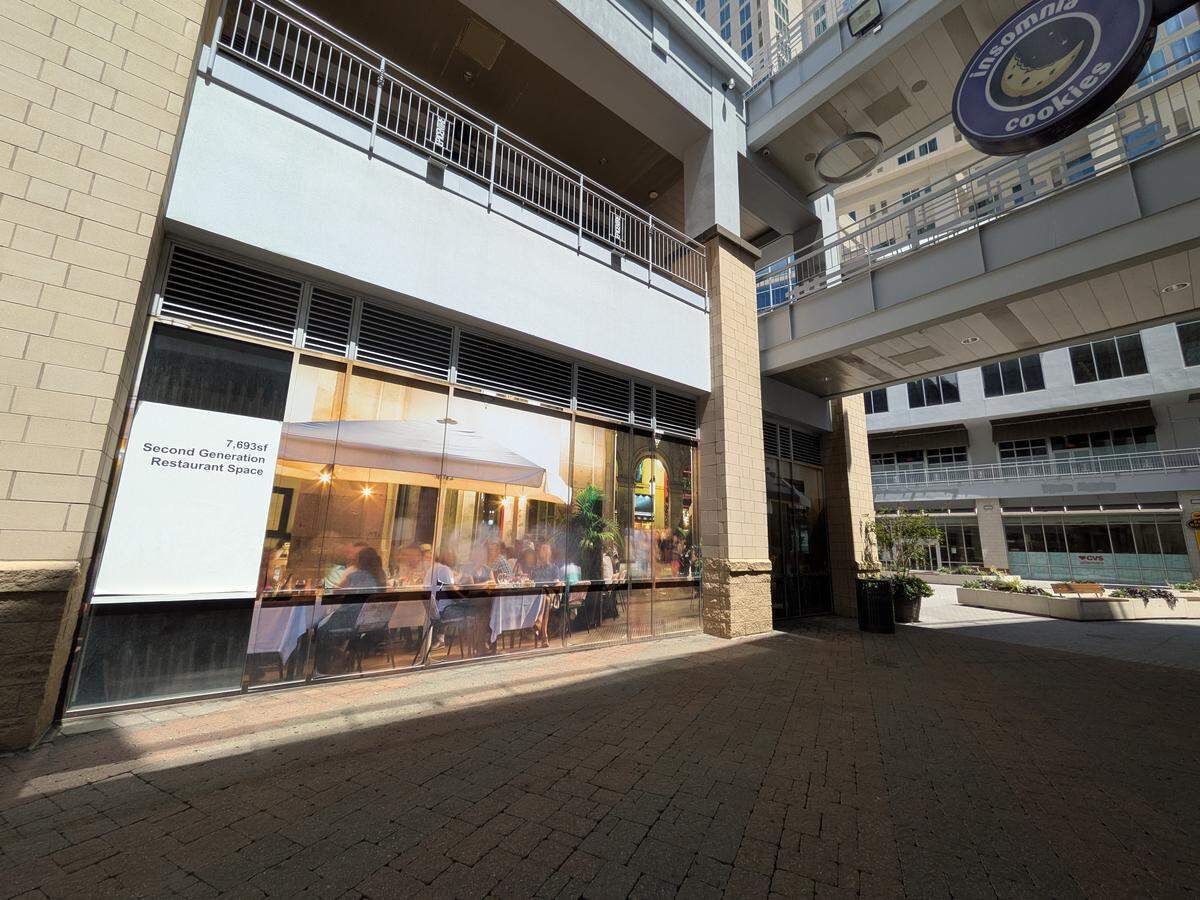
They say sales are significantly lower than pre-pandemic levels, with one even calling it “apocalyptic.” Only 18 of 50 tenant spaces are currently occupied, according to the Quarter’s own website, leaving nearly two-thirds of the complex empty.
Queen City Quarter’s challenges mirror broader issues in uptown, where three restaurants closed just last month. Overstreet Mall — a skywalk system that connects restaurants, retail, office buildings and hotels with entrances on Tryon and College streets — also lacks retail and restaurants with businesses that have not reopened since the pandemic.
There’s also been an uptick in violent crime in uptown, including six people who were shot, one fatally, two blocks away from the Quarter.
But Queen City Quarter and Charlotte Center City Partners officials insist the site is on a comeback, citing the addition of new businesses and more stores planned, plus events like QCQ @ 5 and marketing initiatives.
On a recent Friday afternoon, retired Charlotte resident Brenda Bunting lamented the current state of Queen City Quarter as she walked through the quiet courtyard. She recalled the vibrant past of the former Epicentre when it was filled with a movie theater, live music venues, bars and more restaurants.
Bunting celebrated her birthday at one of the new businesses, Sea Grill Restaurant & Bar, but wishes there were more attractions at the center.
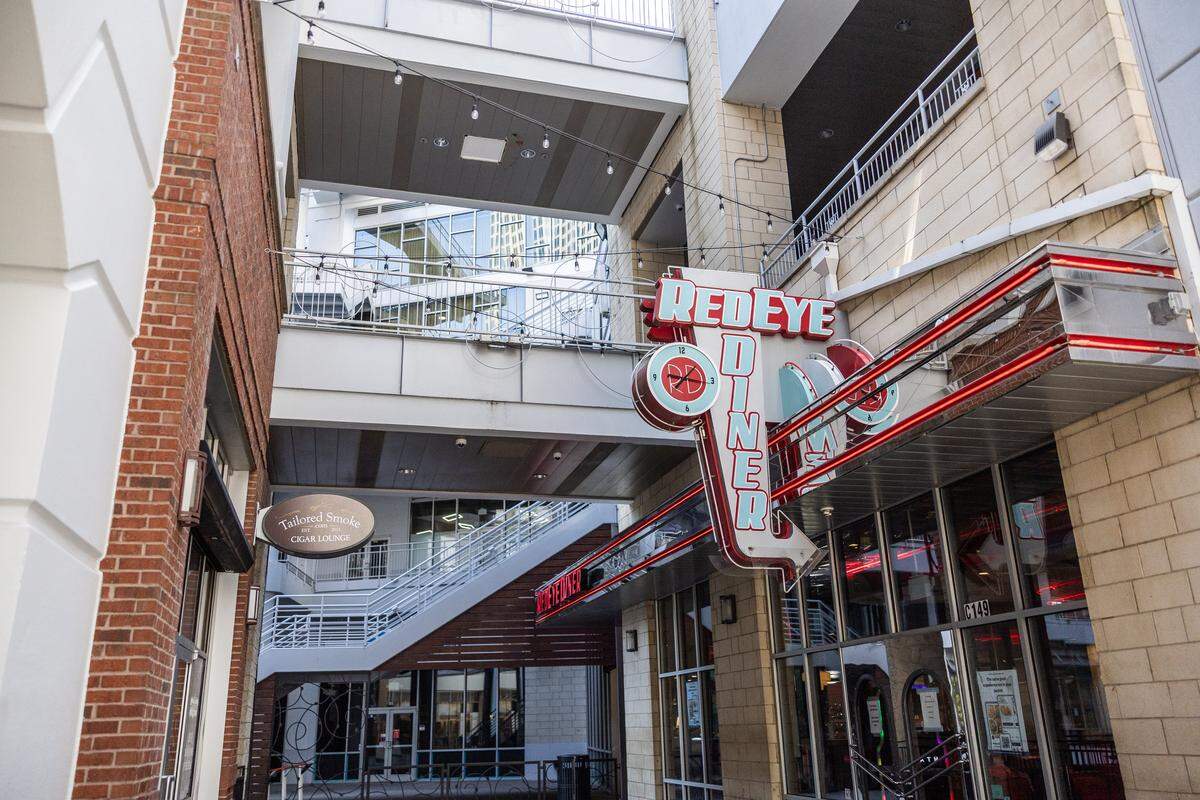
Nearby at Tailored Smoke Cigar Lounge, corporate general manager and co-owner Anitra Gray said they are “still struggling.”
The lounge opened in 2018. Weekend sales are down as much as 70% compared to pre-pandemic, Gray said. Weeknights bring in as little as $100 in sales.
“Since a lot of the places (at Queen City Quarter) have closed, traffic is a lot slower,” said Gray.
While a handful of new businesses have opened, overall foot traffic remains sluggish, Gray said, seeing customer rushes primarily during conferences and events uptown. Parking costs, she added, also deter customers.
From Epicentre to Queen City Quarter
Before it was Queen City Quarter, the 302,324-square-foot, mixed-use center at 210 E. Trade St. was Charlotte’s hot spot for night life in uptown. Epicentre opened in 2008, during the recession.
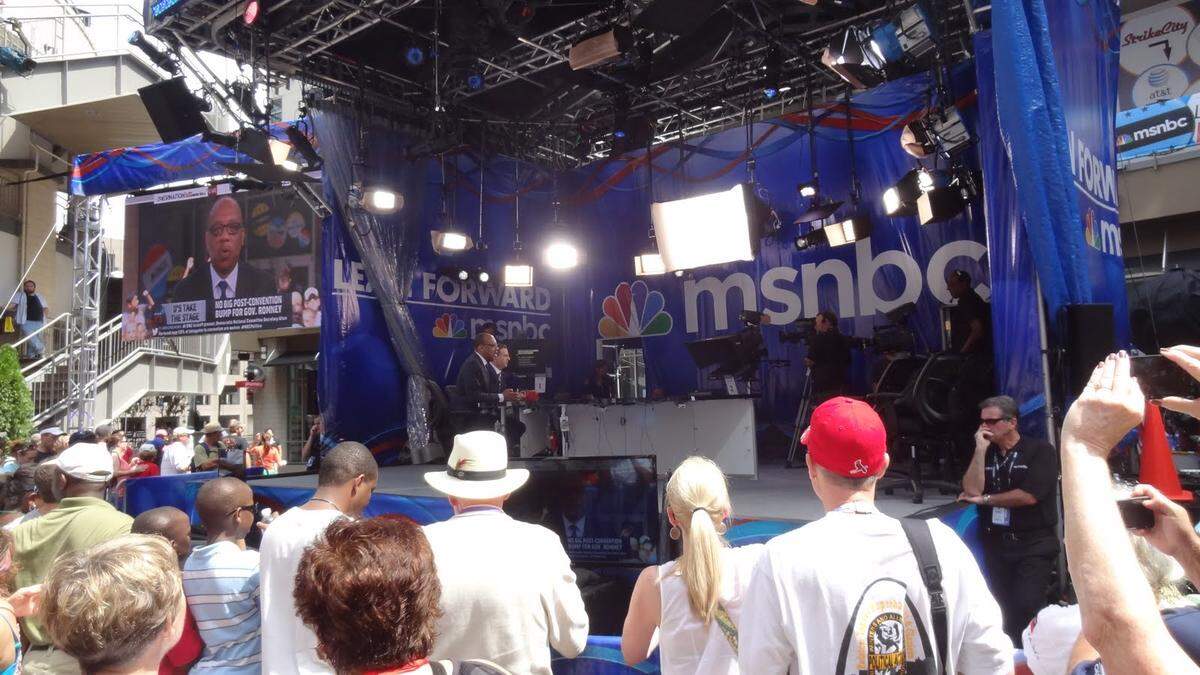
In 2014, California real estate group CIM Group bought Epicentre for $130.5 million. At the time, it was 94% leased, with 70% of its rental revenue from 16 restaurants. During its height of popularity, the one-block complex drew crowds for CIAA parties, the NBA All-Star Game and the Democratic National Convention, among other high-profile events.
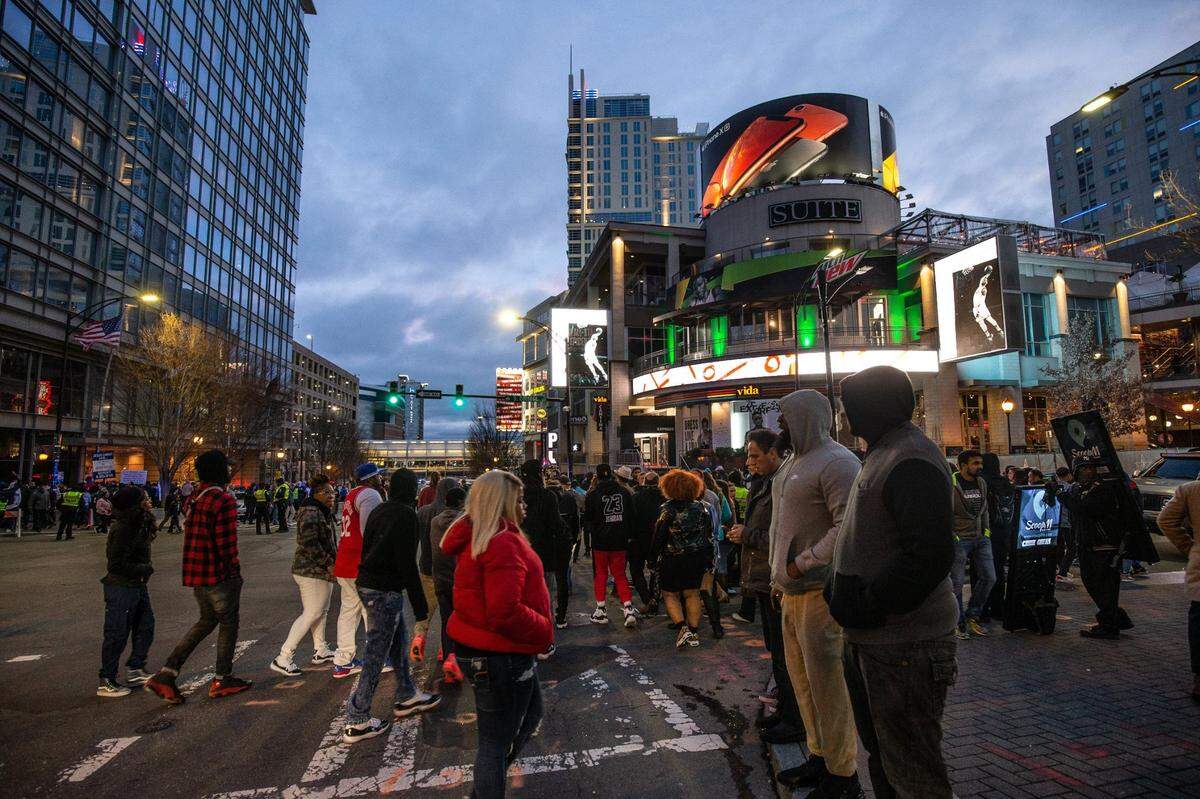
Epicentre’s demise had been exacerbated by the COVID pandemic, rising crime in the area, and nightlife and development growth shifting to South End.
From 2017 to 2019, a total of 54 violent crimes were reported at Epicentre, more than any other business in the city during that period, The Charlotte Observer previously reported.
In June 2021, the three-story complex fell into receivership after defaulting on an $85 million loan. The center was 70% vacant that year.
In 2022, it sold at auction with only one bid from its creditor Deutsche Bank for $95 million.
Signs of the Epicentre continue to linger. Gray metal railings still bear the name. Now-vacant business windows promote retail space available. The bold World of Beer signage and Wild Wing Cafe mural also hearken to its past.
Some longtime tenants remain, including Bowlero bowling alley and Insomnia Cookies. They stand alongside newcomers listed on the Quarter’s directory like Stoner’s Pizza Joint and Standout Vintage shop.
Property management group CBRE declined to comment on the vacancy rate.
Despite changes, ‘nothing’s changed’
In 2023, CBRE announced the former Epicentre complex would be rebranded as an entertainment destination instead of a nightclub venue.
The center also was getting a facelift with property renovations including replacing pavers and installing benches in the 15,462-square-foot courtyard, along with painting and making other repairs. None of the four new businesses promoted at the time are still there.
Long Chen, manager of Fuji Hibachi and Teriyaki Grill on the second floor of Queen City Quarter, said even with the renovations and new ownership, “nothing’s changed.”
“You see how empty it is,” Chen said during a recent interview with The Charlotte Observer on a Friday afternoon. “I wish more people were coming in.”
The Japanese restaurant, which used to thrive at lunchtime with uptown workers, has yet to see business return to pre-pandemic levels. Office vacancy rates in Charlotte remain higher than the national average, the Observer reported last month, as many companies have shifted to allowing more hybrid and remote work.
Although Chen said his rent is now “a little cheaper” under new ownership, he remains worried. “We don’t have enough sales,” he said.
Waiting for Spectrum Center to reopen
Many of the businesses at Queen City Quarter said their businesses now rely more on other events in uptown.
The temporary closure of the Spectrum Center in May to undergo $215 million in renovations has significantly impacted sales, without concerts and other events to draw visitors to the Quarter’s neighbor. It is scheduled to reopen in October.
“It feels apocalyptic still,” said Samantha Francis, general manager of Mortimer’s Cafe and Pub, lamenting that she thought that Queen City Quarter was not progressing as its own entity. “We’re still very much event-based.”
Gray at Tailored Smoke and Brian Dominick, owner of RedEye Diner, agreed.
“When the arena is closed, that makes a difference to us,” Dominick said. “The events help us dramatically.”
Francis, whose casual bar is one of the last remaining nightlife spots from the Epicentre era, understands the new ownership’s desire to move away from an “adult playground” image. But she said there needs to be more entertainment options to thrive again, suggesting a pickleball court or other activity-based businesses.
“Crowds draw a crowd,” Francis said. “And we don’t have a crowd right now.”
Last month, a rooftop event by MilliUp Event Center drew over 3,000 people, Charlotte Axios reported. But Francis said it had little effect on other businesses within Queen City Quarter.
Still, she remains hopeful that uptown will eventually regain its vibrancy, but questions if businesses can “survive until it does.”
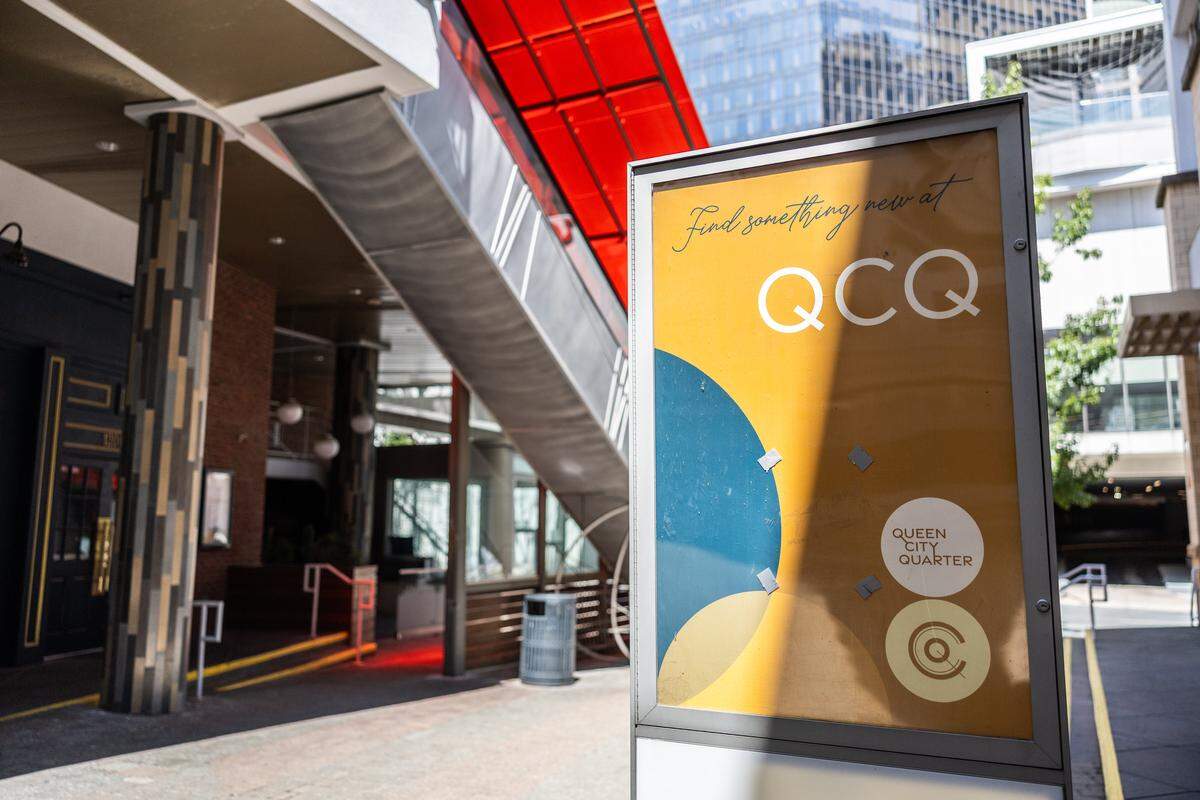
Seeing signs of progress at Queen City Quarter
Kaitlyn Fitch, a retail broker for CBRE, highlighted the property renovations in the courtyard undertaken over 18 months ago.
Fitch also acknowledged the shift in the “uptown landscape post-COVID,” with South End becoming a major entertainment district.
The goal at Queen City Quarter, she said, is to create a “more professional, family-friendly environment.” CBRE has hosted events like “Alive After Five” and has a few events in the works to promote the center, Fitch said.
James LaBar, senior vice president of Economic Development for Charlotte Center City Partners, said Queen City Quarter is a crucial component of uptown due to its prime location and accessibility to public transportation.
He also highlighted the new additions at the Quarter like Sea Grill, Kitchens + Kocktails soul food restaurant and Lottie’s Cafe, and more planned like Mooya Burgers.
“I think it (the Quarter) really relies upon the small businesses that are going into those spaces,” LaBar said.
He also said uptown as a whole is on the rise. Its overall visits are at about 83% of pre-pandemic numbers, and that number has steadily increased.
LaBar reported a 2% to 3% increase in uptown foot traffic this June compared to June 2024, driven significantly by out-of-town visitors. He anticipates continued growth, especially when Spectrum Center renovations are completed.
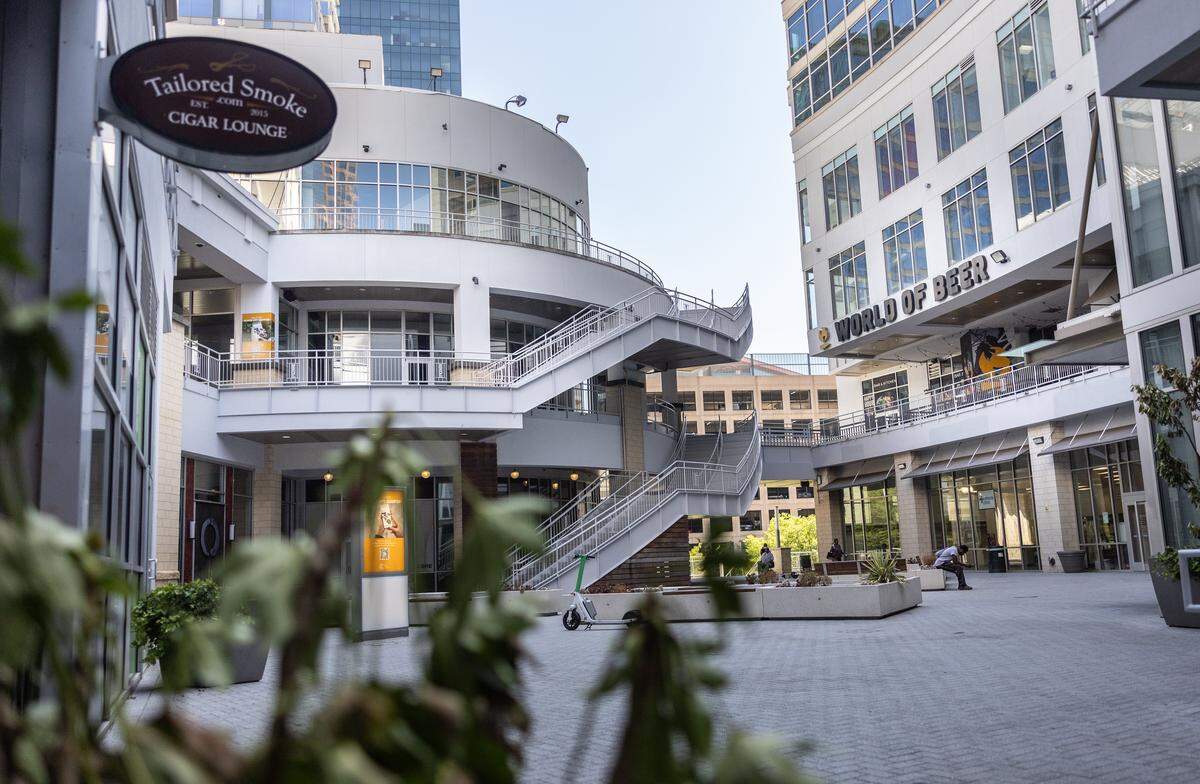
Working to draw customers back
Corey Pinette of Boston was walking back to Aloft Hotel, which is connected to the Quarter, after exploring uptown.
The hotel bills itself as “atop of the most iconic destination in uptown Charlotte, the Queen City Quarter,” however, it was not included as part of the Epicentre foreclosure sale.
Pinette had been looking for a pop-up market or a brewery, but there weren’t any. So instead, he was going to check out the Novole’ Rooftop Twenty Two bar above the hotel.
He pointed out attractions within Queen City Quarter he planned to check out later, like bowling or grabbing a bite to eat.
Elsewhere, J Winston Roberts of Privee Clothing, a high-end designer boutique, said his business at the Quarter is “picking up, better than what it was when he first opened” in 2023.
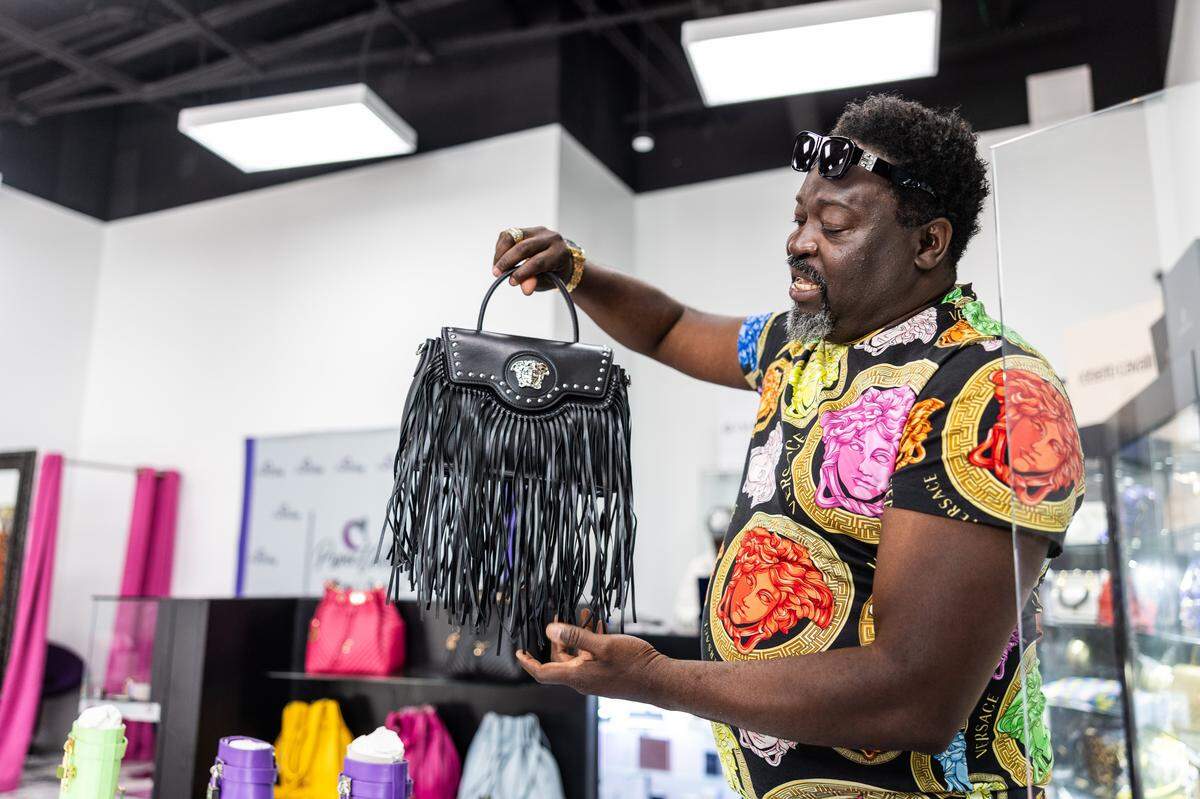
Roberts is working on building the store’s brand recognition, relying heavily on passing tourists like Pinette from nearby hotels. People are “shocked” to learn the former Epicentre is still open, he said.
Despite ongoing challenges, some businesses are seeing small improvements. However, the overall consensus among tenants is that the Queen City Quarter remains far from its former glory, requiring a concerted effort to draw people back to this uptown destination.
Privee Clothing is working on its own brand and aims to increase public awareness. “People need to know we exist,” Roberts said.
NC Reality Check reflects the Charlotte Observer’s commitment to holding those in power to account, shining a light on public issues that affect our local readers and illuminating the stories that set the Charlotte area and North Carolina apart. Have a suggestion for a future story? Email realitycheck@charlotteobserver.com
This story was originally published August 5, 2025 at 5:04 AM.