At I-77 meetings, Charlotte residents feel divided over contentious toll project
Charlotte residents expressed mixed feelings after the state hosted several community meetings on the controversial Interstate 77 South toll lane project last week. Some felt informed while others were skeptical and left with far more questions than answers.
The North Carolina Department of Transportation hosted about five meetings last week regarding the design and acquisition of the $3.2 billion I-77 project. The meetings are part of NCDOT’s attempt to increase engagement on the toll lane project amid residents’ concerns.
Some meetings were developer listening sessions, where representatives of the four shortlisted contractors heard what residents wanted to get out of the project, including protections for businesses and residents.
And on Thursday, NCDOT held a right-of-way meeting with Wilmore neighborhood residents. With the communtiy’s proximity to I-77, and based on the project’s current design, about 29 homes could be acquired through eminent domain to make way for the interstate toll lanes.
West Charlotte resident Vic Williams attended a developer listening session Tuesday. He felt more at ease about the project and hoped NCDOT would take into consideration what residents discussed. “I feel like they gave as much information as they realistically could,” Williams said.
But Will Wooten didn’t feel the same way. Wooten has lived in Wilmore for about six years and if the project started today, his home would be taken.
“There was a lot of good feedback in the room,” Wooten said. “But where does it go? Yes, they’re listening. You can listen all day. But what are you going to do to take action and do what people want for the greater good?”
What are the I-77 South toll lane plans?
To address congestion and crashes on I-77, NCDOT plans to add toll lanes to an 11-mile stretch from uptown to the South Carolina border.
I-77 South, according to NCDOT, has the state’s highest congestion levels, seeing over 160,000 cars a day. The agency estimates that, with or without toll lanes, I-77 will see a 25% increase in traffic by 2050, meaning the roadway will see over 200,000 cars a day.
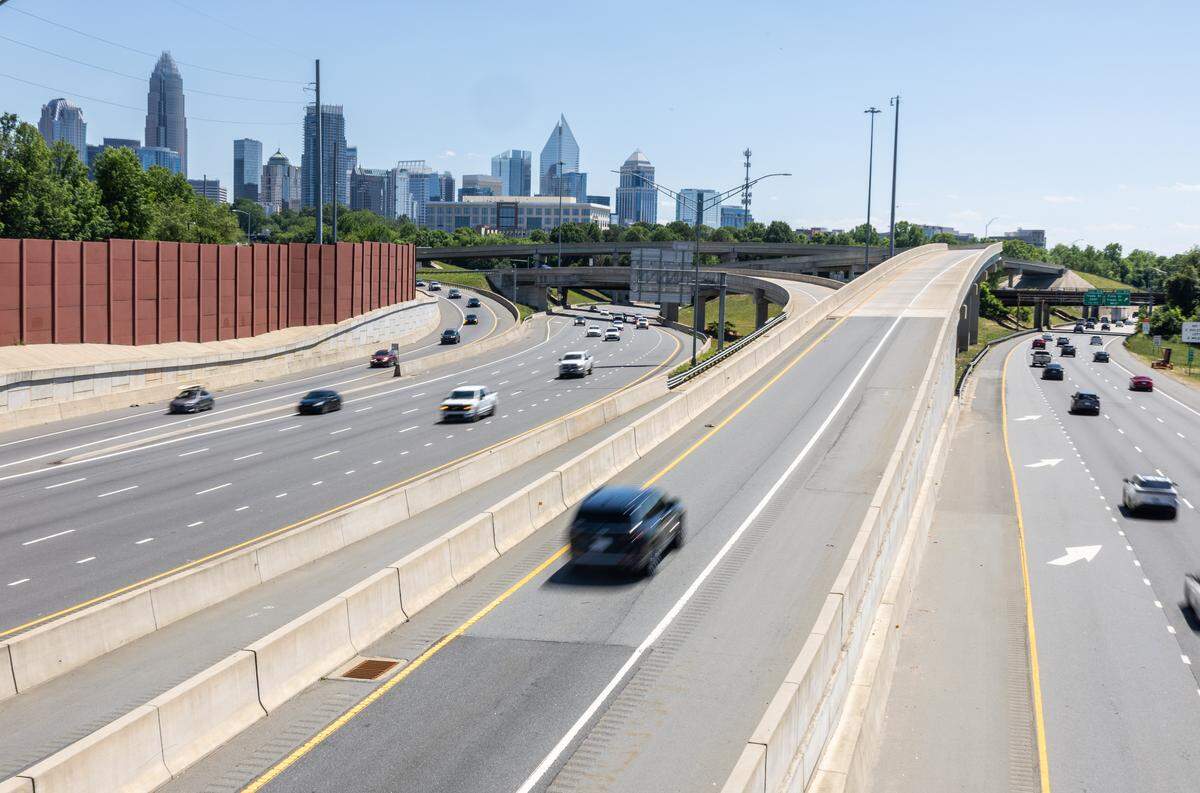
But some residents strongly opposed the project, saying it would cause too much damage to historically Black neighborhoods that have borne the cost of growth before. Several parks and greenways will be affected by the project, including the complete removal of Wilmore Park.
Charlotte’s vote on I-77S tolls
The project remains in limbo.
Last Monday, Charlotte City Council voted 6-5 to revoke its approval of the public-private partnership funding for the $3.2 billion toll lane project. The board also approved a resolution requesting a deeper analysis into the design of the project and how transportation could be improved in the region.
The decision will be presented to the Charlotte Regional Transportation Planning Organization, which looks at urban transportation improvements in Iredell, Mecklenburg and Union counties.
If the organization acknowledges Charlotte’s decision to rescind its support, CRTPO could revote on the funding agreement as soon as its next meeting on May 20.
It’s unclear if NCDOT would consider the project any further if funding was revoked.
NCDOT allocated $600 million for it, but told CRTPO the project was too expensive and wouldn’t move forward without a private partnership. The contractor would cover the $3.2 billion cost.
If CRTPO follows Charlotte’s lead, the $600 million would go back to the state and be redistributed to other projects, NCDOT spokeswoman Jen Goodiwn said. And that would mean the end of the I-77S toll saga, for now at least.
NCDOT’s engagement with Charlotte
Another point of contention with residents has been NCDOT’s engagement and transparency. It’s something NCDOT has been working on.
At Tuesday’s developer listening session, about 30 people attended, along with elected officials and contractor representatives. Residents provided feedback on design, quality of life, reconnecting corridors and economic benefits.
Williams was interested to see the westside be reconnected again, after the highway splintered the uptown neighborhoods. Those reconnections include bike and pedestrian walkways, along with greenspaces on capped portions of the project.
He’d like to see some of the greenspaces be geared toward youth, such as a recreation center.
Meko McCarthy left Tuesday’s meeting feeling informed, but wanted NCDOT to protect the residents along the corridor. She also wants NCDOT to find new ways to reach residents.
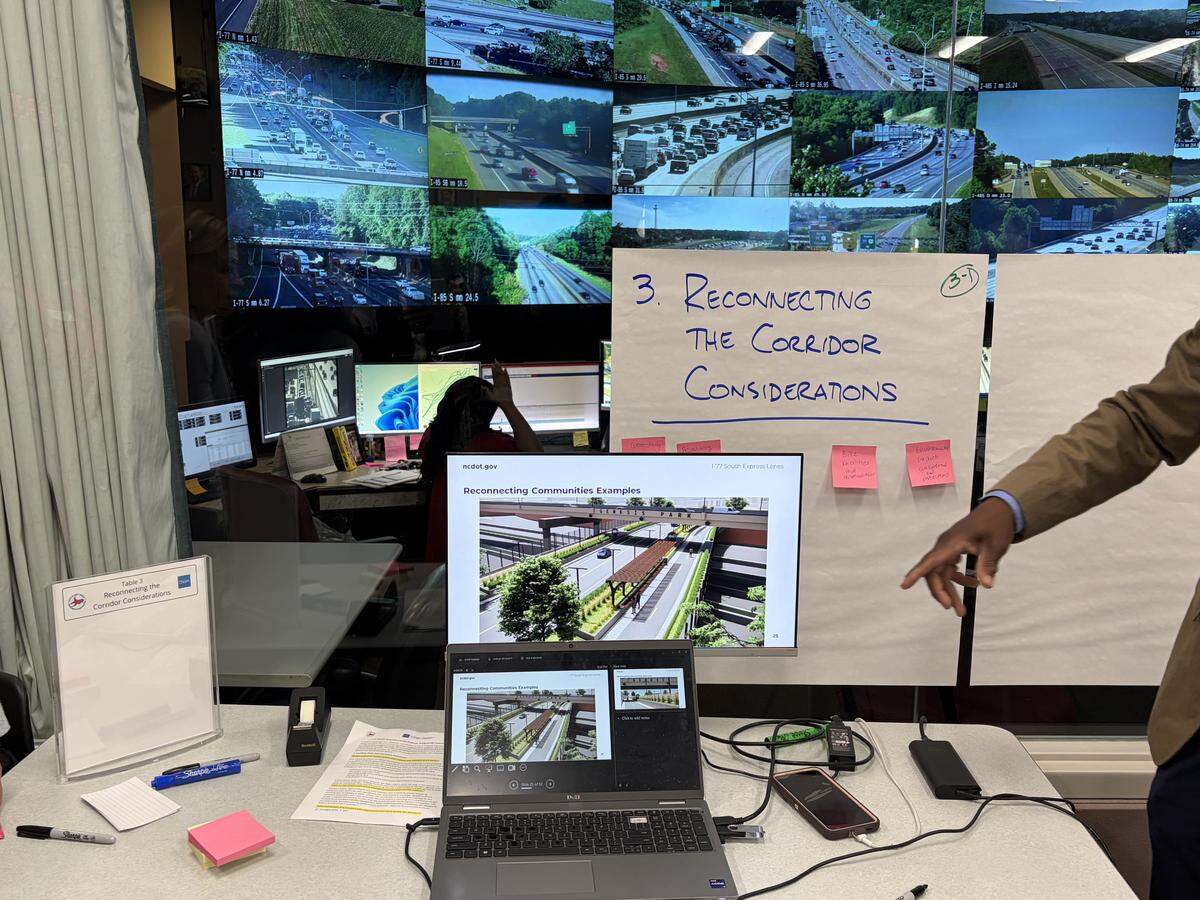
The community’s voice, McCarthy said, has already led to some changes, including NCDOT’s elevated design for the project, which preserves homes north of the John Belk Freeway. If more people come out to speak, McCarthy said, more change can occur.
“Ground game is important,” McCarthy said. “I want to see more, learn more and the only way to do that is through more meetings.”
Williams agreed.
“Do more,” Williams said. “Continue to do more outreach because that’s the only way people will be comfortable.”
Wilmore neighborhood impact
But even with the outreach, Wilmore residents at Thursday’s meeting had more questions.
The meeting gave an overview of residents’ recourse if their homes are directly impacted by construction. But there’s no federal laws protecting residents’ quality of life.
Laura Pepper, a 10-year resident of Wilmore, said people were drawn to the neighborhood because of its walkability and community feel. All that could now be threatened by the project.
“We see a lot of people out walking, we see a lot of people visiting neighborhood locations” she said. “People are used to that kind of interaction. (The neighborhood) becoming just more of a pass-through is, again, disappointing.”
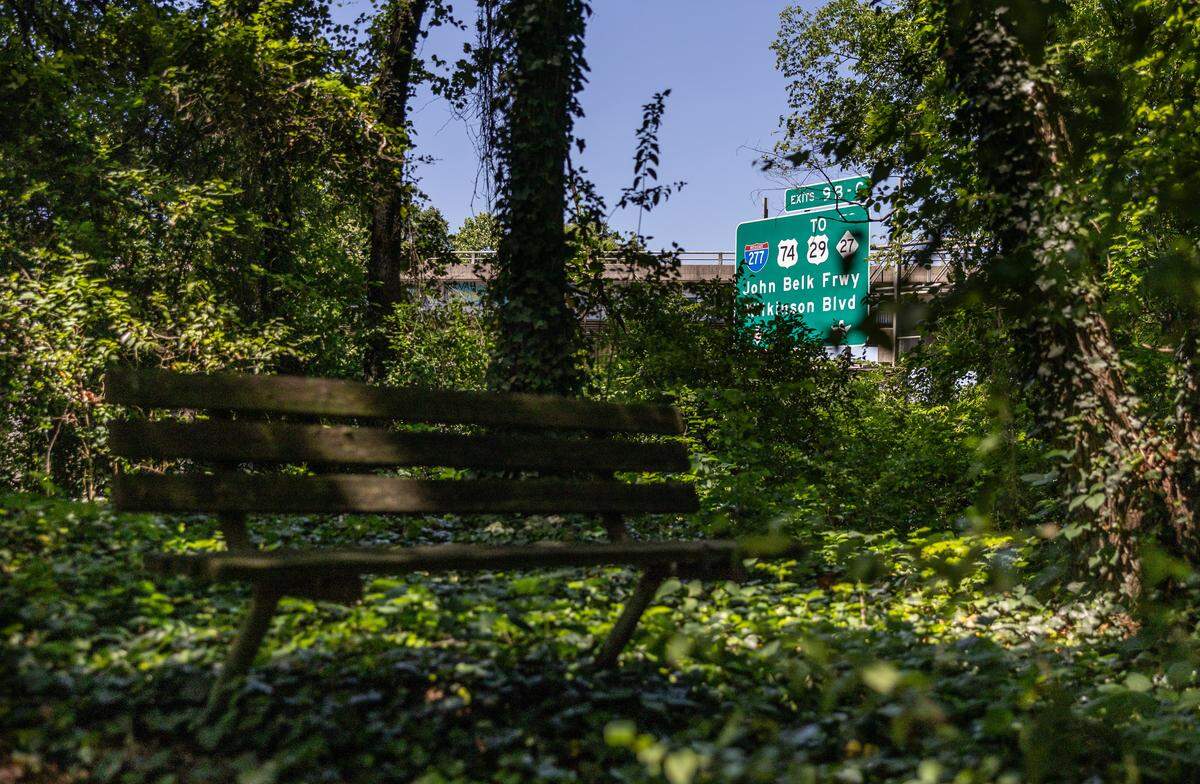
The sentiment could be felt throughout the meeting as residents questioned the possibility of the project’s footprint expanding, and the impact on property values for homes that would be left standing.
Pepper said it was always going to be a challenging conversation when it starts with some people’s homes are going to be taken. “When you’re making decisions that have this long-term of an impact I would like to see a more thoughtful approach than what I saw today,” she said.
Wooten has questioned NCDOT’s thoughtfulness as well.
Wooten has spoken to NCDOT a few times regarding I-77 sounds reverberating through his home on Spruce Street. But they never told him his house wouldn’t be there in the future.
Wooten was glad to learn of Charlotte’s decision to cancel its approval of the funding. And like a bad business agreement, if NCDOT and the city have to start I-77 plans over, they should, he said.
If the project funding is cancelled, he’d like to see NCDOT focus more on mass transit options.
Wooten said he’s become more resigned to the fact that he might lose his home and that the sentiment comes from a place of privilege. He would probably leave the city if that happened.
But he’d want to do see if the project could still benefit the community.
“If there’s better pedestrian access or if a park goes where what remains of my house, that’s what I want to happen,” Wooten said. “But I’m still skeptical that our words are being taken to heart, because how many levels above and beyond are making the decisions?...
“It’s easy to make these decisions and do things without meeting people like us.”
This story was originally published May 18, 2026 at 5:00 AM.