Q&A: What you should know about dining out in Charlotte with rising COVID cases
READ MORE
Winter Dining Guide
From where to go to how to dine outside in the cold, we tell you how to navigate Charlotte’s dining scene this winter.
Expand All
It’s been a long 21 months since the coronavirus pandemic hit the Charlotte area, and the rising COVID-19 cases and omicron variant are raising concerns.
As North Carolina’s key metrics — hospitalizations and positive tests — continue to rise, North Carolina is once again classified as red, or high community transmission, by the Centers for Disease Control and Prevention. To reduce the risk, health officials urge people to get vaccinated and get a booster when eligible.
But people still want to go out to local restaurants for a nice meal or to meet up over the holidays. And with the weather getting colder, outdoor dining will not be a big option. So is it safe to dine out?
Here’s what you should know before heading out.
Is it safe to eat at restaurants?
Indoor dining is fully open in North Carolina with no capacity restrictions or social distancing requirements.
However, the CDC recommends face coverings for employees and customers. The CDC also recommends taking a self-test before joining indoor gatherings with others who are not in your household.
Throughout the pandemic, indoor dining has been considered a high-risk activity by the CDC.
What safety measures are in place?
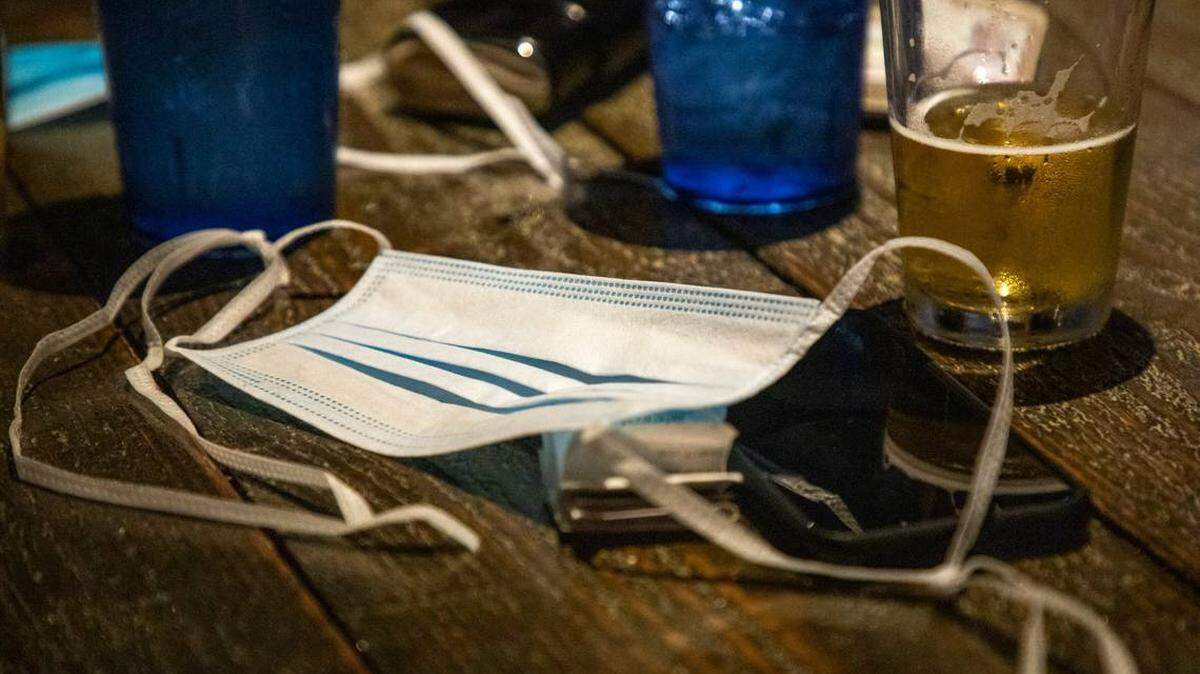
The city of Charlotte and Mecklenburg County are requiring face masks in public places regardless of vaccination status, unless people are actively eating or drinking.
Last month, county officials revised the rule so that the positivity rate must be below 5% for seven consecutive days to be lifted instead of the previous requirement of four weeks. Mecklenburg’s positivity rate has remained around 8% throughout December.
In areas of high COVID-19 transmission where there is not a mask mandate, the industry advocacy group North Carolina Restaurant & Lodging industry said restaurants may want to “strongly recommend or require” guests and staff wear face coverings.
Do I need a vaccine card?
While some restaurants and businesses in Mecklenburg County are requiring staff to be vaccinated against COVID-19, it’s unclear if any restaurants have the same policy for customers.
Several Charlotte bars and entertainment venues do require proof of vaccination. So if you’re dining out then heading to a show, be sure to have your vaccine card available.
When making reservations at local restaurants on OpenTable, a restaurant can display vaccine requirements or indoor mask mandates on its profile page.
The online reservation app also teamed up with secure identity company Clear to show proof of vaccination. Messages also can be sent to the restaurant after making a reservation to find out the latest requirements.
What about outdoor dining?
Along with patio spaces, some restaurants have set up igloos.
CharlotteFive wrote about the best patio dining in different areas throughout the city, as well as details about igloo dining at Merchant & Trade available to book until March 30.
But in areas with high numbers of COVID-19 cases, the CDC recommends wearing a mask in crowded outdoor settings and for activities with close contact with others who are not fully vaccinated.
Mecklenburg County and all of the surrounding counties of Gaston, Lincoln, Catawba, Iredell, Rowan, Cabarrus and Union, and York and Lancaster in South Carolina, are listed as high transmission areas by the CDC.
Should I be worried about COVID and the omicron variant?
North Carolina’s first case of the omicron variant was detected Dec. 10 in Mecklenburg County.
The UNC Charlotte student who had tested positive was isolated and recovered.
The delta variant is still the most common variant in the county, state and country. The first cases of omicron were identified Dec. 15 in South Carolina, all in the Lowcountry, by Medical University of South Carolina.
COVID-19 statistics and updates are posted almost daily at charlotteobserver.com and on the N.C. health department website. However, case numbers don’t distinguish between omicron, delta or the original COVID-19 strain.
Omicron is believed to spread more easily than the original virus. Dr. Anthony Fauci, the president’s chief medical adviser, said booster shots are enough to stop the spread of the new variant.
As of Dec. 16, there were at least 19,099 COVID-19 related deaths in North Carolina since March 2020, according to state health officials. About 73% of adults in North Carolina have received at least one dose of a coronavirus vaccine, and about 69% were fully vaccinated.
Worried you might have the virus?
If you’ve been exposed to someone who tested positive for COVID-19 in the last five days or have symptoms, free COVID-19 testing locations are available throughout Mecklenburg County. Visit mecknc.gov.
Can’t get to a local testing site or afford an at-home kit? Mecklenburg County Public Health, in partnership with Charlotte Mecklenburg Library, this month began offering, COVID-19 at-home test kits.
Kits are available via curbside pick-up at designated library branches and public health locations. No ID or insurance is required. No appointment is necessary.
Remember, health officials say the best ways to protect yourself and others from the virus is to get vaccinated, wear a mask, social distance and wash your hands frequently.