I-77 South project has irked Charlotteans. They say it needs this to be better
The proposed design of the Interstate 77 South toll lane project, which includes the elimination of homes and greenspaces along the 11-mile corridor, has been a major point of contention for Charlotte residents.
So, what would some Charlotteans like to see instead?
Sustain Charlotte, a nonprofit focused on sustainable growth, called on residents to design their own changes to I-77 South in its “Reimagining 77 South” project.
The group received more than 30 submissions and several were on display Monday at The Dubois Center at UNC Charlotte in uptown during the Charlotte Ideas Festival.
And the ideas were flowing.
From capped highways covered with greenspaces to the creation of autonomous shuttle buses and mobility hubs, architects, urban planners and even elementary school students presented different ideas for the corridor.
“I’ve always been into city planning and design,” said Amaya Woliansky. She’s 10 years old. “My main goal is to connect neighborhoods by walking and biking.”
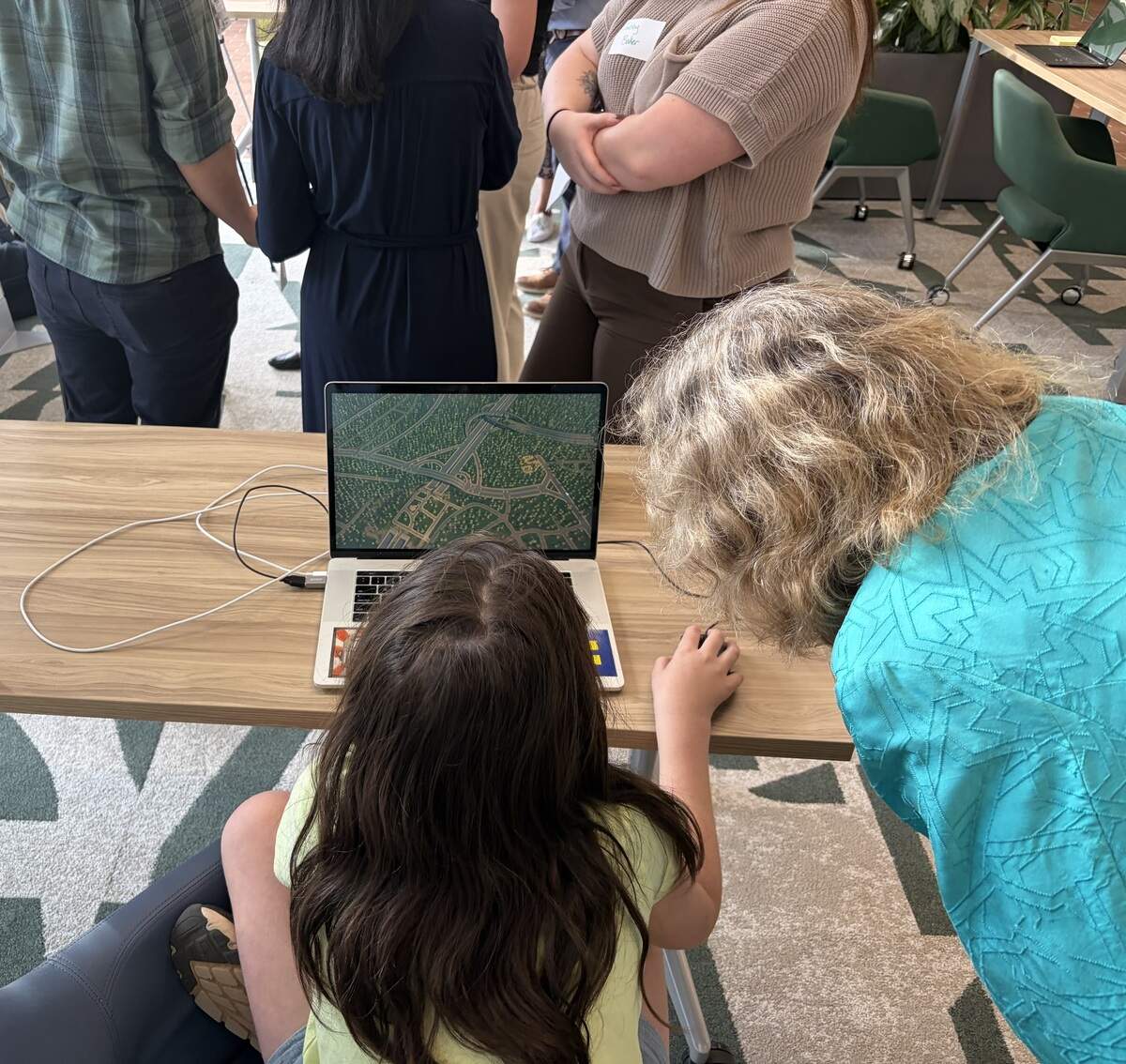
Woliansky used a video game, Cities: Skyline, to create a 3-dimensional map of the uptown portion of I-77. She’d want to see more connection via existing major arterials such as Wilkinson Boulevard. Extending the boulevard toward West Summit Avenue would give residents a new way to travel, which could lessen traffic in the congested area where I-77 connects with I-277, Woliansky said.
She’d also put a cap on top of the highway farther north where I-77 meets the Brookshire Freeway, which would create more greenspace and access for people to bike or walk, as opposed to getting into their cars.
Greenspace, bike lanes and added use of public transit were the main themes of many of the proposed designs.
Cars were a secondary option, which is what Shannon Binns, founder of Sustain Charlotte, has advocated for.
“We are for a better future for Charlotte, a future that prioritizes people, place, community and connection over disconnection and focusing on moving people in cars,” Binns said. “Most cities in the world, including in the U.S., are trying to grow. They’ve stopped designing around the idea that the way you design your city is to move people efficiently in cars… It’s how do you move people, not just cars.”
An I-77 South toll lane refresher
Cars and traffic are at the center of the North Carolina Department of Transportation’s plan for I-77.
NCDOT wants to add toll lanes to an 11-mile stretch of I-77 between the Brookshire Freeway exit to the South Carolina border. The idea stems from a traffic study conducted in 2007. It would be NCDOT’s most expensive project at $3.2 billion.
But the project’s design has alarmed residents and environmentalists, even with recent updates.
NCDOT revealed new maps at the opening of its community engagement center earlier this month.
The maps showed what NCDOT has already said: Homes north of the John Belk Freeway would be preserved, including residences in Biddleville, Genesis Park, McCrorey Heights and Wesley Heights. But the elevated highway would still go over these neighborhoods.
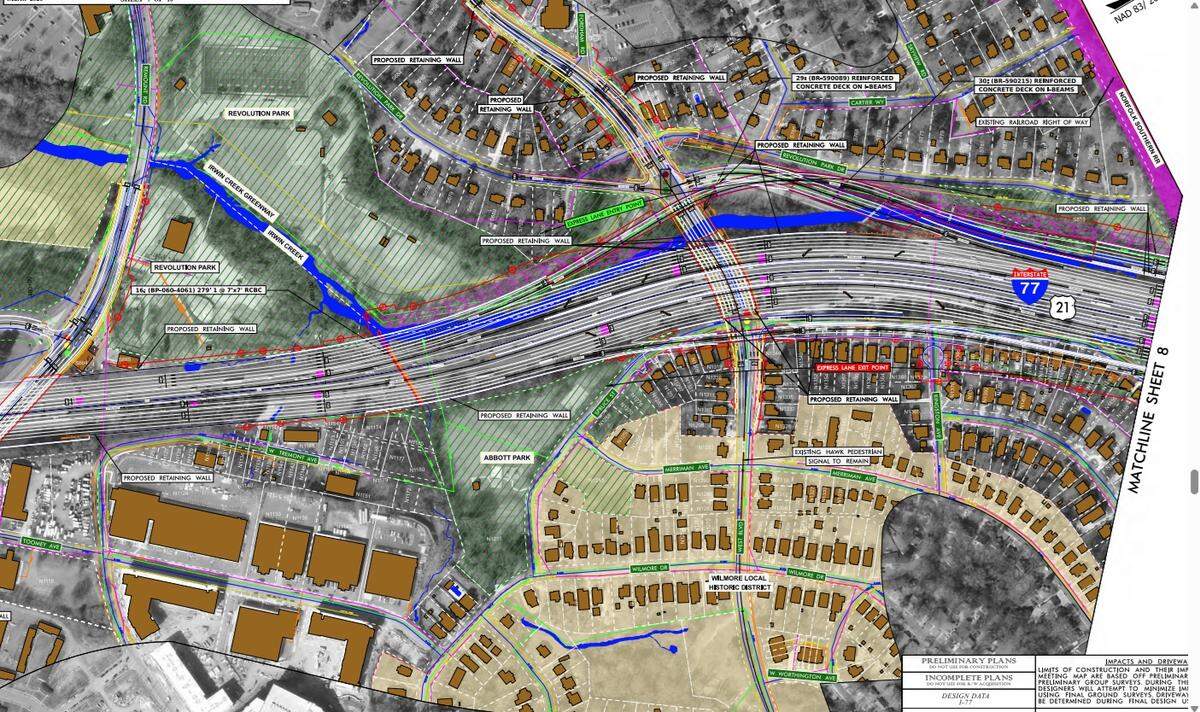
That does not include the Wilmore neighborhood. In one map, exit ramps for the express lanes go through homes in the Wilmore neighborhood. It’s unclear how many homes would be impacted.
And while homes will be saved in the northern neighborhoods, residents in the uptown neighborhoods, including McCrorey Heights, Oaklawn Park, and Wesley Heights, have said the elevated design would impact their quality of life and encroach on their neighborhoods.
The elevated design would also affect 11 parks and several greenways, including the complete removal of Wilmore Park.
Community response to I-77 South
NCDOT has said the design process is ongoing. Prospective developers will present their design proposals sometime next year.
And while NCDOT has held two community meetings on the designs and intends to form a community advisory committee, it hasn’t asked residents how they would like the project to look.
The responses from Monday night were clear: Greenspace and multimodal transportation are what some Charlotteans want to see.
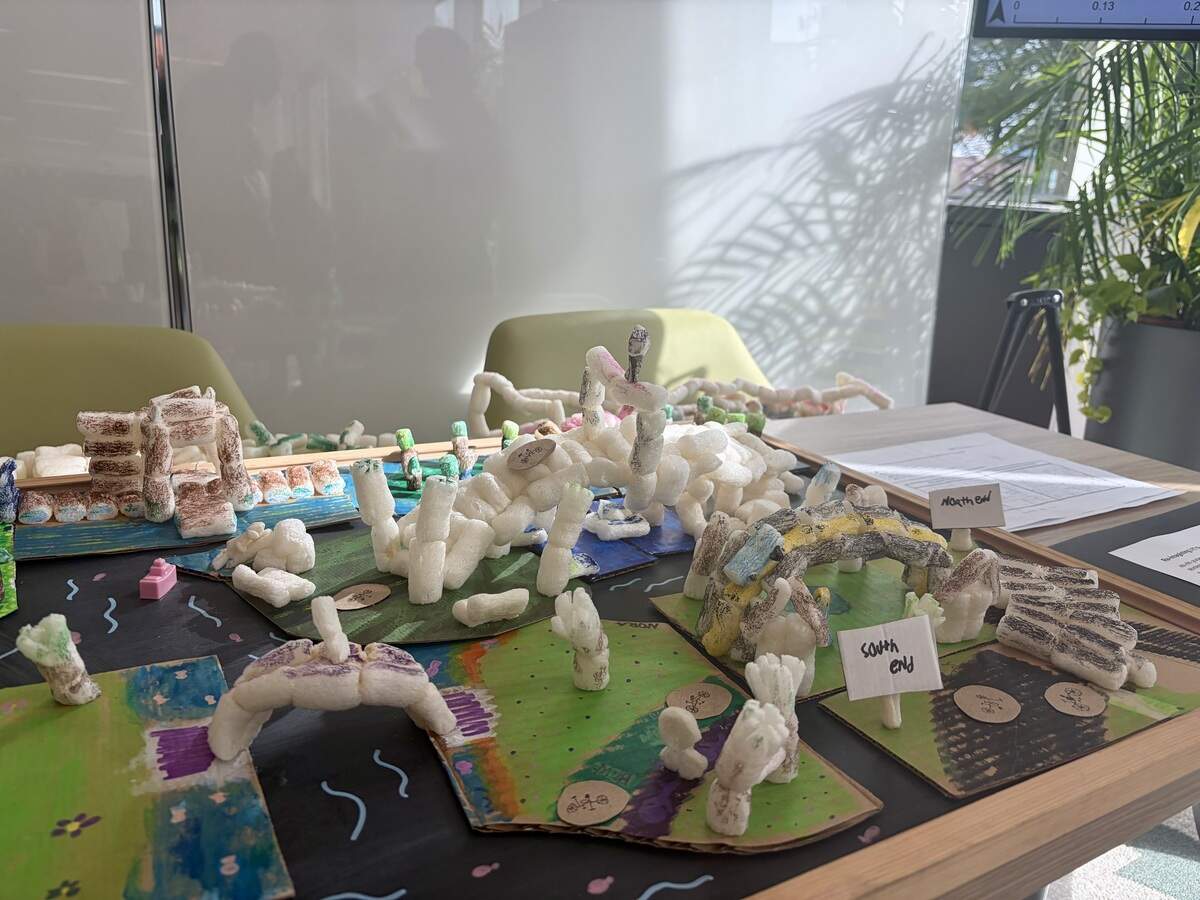
Several ideas included cap designs or putting the highway underground. Elementary school students from the Chantilly Montessori School used packing peanuts and LEGOs to create their design, which included a cap and more greenspaces.
Civil engineering students Manaiyah Raybon and Kristina Proffitt-Little from the William States Lee College of Engineering at UNC Charlotte agreed with the cap idea.
“Capping the highway creates multi-uses for the space and has the biggest economic benefit,” Proffitt-Little said.
It also has a strong sustainability component, Proffitt-Little added. The space could be used for parks, housing and street artwork. It also provides more modes of transportation, such as biking and walking.
“If we don’t consider sustainability as the city is expanding it’s going to be a mistake,” Proffitt-Little said. “You’re going to have to go back and correct those issues. Charlotte has already made those mistakes, especially in minority communities.”
Instead of expanding the highway, Taylor Harrington, Javan Joel and Whitney Vanhouten would like to see one of the lanes convert into a rapid transit lane for shuttles.
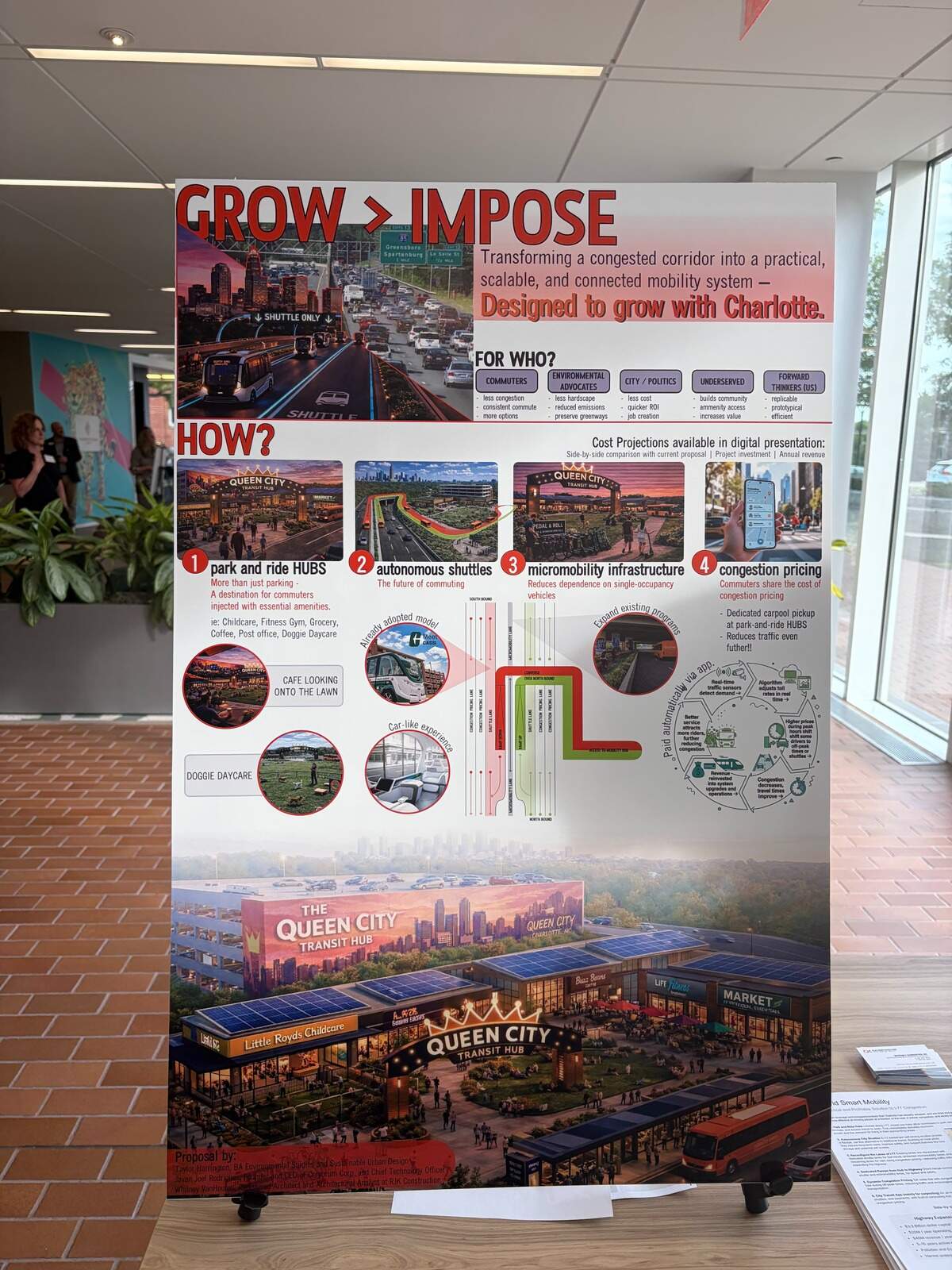
The shuttles would be autonomous and leave from transit hubs, where people can park. But it’s not just a parking lot. The hubs would have amenities such as restaurants, grocery stores or gyms so when people come back to their cars, they can run errands in the same place.
The trio would also like to see the median become a designated bike lane. It would create a safe space for riders to head south on an e-bike in 30 minutes, Joel said.
NCDOT has previously said a cap would be too expensive for the project.
What’s next for I-77 South?
Charlotte’s City Council briefly discussed the project last week during its transportation committee meeting.
Nothing discussed moved the project forward but council members wanted more concrete information from NCDOT regarding community benefits agreements.
At the Charlotte Regional Transportation Planning Organization, or CRTPO, meeting in March, members continued voicing their disapproval of the designs.
For now, NCDOT is putting a callout to community members to form the advisory board.
The 11-person board will help shape the community benefit commitments and review project design updates, according to NCDOT.
The application deadline is April 24.
This story was originally published April 15, 2026 at 5:00 AM.