See our map of Charlotte’s Revolutionary War history: A ‘hornet’s nest’ of freedom
Charlotte and the surrounding region played a pivotal role in the American Revolution, serving as a fervent “hotbed” of resistance.
This revolutionary spirit was fueled largely by Scots-Irish Presbyterian settlers, who were influenced by preachers like the Rev. Alexander Craighead to justify the cause of independence through their faith.
This regional passion for liberty culminated in the alleged signing of the Mecklenburg Declaration of Independence in May 1775, that’s 15 months before the Continental Congress’s formal declaration, solidifying the area’s reputation as a key epicenter of the early revolutionary movement.
The conflict in the Carolina backcountry was intense, characterized by a brutal struggle that often pitted neighbor against neighbor, and family member against family member.
The region was the site of numerous engagements, such as the Battle of Charlotte and the Battle of McIntyre’s Farm, where local militiamen and farmers successfully forced British General Lord Cornwallis’s troops to retreat. This fierce, unexpected resistance led Cornwallis to famously label Charlotte a “hornet’s nest” of rebellion.
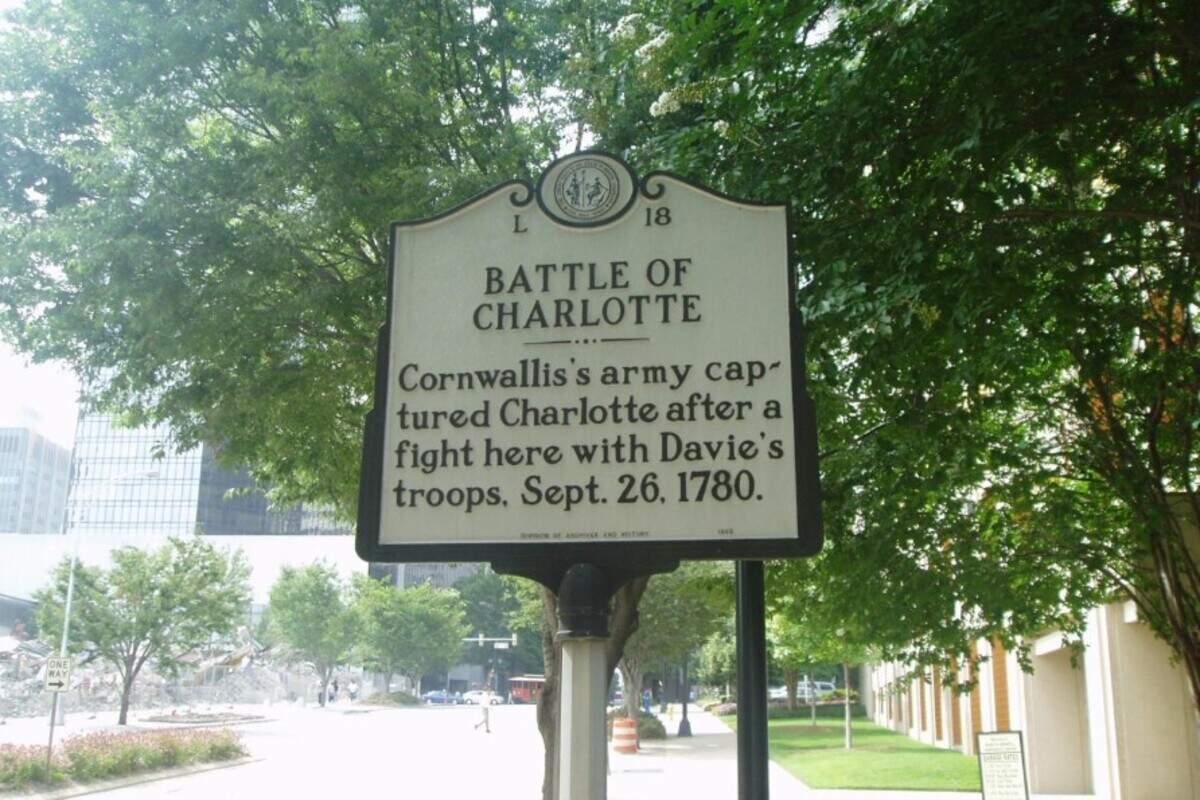
The war’s impact extended far beyond military leaders, drawing contributions from a diverse cross-section of society, including women, farmers and enslaved people, whose varied stories remain preserved today in local cemeteries and historical markers.
For instance, Durham historian and blogger Kelly Gomez is documenting Revolutionary War Patriots, with the Charlotte region at its core. She’s sharing 250 stories from cemeteries in the South as part of her “The Forgotten South” project.
Map of the Charlotte area American Revolution sites
To further delve into local history on the eve of the country’s 250th birthday, The Charlotte Observer has compiled a map with historic sites and markers tied to the American Revolution.
That includes The Alexander Rock House at the Charlotte Museum of History, which also has the “American Revolution: The Augmented Exhibition” running through April.
Historic Brattonsville and Kings Mountain National Military Park were well-known, crucial battle sites in the war, and both are in South Carolina. And our map has a few lesser known sites like Nanny’s Mountain Historical Park in Lake Wylie, S.C., an open-pit iron ore mine supplied weaponry for Patriot forces during the Revolutionary War.
Reporter Claire Harutunian contributed to this report