Demand up for online-only school in Charlotte — this time by choice
READ MORE
Charlotte 2021 Back to School
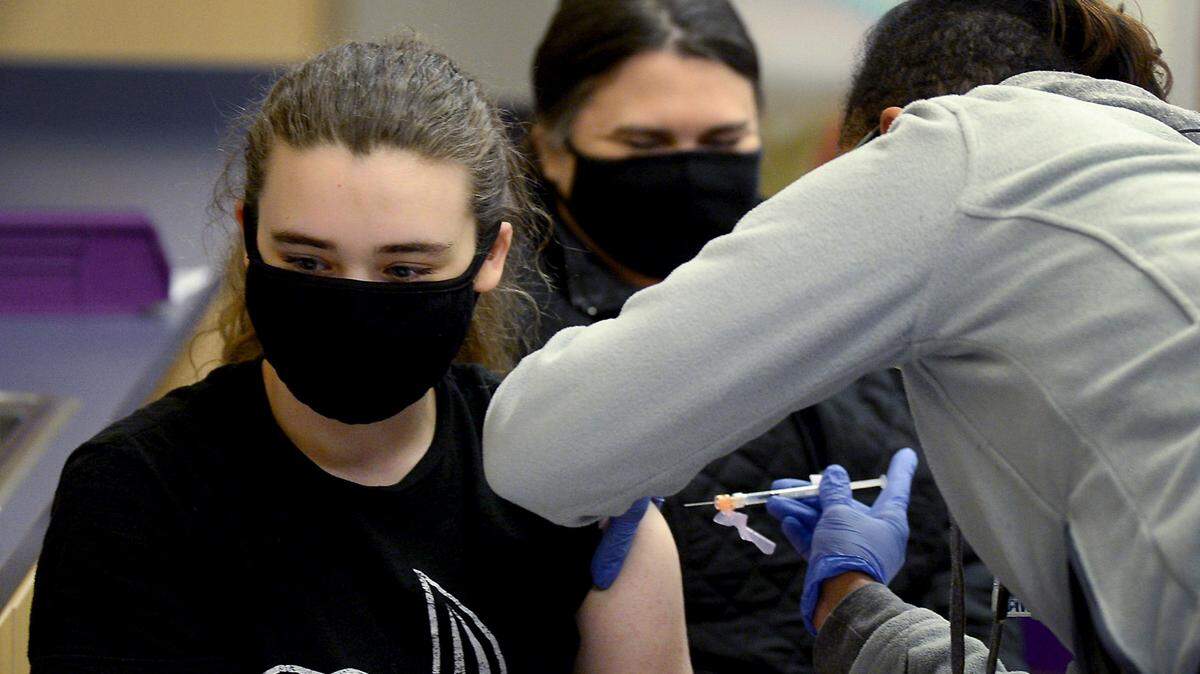
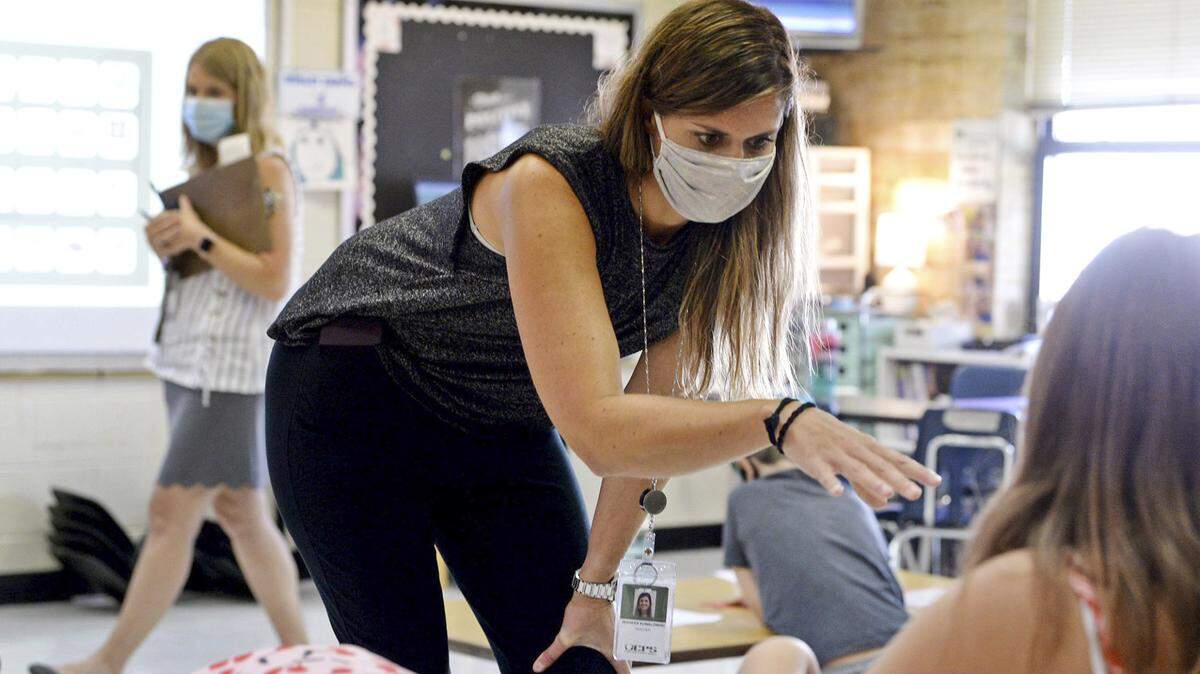
Due to COVID-19, masks are required at CMS and adults are encouraged to get vaccinated. There’s also a push among educators ad parents to catch up students who lost academic progress during the pandemic.
Expand All
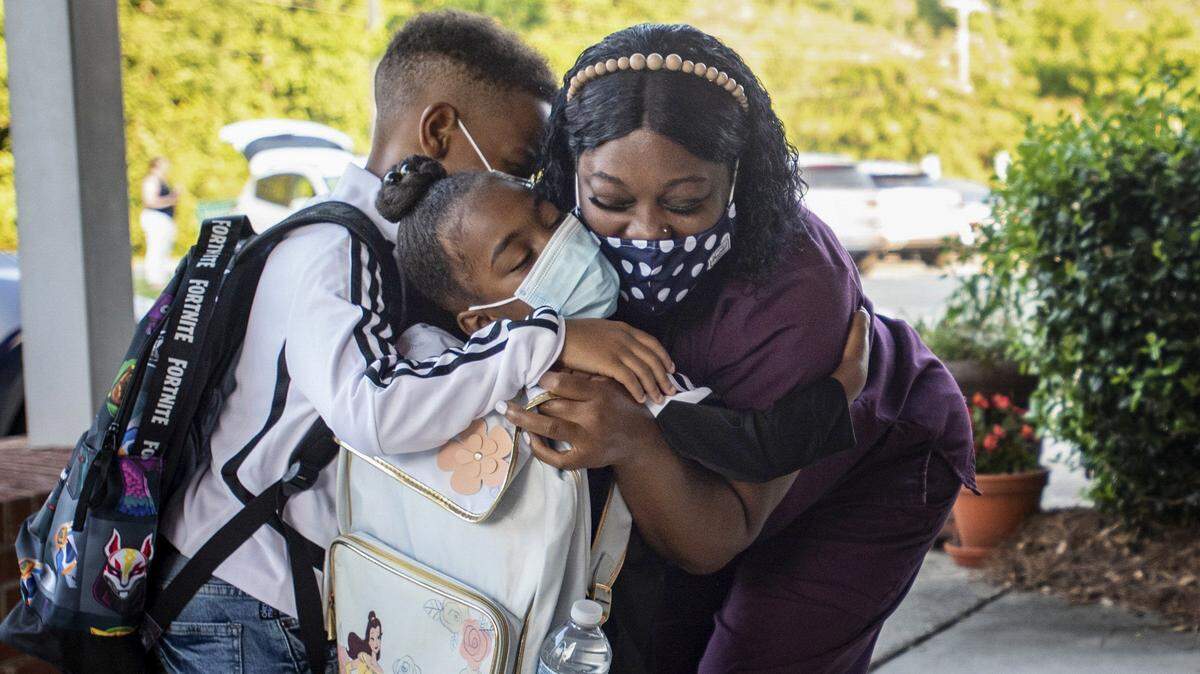
Next week, for the first time in 18 months, Charlotte-Mecklenburg Schools will open all buildings without reduced class size or all teachers tethered to students via remote instruction. Yet for hundreds of CMS families, students will be learning virtually — this time by choice.
A week before the first day of school, Najah Jackson prepared her classrooms — she has a desk in her bedroom and another one in her family’s living room.
The 10-year-old, a fifth-grader in Charlotte-Mecklenburg Schools, normally studies and completes assignments in the living room and takes tests in her bedroom.
“Virtual (learning) has been amazing for her,” mom Zayida Suber said. “She loves being virtual. Her old school, Governors’ Village STEM Academy, was already doing online work pre-COVID, so they transitioned flawlessly.”
Virtual learning, for many families, conjures memories of the stress, fear and confusion unleashed in early 2020, when the early days of a spreading coronavirus caused schools to abruptly close their doors — with no indication of when they’d reopen. Last fall, when another school year opened, older students stayed in remote class and CMS brought back elementary students. Later, many CMS teachers and families found themselves juggling a hybrid of in-person and online instruction as the district staggered schedules to increase social distancing in buildings.
Unlike the COVID-precipitated move to online class, CMS’ virtual academy has the benefit of being designed exclusively for virtual learning.
Najah has attended virtual school since March 23, 2020, and will continue for the 2021-22 school year at the district’s new Charlotte-Mecklenburg Virtual Elementary School for students in grades 3-5.
CMS expanded its online-only learning options this summer as COVID-19 cases, largely among unvaccinated people which includes most school-age children, have steadily climbed. Data for cases locally show CMS’ return to classrooms Aug. 25 will take place during the worst spread of the virus seen in months.
“She cannot be vaccinated and has asthma,” said Suber, who had planned to send her daughter to the North Carolina Virtual Academy based out of Durham, but kept her in the CMS system when the district extended its virtual learning programs.
“I am absolutely thrilled about the virtual academy. Since it’s new, I hope that they will be following an already established and successful format.”
The boost of online learning options for families also allows CMS to keep students it may otherwise lose — the last thing district officials want during a time when public school enrollment across the country and locally has dipped, and systems are fighting for students.
“One thing I’d love to make sure our public knows is that student enrollment is open,” Matthew Hayes, the district’s deputy superintendent of academics, told the Observer last week. “We’re still receiving students. That’s not just for the virtual school, but throughout CMS.
“So we have some families that may have kindergartners sitting home. It’s more critical this year than it ever has been that (everybody) needs to get enrolled in CMS.”
Public school enrollment
Last fall, the Charlotte Observer reported that CMS saw an unprecedented drop in its annual headcount. National reporting has indicated that public school enrollment dips, exacerbated by the pandemic, affected elementary school headcounts the most. As COVID-related shutdowns and instruction interruptions began, an increasing number of American families chose to hold off enrolling children in kindergarten, data has shown.
School districts carefully watch enrollment each year — for practical purposes of planning student-teacher ratios or building more schools, but also because enrollment affects how much money is allocated by state and federal sources.
According to the North Carolina Department of Public Instruction, nearly 63,000 fewer students were attending public schools in the second month of 2020-21 compared to 2019-20, a loss of 4.4%.
Enrollment declines were most heavily-concentrated in kindergarten, (14,282 fewer students), followed by fifth grade (8,428 fewer students) and 11th grade (7,859 fewer students,) according to an analysis in EducationNC, a nonprofit organization.
The largest declines were in CMS, Wake County Schools, Rowan-Salisbury Schools, Winston-Salem/Forsyth County Schools and Guilford County Schools. Four of those districts represent the four most-populous counties in North Carolina (Rowan County is smaller).
Locally, CMS lost more than 6,800 students in 2020-21 compared to the 2019-20 school year — a headcount of 146,887 in 2019 to 140,073 in 2020. Based on the district’s annual 20th day attendance reports, CMS saw some gains in enrollment in 2016 to 2018, but saw a dip even before the pandemic.
At a Board of Education meeting this month, Akeshia Craven-Howell, an associate superintendent, projected CMS enrollment for the 2021-22 school year at “just under 143,900 students.”
“Our current enrollment is tracking about 1,500 students below that projection,” Craven-Howell said. “In terms of grade-level trends, we’re seeing increased enrollment in ninth and 10th grades.
“We’re seeing enrollment below projection in kindergarten. ...It’s typically a grade level where we see lots of late enrollment.”
This year, included in CMS’ enrollment data, will be hundreds more students who selected the district’s virtual academy option.
‘Social life is intact’
For Suber, her daughter is thriving in the virtual classroom.
“While she was at Governors’ Village, they had time allotted for the students to be in (online) breakout rooms to study/work as a group and just to hang out,” she said. “They also allowed them to ‘have lunch’ together.
“Her social life is intact. She has cousins her age that she visits with often.”
Kim King, the principal of Charlotte-Mecklenburg Virtual Elementary, said this week that 574 students have applied to the program. Students are evenly spread between grades 3-5.
“Many people have different circumstances, needs or preferences that make virtual learning a great fit,” King said, “and we are so fortunate to exist in a time and place where we have the resources to make virtual learning every bit as dynamic and impactful as in-person learning.”
At the Charlotte-Mecklenburg Virtual Middle School, also a new offering this school year, about 750 students have been enrolled, Principal Tonya Faison said.
“In the initial planning stages for this school, we were allotted eight teaching positions based on initial student enrollment projections,” Faison said. “We have seen a steady increase in student enrollment, and we anticipate an increase in staffing during the normal district-wide leveling process.”
As of Aug. 6, the CMS communications team reported 471 new applications being processed at the district’s virtual high school, which has been in existence for five years. Charlotte-Mecklenburg Virtual High School Principal John Cline said “it looks like growth will be around 500%” as officials are still processing transfers.
“We have a highly-skilled and experienced staff that has been focused on providing rigorous, personalized and flexible instruction that prepares students to be successful, independent learners,” Cline said. “The shift to remote instruction districtwide last year created an awareness about the viability of virtual learning. Many students thrived and, as a result, sought out Charlotte-Mecklenburg Virtual High School as an option to continuing their academic success. Additionally, the recent increase in COVID numbers has raised interest.”
Faison said: “I have witnessed students who do well virtually, and I have also seen students struggle. But I believe this virtual middle school is providing the opportunity for students who did well virtually to continue that success. They are choosing to stay the course and stay focused on getting their education through a modality that best suits their learning needs.”
King said the rules of student engagement are the same — whether in-person or virtual.
“We teach them norms of communication, tap into their interests, pay attention to their cues, and adjust as needed,” King said. “The answer is the same for virtual learning, but the norms just look a little different. Where in person it is easy for a person to show agreement or interest by nodding, smiling, leaning in, or gesturing, in virtual learning that might look like giving a digital thumbs up, gesturing in a way that can be seen on camera, typing into the chat, ‘Yes, good point!’
“Teaching our students to be intentional and thoughtful about their signals and communication prepares them to be more savvy about the way they give and receive communication in a society that is so digitally rich.”
Parents who are wanting to switch from in-person to virtual learning are looking at a wait list, CMS communications told the Observer. Regardless, less than a week before school starts, district officials are pushing for enrollment of any kind.
“We would like to be able to stabilize our student body population in our brick and mortar buildings, as well,” Frank Barnes, the CMS chief accountability officer, said. “But we recognize that some families would prefer that virtual option.”
Added Hayes: “So to all of our families out there, if you’re not enrolled ... get enrolled in your school.”
This story was originally published August 20, 2021 at 6:00 AM.