With new redistricting maps in place, will NC’s 1 million Latinos get more attention?
READ MORE
Will their voices count?
North Carolina grew so fast since 2010 that it will gain a new seat in Congress. Latinos are more responsible for that growth than anyone else. With the Hispanic population booming, will redistricting help bring more political power to these communities? Read The News & Observer’s special report.
Expand All
With new redistricting maps in place, will NC’s 1 million Latinos get more attention?
What is gerrymandering? Here are 6 things you need to know about redistricting in NC

Latino residents driving NC’s population growth. Will new political maps split them up?
How do you reach Latino voters? Stop treating them as one group.
During the 2018 elections a high school student in rural Yadkin County, Cristo Salazar, noticed the Latino community he had grown up in was not very politically engaged.
“A lot of them actually did not vote because it was just such a hard process for them to figure out how to do it, how to register, and where to (vote),” he said. “Not only that, but there was no access to information on who these candidates were and, you know, what they represented, who they supported, and what they supported.”
This bothered him. So he left the area where his parents, immigrants from Mexico, had settled in the North Carolina foothills. He moved to Raleigh and helped out with the 2020 campaign of a Latino candidate, Ricky Hurtado.
Hurtado, a Democrat, flipped a Republican-held seat in Alamance County for the N.C. House of Representatives and became the state’s only Hispanic legislator when he was sworn in earlier this year.
Latinos in the state are underrepresented in the General Assembly. Proportional representation would mean 17 or 18 Latino members among the state’s 170 legislators, not just one. The state’s Latino population has exploded in recent years, with more than 1 million Hispanic people now calling North Carolina home.
Younger Latinos — many of them the US-born children of immigrants, like Salazar and Hurtado — are now coming of age and demanding more representation in politics. This year is pivotal since state lawmakers are now drawing new political maps that could be used in every election for the next decade.
The choices politicians make in drawing those maps have huge potential to either help or hurt Latino political influence, depending on exactly how they’re drawn. So for the first time, there has been a large statewide effort by Latino voters this year to demand more attention to those maps than in years past.
Redrawing all the district lines, for both the N.C. General Assembly and the U.S. House of Representatives, is something every state is required to do once a decade based on the latest population data.
The data shows North Carolina grew so fast compared to the rest of the country since 2010 that it will gain a new seat in Congress. And Latinos are more responsible for that growth than anyone else. The state’s population added 318,000 new Hispanic residents in the last decade but only 88,000 new white residents.
Yet Salazar is worried that Latinos in North Carolina might soon find themselves — because of the new maps — lacking political representation in the state legislature once more.
“And now with redistricting, you know, I’m feeling like his position might be threatened,” he said of Hurtado. “The people that maybe got him elected, might not even have the option to vote for him this upcoming (election).”
Republican lawmakers are planning on finalizing the new maps in the coming weeks. Whatever districts they draw will be used in every election from 2022 through 2030, unless they are struck down in court for being illegally gerrymandered.
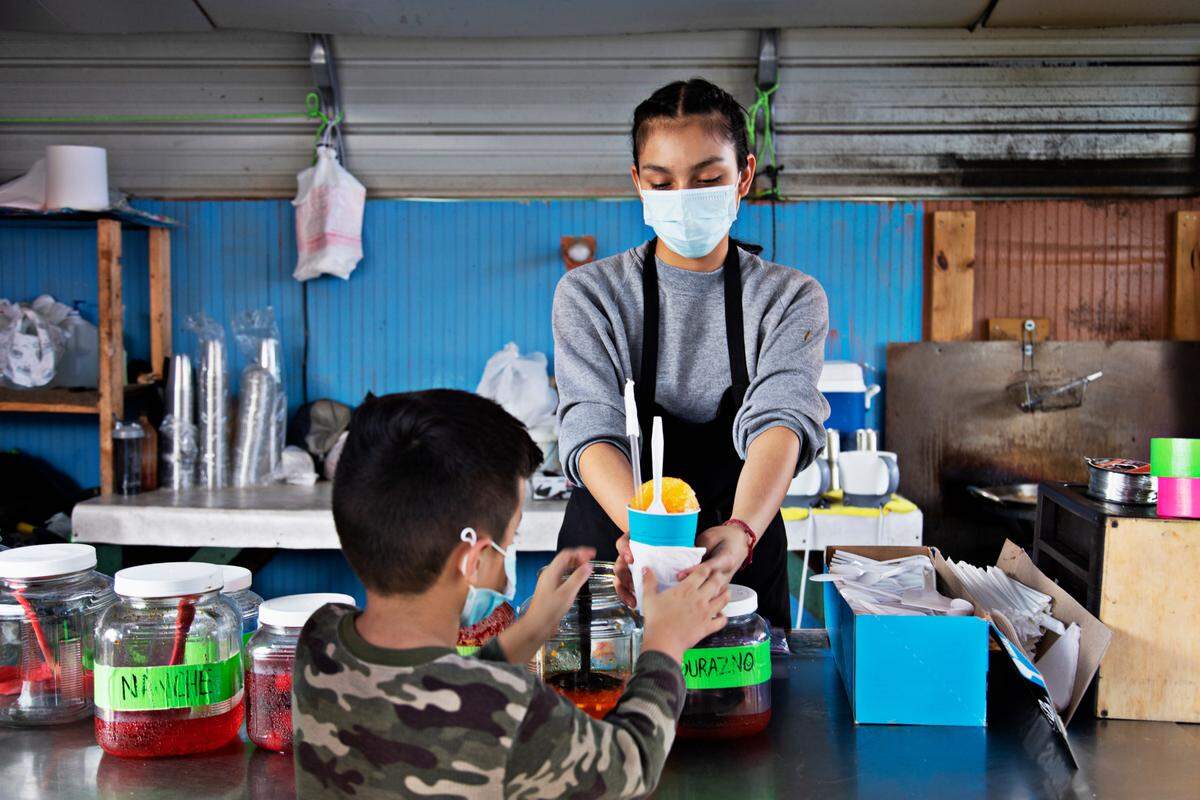
Hispanic voters split up in current maps
Salazar isn’t the only Latino worried about how the maps will affect communities like his. In public hearings on redistricting that lawmakers held around the state throughout September, numerous groups of local Hispanic residents came out to ask lawmakers not to split up their communities.
The current maps do split them up, at least in some cases — like for congressional races.
Of the 10 counties where Hispanic voters have the largest percentages, eight of them border one another. That area stretches from just outside Raleigh in Johnston, Harnett and Lee counties, south toward Fayetteville and east through farm country toward Jacksonville on the coast. But those eight connected counties are split into five different congressional districts.
There’s no indication that lawmakers intentionally divided up the heart of the state’s Latino population. In fact, those maps were drawn in 2019 — following a court ruling that had found the previous maps unconstitutional — by GOP lawmakers who used a lottery ball machine to randomly select a map from several possible maps that Democrats had vouched for in court, then made minor tweaks.
“There could be zero accusation that the Republicans gerrymandered these maps,” Sen. Paul Newton, a Cabarrus County Republican who is one of the top redistricting officials, said about that 2019 redistricting process in a recent interview.
Still, the maps took into account where incumbents lived, to protect them and let them influence the lines. (That same rule is in place again this year.) And last time, no lawmakers were Hispanic.
To activists like Manny Diaz, the outcome just shows how much people like him get overlooked.
“I don’t believe the Latino population was even thought of when it came to drawing those maps,“ said Diaz, a Salvadoran immigrant who lives in Fayetteville and does voter outreach all throughout the southeastern part of the state for the group Democracy NC.
This year, as the new redistricting process enters its second month, he’s just one of the people trying to change that.
“The next decade could be transformational for Latino political power in North Carolina,” Hurtado said in an interview. “The question now is how will new maps either help or hurt that political participation and representation in our government.”
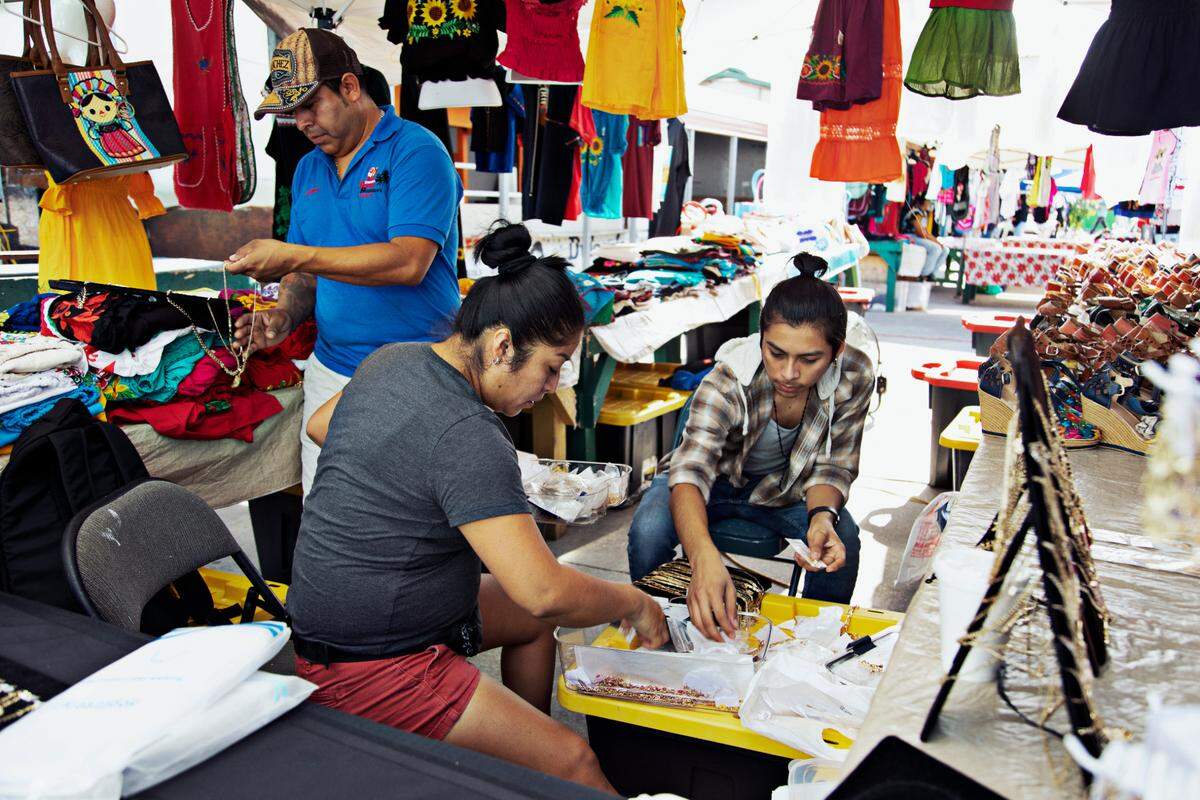
Latinos underrepresented in NC politics
In recent decades, Hispanic residents have been largely responsible for North Carolina’s exploding growth and the state’s rising power in national politics. Yet they continue to be massively under-represented in all levels of politics, from Raleigh to Washington.
“Our communities are growing across North Carolina but we aren’t seeing that voice necessarily represented,” Hurtado said.
More than 1 million of the 10.5 million people who now call North Carolina home are Hispanic. If they were proportionally represented in the state legislature, 17 or 18 of the General Assembly’s 170 members would be Hispanic. Instead, it’s only Hurtado.
Hurtado is the son of immigrants and part of a younger, more politically active generation of Latinos. And he hasn’t been shy about advocating for immigrants, even as he represents a county that voted for Donald Trump in 2020.
In his first few months in office, he sponsored bills like one that would let unauthorized immigrants pay in-state tuition at public universities here as long as they graduate from an in-state high school, and another to require stricter regulations around manure and other waste at chicken farms, which often employ migrant workers. Neither bill advanced in the GOP-controlled legislature, but he did convince numerous fellow Democrats to sign on as co-sponsors.
But looking ahead to 2022, it’s likely that some of the people who put him in office to advance an agenda like that won’t get the opportunity to vote for him again. His district is definitely getting redrawn. It’s just a question of how.
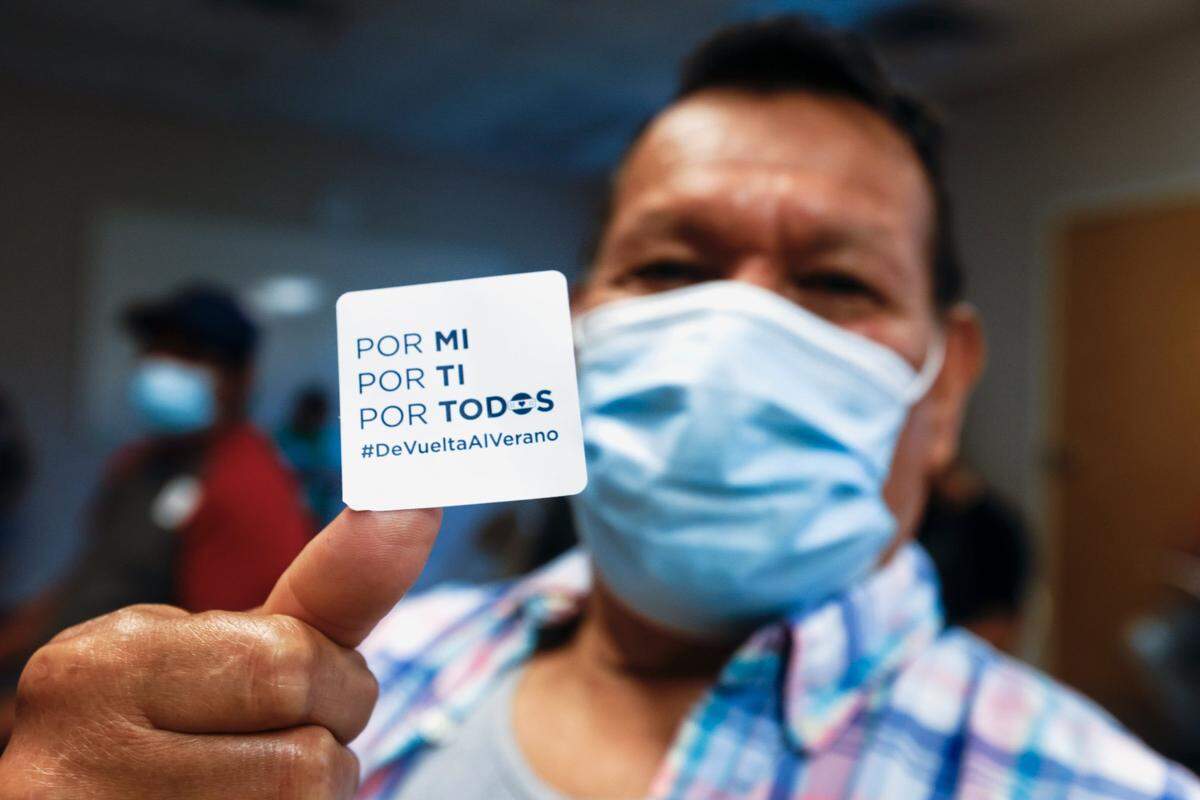
Latino activists put pressure on redistricting
Republican politicians are in charge of drawing the new maps this year. Many of them also voted for maps drawn in 2011, which were later tossed out in court as unconstitutional racial gerrymandering for diminishing the power of Black voters. Unlike with questions of partisan gerrymandering — which federal and state courts have split on — racial gerrymandering has long been ruled unconstitutional by courts at all levels
So the new maps will be carefully scrutinized again for how they affect Black voters. But Latino activists say they are now a large enough voting bloc of their own to warrant attention and protections, too.
“Western North Carolina is overlooked, and the contributions of my community gets overlooked,” said Margarita Ramirez, who was born in Mexico but moved as a kid to McDowell County, between Asheville and Morganton. “This is why I ask that we be fair in the distribution of districts, and that we focus on all communities receiving the necessary resources. For that to happen, my community needs fair representation.”
The leader of a charity focused on McDowell County’s Hispanic population, Ramirez delivered her message directly to a group of Republican and Democratic lawmakers at the first of more than a dozen public hearings they held in September on redistricting.
And at many of the hearings since then, the message has been the same: Latino voters want their communities to be kept together in a few districts, instead of being spread out, so that they will have more influence over who gets elected.
“We are protagonists in this redistricting and we are watchful of where the new district boundaries will end up,” Julián Abreu, head of the Association of Dominicans in Raleigh, said in Spanish. “We need to unite our community that is voting in divided districts in a fragmented manner, because then we are being left up in the air, we’re being left in limbo, we’re not being able to do the work we need to do.”
Abreu has been part of a group of Latino activists showing up at redistricting hearings in different counties, bringing along Spanish translators with them.
A political scientist at the University of West Georgia who studies Latinos in the South, J. Salvador Peralta, said they will have to keep up the pressure if they want to be heard.
“At this point, it’s very likely that Latinos are going to get split,” he said. “In part because, wherever they are, they don’t have enough numbers to influence the process.”
Hispanic people are just under 11% of the total state population. But they aren’t evenly spread out. Some towns and counties have almost no Hispanic residents, while others have large communities. Nearly a third of Monroe’s 35,000 people are Hispanic, for example, and Latinos make up one in every four or five residents in other mid-size towns like Jacksonville, Smithfield, Burlington, Sanford and Morganton.
A decisive group in a purple state?
Politicians often assume that Hispanic voters typically lean left, with the exception of the conservative Cuban diaspora that exists mostly in Florida.
But that’s not necessarily true.
Politicians and outside experts alike told The News & Observer that while there aren’t many Hispanic Republicans, it’s also true that less than half are Democrats. That’s because around 40% are unaffiliated, choosing not to join either party. That could be because their personal views don’t align perfectly with either party and they see reasons to support either — or neither.
“If one party chooses to pursue their vote and acknowledge their political presence, it could help them swing elections,” said Michael Bitzer, a political science professor at Catawba College who recently published a book on redistricting in North Carolina. “Either party could look to that coalition and find support.”
Bitzer, Peralta and Hurtado all emphasized that different factors determine where Hispanic voters may fall on the political spectrum, like which country their family is from, how old they are and whether they’re a naturalized citizen or were born in the U.S. They also agreed that a sizable number of Hispanic voters have views not represented in mainstream American politics, such as being socially conservative but economically liberal — which means they could be persuaded by either party.
Hurtado pointed to the narrow margins of recent statewide elections, in which both Republicans and Democrats have narrowly squeaked by depending on the race. He also pointed to the fact that voter turnout is comparatively low among Hispanic citizens: Turnout was 79% for white voters in 2020, 72% for Asian voters and 68% for Black voters. Hispanic voters trailed the rest, with just 59% of registered voters actually casting a ballot in the presidential election.
Hurtado said that indicates there are many Latinos who could vote but either face obstacles to voting or haven’t been inspired by either side.
“I think they actually present a really unique opportunity to complicate our politics,” he said. “You can have pro-life, pro-immigrant Republicans. Or you can have pro-life, pro-immigrant Democrats. And what does that mean for the future of politics in North Carolina?”
This story was originally published October 6, 2021 at 6:00 AM with the headline "With new redistricting maps in place, will NC’s 1 million Latinos get more attention?."