What is gerrymandering? Here are 6 things you need to know about redistricting in NC
READ MORE
Will their voices count?
North Carolina grew so fast since 2010 that it will gain a new seat in Congress. Latinos are more responsible for that growth than anyone else. With the Hispanic population booming, will redistricting help bring more political power to these communities? Read The News & Observer’s special report.
Expand All

With new redistricting maps in place, will NC’s 1 million Latinos get more attention?
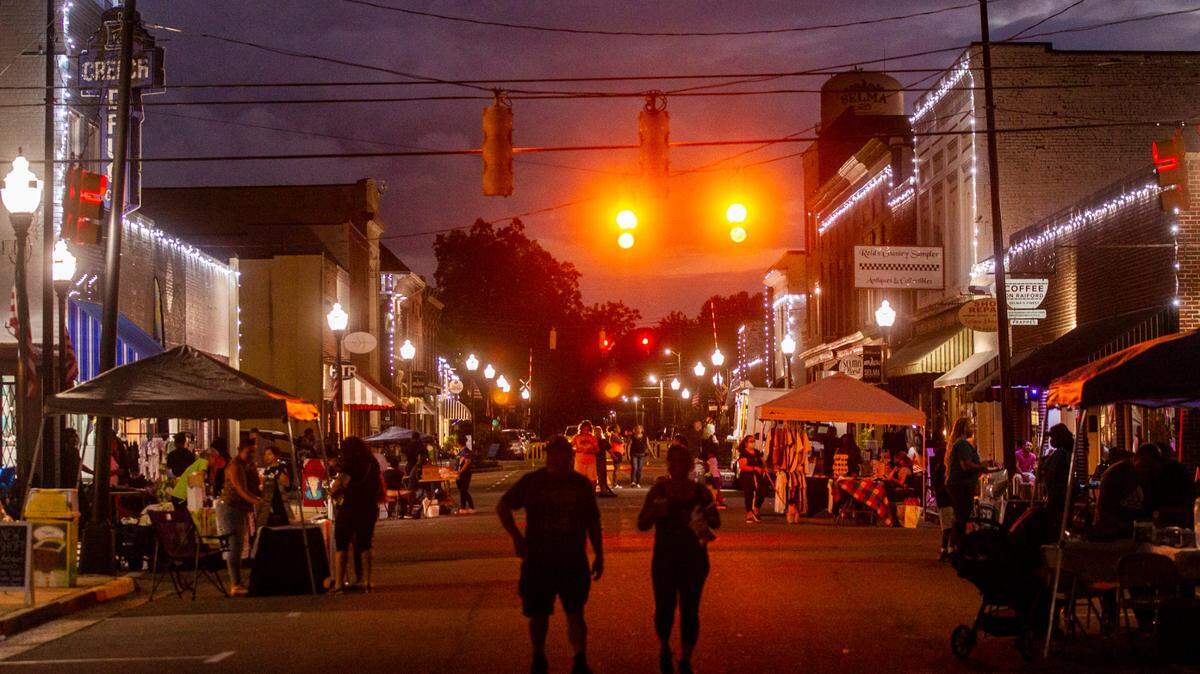
What is gerrymandering? Here are 6 things you need to know about redistricting in NC

Latino residents driving NC’s population growth. Will new political maps split them up?

How do you reach Latino voters? Stop treating them as one group.
This story was updated on Oct. 6, 2021, including with more information regarding comments on the process by a former NC GOP leader
North Carolina lawmakers are in the middle of drawing the state’s new political maps, based on 2020 Census data.
Don’t let your eyes glaze over just yet, though. It’s a hugely important part of state politics — and a big reason Democrats spent millions upon millions of dollars in 2020 trying unsuccessfully to flip one or both chambers in the N.C. General Assembly.
Since the Democrats failed at that, Republicans will retain control over redistricting. They now get to decide exactly how the districts for seats in the U.S. House of Representatives, N.C. Senate and N.C. House of Representatives will be shaped.
It can be complicated at times, and tough for the general public to get involved in. But it affects literally everyone in the state. So here are some major things you need to know about redistricting, and gerrymandering, in North Carolina.
We’ll tell you why you should care, when all of this is happening (hint: right now), how politicized the new maps might be, who’s in charge of making sure they’re at least sort of fair, and more.
1: What’s the big deal?
If history is any guide, these new maps could go a long way toward determining which political party controls North Carolina’s legislature in the future, as well as which way the state’s congressional delegation leans.
Since Democrats have only a slim majority in the U.S. House of Representatives, that means Republican state lawmakers in North Carolina have an opportunity through redistricting to help their party take back control of the House for the second half of President Joe Biden’s first term.
Republicans currently hold an 8-5 advantage in North Carolina’s U.S. House delegation. The state will get a 14th seat starting in next year’s elections, though, and former NCGOP leader Dallas Woodhouse has said Republican lawmakers were talking about drawing themselves a 10-4 split, which would grow their advantage from three seats to six. Woodhouse later walked back his claim about GOP lawmakers specifically, but stood by his analysis that a 10-4 map could happen.
Politicians on both sides of the aisle, all around the country, have long used redistricting to identify where their supporters live and then draw the political maps in a way that ensures those people’s votes will matter more than the votes cast by people on the other side.
When it gets egregious, people call it gerrymandering. And when it gets really egregious, the courts can step in and force lawmakers to redraw the lines. That’s happened in North Carolina — a lot.
For example, Republicans did such an effective job drawing maps for themselves last decade that even the “Blue Wave” election in 2018, with its massive Democratic turnout, wasn’t able to flip a single seat in Congress from North Carolina. Nor were Democrats able to flip either chamber of the state legislature. Those maps were then ruled unconstitutional for violating the state’s guarantee of free elections.
But since Republicans kept their majorities under those maps found unconstitutional, they were also the ones who redrew the maps for 2020. They won in 2020, too, so this year they are in charge of the process yet again.
2: What do critics want?
There is popular support for making changes to the redistricting process, and the idea even got some big-name Republicans on board before the 2020 elections. But when Republicans kept control of the legislature in 2020, that fizzled out. So while gerrymandering critics know they probably won’t get their goal of an independent redistricting committee anytime soon, they have been pushing for smaller concessions like more transparency this year.
But as for what end result they want to see, not everyone agrees.
Some critics want maps in which the makeup of the state legislature and U.S. House delegations would more or less reflect how the people of the state actually vote.
But others say that rather than guaranteeing each side a certain number of seats, the districts should be drawn to be as competitive as possible. None of North Carolina’s congressional districts are currently competitive, even though statewide races here are tightly contested. And only a few state legislative districts have been competitive in recent years.
Evenly matched districts statewide could lead to turbulent politics, with even small changes in support making the balance of power swing back and forth. Some are skeptical of that. But supporters say it would reduce the importance of party primaries and therefore, they believe, lead to more moderate politicians being elected on both sides of the aisle.
3: How can I have a say in redistricting?
Lawmakers have finished a statewide tour of public hearings, but the maps likely won’t be finished until late October or early November. In the meantime, there are opportunities for people to find more information and leave written comments, online at the legislature’s ncleg.gov website.
For anyone who wants to watch in person, the work will be happening in Raleigh at the Legislative Building, and more information is available on the same website.
4: How much will politics come into play?
At times, GOP leaders have been explicit about seeking maximum political advantage. During a round of court-ordered redistricting in 2016, a top redistricting official, former Rep. David Lewis, said the reason Republicans all-but-guaranteed themselves a 10-3 advantage in the U.S. House was because they couldn’t figure out how to draw an 11-2 map.
Democrats were engaging in political gerrymandering here before Republicans were, and lawmakers long ago wrote the laws to give themselves very few rules regulating the process. State law even specifically bans the governor from vetoing the maps.
“Gerrymandering is the law of the land and the law says the prevailing party draws the maps,” Jerry Tillman, a former Republican state senator who represented a particularly gerrymandered district based in Randolph County, told The News & Observer in 2019. “It doesn’t say you draw them to help the other side.”
The question of political gerrymandering is a tricky one, legally speaking.
Courts have generally frowned on drawing maps to either weaken or strengthen the political influence of racial groups. But using the maps to specifically harm the power of Republicans or Democrats in general, regardless of race?
The U.S. Supreme Court allowed just that in 2019, in cases involving North Carolina and a few other states. But a state-level court here did not, and struck down the maps as unconstitutional partisan gerrymandering based on the state constitution. So the jury is out, so to speak, on how much leeway the courts might allow for partisan gamesmanship in this year’s maps.
For their part, GOP leaders have said they won’t use partisan political data when drawing the maps this year, unlike in the past. That could take politics out of the equation somewhat. On the other hand, politicians know where their voters tend to live. So lawmakers don’t necessarily need spreadsheets full of data to have a general sense of how different areas lean.
Plus, some may be skeptical of whether lawmakers will follow their own rules — since a court that overturned maps in 2019 also ruled that when GOP lawmakers drew those maps, they may have secretly broken their redistricting rules.
Because of that, the court ordered never-before-seen levels of transparency for the redraw that year. GOP leaders have said that this year, they plan to continue using many of those same transparency rules even though they’re no longer bound by a court order to do so.
5: Who makes sure the maps are fair?
The U.S. Department of Justice used to be able to weigh in on the maps and potentially force a redraw, due to concerns over racial discrimination laid out in the 1965 Voting Rights Act. But the U.S. Supreme Court invalidated that piece of the VRA in 2013, so the Biden administration won’t be able to review the maps this year.
With the legislative branch in charge of redistricting, and the executive branch powerless at both the state and national levels, that leaves any oversight up to the courts.
6: How likely are lawsuits against the new maps?
Very.
Redistricting is supposed to only happen once every decade. The Census data comes out, the lines get drawn, and that’s it until the next Census. And some states do manage to draw lines that hold up to legal scrutiny.
But not North Carolina. We haven’t drawn maps that lasted for a whole decade in, well, decades.
The 2011 maps were ruled unconstitutional, as were maps that lawmakers drew to replace them. Maps drawn for the 2000s, 1990s and 1980s were all also later forced to be redrawn by the courts.
Most of those times, the maps were thrown out for diminishing the voting power of Black people. But the ‘90s congressional map was the opposite — thrown out for giving Black voters too much influence. In that case lawmakers had created two majority-minority districts, including the oddly shaped 12th district that snaked all the way from Durham to Charlotte. The U.S. Supreme Court ruled that district was unnecessary and too influenced by race.
So, it’s clear that courts have long ruled that racial gerrymandering is unconstitutional. And actually, North Carolina’s Democrat-drawn maps from 1981 are largely responsible for that, due to a landmark U.S. Supreme Court case, Thornburg v. Gingles, that found the maps diluted Black political power.
In other words: North Carolina has been at the center of the nation’s legal battles over redistricting for decades, and that’s not likely to change this time.
How can I get caught up?
Here are a few links to relevant stories that you may find useful in learning more about redistricting in North Carolina:
Redistricting is why NC Democrats spent millions of dollars on state legislative races in 2020
The News & Observer’s new, 2021 podcast on redistricting
The legislature’s web page for people to leave public comments and find more information
An overview of the rules lawmakers will use this year
Timeline of redistricting in 2019, a process lawmakers have said they want to largely emulate again
Census shows cities booming, rural areas shrinking
Analysis of how the current maps favored rural voters in 2020
Supreme Court ruling on partisan gerrymandering not being a proper issue for federal courts
State court ruling on partisan gerrymandering being unconstitutional
Timeline of redistricting in North Carolina from 1776 through 2009
For more North Carolina government and politics news, listen to the Under the Dome politics podcast from The News & Observer and the NC Insider. You can find it at link.chtbl.com/underthedomenc or wherever you get your podcasts.
This story was originally published October 6, 2021 at 6:00 AM with the headline "What is gerrymandering? Here are 6 things you need to know about redistricting in NC."