Revaluation 101: How will 2023 change taxes on homes, property in Mecklenburg County?
READ MORE
CLT Property Revaluations
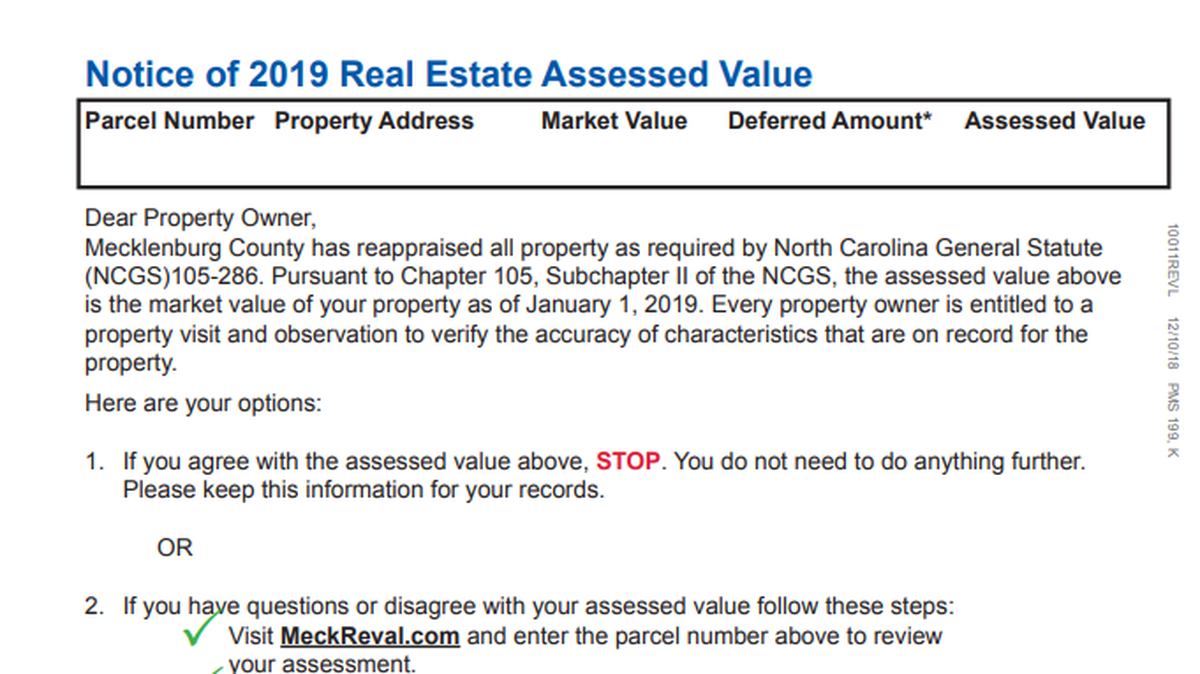
Starting Friday Mecklenburg County is mailing out the 2023 property revaluation notices to hundreds of thousands of property owners.
Expand All
If you own a home or commercial property in Mecklenburg County, you will see a change to your property tax bill in 2023.
The county tax assessor’s office is working on its revaluation process. It happens every four years and involves property tax values being reassessed to match current market standards.
Here are some answers so you’re not shocked this January when you receive your home’s new value.
Why does the county reassess property tax values?
Mecklenburg County completes the revaluation process to redistribute the property tax base fairly and equitably, said Tax Assessor Ken Joyner. The process also updates property tax valuations to current market levels.
“A revaluation is not a means to increase property tax revenue,” Joyner said.
Revaluation, though, could increase property taxes for some people.
What’s the time schedule for revaluation?
▪ Now - The county tax assessor office is working on community engagement through March 2023. This includes more than 60 speaking engagements, website branding, brochures and videos. To schedule a presentation on the revaluation process, contact kay.tembo@mecknc.gov.
▪ Through December 2022 - The citizens review committee, a nine-member panel appointed by the Mecklenburg Board of County Commissioners, will review the valuation process. The committee’s role includes reviewing operations, appraisal methods and statistical reports. The committee will also monitor the progress of the county’s revaluation so it can report conclusions and make recommendations to commissioners.
▪ January 2023 - The county will mail value notices to all Mecklenburg property owners.
▪ May 2023 - The final month to submit an appeal to the Board of Equalization and Review if you think something is wrong with your property’s assessment.
▪ July 2023 - Tax bills will be sent out to property owners and are due Sept. 1.
How do you appeal your revaluation?
The new assessed values are not necessarily set in stone. If something looks wrong, property owners can file an appeal to potentially reduce their value.
The form to file an appeal can be found at mecknc.gov/AssessorsOffice/.
Will new homes be part of the revaluation process?
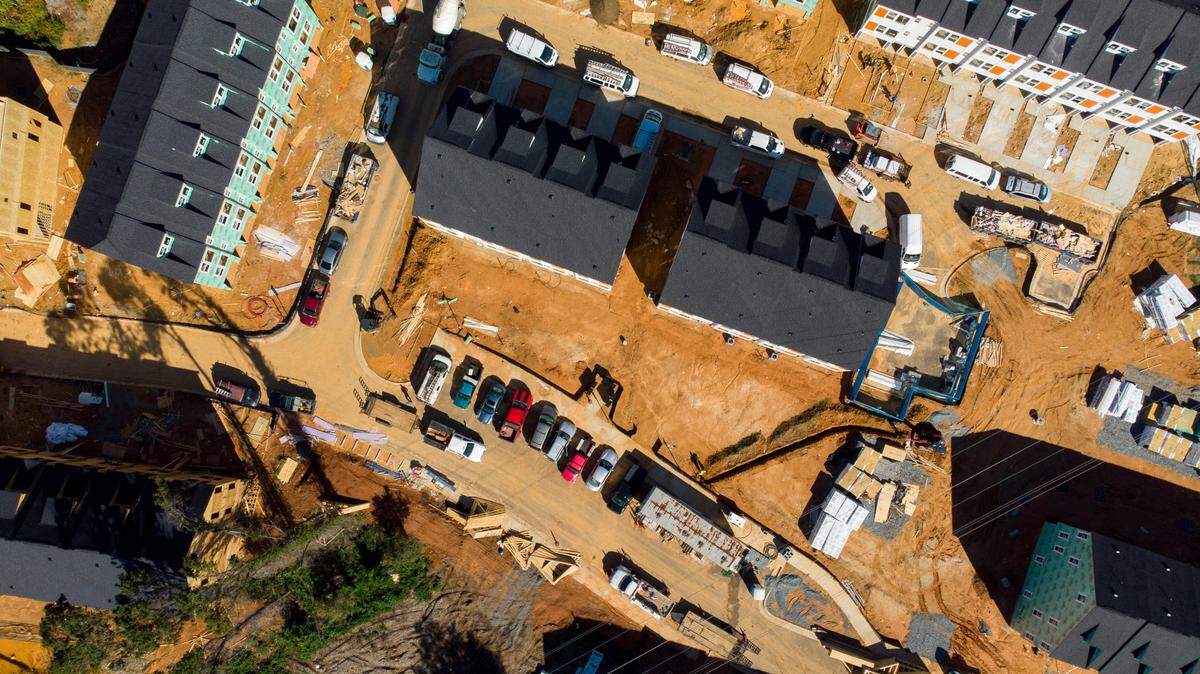
All properties in Mecklenburg County are currently valued based on the same assessment from 2019. This means new homes built after 2019 will be assessed as part of the 2023 process.
“(Revaluation) includes homes built 100 years ago and new construction so that everyone is on a level playing field,” Joyner said.
Will my property taxes increase?
From 2021 to 2022, median home sales prices have risen almost $100,000 in Charlotte, according to data from the Multiple Listing Service, an organization that brokers use for appraisals. Property tax values could rise with sales prices, but it’s still too early to tell how bills will be affected, Joyner said.
Mecklenburg County’s fiscal year 2023 budget kept the property tax rate at 61.69 cents per $100 valuation until July 1, 2023. The city of Charlotte also kept its property tax rate the same for fiscal year 2023 at 34.81 cents per $100 valuation until July 1.
“Although home prices have increased substantially, these increases are not captured in the city’s property tax revenue until the county reassesses property values,” the city budget states. “In FY 2023, property tax revenue is projected to grow by 2.6 percent driven primarily by real property growth.”
The city and county will set a new tax rate before July 1 that incorporates revaluation and applies to the 2024 fiscal year.
The Mecklenburg Board of County Commissioners voted in October 2019 to reassess properties every four years instead of every eight. A shorter period between revaluations reduces the likelihood of steep market increases seen in eight-year cycles, Joyner said.
The decision to reduce the time between revaluations came after the revaluation process the same year when Charlotte saw a 43% median increase for residential property values and 77% for commercial property. Commercial and residential property owners filed appeals, reducing property values by more than $1 billion.
By May 2019, The Charlotte Observer reported more than 6,000 residential revaluation appeals were processed by the assessor’s office, reducing just under $193 million in value, and just under 1,600 commercial appeals were processed, reducing $914 million in value.
Property taxes, which increased by 2.6% in the fiscal year 2023 budget, make up more than half of the city of Charlotte’s general fund revenue.
“As the housing supply continues to increase (as seen in the number of building permits issued for multi-family and single-family units) real estate property tax revenues will fare even better,” the city’s budget states.
Are tax relief options available?
Tax relief options are available for some elderly, disabled, veteran and low-income property owners in Mecklenburg County.
Elderly and disabled Mecklenburg County residents can receive up to $25,000 or 50%, whichever is greater, off their taxes. Those interested can apply between January and June each year by calling 980-314-4226.
Elderly and disabled tax relief requirements include:
▪ The applicant’s name must be on the deed or title to the property.
▪ The property must be the applicant’s primary residence.
▪ The applicant must live in North Carolina.
▪ The applicant must be at least 65 or have a disability that “substantially hinders a person from obtaining gainful employment.”
▪ If claiming a disability, the applicant must provide proof of the disability from a North Carolina physician or a government agency.
▪ The applicant’s household income must be below $31,900, based on 2021 income. The Mecklenburg Board of County Commissioners is working to make this income restriction higher so more people can qualify, Joyner said.
Disabled veterans in North Carolina can receive up to $45,000 off their property taxes. Those interested in applying must fill out a form on milvets.nc.gov.
Disabled Veterans Homestead Exemption requirements include:
▪ The deed or title must be in the applicant’s name as of Jan. 1.
▪ The applicant must live in North Carolina.
▪ The applicant must be a disabled, honorably discharged veteran or receive benefits for specially adapted housing under 38 U.S. Code 2101.
The Helping Out Mecklenburg County homeowners with Economic Support (HOMES) program helps low to moderate-income homeowners get up to $340 off their property tax bill. Those interested can apply at mecknc.gov/4Homes.
HOMES program requirements include:
▪ The applicant’s name must be on the deed, title or recorded life estate to the property.
▪ The property must be in Mecklenburg County.
▪ The property must be the applicant’s primary residence at the time of application and consistently for the past three consecutive years.
▪ The applicant’s household must make less than 80% of Mecklenburg County’s area median income, or less than $67,000 for a family of four according to data from local affordable housing developer DreamKey Partners.
This story was originally published August 18, 2022 at 6:00 AM.