Q&A: Mecklenburg health director on the next pandemic and what happens to COVID hires
READ MORE
COVID money’s final deadline
The federal government’s COVID relief packages brought windfalls of hundreds of millions to local governments and schools. Now, they’ll have to find ways to help struggling students or ensure affordable housing without it.
Expand All
‘Keeps me up at night.’ How will CMS pay for programs with dwindling COVID relief money?

With COVID relief money set to end, where should Charlotte renters in need go?
Q&A: Mecklenburg health director on the next pandemic and what happens to COVID hires
See where hundreds of millions in CMS and city of Charlotte COVID relief dollars went
Follow the money: Mecklenburg County finds home for all $317 million in COVID relief
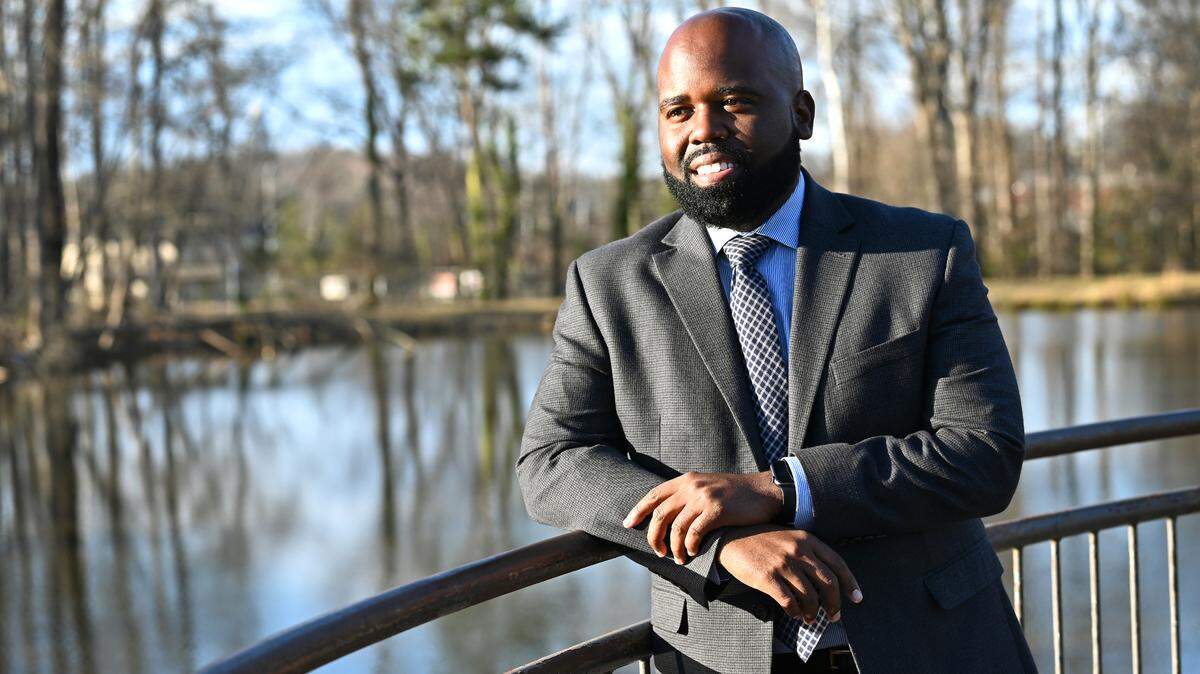
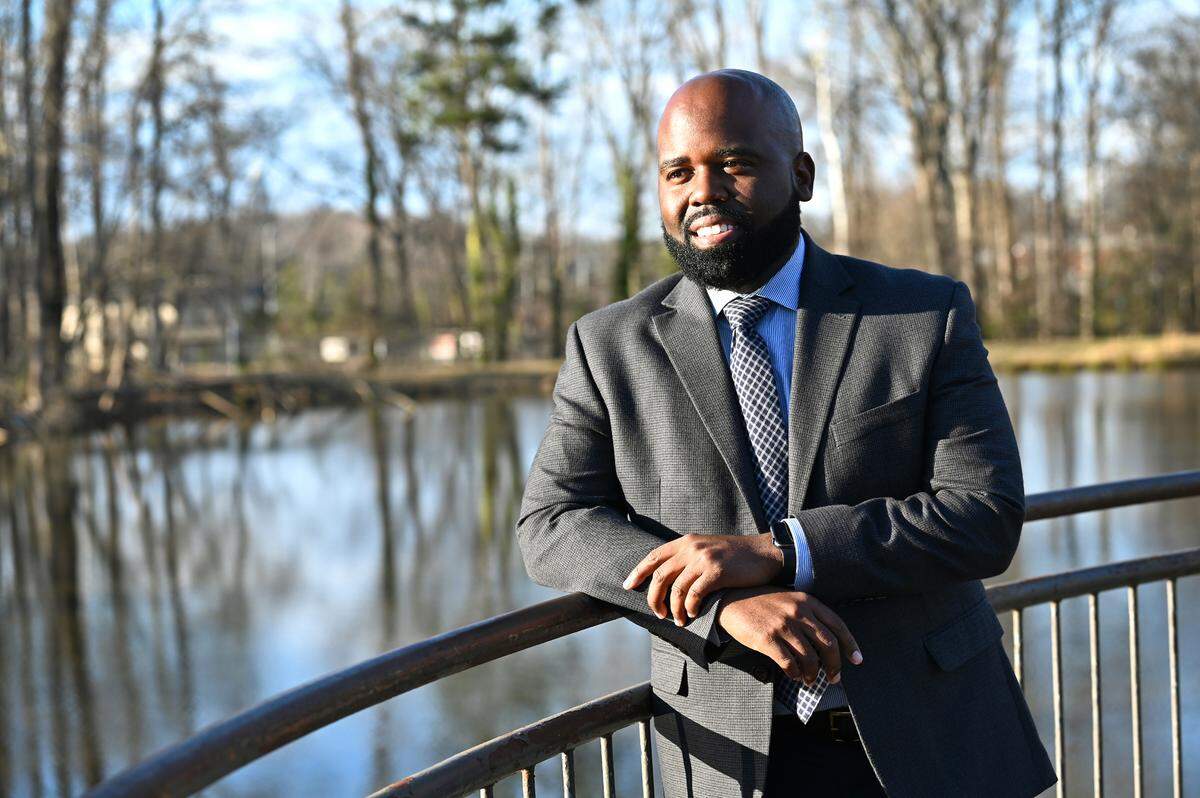
Dr. Raynard Washington’s start date with Mecklenburg County’s health department lined up almost perfectly with the arrival of COVID-19.
The epidemiologist joined Mecklenburg County’s health department in March 2020, just five days after the U.S. formally declared COVID-19 a pandemic and four days after the county reported its first case. Though he didn’t anticipate a pandemic when he applied for the job, he’s spent every day since then thinking about it, sometimes working 12-hour days and weeks without breaks.
The hours paid off, Washington said. If he had to give the county a letter grade on its emergency response over the past three years, he said he’d give it an A-plus.
Mecklenburg County received more than $255 million in federal COVID relief dollars. In this Q&A with The Charlotte Observer, Washington talked about Mecklenburg’s response to COVID-19, what will happen to temporary employees funded with that money and how the county is prepared for the next crisis.
This interview has been edited for brevity and clarity.
Charlotte Observer: You joined the county as health director in the middle of the pandemic, correct?
Dr. Raynard Washington: I came to the county on March the 16th of 2020. I was previously in the city of Philadelphia. I’m an epidemiologist by training, and I was their chief epidemiologist.
When I first joined Mecklenburg, I was a deputy health director, which is I guess you can say second in command in our department. And then Gibbie (Harris) retired in December of 2021 and I became health director. So when I took over as health director, obviously we still today are still dealing with COVID stuff, but it was at a different time, I think at the first couple years of the response.
CO: When you had federal money coming in, what were the priorities that you knew needed funding right away?
RW: Mecklenburg County took early action as a local government in terms of our immediate pandemic response to ensure that we protected the health and safety of our employees and our clients by moving to a virtual environment.
Before we got our first case, we activated the Emergency Operation Center, an opportunity for us to set up an incident command structure that brings to the table all the critical players who may have a role in the response activities.
What emergency management does is brings together all the stakeholders of law enforcement emergency response teams, Medic, fire, social service agencies, community volunteers, and it is a coordinating entity for all response activities as well as communications.
We did start to see our pandemic response funding come down and there was also an understanding that there’s going to be some level of reimbursement from the (Federal Emergency Management Agency).
We were also at the same time mobilizing our response activities. We have the communicable disease team that’s made up of nurses who already everyday track and monitor the 85-plus communicable diseases that we’re responsible for tracking and tracing in our community. At that time, nobody knew what contact tracing was, but it’s a thing that we do every day for a lot of conditions.
With a novel illness that we didn’t know a lot about, as we were learning from our partners at the state and federal government, we were working to mobilize very quickly to be able to adopt the necessary protocols.
The first couple of months we were essentially just reassigning existing resources within the health department to be able to respond to the activities as well as working to stand up an isolation facility to ensure that we had space for individual residents who didn’t have a place to isolate.
So that’s when we began to issue the lease agreement with the hotel (to isolate COVID patients). Then of course, we had to identify staff to actually staff that hotel. Many of our staff actually ended up working in the hotel. A variety of staff from various parts of the health department, environmental health and other areas took on responsibilities and were diverted from the usual work to assist with response activities.
In the health department, it was all hands on deck. As the need for support and resources continued to grow in the summer, early months. We worked to set up a hotline for our community members. We had to mobilize communication resources to ensure that there was a website and places where people could go for trusted information.
CO: How many temporary employees did you hire? What will happen to their positions?
RW: We established, with the support of the Board of County Commissioners, the COVID response unit with about 35 team members. Those individuals were hired on two- or three-year, term-limited positions.
Many of those positions do end in June of this year. Fortunately for us, we have been able to transition many of those team members to other permanent roles in the health department, so we’re not looking we’re not facing a big layoff. Many of those folks will be continuing on with us in new capacities and some of them will be in new grant funded positions that are funded by federal public health infrastructure grants.
CO: Did the health department have enough support?
RW: I think we’re really fortunate to have really supportive leadership to support us and moving forward and, and also making the best decisions for our community. I certainly think we had adequate support. .
One of the challenges we had at least initially was having enough human support, human resources to help us get all the stuff done that we ultimately need to get done. Initially, when we just had a couple of cases a week. Obviously, we had plenty of staff to handle that.
Many of us worked seven days a week, sometimes 12 to 14 hours for a very long time to make sure that everything we needed to get done got done. And ultimately I think we we certainly were able to.
Even throughout the response when it got more, I would say politically charged, it was great to have the thoughtfulness of our leaders here to trust science and to follow the data and to allow us to lead from a neutral place of public health practice.
CO: Looking back over the past three years, how would you grade the county’s response to the pandemic?
RW: I would give us an A-plus. I would actually give probably every local health department an A-plus.
Being in the situation that we were in to find a novel virus where information was rapidly evolving every single day from state, federal and global partners and trying to translate that information to the community and then work very quickly to again, mobilize the resources we needed. Whether it be isolation quarantine hotel that’s a 24/7 operation or the needs of our case investigation team, which was also a seven-days-a-week operation.
Are there things that we could have done better? I think that’s the case in every situation, there’s always an opportunity to do something better. So I wouldn’t give us 100% on a test, but certainly, I think the level of effort and the commitment of our team members and our leaders showed they stepped up to the occasion.
I would say that we did a fantastic job given the circumstances and the level of misinformation that was sort of fighting against us and then the political polarization that was attached to it. All those forces considered you know, it’s a really hard test to pass.
CO: Is Mecklenburg County prepared for the next pandemic?
RW: I think, state and national level there’s certainly an opportunity for us to make sure we have a seamless coordinated public health system. In many cases right now it’s fairly fragmented, partially because of the way that the public health system is funded. Much of the funding goes to states, and states have a certain level of latitude and how they implement various systems. We need to really have coordination.
There was a time where people were trying to find out how many COVID cases we have and you got one number from the county, one number from the state one number from the feds. And that really is representative of the lack of a seamless, coordinated data system to be able to respond.
Kudos to the federal government. There was a big initiative where roughly $3 billion has now gone into public health agencies across the country to help us build our capacity to be able to respond, not just in emergency response, but also in our day-to-day operations. We’ll be able to sustain those things as a result of these additional funds that came from the federal government.
In a situation where you’ve got miscommunication across the board, having people who actually have expertise, it’s not just about communicating back to the media. It’s about how you can communicate health information in a way that people understand regardless of your literacy level and regardless of your ability to understand complex biological processes. In a world where everybody’s consuming information in real time or in 30 seconds on social media, a press release is not going to reach 1.2 million residents.
There’s a lot of discussion right now from the public health community advocating for this is why this is so important. We’ve got lots of investments in the biological and basic sciences like through the National Institutes of Health to develop treatments and vaccines and we’ve gotten lots of investments in health care specifically to deliver services directly to people with treatment and care. But we don’t have equal level of investment in public health and when it comes down to things like an emergency or a pandemic. Public health sits right in the middle of all of that.
We have a lot of preparedness plans, within the health department. We have a preparedness team. They manage a lot of plans for us, that help us be prepared for incidents and emergencies that might arise, whether it be a waterborne illness or another respiratory illness or nuclear event of some sort. Those things, I think, are continuing to to move forward. However, there’s still a need for added investment at the federal and state level in our system as a whole so it’s more coordinated.
This story was originally published April 18, 2023 at 6:00 AM.