Manufacturing work has changed in North Carolina. But the workers aren’t there.
READ MORE
Help (still) wanted
By many accounts, the economic news is bad. Yet almost everywhere you look there are still Help Wanted signs. In North Carolina and nationwide, the tight job market is showing signs of easing. We take a closer look at 5 job fields where everyone can feel the effect.
Expand All
At its facility in Mebane, the Swiss-based corporation ABB makes an assortment of electrical equipment: power panels, switchboards, transfer switches, motor control centers and more.
In 2019, North Carolina awarded ABB $4.4 million in future tax breaks to expand this facility. Further funding from the state, Orange County and City of Mebane brought the total incentive package to $7.6 million.
For this money, ABB pledged to create more than 360 new jobs in Mebane at an average salary of around $63,700. The company, which has its American corporate headquarters in Cary, also promised to retain more than 1,200 existing positions.
But finding those workers hasn’t always been easy.
“It was touchy at different points, at times,” said Marie Van Cleve, human resources director for ABB’s Electrification Distribution Solutions. “We had to figure out how to work smarter.”
This included cross-training more existing employees to fill positional gaps.
Labor shortages have not been limited to the manufacturing sector or to any one company.
“It hits every single company that I’ve talked to everywhere,” said Jay Timmons, head of the National Association of Manufacturers. Timmons was speaking before an auditorium crowd at National Manufacturing Day, annually held on the first Friday of October. This year, the event was held on the sprawling Cary headquarters of SAS Institute.
Timmons said there are 800,000 unfilled manufacturing jobs across the country, “almost twice the entire population of Raleigh,” and spoke of the detriment this gap could produce.
“If we don’t find the talent that we need to keep shop floors running and research and development moving, we’re going to lose out on productivity, on innovation, on growth,” he said.
Not your grandfather’s factory
Speaking at National Manufacturing Day, Gov. Roy Cooper said the industry has an image issue.
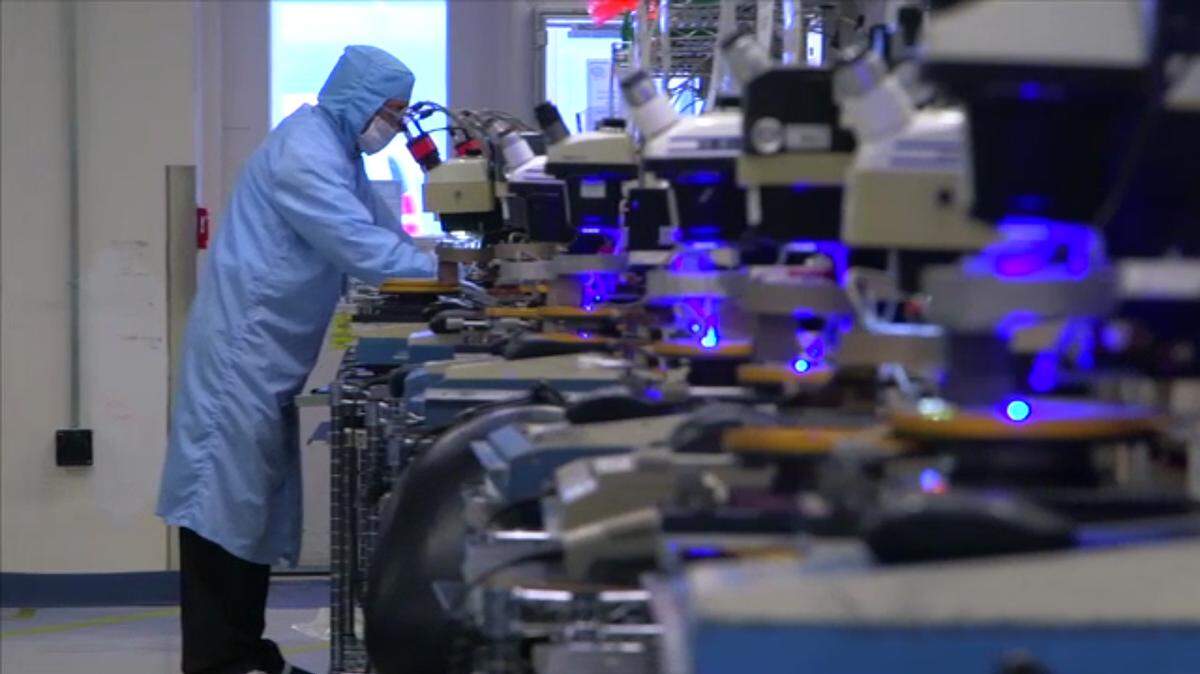
“A lot of people have this vision of what manufacturing is all about, that it’s dark, and dull, and boring, and repetitive,” he said. “That’s not the way it is anymore. It’s open and airy and light and exciting and challenging. But it also requires a little more education and skill and training.”
Manufacturing makes up most of the much-heralded economic projects coming to the state: VinFast in Chatham County, Toyota in Randolph County, Boom Supersonic in Greensboro, and dozens of smaller initiatives. So far in 2022, more than 90% of the job development investment grants, the state’s main tax incentive tool, have gone to manufacturing projects.
This isn’t by accident. Manufacturing predominately requires in-person work. Since remote work options have become more popular in sectors like software, North Carolina’s economic leaders have sought to back projects that demand employees live and work in local communities.
Internships and apprenticeships are ways to expose students to manufacturing careers, said Tammy Hedgren, a vice president of manufacturing at John Deere, during a panel discussion at National Manufacturing Day.
“It’s about getting people into our factories and understanding where the career opportunities are,” she said. “That they are high-paying, that they are high-skilled.”
At ABB, Van Cleve credits the company’s renewed focus on “outside the box” recruitment and retention with improving its labor situation. The Mebane facility became the pilot program for what Van Cleve called a “factory communications toolkit” — a set of strategies to enhance the ABB brand in the local community.
And after identifying the first three months of the job as the most determinative for whether employees stay, the company retooled its orientation and mentorship programs.
Van Cleve described ABB’s worker situation as “a good story.” But it’s not one many manufacturing firms have yet been able to tell.
This story was produced with financial support from a coalition of partners led by Innovate Raleigh as part of an independent journalism fellowship program. The N&O maintains full editorial control of the work.
This story was originally published November 2, 2022 at 6:00 AM with the headline "Manufacturing work has changed in North Carolina. But the workers aren’t there.."