
Why widening roads and adding lanes won’t speed up traffic in Charlotte | Opinion
Take a second to imagine the city with the most disorganized road system in the world. Ever tried crossing the street in Vietnam? Good luck! Maybe it’s Atlanta, with its 15-lane highways, right?
As it turns out, in a recent study that measured the “entropy” in city streets in 100 cities around the globe — considering things like connectivity, griddedness, circuity, four-way intersections and dead-ends — Charlotte landed dead-last, making it the most disordered of the 100 cities. It trumped the notorious streets of São Paolo and Rome.
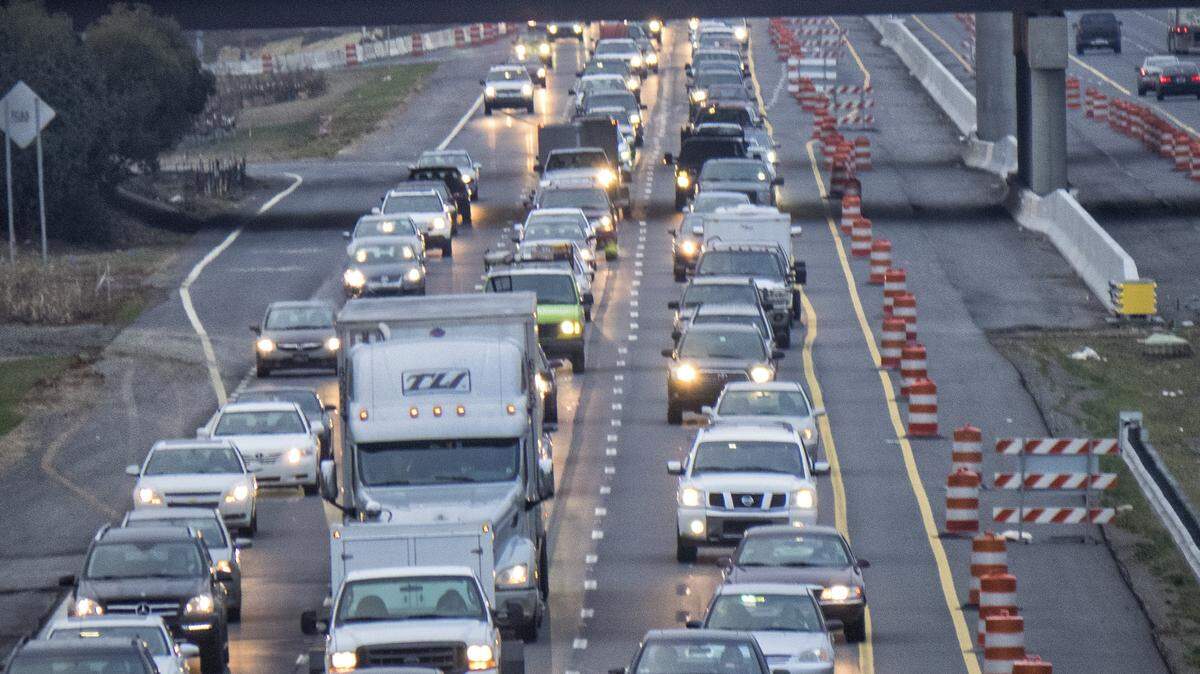
A natural inclination in this scenario is to increase road capacity for cars, as recently suggested by N.C. House Speaker Tim Moore. More roads must mean that there is more space on the roads, and therefore more flow and less chaos, right? As one of the fastest growing metro areas in the U.S., Charlotte is also among the most traffic-congested cities, with drivers spending 25 hours per year in congestion at a cost of $426 per driver, according to a global traffic scorecard.
Increasing road space will not accomplish what some people think it will. Rather, it would be a failed, misinformed and short-sighted decision that would lead to increased congestion — and ultimately to a more dangerous and less walkable and navigable city for all.
It’s a phenomenon called Braess’s Paradox, and it is a well-described premise in nature in which the narrower and less connected a high-traffic network is the more efficient and faster the movement of the flow is within the network. It’s a premise that power and natural gas companies are aware of. It impacts everything from blood flow in tumors, to queuing in line, to why the Knicks are so bad. Keeping things contained keeps things moving. Put simply, less is more.
Traffic is no exception. In the 90s, New York City closed 42nd Street to traffic for a parade. The city’s worst traffic jams were expected. But they never happened. How is this possible? It is counter-intuitive, I know, which is why it is called a paradox.
But how can this be? It’s because many congested roads have misutilized “latent spare capacity,” which means drivers with more space face a burden of choice. Humans will always choose the faster route for themselves. When there is not the option to take the faster road — for example, when a bike lane is there or when there is only one lane instead of three — drivers have only one way to go and will behave more predictably and in a safer fashion.
Let’s not forget to consider what widening the street means beyond motorists. When there are more lanes, it means longer times to cross streets at crosswalks. It means more time to get across the street simply because pedestrians must find their way to a crosswalk to cross safely. And, it means higher risks of cyclists being struck by drivers changing lanes.
Every street does not need to accommodate every type of transportation at all times. Remember, less is more.
Keep cars where cars need to be and optimize alternative routes that cars use as shortcuts as living spaces for people. Consider a simple thought experiment: In the South End, if we closed Camden Road, what would happen? Pedestrians and cyclists could move to and from the light rail. Fewer people would drive because there would be less parking, and they now feel safer using the light rail in this area.
Fewer people driving in a bar-heavy area means less drinking and driving. All the while, cars can continue on their merry way up and down Tryon Street and South Boulevard uninterrupted by motorists short-cutting in between the two streets or pedestrians on their phones walking out unannounced.
Despite Charlotte being the most European-like city based on its chaotic network of streets, it has a single advantage: It is not 1,000 years old. Charlotte is both small and young enough to develop any which way it wants. City planners have a choice. Let’s not regret it in 100 years because we did not consider what was already known.
Do not widen the roads for cars. Reduce entropy by removing latent connective streets to improve the flow of major artery roads. We can embrace Charlotte’s chaos, but we just need to organize it a bit.
This story was originally published February 10, 2023 at 6:00 AM.