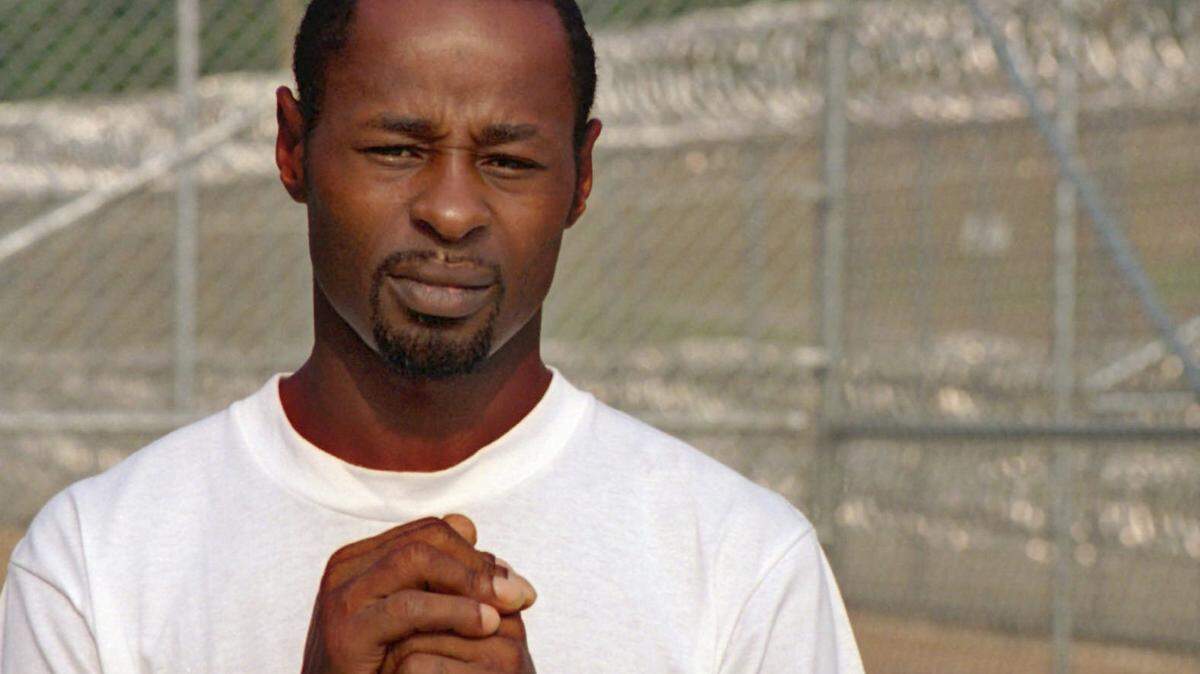
Who killed Kim Thomas? Marion Gales’ family thinks he did it. Police think otherwise.
READ MORE
Who killed Kim Thomas?
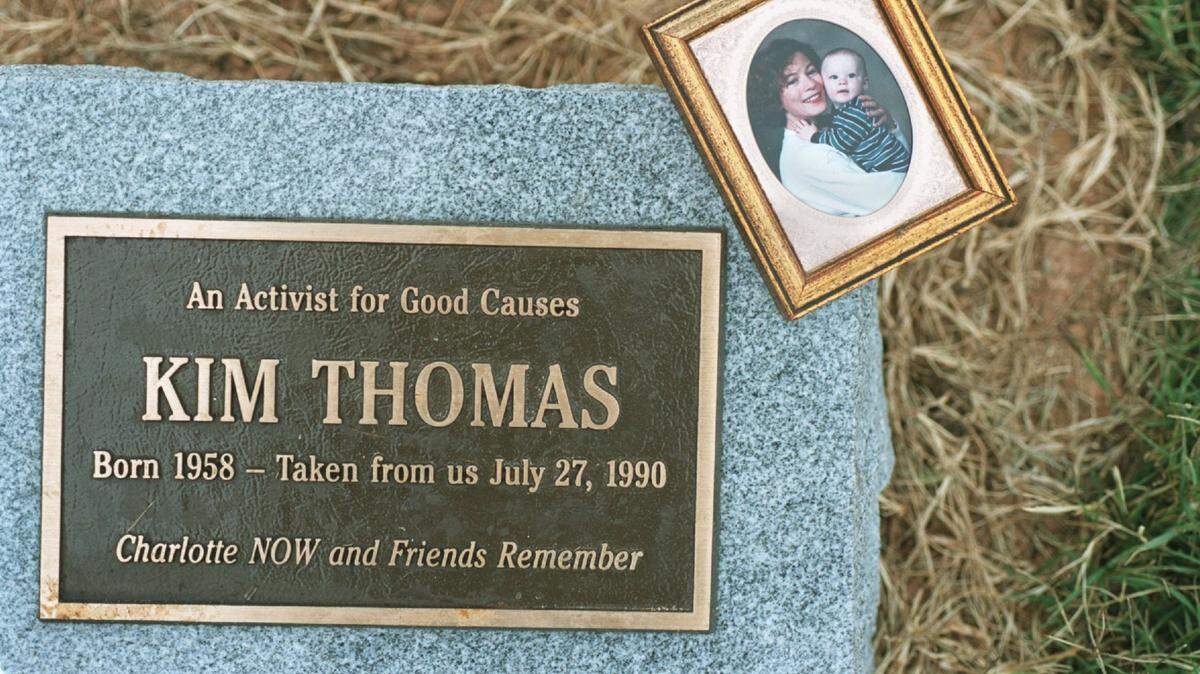
A young doctor’s wife was slashed to death in her Charlotte home in 1990. The case remains unsolved, though new evidence may be coming out. The Observer dug deep with these stories in 1995 and 2003.
Expand All
Editor’s note: This is the third installment of former Observer reporter Elizabeth Leland’s four-part series on the 1990 murder of Kim Thomas and the police investigation that continues to this day. The series ran July 30 to Aug. 2, 1995. Go here to read about the latest development in the case, new this week.
Robert James Roseboro phones police the day after Kim Thomas was slashed to death, and says he thinks his brother-in-law did it.
His name is Marion Gales, but he goes by Pool.
I think he did it, Roseboro tells police investigator Bob Holl. He’s not acting right.
That day, Saturday, July 28, 1990, another caller, this one anonymous, tells police about Gales. The caller says a friend told him Gales came by wearing gloves the night before. He said he was going to the Churchill Road area to “do some work,” meaning break into houses or steal something.
Gales is 28 and lives in Grier Heights, a 5-1/2-minute walk across Wendover Road to Kim Thomas’ house on Churchill Road. He’s been in and out of prison and jail since age 16 when he shot and wounded a woman on Churchill.
In a murder case like this, a woman killed in her house, detectives always ask themselves if the husband could have done it. Now they’ve got to ask: Could Gales have done it?
Jan Ellen Brown is wondering that, too.
Brown had gone to wish Kim a belated happy 32nd birthday on June 18, and saw her talking with a scruffy-looking man. Kim gave him a toothbrush and bleach and told him to scrub the flagstone walkway.
“Where did he come from?” Brown asked Kim. “Is he your yard man?”
“No. He came up through the woods.”
Brown knew how trusting Kim was. She often left the doors unlocked when she was at home.
“Why would you let some guy just walking up through the woods come up here when you’re alone here with the baby? How are you going to pay him?”
“Cash.”
“That’s even dumber, you know. He knows you’re up here and you have cash.”
On Sunday night a little after 9, two days after Kim’s murder, police investigators Don Rock and Mark Corwin show Brown photographs of five men.
Do you recognize any of them?
That’s the one, she says. He’s the guy who cleaned the walkway.
She initials the back of the photograph. It’s Gales.
David Moore points to Gales
Now Rock and Corwin want to know whether Gales was the man who rang David Moore’s doorbell at 5:30 a.m. the day Kim died. Moore lives down Churchill from Kim’s driveway. Rock and Corwin visit him after talking with Brown.
“I’m an undercover police officer,” the man told Moore. “Your car has been broken into. Would you come outside for a minute?”
The man’s eyes looked crazed, as if he were on drugs. Moore had left the windows open on his 1969 Impala, and knew it hadn’t been broken into.
“Just a minute,” Moore said. “Let me get some clothes on.”
As Moore shut the door, the man walked away. He was 5 feet 9 to 5 feet 10, 145 pounds, wearing a red shirt and tan pants. Moore called 911.
Rock shows Moore the five photographs he showed Brown.
Do you recognize anyone?
Moore points to one photograph. He looks like the man, but I can’t be positive. There’s something about his jaw, a crook in it or something.
The photograph is the same one Brown picked. It’s Gales.
Kim has been dead two days, and four people have linked Gales to her - his brother-in-law, the anonymous caller, Brown and Moore.
Rock starts looking for Gales.
Roseboro’s Aug. 1 interview
On Aug. 1, five days after Kim’s murder, investigators Holl and Bob Buening interview Gales’ brother-in-law, Roseboro.
“He came by the house last Friday night about, I’d say about 9 or 9:30,” Roseboro says.
“You’re talking about who?” Buening asks.
“Pool.”
“What’s Pool’s real name?”
“ . . . Gales.”
Roseboro says he was wearing a red shirt and beige pants (so was the man who came to Moore’s house). Roseboro tells them he didn’t see blood on Gales’ clothes. He wore old shoes with a whitish sole, like a pair of Docksider boat shoes (the same kind of shoes that made the bloody print on Kim’s floor).
Buening: “ . . . He told your wife he done broke into somebody’s house?”
Roseboro: “ . . . She told me that she believe that he did that. . . . “
Buening: “Did what?”
Roseboro: “Killed that woman.”
Roseboro says Gales hangs out in the Churchill Road area, and has brought home stolen necklaces, rings, watches, chainsaws, electric screw guns. Gales trades the stuff for cocaine, Roseboro tells the investigators. Roseboro’s wife, Annie, claims Gales beat her up on July 23; he hit her on her face and back and grabbed her neck.
Roseboro tells Holl and Buening he didn’t see Gales again until this morning, Aug. 1. He wanted a ride to Cotswold Mall, but Roseboro says Gales didn’t want to go past Churchill Road.
“I don’t want to go down there,” Roseboro says Gales told him. “That’s where that woman got killed at.”
“Tell me something,” Roseboro asked Gales. “Did you do anything or not?”
“ . . . Man, I didn’t kill nobody.”
Holl asks Roseboro: “You still think Pool killed her?”
“I got that feeling the way he act that day. . . . “
Police talk to Nancy Verruto
Nancy Verruto keeps calling police about the man who came out of the woods and cleaned Kim’s deck chairs the week before, the same man Kim said cleaned her flagstone walkway.
Verruto tells Holl about the man. She calls back and talks with Corwin. She thinks they’re not taking her seriously. I’m Kim’s friend, why don’t they want to know what I know?
On Aug. 1, Corwin interviews her at her house.
They talk about Kim, the burglar alarm, Kim’s jewelry, the baby-sitter, Kim’s ear plugs.
Did Kim and Ed have handcuffs? Corwin asks.
I don’t know.
Nancy thinks Corwin suspects Ed.
She doesn’t believe Ed killed Kim. He can be a little weird, but he’s no killer. She thinks the man who walked out of the woods did it
Gales thinks police suspect him
Three weeks pass, and out of the blue a little before noon on Aug. 21, Gales calls investigator Rock. Gales says his mother told him to call.
She’s upset. She wants me to turn myself in.
No one will hurt you, Rock says.
Gales thinks the police suspect he killed Kim Thomas because in 1979 he shot Gayanne Hall on Churchill Road, not far from where Kim lived. It was about 11:30 a.m. March 8, 1979. Hall drove home from the Harris Teeter and rushed in to the bathroom. She walked back to get the groceries, and saw Gales closing the back door behind him. She had found him in her yard before, and figured he was asking for work. Since the doorbell was broken she didn’t think it odd to find him on her porch.
“Can I help you?”
Gales jerked his hand up, and she saw a gun.
“What is this?” she screamed as he backed her into the kitchen. “What is this?”
Dusty, her golden retriever, bounded into the room and Gales fired. The bullet tore through her upper right arm, ricocheted off the refrigerator and landed in the dining room. Police found her pocketbook in the woods behind her house. Gales served two years in prison.
This is because of that thing that happened 10 years ago, Gales tells investigator Rock.
What are you talking about?
That lady over on that road, Rock. I didn’t kill that lady.
What lady?
That white lady. Rock, I ain’t been on that road. My sister says you’re going to put that case on me.
We need to talk with you, Rock says.
Don’t leave your office, Rock. I’m coming in.
Gales never shows.
‘He’s been acting crazy’
Sgt. Rick Sanders assigns homicide investigator C.E. “Buzz” Boothe to find Gales. Boothe knows him. Gales pulled a stolen .22-caliber pistol on officer Ted Kennedy in December 1985 during a crackdown on crime in the Piedmont Courts housing complex. Kennedy shot him through the jaw, and Boothe investigated the case. Gales served nearly three years in prison.
Boothe talks with Gales’ sister, Cynthia, who says he’s on cocaine real bad and needs to be off the streets.
He talks with Gales’ girlfriend, Bernice Robinson. She’s pregnant; Gales is the father. He’s been acting crazy lately, Robinson says. High on cocaine. He carries a 12-gauge sawed-off shotgun and a knife. It’s brown, about 6 to 8 inches, with two or three blades.
She says she asked him if he killed Kim Thomas. He said he didn’t.
Do you know her, she asked Gales.
Yes. I did some yard work near her house.
People ask her if he killed Kim Thomas, and Robinson says she thinks so.
“The reason is Pool has done so much lately, I wouldn’t put anything past him. Pool has beat me before, real bad. He was high at the time.”
Rock tells officers working in Grier Heights to look for Gales. They spot him Aug. 24, almost a month after Kim’s death. He runs, but they catch him.
‘I didn’t kill that lady’
Boothe interviews Gales in jail that day, and Gales denies ever working for Kim or owning handcuffs.
Boothe doesn’t know that Brown says Gales worked for Kim or that Moore thinks Gales might have knocked on his door or that Roseboro says Gales wore Docksiders, so he can’t confront Gales. The reports about Brown and Moore and Roseboro are in the file, but no one told Boothe.
Boothe asks Gales to write a statement.
“ . . . I haven’t been on Churchill Road to do work or any other thing,” he prints in capital letters. He fills up nearly two pages.
“I haven’t done any yard work with my brother-in-law . . . in this area.
“The word in Griertown is I was the person that killed the woman on Churchill Road.
“I never met the lady nor had I been to her house.
“I didn’t kill that lady nor do I know who did.”
Gales lets a technician take samples of his head hair, pubic hair, facial hair and saliva.
Boothe asks Gales’ mother for Gales’ shoes. She gives him five pairs of athletic shoes. He doesn’t ask her whether Gales owns Docksiders.
Investigators get all they want about Gales. They don’t think he’s a strong suspect.
Sanders and Boothe and Buening and their bosses put him aside. He’s just a guy doing yard work. They found no scientific evidence inside the house - such as hair or fingerprints - that they believe links Gales to Kim. They found nothing personal inside the house - such as a knife or gloves - linking Gales to Kim. All that talk in Grier Heights about him being the killer is just street talk. Gales breaks into houses. They don’t think he’s a killer.
The police theory: Ed Friedland
Investigators focus on Ed. They have no evidence linking him to the murder, but they have a theory.
The way police figure it, Ed had plenty of motive for killing his wife. He was having an affair, and he and Kim had talked in the past about divorce. But they think he didn’t want to part with his money. There was no way she was going to let him out without paying. It would be messy. Kim was a fighter. That was obvious from the murder scene. He’d not only forfeit half the house, but half the value of his medical practice.
So, investigators speculate, he decides to kill her. He plans it. They figure he waits until she’s asleep and handcuffs her. Or he plays a bondage sex game as a pretext for handcuffing her.
Investigators found no evidence of a break-in. As far as they can tell, nothing valuable was missing. Not the VCR. Not the stereo. Not the TV. Not Kim’s pocketbook. Not even the gold necklace she was wearing. Someone opened Kim’s desk drawers, but investigators think the office is so inconspicuous, it had to be someone familiar with the house. They think Ed must have smeared blood on the drawers to make it look like a burglary.
He said Kim was awake when he left for work - she brewed a pot of coffee and she and the baby waved goodbye. The police don’t think so. They found blood on the sheets. She was wearing her pajamas and ear plugs. They think he stabbed her in bed, and swiped at her as she ran through the house to the kitchen.
The killer slit her throat and the back of her neck. The front side would have been enough to kill her. Such extreme violence is often a sign of passion and anger, a sign of a close relationship between victim and killer, a sign that the killer hated the victim. Or a sign of drugs.
After he kills her, investigators think he goes into the office and master bedroom. Because they think the killer spent so much time inside, investigators believe he knew no one would drive up to the secluded house while he was there.
So how does he get away with it?
Investigators theorize he got a change of clothes from the master bedroom. That’s why there’s blood on the bureau and in the closet.
They figure he could have disposed of the knife and bloody clothes at one of the hospitals.
If Ed’s the killer, that might explain why he didn’t touch Kim’s body. If you found your wife murdered, officers ask each other, wouldn’t you hold her or shake her or feel for some sign of life?
It’s all theory. They’re convinced Ed killed Kim, but they don’t have any evidence.
They don’t have a shoe that fits the bloody shoe print. They don’t have a knife. The medical examiner can’t pinpoint when she died.
So why do they arrest Ed four years later?
How series was reported: Stories in this four-day series are based on information from interviews with Dr. Ed Friedland and Marion Gales, the family and friends of people involved in the case, the defense team, prosecutors and police, court documents, police reports, staff writer Kathleen McClain’s notes and the personal journals of Kim Thomas.
This story was originally published December 8, 2022 at 6:00 AM.