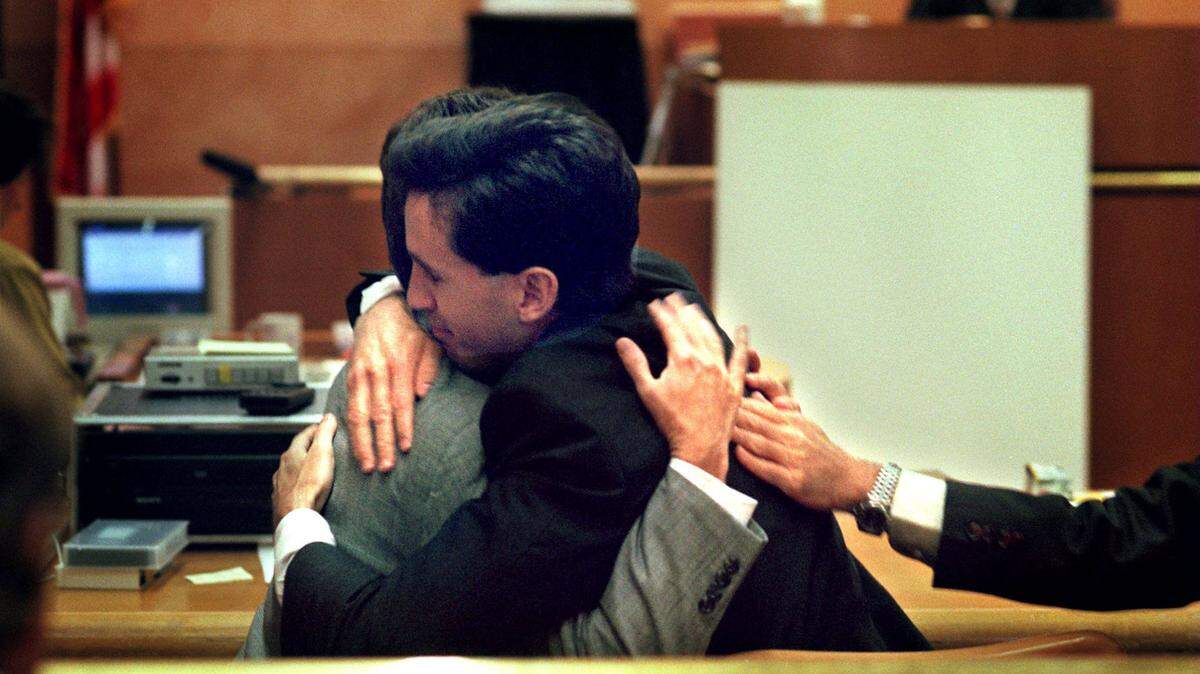
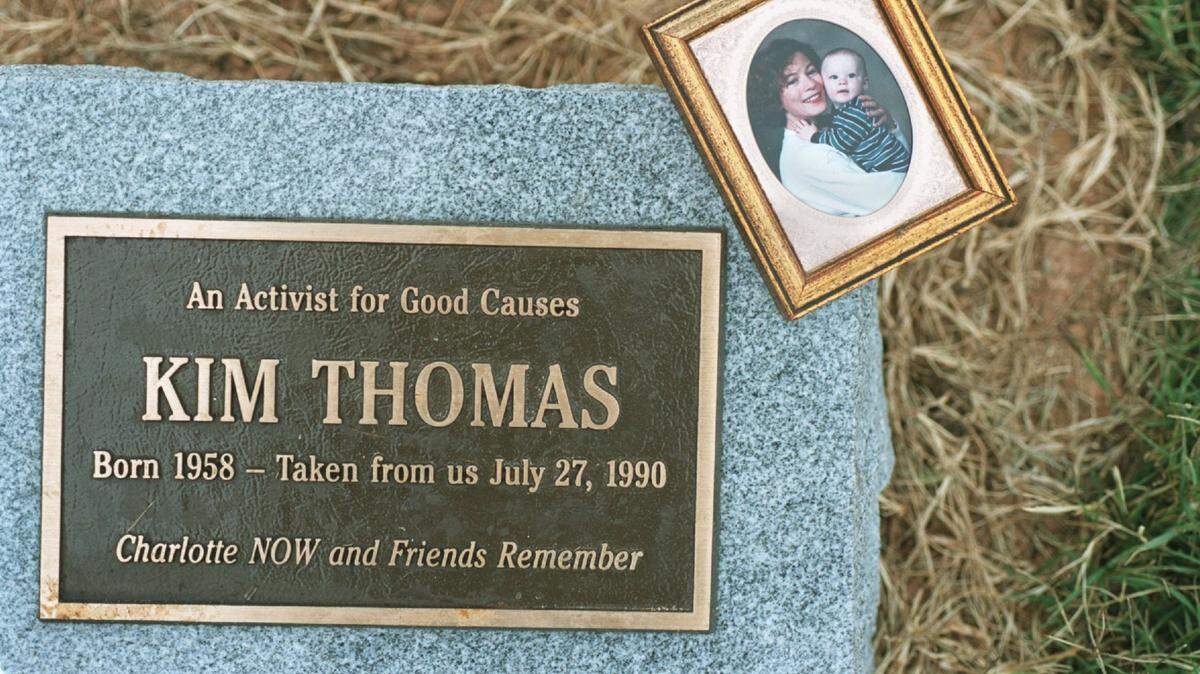
Who killed Kim Thomas? The case against her husband, Dr. Ed Friedland
READ MORE
Who killed Kim Thomas?
A young doctor’s wife was slashed to death in her Charlotte home in 1990. The case remains unsolved, though new evidence may be coming out. The Observer dug deep with these stories in 1995 and 2003.
Expand All
Editor’s note: This Charlotte Observer story first ran on March 9, 2003. Go here to read about the latest development in the case.
After almost 13 years, three court cases and nearly 6,000 pages of investigative papers, the fatal knifing of Kim Thomas remains perhaps Charlotte’s most impenetrable murder mystery.
No one has done a day of prison time for her 1990 slaying. Not her husband, Dr. Edward Friedland, who fought off a murder indictment. Not Marion Anthony Gales, the convicted felon Friedland cast as the prime suspect.
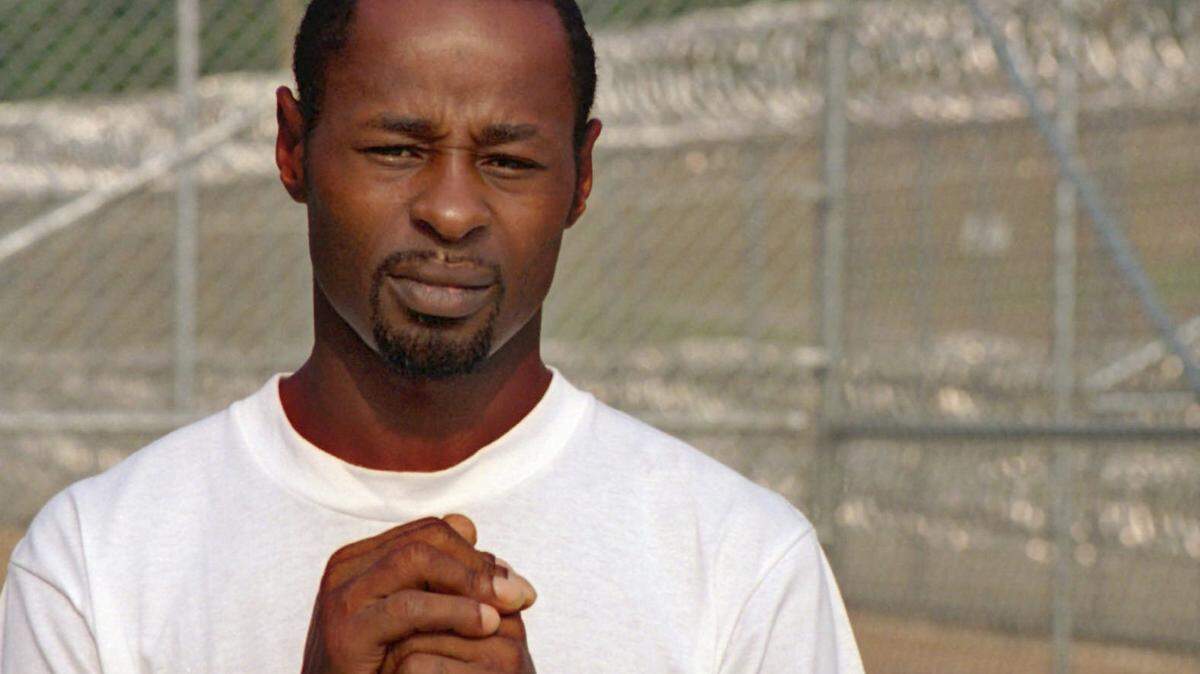
Friedland lives in Florida with a new wife and six children. Gales, now 40 and in prison for an unrelated crime, was never charged.
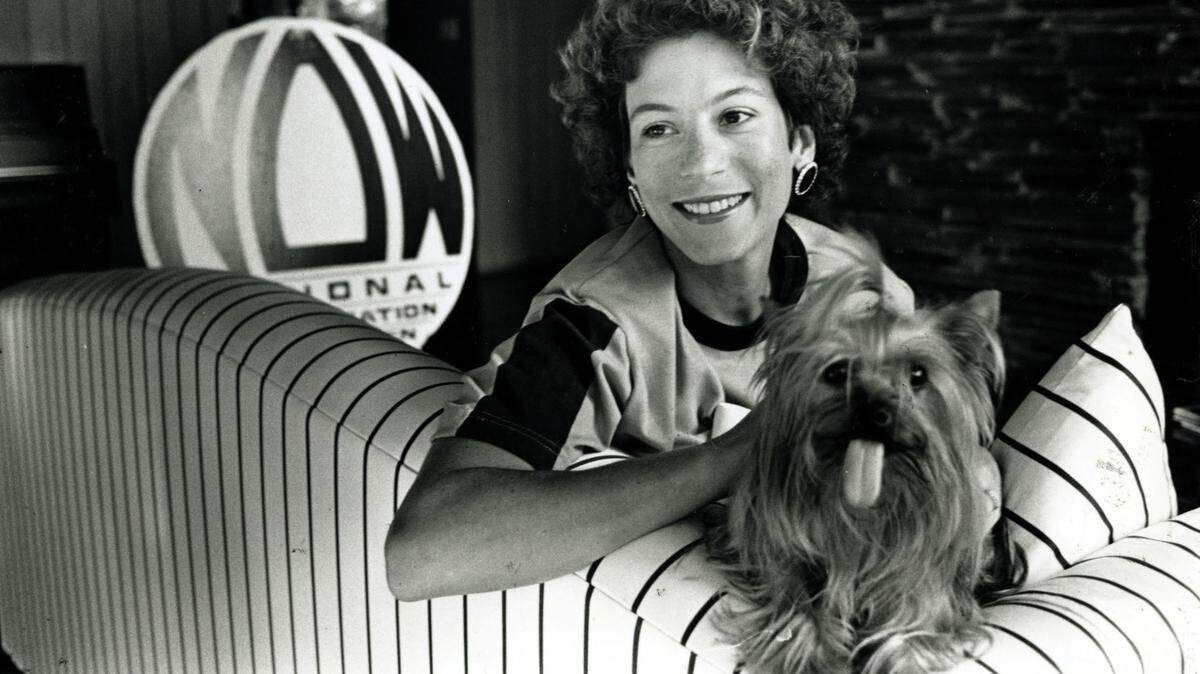
No murder ever riveted Charlotte so much and echoed so long: A prominent women’s activist whose throat was slashed in her spacious southeast Charlotte home. Her physician husband charged with murder, facing a possible death sentence. Prosecutors abruptly drop the charge when a key witness’s testimony is disallowed. The doctor wages a public fight against the police, alleging they maliciously targeted him.
Now, once-secret court documents about the murder, unsealed at The Observer’s request, provide the most detailed explanation ever of what police believe happened to Thomas, and why they felt so sure her husband killed her.
Friedland remains undaunted by police suspicions.
“I’m innocent,” said the 46-year-old kidney specialist, reached by telephone in Pensacola. “Not only was this case not solved, but the police went after the wrong guy.”
In 1997 - two years after the murder case against Friedland fell apart - the doctor filed a malicious-prosecution lawsuit accusing the police of botching the investigation. Police said the full story would come out when they got their day in court.
But that day never came. Superior Court Judge Craig Ellis dismissed Friedland’s lawsuit in 2001, before it went to trial. The judge ruled police and prosecutors indeed had probable cause to arrest and prosecute Friedland in the murder of his 32-year-old wife, a leader in Charlotte’s National Organization for Women and an advocate for battered women.
The unsealed documents - investigators’ handwritten notes, transcripts of police interviews and crime-scene photos - provide the first detailed look inside one of Charlotte’s most controversial murder investigations.
They reveal how police interpreted the evidence, from the bloody crime scene to how Friedland acted when he discovered his wife’s body.
Among that evidence:
The killer moved methodically through the house, leaving bloody shoeprints as he chased down and slashed Thomas to death.
The killer, apparently unafraid of being caught, lingered in the house after the murder, closing doors and turning on and off the master bedroom light.
Police believe the killer, in an apparent attempt to mislead investigators, spread Thomas’ legs to suggest a sexual assault.
The month before the murder, Friedland asked an anesthesiologist about a paralytic drug and whether it could be detected.
The court papers, many from confidential police files, speak of a husband’s two-year affair and a troubled marriage he didn’t think he could escape without a hefty divorce bill.
The police documents reveal a young physician who talked of murdering his wife. They also contain an allegation that he made a joke about his wife after her death.
The city spent $4 million defending the Police Department and its investigators against the malicious-prosecution lawsuit; its insurer picked up $2 million of that tab. City officials refused to settle out of court.
“The city wasn’t going to pay a dime to a man the Police Department had probable cause to believe had murdered his wife,” City Attorney Mac McCarley said in an interview.
Police insist they didn’t maliciously pursue Friedland, but simply followed the evidence.
“The crime scene - including the path of the killer and what the killer did and did not do - pointed directly to a killer who planned Kim Thomas’ death, who knew the home, and who was not there to steal,” attorneys for police investigators say in the documents.
“It points directly to a killer who was in Kim Thomas’ home for one reason only - to kill her.”
That killer, police believed, was Dr. Ed Friedland.
The killer’s path
Information about the investigation has dribbled out over the years, but the public has never heard the full police case against Friedland - and what investigators believe happened to Thomas in her last, desperate moments.
After collecting hundreds of pieces of evidence, taking more than 400 crime-scene photos, gathering information from more than 100 witnesses and conducting hundreds of scientific tests, they reconstructed the murder.
This, police believed, is the path of the killer:
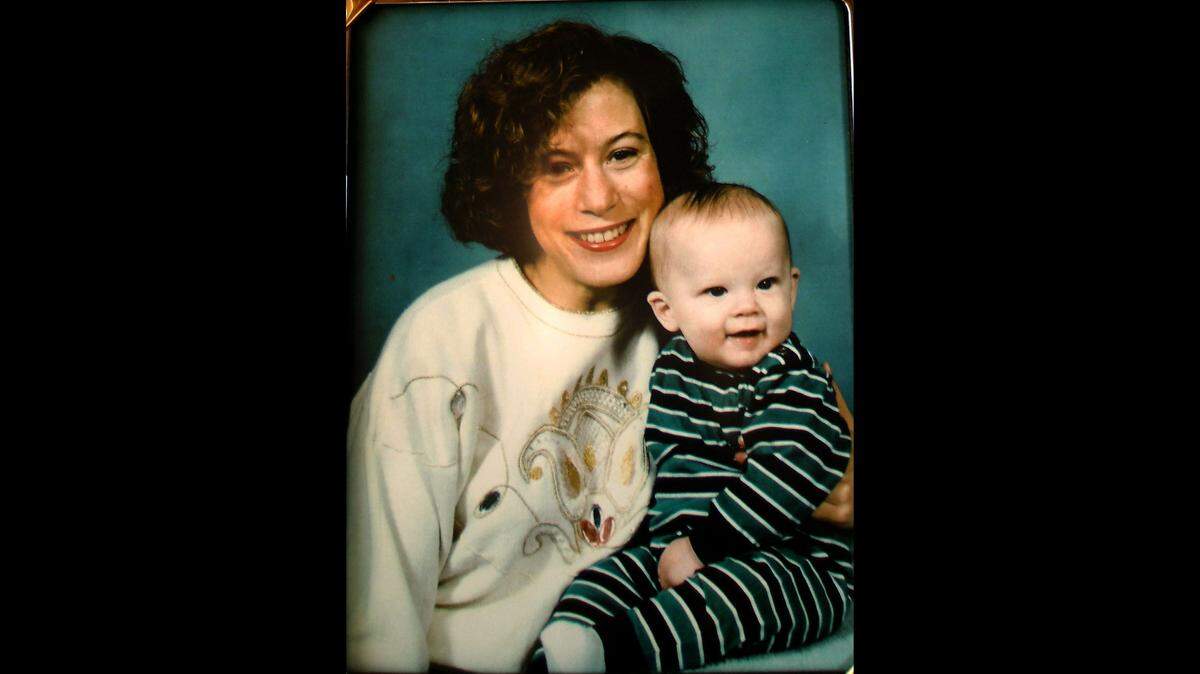
Sometime on July 27, 1990 - police suspect in the early morning hours - the murderer confronted Thomas in the master bedroom of the home she and Friedland shared with their 10-month-old adopted son, Elliot.
The killer, almost certainly a male, came prepared. He had handcuffs to control her. Gloves to hide his fingerprints. And a knife or cutting instrument to murder her.
She was asleep, and didn’t have a chance to defend herself.
She walked or ran from the bedroom, through the hall, into the dining room and toward the kitchen, her bare feet leaving bloodstained impressions. The killer followed, leaving bloodstained marks from his shoes.
The killer caught her and dragged her back into the dining room, leaving heel marks in blood. In the thrashing struggle that followed, the attacker slashed her 22 to 26 times.
He cut with efficiency and passion, concentrating on her neck. Some of the wounds penetrated to her spinal column.
Grisly photographs among the unsealed documents show Thomas where the killer left her, face down on the dining room floor, her hands cuffed behind her back and her once-white nightgown turned brownish pink with blood.
His monstrous task complete, the murderer apparently posed the body, hiking her nightgown and spreading her legs as if to suggest a sexual assault. As he pulled one of her legs, her kneecap traced an arc in the blood on the floor.
He went to her office and lingered at her desk, fingering things with his blood-soaked gloves. Crime-scene photographs show the stains he left. He touched a manila envelope. Raffle tickets. A white envelope. Elliot stared out at him from a framed photo on the desk. A smiling Kim embraced her adopted child in another photo.
He opened and closed the desk drawers, smearing the handles. The killer was either looking for something or trying to fake a robbery.
As he left, he closed the office door behind him.
He went back to the master bedroom, turning on the light with his bloody fabric glove. He touched items in Friedland’s closet and bureau, leaving traces of blood on a pair of green hospital scrubs and across Friedland’s shirts.
The killer dropped the murder weapon, the gloves and his clothes on the top sheet of the bed, police believe. He then washed his hands in the master bathroom sink.
He grabbed the top sheet, with the incriminating evidence bundled inside, and left, turning off the light and shutting the door, police believe. He closed the family’s Yorkshire terrier, Rags, inside.
The killer took no valuables, even though Thomas was wearing a diamond pendant necklace, diamond earrings and a gold bracelet. Her handbag hung from the door of her office with her billfold peeking out.
A portable color television and small appliances in the kitchen weren’t stolen. In the dining room, china, silver and brass candlesticks appeared untouched.
Investigators asked FBI profilers to tell them what kind of killer they were hunting.
The killer, the profilers wrote in a crime analysis report, was likely a white male about the victim’s age motivated by anger or revenge. He could have been involved in an unstable relationship with a woman, and was probably functioning normally in employment and social circles.
Someone, detectives thought, a lot like Dr. Friedland.
The crime scene
At 9:58 p.m., Friedland, after returning home from work, dialed 911.
“My wife is dead on the floor,” he told the dispatcher. “Come here fast.”
When they arrived at the couple’s home on Churchill Road, Friedland told police where his wife’s body was in the darkened dining room.
Thomas was in a short silk nightgown with no panties and no slippers. She also was wearing earplugs, as she usually did while sleeping.
There were no signs of a forced entry. Thomas had no defensive wounds on her arms. Her fingernails were intact, the polish unchipped. She had not been sexually assaulted.
The firefighter who checked for a pulse reported in a handwritten note that her body was stiff. Turning to his captain, the firefighter said it was a “10-80” - dead-on-arrival, in the code-speak of emergency workers.
“Yes,” the firefighter recalled Friedland saying. “It’s definitely a 10-80.”
Within 30 minutes, homicide investigators arrived. Investigator Robert Buening talked with Friedland.
The detective found the doctor calm, unemotional. Not crying. Not distraught.
“He was walking around, conducting business, using the phone,” Buening would recall during a deposition.
A few days after the murder, investigators questioned Friedland again. The doctor told them his wife and adopted son had waved goodbye to him when he left for work about 7:45 the morning of the killing.
Friedland said that when he came home that night, he never went to his wife’s body in the dining room but could see her from the bottom of the steps in the foyer.
He said he saw she was bound with “a good pair of gold-colored cuffs.” The doctor saw blood on the walls and that his wife’s “robe was folded up in such a way that I could see her buttock and the thighs.”
Investigator Buening, in his handwritten report, recalled Friedland’s words: “It appeared to me that her head had been beaten.”
Friedland said he went to the master bedroom to call 911 and get Elliot, who had been whimpering in his crib and was caked in stool.
Sgt. Rick Sanders, then head of the homicide unit, was immediately suspicious when he heard Friedland hadn’t gone to his wife’s body - and hadn’t even entered the room where she lay.
Something wasn’t right, Sanders thought.
A veteran detective, he would go on to investigate more than 700 killings in his career. He couldn’t recall a single homicide scene where a spouse or close partner had not gone to the body, unless they’d been restrained.
Sanders wanted to know exactly where Friedland stood when the doctor spotted the body.
Friedland explained that he had gone no farther than the bottom of the slate steps in the foyer. He could tell she was dead.
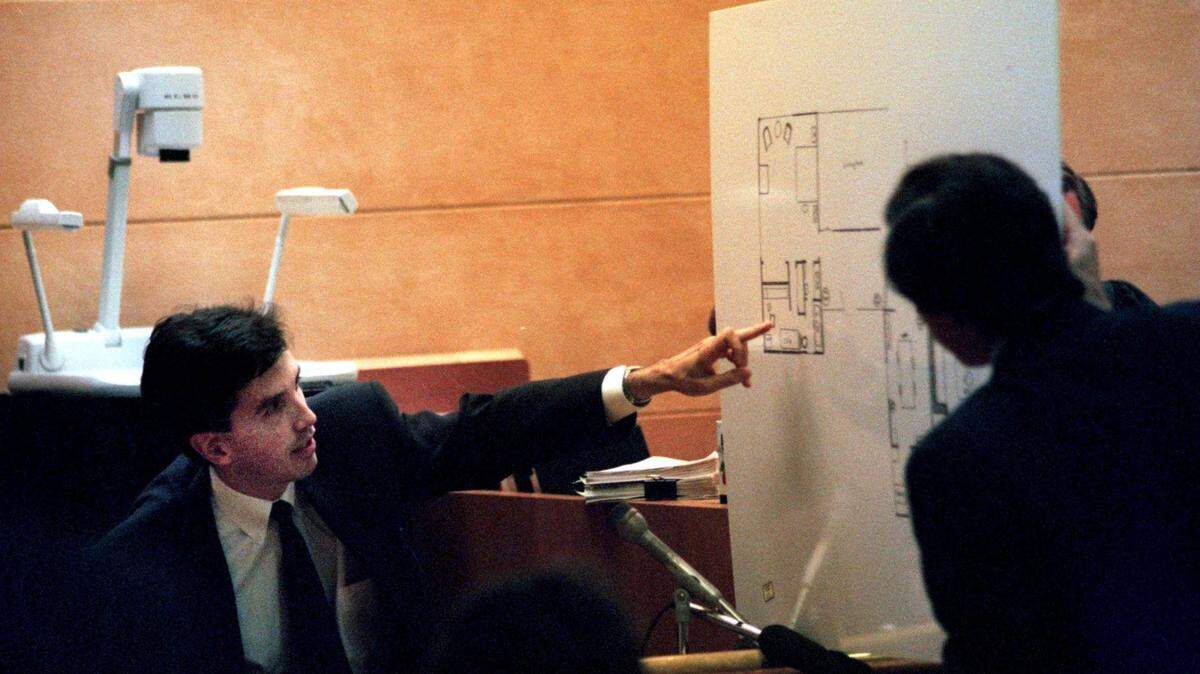
The doctor estimated his distance from his wife’s body at between five and 10 feet. Police said architectural plans put the distance between 15 and 20 feet.
Friedland, the detectives believed, couldn’t have seen Thomas’ body in as much detail as he described. A firefighter recalled there was just enough light to see a silhouette of the body. It was so dark inside the house that emergency workers had to use flashlights.
Years later, in defending the investigators against Friedland’s malicious-prosecution lawsuit, Charlotte attorney Jim Cooney would say it all seemed suspicious.
“He didn’t even go into the room where his dead wife’s body was, didn’t go in to check her pulse, didn’t go in to see as a doctor could he render any aid, didn’t go in to see as a husband could he say anything on the off chance that maybe his wife was having her last few breaths to provide comfort to her,” Cooney told the judge.
“I’m sure Edward Friedland has pronounced a lot of people dead in his career. But I doubt very seriously if he’s ever pronounced a person dead without even going into their room.”
‘Weary and grief-stricken’
Friedland disputes it was wrong for him not to rush to his wife’s body.
“It would have been clear to (Friedland), a doctor, that there was nothing that he could do for his wife and that she had been brutally murdered,” lawyers for the doctor told a judge.
Defense attorney David Rudolf denies that Friedland showed no emotion after discovering his dead wife. Friends described the doctor as “weary and grief-stricken” and recalled his voice as “wavering and cracking.”
Nancy and Michael Verruto, who rushed to Thomas’ house after hearing of their friend’s murder, described Friedland’s expression as sullen, almost in shock. He looked deadpan and white.
Friedland’s lawyers also question the police theory that the crime scene pointed to the doctor.
If Friedland killed Thomas, why would he touch his own closet, bureau and clothing with bloody gloves on, asks Rudolf. If he wanted to stage a robbery to cover up a crime of domestic passion, why wouldn’t he fake a forced entry and take something valuable?
‘I couldn’t kill a mouse’
The morning after Kim Thomas’ slaying, Friedland talked by phone with his mistress, a nurse he’d been having an affair with for two years.
A private investigator and police later spoke to the woman. The nurse said Friedland asked whether she knew about the murder. She recalled him saying: “I couldn’t have done it. I swear I don’t know what happened.”
She said Friedland told her the murder had nothing to do with her, the investigator wrote in his report.
“You know me,” she recalled the doctor saying. “I couldn’t kill a mouse.”
When Friedland was questioned a few days after the murder, Investigator Robert Holl told the doctor that no one had been eliminated as a suspect.
“Did you kill your wife?” Holl asked.
“Absolutely not,” Friedland responded.
During a police interview two days earlier, Friedland had identified “James the yardman, the black yardman,” as someone who had worked at his home.
Three days after the murder, Kim Thomas’ family met with police for the first time. One of Thomas’ sisters, in a letter to a prosecutor, recalled Friedland’s words right before that meeting.
“By this afternoon,” she recalled Friedland saying, “the police will hang some poor black n----r.”
Then, she said, the doctor chuckled.
A troubled marriage
When investigators looked into the Friedland and Thomas marriage, they found evidence of extramarital sex and a rocky relationship.
Less than 18 months before her murder, Thomas wrote in her journal: “I’m not sure where Eddie and I will end up. We talk about divorce a lot more than love and marriage these days.”
In another journal entry, Thomas wrote: “Eddie and I have not had any intimacy for a month at least. I feel rejected, guilty. We haven’t talked about our feelings in a long time I have never been more unhappy in my whole life.”
In the summer and fall of 1989, Thomas told friends that Friedland had told her he didn’t know if he wanted to be married any more and had asked for a divorce.
Friedland, married to Thomas for six years, talked with an attorney about divorce. The doctor learned he likely would have to pay Thomas alimony. Thomas also might be entitled to as much as half of his assets and half of his medical practice.
A lot was at stake. From 1987 through 1990, Friedland’s annual income grew from $73,000 to $244,000, according to tax returns. Police say Friedland was seeking financing for another dialysis clinic that was projected to make $300,000 profit within two years and more than $700,000 within five years.
Four months before the murder, Lynn Thomas talked with her sister about the upcoming opening of Friedland’s new dialysis center.
“I’m no fool,” the sister recalled Kim Thomas saying. “If we get divorced, I want to make sure I am taken care of.”
Another sister, Joyce Thomas, recalled in a letter to a prosecutor that a month before the murder, Kim Thomas told her she was considering leaving Friedland.
Friedland told his mistress, who was pregnant, that he didn’t want to divorce Thomas. Divorce, she recalled him saying, “would ruin me financially.”
The mistress, who terminated her pregnancy, told investigators she and Friedland experimented with bondage during sex. She recalled Friedland tying her up with Ace bandages.
The mistress told a private investigator she and the doctor had talked of leaving their spouses and getting married. While being interviewed by a prosecutor, she remembered complaining to Friedland about how her husband was treating her.
“You know,” she recalled Friedland saying, “we could have them killed.”
The doctor was not smiling or laughing, she told the prosecutor.
The month before the murder, Friedland asked Dr. William Greenberg, an anesthesiologist, about a muscle relaxant called anectine. Greenberg, in a handwritten statement to police, recalled Friedland asking whether the paralytic drug could be detected.
The drug, police say, has been used in murders.
“There may be lots of good reasons to ask how a drug works,” Cooney told Judge Ellis. “There isn’t a single legitimate reason to ask if it can be detected.”
In July 1990, Friedland’s mistress told a friend about her affair with the doctor. The doctor was upset about her disclosure, she told police, and they argued.
Five days later, Kim Thomas was dead.
On Sept. 7, 1990, Friedland went to a hairstylist for a scheduled haircut — the same stylist his wife had been scheduled to see on the day she died, according to police.
The stylist, in a taped interview, would later tell police: “He walked in and he was just real nonchalant and made the comment that, ‘I guess Kim missed her appointment, didn’t she?’ and chuckled a little bit.”
Defense rejects motive
Friedland doesn’t deny he was having an affair. But that didn’t give the doctor a motive for murder, his lawyers say.
Just because Friedland’s mistress told a friend about the affair didn’t mean Thomas knew about it or would learn about it, the lawyers argued. And it certainly didn’t mean Friedland’s reaction would be to kill his wife.
Friedland’s lawyers challenged the police theory that the doctor killed his wife to avoid a costly divorce. They questioned whether Friedland would “nearly decapitate his wife rather than go through the financial consequences of a divorce.”
Besides, the lawyers said, the assets at stake weren’t enough to drive the doctor to murder.
“Choosing between divorce and staying married,” Friedland’s lawyers wrote in a court document, “is simply not the same as choosing between divorce and murdering your wife in her home.”
Friedland’s lawyers say there was nothing sinister about the doctor asking a colleague about a paralytic drug that is difficult to detect in the body. Friedland was simply trying to learn from the anesthesiologist because as a kidney specialist and intensive care physician, he also used paralytic drugs during procedures.
Friedland denies joking with the hairstylist about his wife missing her appointment. The doctor’s lawyers say the stylist told their investigator he had heard the missed-appointment story from someone else.
There was nothing suspicious, Friedland’s lawyers say, about the doctor calling his mistress the day after the murder and telling her he had nothing to do with his wife’s killing. His mistress had paged him, they pointed out.
Friedland’s lawyers also say his mistress told police she and the doctor were joking when they talked about having their spouses killed.
And the doctor denies using a racial slur about a possible suspect while talking to Thomas’ sister.
There was evidence Friedland and Thomas had discussed separation before adopting Elliot in September 1989, Friedland’s lawyers acknowledge. But they say police uncovered no evidence of any discussions about divorce in 1990.
Friedland also acknowledges talking about divorce with his corporate lawyer, but the doctor’s lawyers say the meeting was primarily about business. And they say Friedland never went to see a divorce lawyer.
The couple’s relationship improved after the adoption, Friedland’s lawyers say. Thomas’ state of mind, they contend, was reflected in her last journal entry, made June 8, 1990 — her 32nd birthday and the month before her death:
“Elliot is 9 mos. old today. He has brought joy and meaning to our lives. Eddie and I are making a haven, a sanctuary, where we can live/escape from the doldrums of the day. We are weaving a patchwork - aspects of our lives together - connected-meaningful and functional — a quilt.”
‘I didn’t kill that lady’
About the same time police were learning about Friedland’s affair, Sgt. Sanders gave Investigator Donald Rock an assignment: find Marion Gales.
A friend of Thomas’ told police she had seen Gales working as a yardman for Thomas about six weeks before the killing. Gales was a convicted housebreaker and admitted cocaine user who by the age of 28 had been sentenced to prison twice.
A neighbor said a man fitting Gales’ description showed up at his doorstep about 5:30 a.m. the day of the murder, trying to impersonate an undercover officer.
Investigator Rock went to work. He put out a citywide all points bulletin. He attended roll calls to give information about Gales to patrol officers. He worked his confidential informants. And he went to Gales’ neighborhood, Grier Heights, to speak with the suspect’s mother and sister.
Police knew that three days before the murder, Gales burglarized his sister’s apartment. He forced his way in through a screen, dumped the contents of a purse on the floor, stole money and left fingerprints behind.
Then, the night before the murder, Gales was seen burglarizing another home. There, jewelry boxes were found spread across a bed and two televisions had been moved. One TV sat outside the back door.
Nearly a month after police began looking for him, Gales called Rock.
“I didn’t kill that lady,” he told the investigator.
When detectives looked at the crime scene and looked at Gales, they believed him.
Friedland and his lawyers portrayed Gales as a violent crack cocaine addict who killed Thomas after breaking into her house.
But could Gales have broken in to rob Thomas and then killed her in a cocaine-fueled rage? Not likely, the investigators thought.
Even former N.C. Medical Examiner Dr. Page Hudson, who would later testify for Friedland, didn’t believe the killer committed the crime in a cocaine-induced psychosis.
The wounds were too concentrated in the neck; a cocaine-fueled rage would have produced wounds all over the body, anywhere the attacker could reach, Hudson testified in a 1999 deposition in the malicious prosecution litigation. Gloves, handcuffs and disposal of the murder weapon wouldn’t fit the cocaine theory either.
The murder looked like what police call “overkill.” More wounds were inflicted than were necessary. It suggested a relationship between Thomas and her killer.
The murder, detectives decided, was a crime of passion.
Investigators didn’t think Gales had anything to do with it. Not a single piece of physical evidence — no fingerprints, no hairs, no blood, no fibers - placed Gales inside Thomas’ home.
Lawyers for the police told a judge that Gales had committed a large number of burglaries. During that decade of crime, the police lawyers said, there were no reports of Gales wearing gloves during burglaries or break-ins and no reports of him using handcuffs in any crime.
And as far as the police could tell, Gales never broke into a house without stealing something - or without leaving evidence that he’d been there.
“In Marion Gales’ extensive criminal history, there is no evidence that he ever committed a crime in the way that Edward Friedland claims that he committed Kim Thomas’ murder,” lawyers for the investigators argued in a court document.
Police suspect husband
Investigators concluded that the crime scene virtually eliminated any stranger bent on robbery as the killer. They believed Friedland had a motive to see Kim Thomas dead and had the opportunity to kill her. In July 1994, Friedland finally was charged with her murder.
Police suspected Thomas was killed before Friedland left for work. They had plenty of reasons besides the crime-scene evidence.
Thomas failed to keep appointments that morning: a Gymboree class for her son at 11, one with a baby sitter at 11:30 and another with a hairstylist at 11:45.
Friends and a maintenance worker told police they began calling Thomas’ home about 8:30 a.m. and continued calling throughout the day. Thomas did not answer, and the answering machine was not on.
Investigators believed the condition of Thomas’ body - the rigor mortis, skin discoloration and temperature - suggested she died before 7:30 a.m. That would have put the killing before Friedland left the house.
The state’s key forensics expert, Dr. Michael Baden, director of the New York State Police forensic sciences unit, said he believed it “more likely” that the killing occurred before 7:30 a.m.
Prosecutors had one huge problem: Baden couldn’t be more specific on the time of death. A judge in 1995 said Baden had “candidly admitted” he couldn’t say with a reasonable degree of medical certainty that the killing happened before 7:30 a.m.
So the judge ruled Baden’s findings unreliable, and barred him from testifying that the death “more likely” happened before Friedland left for work.
Six days later, prosecutors dropped the murder charge against Friedland.
In a July 19, 1995, letter to Kim Thomas’ father, Lou Thomas, Mecklenburg District Attorney Peter Gilchrist explained why.
“In order to obtain a conviction, the state must prove to a jury’s satisfaction - and beyond a reasonable doubt - that Dr. Friedland was the perpetrator of this murder,” Gilchrist wrote. “It would not be legally sufficient to show only that he might be the killer, or even that he probably is the killer. The feeling of many that Dr. Friedland committed this crime is, again, not legally sufficient to carry the state’s burden of proof.”
Gilchrist told Lou Thomas that Baden’s opinion was the only prosecution evidence that went “beyond mere suspicion, and tends to show that Dr. Friedland killed your daughter.”
Losing Baden’s testimony was more than a setback.
“It would, in effect, be a death blow to the prosecution, because without Baden’s scientific opinion we would not have sufficient evidence even to carry the case to a jury,” Gilchrist wrote.
Had the trial ended in a dismissal of the murder charge, Gilchrist wrote, Friedland could never again be charged, even if further incriminating evidence were found.
“I do not believe any competent, responsible prosecutor would have continued on with this case, knowing that a possible murderer might thereafter be protected from ever being prosecuted again for his crime.”
Lou Thomas, who will turn 79 in April, hasn’t given up hope he will some day see his daughter’s killer sentenced to prison.
“Somebody somewhere will see or hear something and come forward,” Lou Thomas said. “This case is only 12 1/2 years old. Older cases have been solved.
“I may be dead and buried, but there will be justice.”
Gilchrist hopes so, but he knows that’s a long shot.
“It becomes more remote as time goes by,” Gilchrist acknowledged. “But you never know.”
In a recent interview, Rudolf said there was no evidence that Friedland would be capable of this kind of violence.
“To go from Caspar Milquetoast to Jack the Ripper, that’s a big leap.”
But Friedland’s behavior and the crime scene raised police suspicions about the doctor.
While Kim Thomas’ hands and arms were covered with blood, there was no blood underneath the handcuffs. That convinced investigators that Thomas was attacked in her sleep and handcuffed before she had a chance to fight off her killer.
The investigators’ lawyers told a judge that Friedland’s actions and statements about the murder were “evasive, incomplete and incriminating.”
Friedland showed little concern for his wife, lawyers for the police told the judge. He referred to Kim Thomas as “the body” or “the crime scene,” they said.
Within hours of leaving the murder scene, Friedland contacted police and asked “what the situation was down there.” When told that police were still working at the house and may work into the next day, Friedland responded: “Well, that’s fine by me. Is the body still there?”
In the end, police concluded there was no proof anyone besides Friedland, Thomas and their adopted son was in the home the day of the murder. No forensic evidence - fingerprints, blood, hair, body fluids - placed anyone else there.
Police believed they were dealing with a highly organized killer.
“This is not the crime scene of a psychotic killer,” Cooney told the judge. “This is a crime scene of somebody who knew who he was going to find and went there with clear intent to kill and also with a clear intent to avoid detection.”
The evidence was all circumstantial, but investigators believed it all pointed to Friedland.
The police officers Friedland sued - former Deputy Chief Larry Snider, former homicide Sgt. Rick Sanders and former Investigators Robert Buening and Walter Bowling - called the judge’s ruling dismissing the lawsuit against them a strong endorsement of the integrity of the investigation.
“We conducted our investigation by going where the evidence led us,” the officers said in a statement. “We arrived at our conclusions based on that evidence and we stand behind our investigation today.”
Attorneys for the police said Friedland and his lawyers found no evidence that investigators had conspired to accuse the doctor of his wife’s murder because they bore him ill will or prejudice.
“Marion Gales was not pursued, because the police did not believe that he committed this crime,” Cooney wrote in one court document. “Edward Friedland was investigated by the police because that was where the evidence led.
“The police investigated Edward Friedland because of a good-faith belief that he was the murderer.”
Today, Peter Gilchrist, Mecklenburg’s district attorney for almost three decades, thinks he knows who killed Kim Thomas.
“It wasn’t Marion Gales,” he said.
How This Story Was Reported
The information in these stories came primarily from court documents in a malicious-prosecution lawsuit Dr. Edward Friedland filed in 1997 against the city of Charlotte and four police officers.
Accompanying the documents were items from police files, including investigators’ reports, witness interview transcripts and crime-scene photos.
After a judge dismissed the doctor’s lawsuit in 2001, The Observer won a court order unsealing many of the documents.
This story was originally published December 8, 2022 at 1:00 AM.