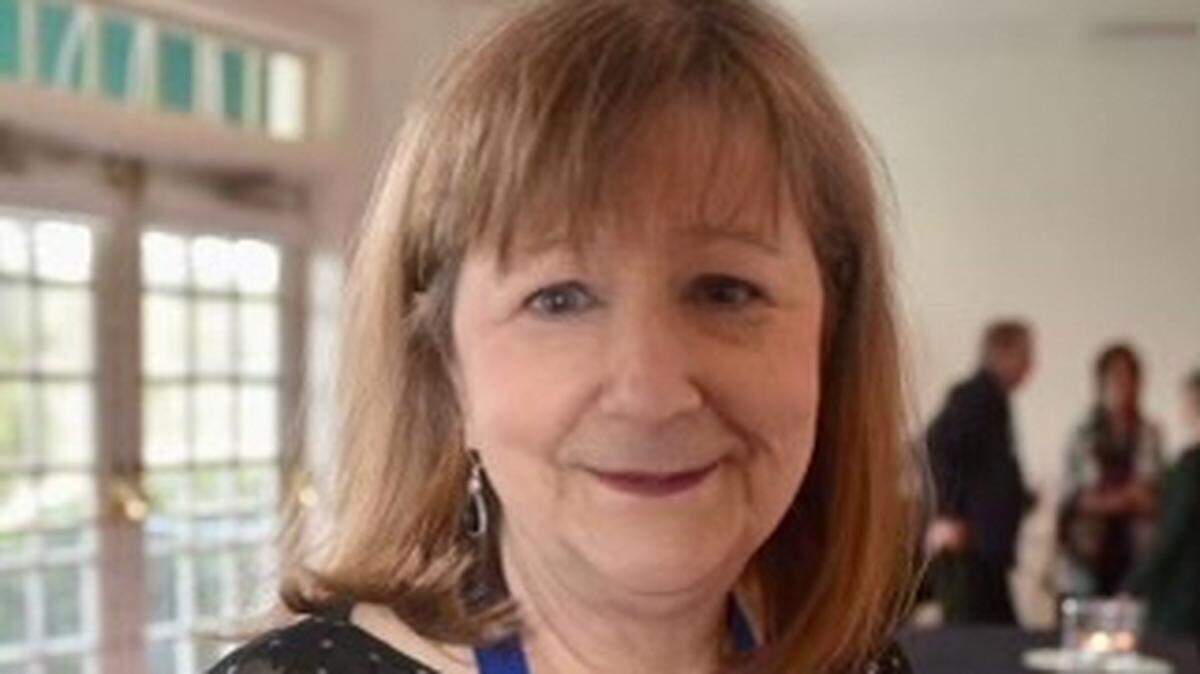
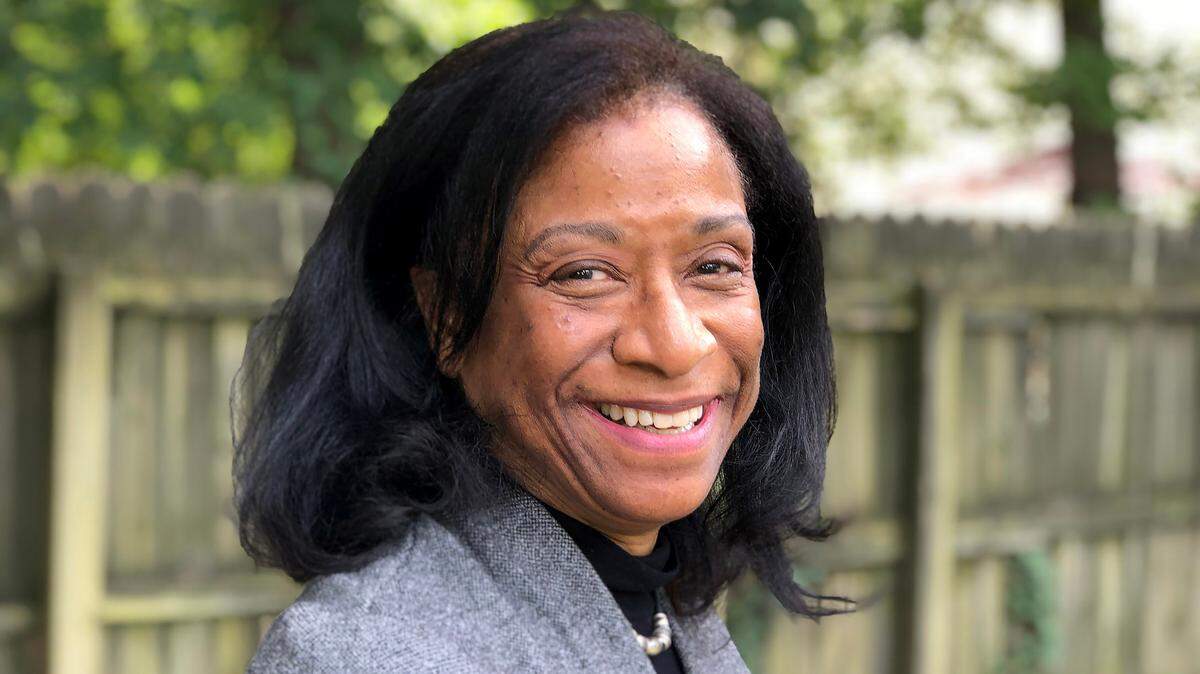
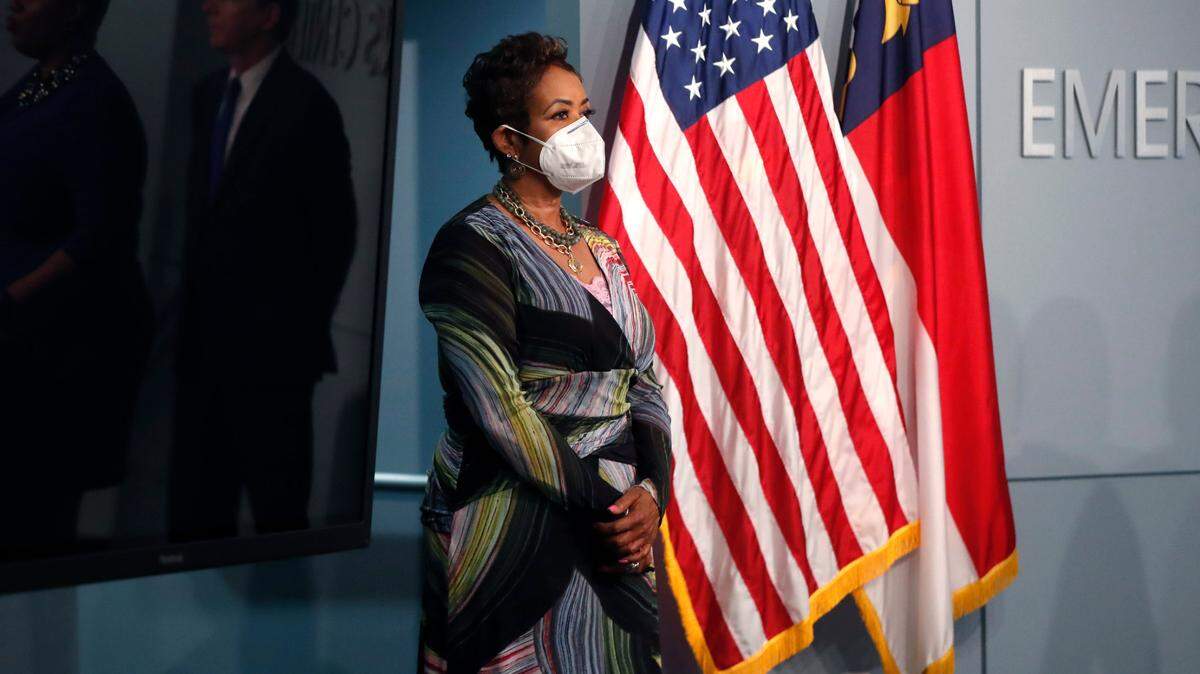
Machelle Sanders has a passion for amplifying the voices of those who need to be heard
READ MORE
The News & Observer Tar Heel of the Month
The News & Observer’s Tar Heel of the Month honors residents who have made significant contributions to the Triangle, North Carolina and beyond. At the end of the year, a Tar Heel of the Year is named. Do you want to nominate someone? Email metroeds@newsobserver.com.
Expand All
Machelle Sanders was born and raised in Belhaven, a small rural town in eastern North Carolina. It was a town with just one doctor, and only one ZIP code.
She’s seen the disparities that exist in a place like her hometown, a place that’s not like Raleigh or Charlotte, in terms of access to health care and quality education.
“It should not matter what your ZIP code is,” Sanders said. “But it does matter what your ZIP code is.”
But Belhaven also was a place that instilled in her values of empathy and respect for all — not just a select few. It’s where she learned she doesn’t need to be limited by where she grew up.
“Most people know each other,” said Sanders, 57, of Belhaven, in a video interview with The News & Observer. “It taught me to stand true to the values that my parents instilled in me, such as serving others, helping to improve the conditions of others, respect and dignity for everyone.”
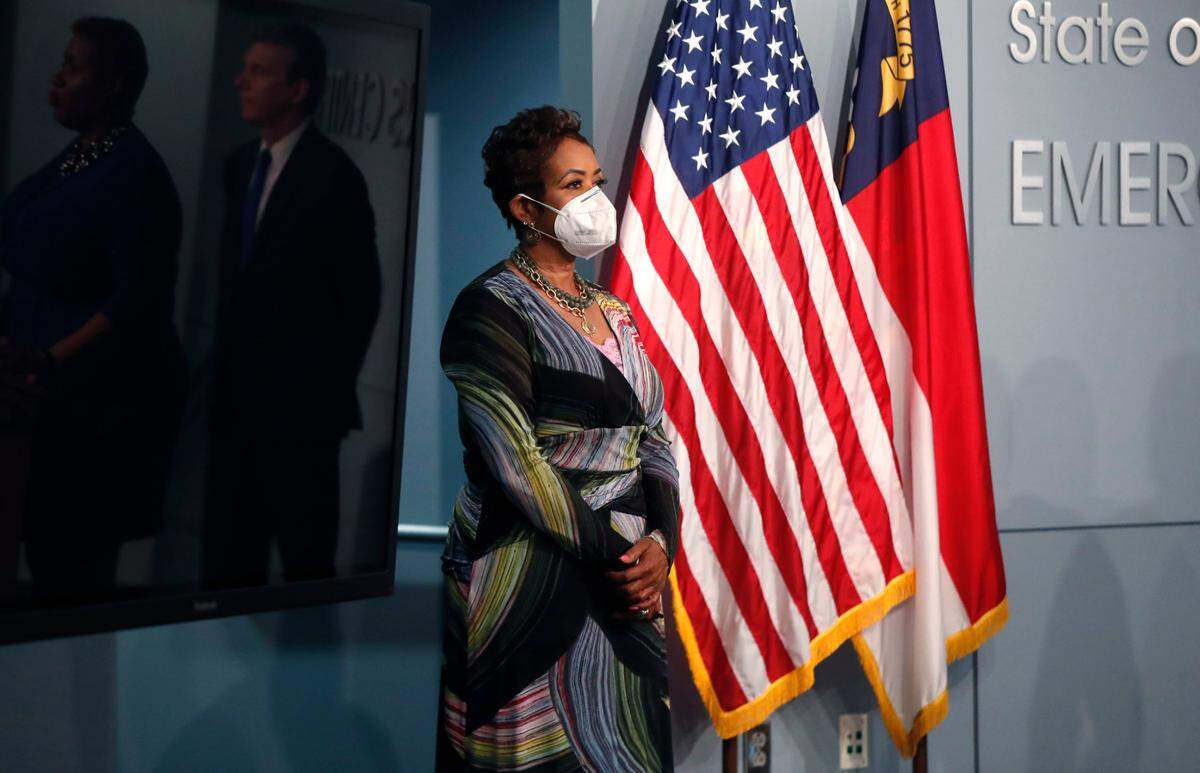
Those values have influenced her throughout her life, from promoting female leadership in the pharmaceutical industry, where she was an executive at Biogen, to advocating for racial equity in Gov. Roy Cooper’s administration, where she has served as secretary of the Department of Administration since January 2017. She serves on numerous boards to address issues facing the homeless, Hispanics and Latinos and Native Americans.
Her role, and her passion for inclusiveness, has taken on a new sense of urgency as the coronavirus pandemic amplifies the racial and economic divides that prevent people from getting the testing and treatment they need. In June, Cooper named Sanders to lead the Andrea Harris Social, Economic, Environmental and Health Equity Task Force to seek solutions to address these disparities facing North Carolina residents.
The task force was formed at a time of historic social upheaval nationwide. The killing of George Floyd at the hands of Minneapolis police has sparked protests and conversations of the role of systemic racism in American society.
“This is the time for each of us to reflect on our hearts to reflect on our souls, and answer the question: ‘Is the way we are today, are the beliefs we have today, is the way we treat others today, is that the way we want to be remembered?’” Sanders said. “Is that the way we want our children and grandchildren to remember us?’”
For her inclusive method of governance and her advocacy for more women in science, technology, engineering and mathematics fields, Sanders is The News & Observer’s Tar Heel of the Month, which honors people who have made significant contributions to North Carolina and the region.
Growing up in Belhaven
Sanders was born to Albert and Bertha Baker, both educators. Her mother taught high school. Her father was the head coach of Pantego High School in Beaufort County, where he led his team to 224 victories and three state championships. (Albert Baker, who died in 2018, was named The News & Observer’s Tar Heel of the Week on March 29, 1981.)
Her father instilled self-discipline not only in his players and students in the classroom, but in Sanders as well. Sanders flourished at Bath High School, thanks to the opportunities her parents provided her outside of her hometown.
“My parents did ensure that I had exposure and experiences,” Sanders said. “I was fortunate enough to have parents who took me on vacations every summer, who enrolled me in programs in Greenville for the summer. But we had transportation to get me there, so I think I was fortunate.”
Sanders graduated high school in 1981 and attended North Carolina State University, where she graduated with a bachelor’s degree in biochemistry. She later received a master’s in health administration from Pfeiffer University.
After college, Sanders worked in the private sector, most notably at Biogen, a biotechnology company that specializes in neuroscience. Sanders served as vice president of manufacturing and general manager at Biogen’s facility in the Research Triangle Park. In that position, she formed the Women’s Innovation Network, an employee resource network at Biogen that seeks to produce inclusion and engagement for women at the company.
“What I observed was a cultural transformation, where women were more comfortable in speaking their truth,” Sanders said. “They also began to help others find their voice and find their way in the organization.
“Who would know best, and who would have first-hand knowledge about what women needed and expected, and what the patient experience could be as a female and how it could differ from a male than women?”
Christy Shaffer first met Sanders at a North Carolina science festival almost 10 years ago and now serves with Sanders on the board of On Board NC. The organization advocates for increased representation of women from the Research Triangle Park region on corporate boards.
“Machelle is a doer, and if you want to get something done, she is one of the first people you contact,” Shaffer said.
Shaffer said she admires Sanders’ commitment to advocating for more STEM education for women across the state.
“Machelle shines, exuding energy and passion in all that she does for work and family,” Shaffer said. “This has been evident in her current role in our state government.”
Sanders says she tries to encourage women and people of color to consider STEM careers, which has “a shortage of talent in our pipeline.”
“They’re needed,” Sanders said. “Their way of thinking and approaching problem solving is unique, and that’s what’s needed in the life sciences space.”
Addressing systemic problems
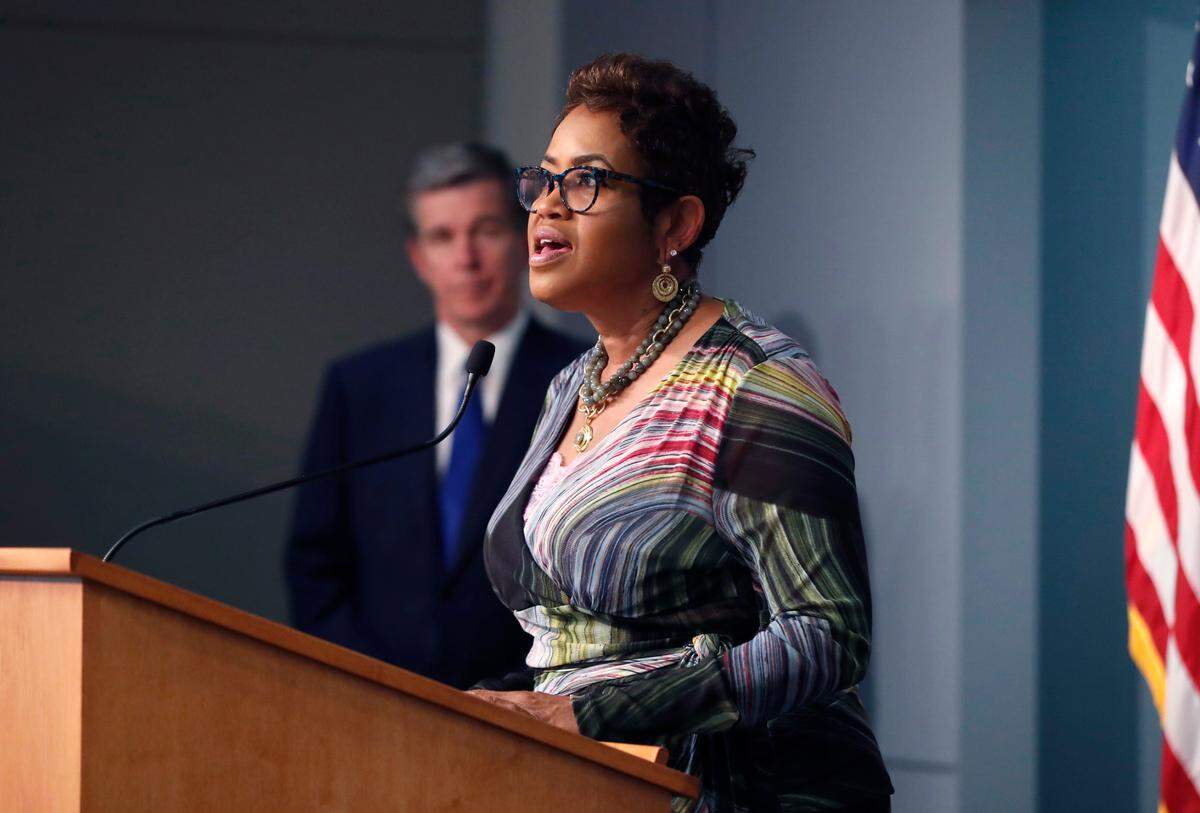
The Andrea Harris task force, created by Cooper’s executive order, is named after the late founder and former CEO of the North Carolina Minority Development Institute in Durham who died in May.
“She was a longtime activist, advocate and force for the betterment of North Carolina citizens and residents,” Sanders said.
Kristi Jones, Cooper’s chief of staff, said the governor asked Sanders to lead the task force because of her ability to advocate for all marginalized communities within the state’s population.
“She does an extremely good job of not only advocating for those communities, but also getting others to support and understand the need for these communities,” Jones said in an interview with The News & Observer.
“That’s what’s unique about her, is that she has the ability to not just advocate for one group, but to include the others to help in the advocacy process for this group,” Jones said.
Sanders said the task force, featuring a cross-section of influential leaders in health, education, faith and business, will focus on five areas: ensuring access to quality health services in underserved communities; enhancing patient engagement in healthcare settings; advancing environmental justice; promoting economic and workforce development; and strengthening education for communities of color.
Many of the challenges and the inequities are a result of systemic and historic racism, Sanders said.
“We want to focus on the root cause of these disparities,” Sanders said. “We want to focus on the root cause of the outcomes that we are seeing, and we want to focus on the root cause of why the data tells us that it is no surprise that there’s a disproportionate impact of COVID-19 on communities of color.”
Sanders said for North Carolina to lead the way in solving today’s problems, it has to create diversity in corporate and governmental leadership.
“That’s what makes North Carolina such a great state, because of our diversity,” Sanders said. “So now when we see and witness Black men being murdered on the streets, and Black women being murdered because of the color of their skin or their socioeconomic status, when we see people not allowed into our country because of their religious beliefs, or their faith, when we see people not being able to have equal access and rights because of their gender, their color or because of who they love or because they are in the LGBTQ community, it is a time for us all to stand up because our democracy is at risk.”
Belhaven is always home
Sanders has made her career in the Triangle, but she never really left Belhaven. She refers to her hometown as a second home, visiting often and bringing her 27-year-old twin daughters, Ashlyn and Robyn, with her.
“When she comes to Belhaven, she’s coming home,” said Cynthia Heath, Sanders’ childhood Sunday school teacher at St. Reddick Missionary Baptist Church. “She’s not coming to nitpick. She’s not coming to challenge anybody, but she’s coming home as she willingly shares her talents, her information, her wisdom and her experience with others whenever it is needed.
“Not once have I detected, have I seen her change from being a very humble person, a very caring person, a very nurturing person.”
Rural North Carolina faces many challenges, Sanders said, and she’s realistic about what it will take to overcome them. But there are people in those communities, and her hometown, who are making significant contributions to society, she said.
“The same way that it shouldn’t matter what your ZIP code is as to whether you get healthcare or education,” she said. “It does not matter what your ZIP code is when it comes to what your future and potential is.”
This story was originally published July 25, 2020 at 3:37 PM with the headline "Machelle Sanders has a passion for amplifying the voices of those who need to be heard."