As COVID pandemic hit, Duke doctor made it her mission to amplify NC’s Latino voices
READ MORE
The News & Observer Tar Heel of the Month
The News & Observer’s Tar Heel of the Month honors residents who have made significant contributions to the Triangle, North Carolina and beyond. At the end of the year, a Tar Heel of the Year is named. Do you want to nominate someone? Email metroeds@newsobserver.com.
Expand All
As COVID-19 spread among North Carolina’s Hispanic residents in the spring of 2020, state health officials wrestled with how to gather and present the data to the public.
Latinos make up about 10% of the state’s population, but accounted for 44% of coronavirus cases by mid-June. Among the people state officials consulted about how to present the data was Dr. Viviana Martinez-Bianchi, a family physician and professor at Duke University.
“Their question was coming from a place of caring,” Martinez-Bianchi says. “They were really worried that it would stigmatize the community.”
Martinez-Bianchi told state officials she thought the data needed to be widely shared, to inform the Latinx community of the risks it faced. But she also said she wanted to consult people in the community to see what they thought.
She took the question to a weekly virtual gathering of Hispanic residents and advocates organized by Latin-19, an organization she and Duke pediatrician Dr. Gabriela Maradiaga Panayotti formed in March 2020 in response to the coronavirus pandemic.
Her instinct to consult the community is typical of Martinez-Bianchi, says Maradiaga, who has spoken with her colleague almost daily since the pandemic started.
“Even though she is a doctor at Duke — so in a position of power in some ways — she’s always trying to make sure the community’s voice is well heard and never ever thinks of herself as superior,” Maradiaga said. “She’s really trying to be an amplifier, be someone who can take the message from a group of people to a higher station to be heard.”
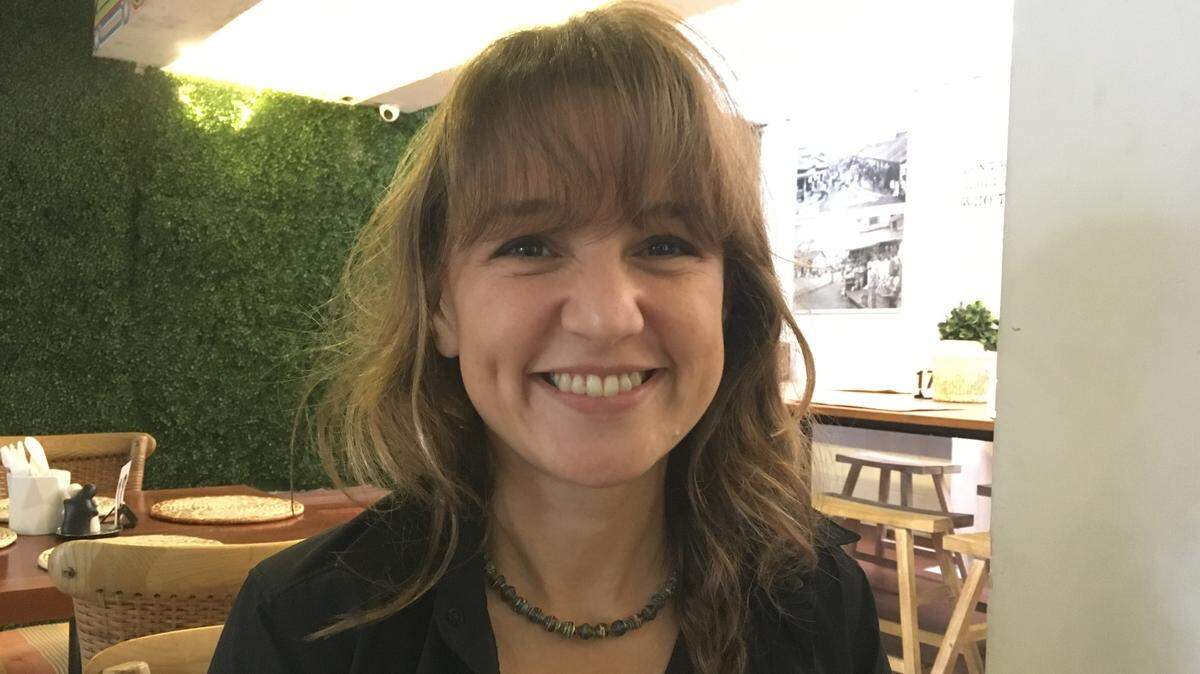
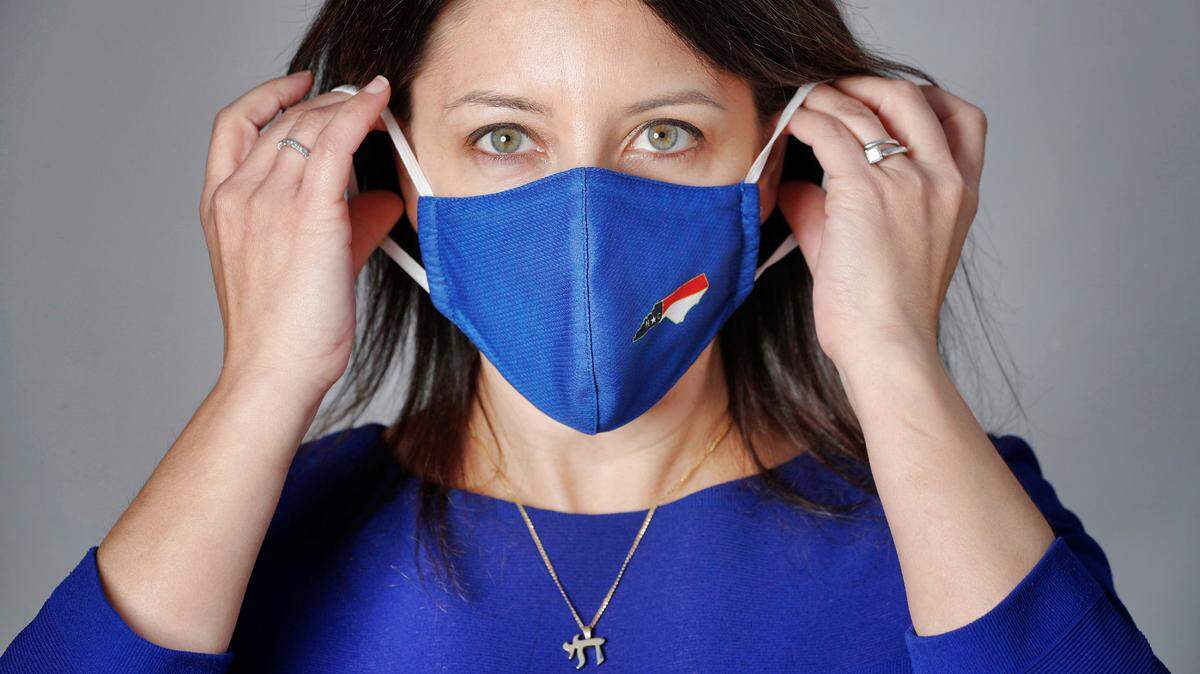
Martinez-Bianchi, 57, emerged during the pandemic as one of the most prominent voices in and for North Carolina’s Hispanic community. She shared public health messages with Latino residents on the coronavirus and how it spreads, as well as how people could get tested and vaccinated.
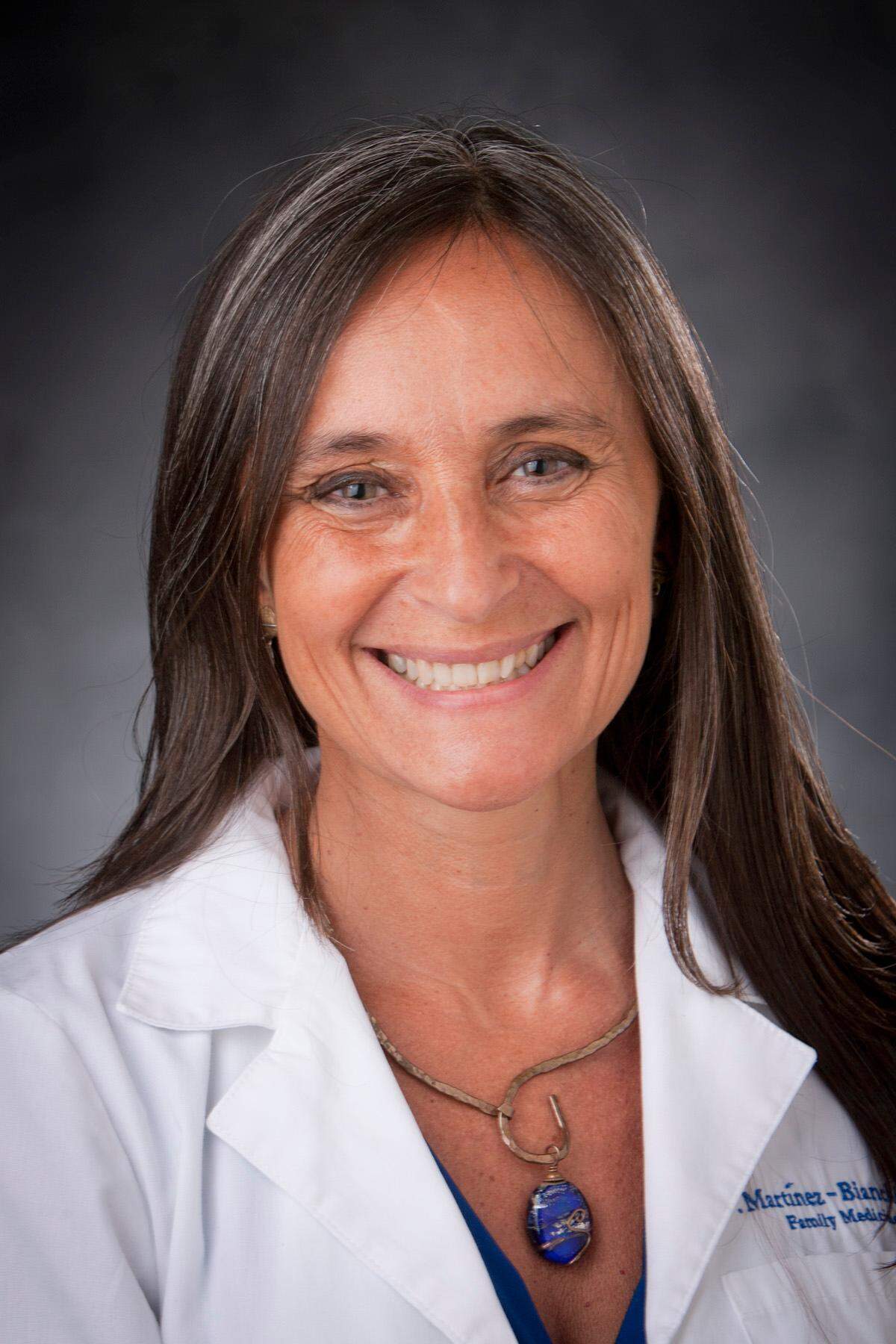
She also listened to the community’s needs and challenges and conveyed those to decision makers in government and health care. She became an advisor to the state Department of Health and Human Services on its response to COVID-19 among Latinos and co-leads the department’s efforts to improve coronavirus testing among historically marginalized populations.
Her work was fueled by a long interest in improving access to health care and came after years of activism that included taking part in a hunger strike as a student in her native Argentina.
For her efforts, Martinez-Bianchi is The News & Observer’s May Tar Heel of the Month, which honors people who have made significant contributions to North Carolina. But she is the first to say it’s been a group effort.
“I want to be clear that I often get the accolades and I get interviewed,” she says, “But this would not happen without an incredible group of people.”
Getting the attention of public health officials
Latin-19 got started with an email, on March 13, 2020, just 10 days after the first COVID-19 case was announced in North Carolina. The Durham Public Schools had just announced they were closing because of the coronavirus, and Maradiaga wrote to her colleague concerned that Latino families were losing a place of support and stability in their lives.
Maradiaga, who is from Honduras, had crossed paths with Martinez-Bianchi at Duke over the years. But they first worked closely, organizing community meetings, in 2019 after a young man who said he was targeting Mexicans shot and killed 23 people and injured 23 at a Walmart in El Paso, Texas.
Prompted by Maradiaga’s email, Martinez-Bianchi arranged a Zoom call for leaders of the Latino community. Latin-19 has been holding those calls every Wednesday since then, taking on new topics and initiatives and drawing in new people and organizations.
Early in the pandemic, it was clear there wasn’t enough information about COVID-19 in Spanish. Martinez-Bianchi and Maradiaga appeared on Spanish-language radio and TV to talk about the virus and gave interviews to Spanish print media. But the Latin-19 group also wrote letters to state and local governments, urging them to provide translations of public health materials and websites.
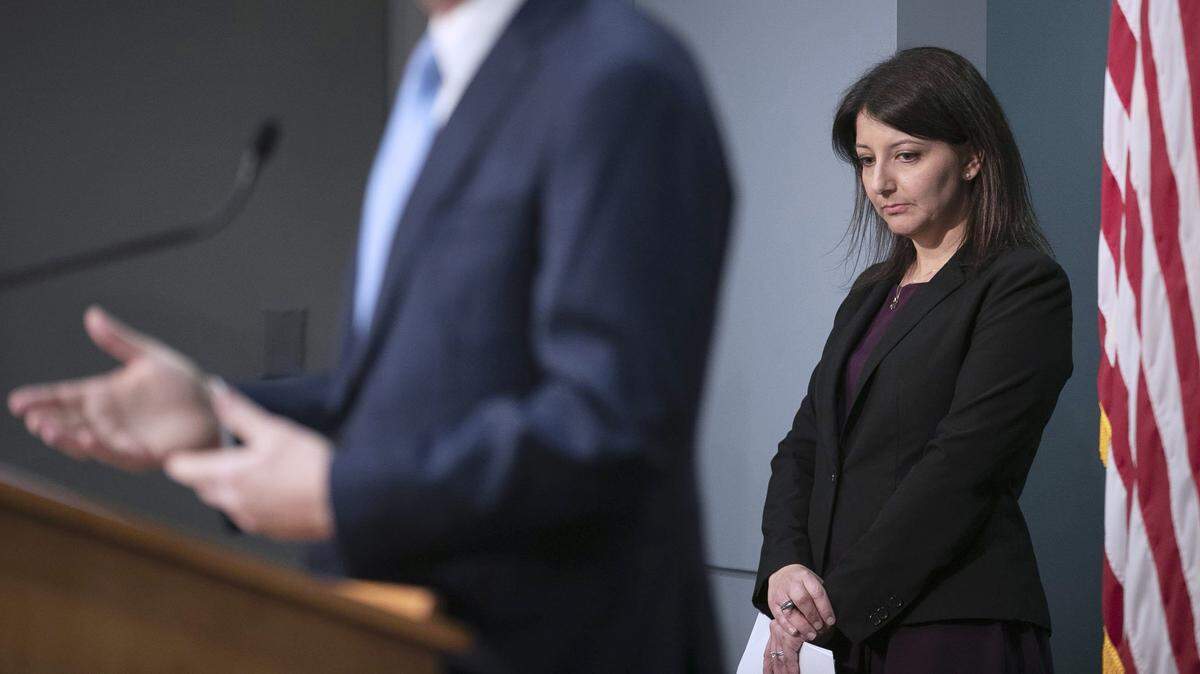
Within two weeks, they were invited to a call with DHHS Secretary Dr. Mandy Cohen. Not only was Martinez-Bianchi brought on as an advisor, but DHHS staff continue to regularly tune in to Latin-19 calls, she says.
“I don’t know that there has ever been a time when so many public health officers were listening directly to the Latinx community,” she says.
Cohen joined the Latin-19 call this week, and for about 50 minutes, took questions on a range of health-related topics, including Medicaid and the future of community health workers hired with federal money during the pandemic. Cohen began by thanking Latin-19 for helping DHHS reach the state’s Latinx residents.
“And particularly to you, Dr. Martinez-Bianchi, thank you for your leadership, for really helping us bring energy and trust to this work in a really thoughtful and intentional way,” she said. “I think we’ve made a ton of progress. When I look at North Carolina compared to other states, I’m really, really proud of that work, and it started with your wanting to see change in the world and partner with us.”
Cohen encouraged the more than 75 people on the Zoom call to continue working together and focus on other public health problems after the coronavirus pandemic subsides.
Coronavirus testing closer to the people
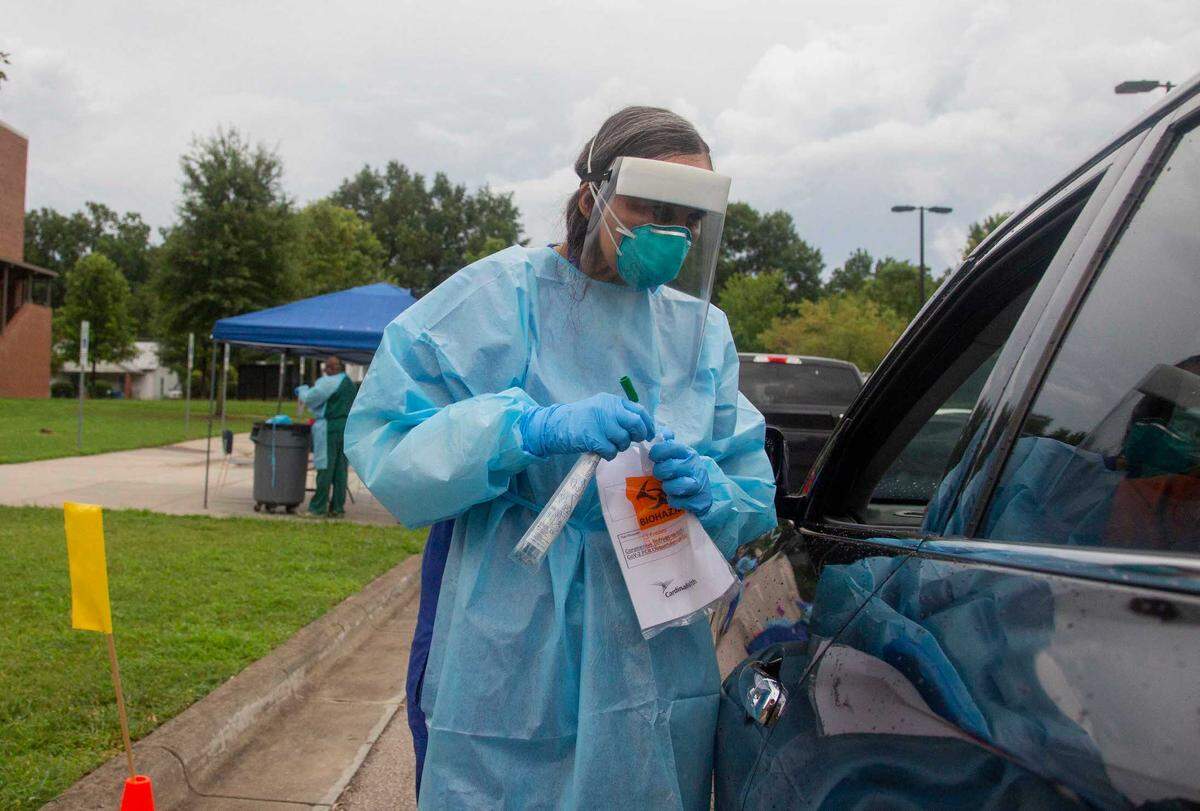
Another issue Latin-19 raised early on was access to coronavirus testing. While Hispanics and other minority groups were often doing what came to be known as “essential” work, in food processing, agriculture, construction and health care, testing was often not available at hours or in places that were convenient to them.
“If you look at the testing sites that were available in Durham at that time, they were all on the west side of town,” Maradiaga said. “And most of our Black and brown community is on the east side of town.”
So Martinez-Bianchi and Latin-19 pressed for Duke to begin offering testing at the Holton Wellness Center, off Driver Street, last summer. She went on to help arrange testing sites in rural and minority communities throughout the state through DHHS’s historically marginalized populations program.
“She’s patient and relentless in the fight for equity,” said Correll McRae, a public health specialist who co-leads that effort. “She doesn’t take no for an answer.”
McRae said Martinez-Bianchi was obviously in tune with the Latinx community and would team up with organizations to provide testing at events that drew people out for other reasons. But McRae said she put in the time and effort to understand the needs of African-Americans, native Americans and other groups the program serves.
“It really takes a special person to put out that kind of listening ear,” he said.
Inspired by her father and a WHO declaration
Martinez-Bianchi says her father was her first role model for a community-minded doctor. Dr. Carlos Martinez Lacabe was a vascular surgeon “with a huge heart for public health,” she says. They lived on the Parana River in Argentina, where he liked to sail and would see to the medical needs of the fishermen and their families who lived on islands in the river.
The military had overthrown Argentina’s government in 1976, and Martinez-Bianchi came of age in a period of political and cultural repression.
“I grew up in a dictatorship, so you didn’t do politics,” she says. “But I learned that you could do community work, and your political involvement is working in the community.”
Martinez-Bianchi was 14 in 1978 when her father told her about the Declaration of Alma-Ata issued by the World Health Organization that year, which identified health care as a fundamental human right. As he explained the declaration and its goal, she decided on a career in medicine.
But there were hurdles. Martinez-Bianchi applied to medical school at the National University of Rosario at a time when the government was closing universities and restricting access to higher education. She was denied admission but took classes anyway as an auditing student.
She joined a group of about 100 current and aspiring medical students in a hunger strike outside the university president’s office to press for wider admission. For nine days, they drank only broth, tea, coffee and mate to ward off the winter chill, until word came that the university president and medical school dean had resigned.
“I fainted hearing the news. Found myself in a hospital hours later,” Martinez-Bianchi says. “My mother had traveled to Rosario with my grandma and my little sister and arrived at the site of the hunger strike and saw the paramedics carrying me out.”
Martinez-Bianchi was admitted to the school but had to fight to be able to take the final exams for the courses she had been auditing. When she passed, she says, some of her classmates carried her out of the building on their shoulders.
When she graduated, Martinez-Bianchi was recruited to do her residency in the Chicago area, where she had been a foreign exchange student in high school. In Argentina, the male-dominated faculty was often dismissive of female students, while hospitals and medical schools in the U.S. in the late 1980s were looking for women doctors as role models, she says, especially ones who could speak Spanish.
“It was like, my country’s telling me I don’t belong in medicine because I’m a woman,” she says. “And the U.S. is telling me I belong in medicine in the U.S. because I am a woman. That’s not too hard a decision to make.”
A family physician and ‘flaming liberal’
As a medical student, Martinez-Bianchi did a clerkship in the emergency room at Northwest Community Hospital in Arlington Heights, outside Chicago. She loved the variety of people and problems she treated but didn’t like that she never got to follow up, to find out how patients were doing after she treated them.
Her mentor there, Dr. Stanley Zydlo, suggested she go into family medicine, a general practice that treats people of all ages, something that didn’t exist at that time in Argentina.
“He’s like, ‘Viviana, it sounds like you have the heart for a family doctor,’” she says. “And I was like, what is family medicine? He told me about it, and that was it. He described what I wanted to do.”
Martinez-Bianchi met her husband, Gregory Bianchi, while in Chicago. Together they moved to Iowa while he did his residency in urology and she finished her family medicine residency at the University of Iowa and later worked at the hospital and community health center in Muscatine, on the Mississippi River. After 11 winters in the Midwest, she told her husband she needed to move south, and they both found jobs at Duke. Their son, Francesco Bianchi, just finished his first year at The College of William and Mary in Virginia.
Martinez-Bianchi says her son once asked her why his friends at school referred to her as a “flaming liberal.” Her pre-pandemic activism includes a speech at the Moral March in Raleigh in February 2017, in which she called for universal access to health care and decried the state’s refusal to expand eligibility for Medicaid, the federal health insurance program for low-income people.
She told her son she doesn’t consider the label an insult.
“I want everybody to have access to an excellent primary care physician,” she says. “I want everybody to say I have a trusted doctor that I can see that can answer my questions in a way that feels comfortable. Why is that not something we all should want for everyone?”
Last June, Martinez-Bianchi took on a new role at Duke, as director of health equity for the Department of Family Medicine and Community Health. It happened at a time when COVID-19 was highlighting that many people lack access to doctors and health care, something that’s especially apparent, she says, as the government tries to get the population vaccinated.
“We are trying to put universal access to vaccines into a system that doesn’t provide universal access to health care,” she says. “And there’s a real disconnect.”
Martinez-Bianchi believes COVID-19 became a shared experience in part because it’s a communicable disease; controlling it was in everyone’s self-interest. She hopes that as the pandemic wanes and life returns to normal that people don’t forget how much they depend on essential workers — and on each other.
“I think we would be very cynical if we were to go back to the way it was after all we’ve learned,” she says. “I also know I live in a country that forgets, and once people are going back to their normal, what they want it to be, I don’t know how many people will continue to remember what happened and whether we can actually learn from this.”
This story was originally published May 27, 2021 at 10:24 AM with the headline "As COVID pandemic hit, Duke doctor made it her mission to amplify NC’s Latino voices."