NC adds nearly 1 million residents in a decade to earn a new congressional seat, Census says
By Brian Murphy and
Richard Stradling
READ MORE
North Carolina 2020 census data
Expand All
WASHINGTON
North Carolina is getting another member of Congress.
The state will receive a 14th seat in the United States House of Representatives based on the first public results from the 2020 Census, which were released Monday — months behind schedule due to the coronavirus pandemic and legal disputes.
North Carolina had long been expected to gain another seat, which also gives it a 16thmember of the Electoral College for the 2024 and 2028 presidential elections.
The 435-member House is reapportioned each decade based on population after each Census. North Carolina had 9.5 million residents in 2010, according to that year’s census. A Census Bureau estimate of the state’s population last summer was 10.6 million people.
Last year’s complete census put the state’s population at 10,439,388 on April 1, 2020. North Carolina grew by 903,905, or 9.5%, since the 2010 count.
The division of congressional seats is based on the “apportionment population,” the number of a state’s residents plus those from the state serving in the military or working for the federal government overseas and their dependents living with them. North Carolina’s apportionment population was 10,453,948.
By either measure, North Carolina remains the 9th most populous state, keeping pace with No. 8 Georgia and remaining ahead of No. 10 Michigan, which is losing a seat in the House.
Where will the new congressional seat go?
That’s the biggest question for North Carolina lawmakers.
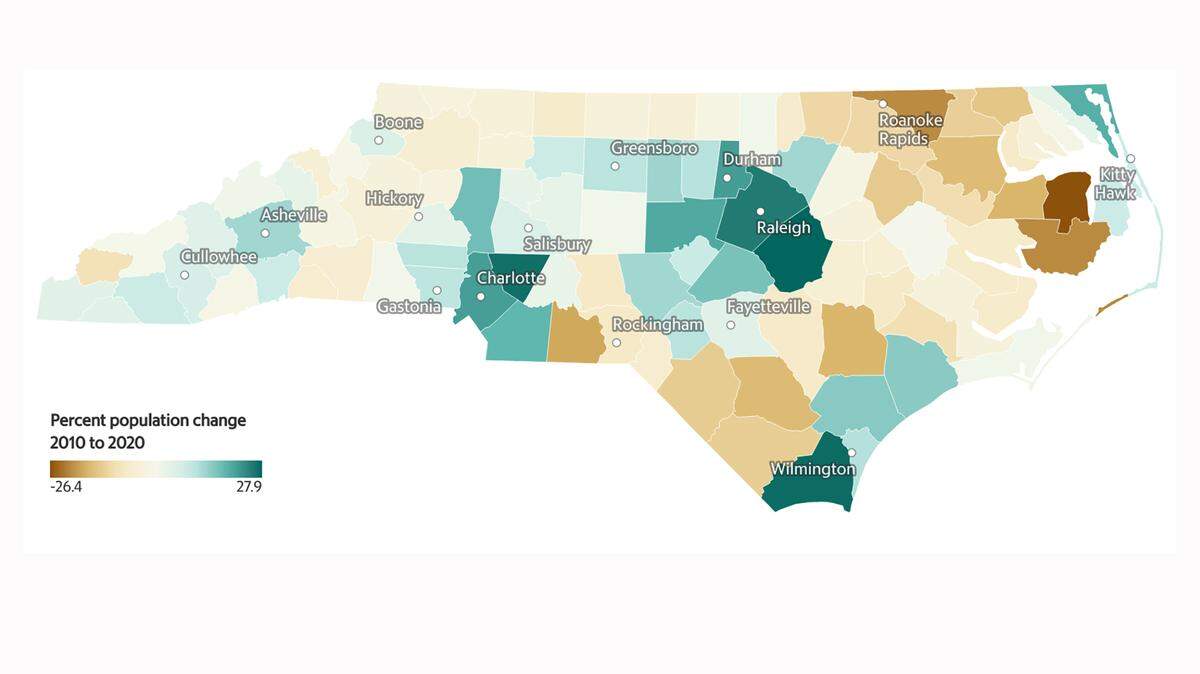
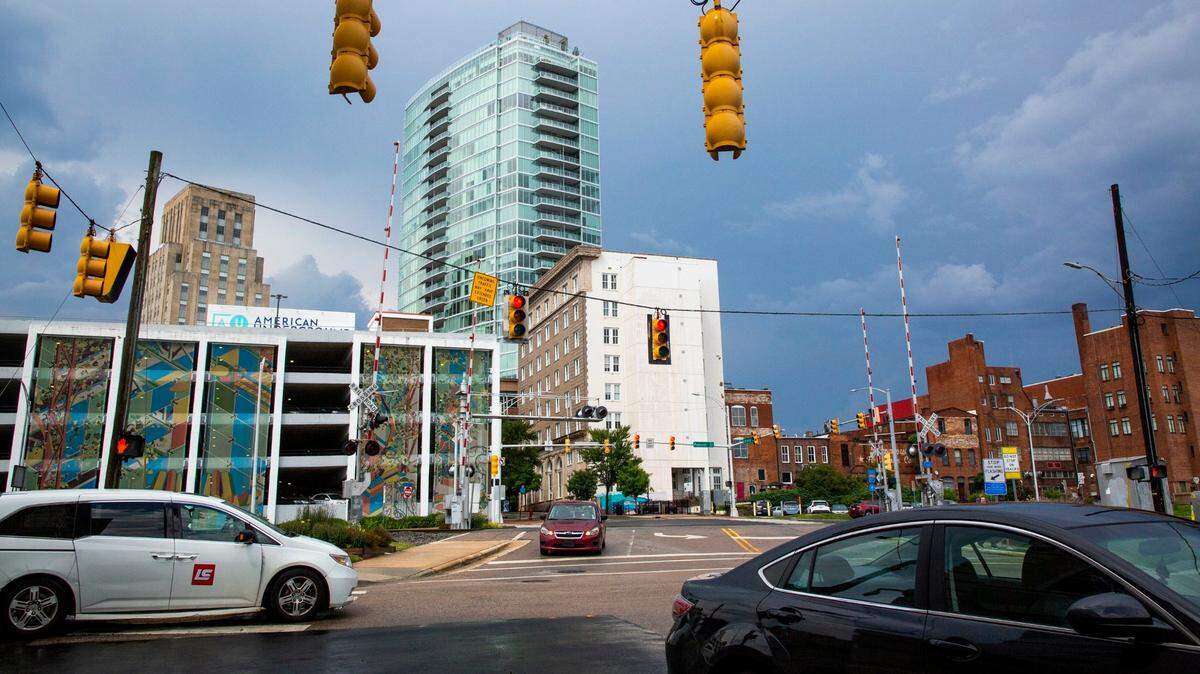
The state’s two most populous counties — Wake and Mecklenburg — continue to grow. Each county is already too large to be contained in a single congressional district.
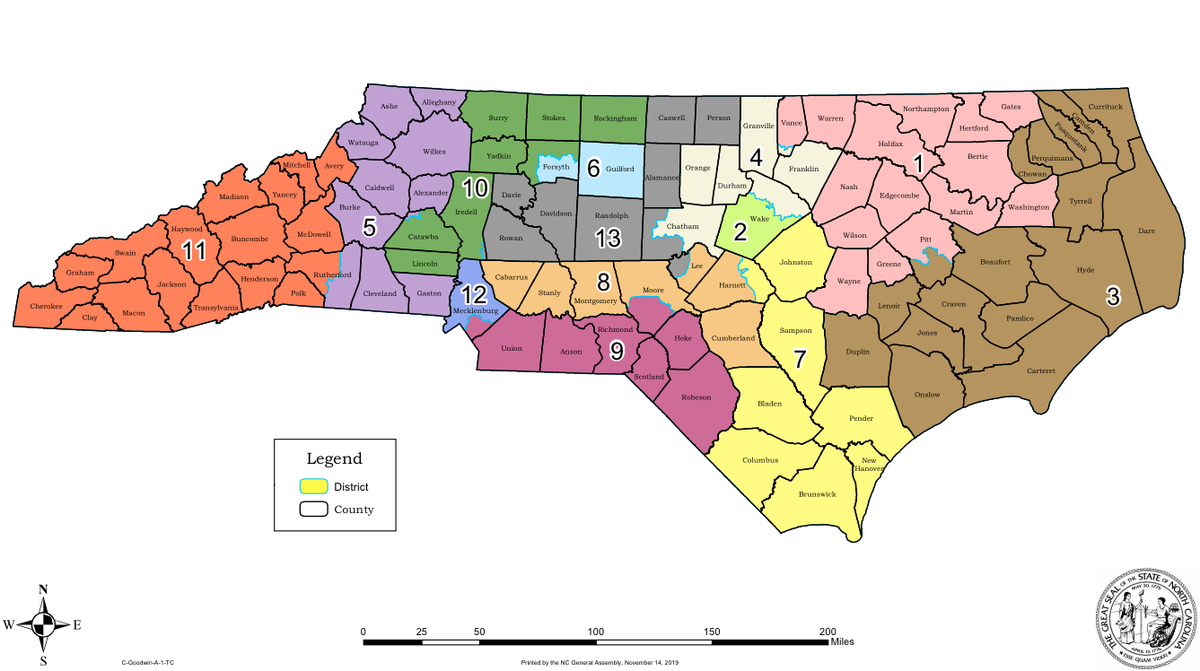
The 2nd Congressional District (Wake) and the 12th Congressional District (Mecklenburg) are solely within county lines.
More than half of the state’s population growth (53%) from 2010 to 2015 occurred, according to an analysis by UNC’s Carolina Demography, in three counties: Wake, Mecklenburg and Durham. In 2016 and 2017, that number was 40% with suburban counties and retirement destinations seeing additional growth.
Based on population estimates, all but one of North Carolina’s current 13 districts now has a population that exceeds the rough estimate of 757,000 people that each of the 14 redrawn congressional districts will have. The largest districts are in Wake County (2nd), Wake, Durham and Orange (4th), from Johnston to New Hanover (7th) and in Mecklenburg (12th).
“What those shifts mean at the congressional district level is that in the urban areas they may be over a relatively small territory and in the rural areas they may have to cover increasingly larger amounts of territory,” said Rebecca Tippett, director of Carolina Demography, a service of the Carolina Population Center at UNC Chapel Hill.
Adding an additional district is sure to have impacts on all of the state’s other congressional districts — as each one must be equal in population.
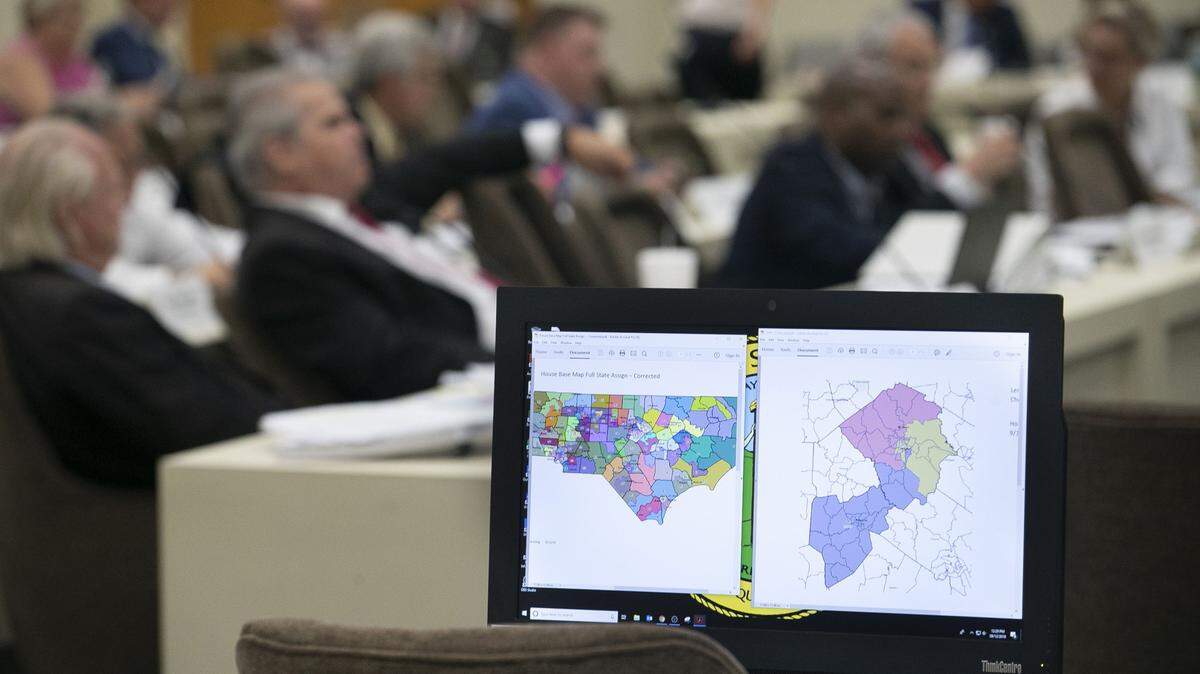
State lawmakers will draw the new lines for state and federal districts — a process sure to lead to legal challenges. Republicans hold majorities in the state legislature.
Republican Senate leader Phil Berger said last year that “the legislature is committed to a process that’s open and transparent.”
“I’m not naive to the point where everybody’s going to agree that whatever maps come out are maps that every individual would agree on,” Berger told The News & Observer late last year. “I don’t know that it’s possible to get to that point.”
Legal fights ahead
The districts drawn from this Census are supposed to last the entire decade.
But the districts created from the 2010 Census were redrawn for the 2016 and 2020 elections after legal challenges due to racial and partisan gerrymandering. North Carolina currently has eight Republican and five Democratic members of the U.S. House.
The districts drawn after the 1990 Census were also challenged in court throughout the decade, resulting in new maps for the 1998 and 2000 elections.
In March, state Democratic lawmakers proposed a constitutional amendment to create a redistricting commission.
“How many redistricting lawsuits have we had in the last decade?” said Rep. Pricey Harrison, a Greensboro Democrat. “We’ve had three or four redraws in the last decade alone. North Carolina has become really ground zero for this, and I supported reform even when Democrats were in charge.”
But the proposal is headed nowhere — except maybe back to court. Former Attorney General Eric Holder, the first Black attorney general in U.S. history, said in February at UNC’s School of Law that “the only way, I think, to crack that which is happening in North Carolina is through the courts, and use those decisions to get a more fair congressional delegation from North Carolina.”
This is a map of the congressional districts used in North Carolina for the 2020 U.S. House elections. North Carolina, based on Census population data, is getting an additional seat in the U.S. House for the 2022 election. Screen grab/North Carolina General Assembly map
Redistricting timeline
This Census data is about four months late and local data is even further behind, which could lead to municipal election delays.
Census data for counties, cities and smaller units needed to draw districts will be released in September, though some data may be available in August.
“If changes are needed to the districts of municipal offices elected by district, and the census data is not released in time, elections for these offices scheduled to take place in the fall of 2021 could be postponed until 2022,” the state board of elections said.
The 2022 U.S. House and U.S. Senate primaries are set for March 8, and candidates must file in December. In order to do so, districts must be completed.
Karen Brinson Bell, the executive director of the state board, recommended that lawmakers push that back two months, in part, “to address redistricting.” But Berger and House Speaker Tim Moore said they do not plan to push back the primary date.
“We should have time and ability to get things resolved so that the (March) election can go forward as planned,” Berger told The Associated Press last week.
Population winners & losers
North Carolina is one of six states — all in the South or West — that will gain representation. Seven states in the Northeast, Upper Midwest and California will each lose one seat due to population changes. Texas will gain two seats.
Only seven states will have more representatives than North Carolina, whose 14 seats are tied with Georgia. The 14 seats are the most the state has ever had. North Carolina had 13 seats in the House from 1813 to 1843 and again since 2003.
Since 1940, 84 congressional seats have moved from the Northeast and Midwest to states in the South and West, as the nation’s population shifts, according to the Census Bureau. Over the last decade, the South was the fastest growing region, at 10.2%, followed by the West at 9.2%, the Northeast at 4.1% and the Midwest at 3.1%.
The nation’s overall growth rate of 7.4% was the second slowest in U.S. history, after the 1930s, according to the Census Bureau.
On The News & Observer's Under the Dome podcast, we’re unpacking legislation and issues that matter, keeping you updated on what’s happening in North Carolina politics on Monday mornings. Check us out here and sign up for our weekly Under the Dome newsletter for more political news.
CORRECTION: An earlier version of this story misstated North Carolina’s rate of increase in population from 2010 to 2020. It increased 9.5%, according to the complete Census count for April 2020.
Brian Murphy is the editor of NC Insider, a state government news service. He previously covered North Carolina’s congressional delegation and state issues from Washington, D.C. for The News & Observer, The Charlotte Observer and The Herald-Sun. He grew up in Cary and graduated from UNC-Chapel Hill. He previously worked for news organizations in Georgia, Idaho and Virginia. Reach him at bmurphy@ncinsider.com.
Richard Stradling covers transportation for The News & Observer. Planes, trains and automobiles, plus ferries, bicycles, scooters and just plain walking. He’s been a reporter or editor for 38 years, including the last 26 at The N&O. 919-829-4739, rstradling@newsobserver.com.