Many NC congressional districts are overpopulated. Here’s a look before redistricting
By Brian Murphy and
David Raynor
READ MORE
North Carolina 2020 census data
Expand All
U.S. House districts centered around Raleigh, Charlotte and Durham are significantly overpopulated and will have to be drawn tighter geographically by legislative mapmakers this year.
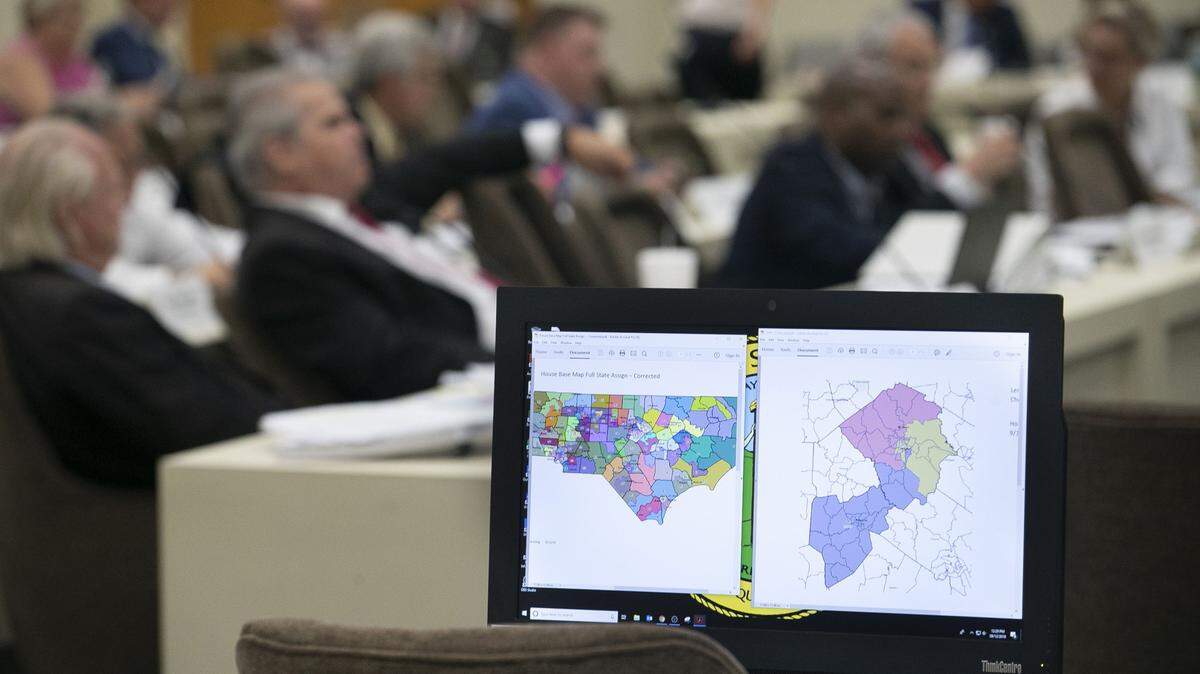
The U.S. Census Bureau released granular population data Thursday that will be used for redistricting for congressional seats as well as the North Carolina statehouse. North Carolina is gaining a 14th seat in the U.S. House.
A News & Observer analysis of census data calculations provided by Carolina Demography shows that 11 of the state’s current 13 districts have more people than allowed in a new district. The current districts were drawn in 2019 and used for the 2020 elections, but they were based on 2010 census data.
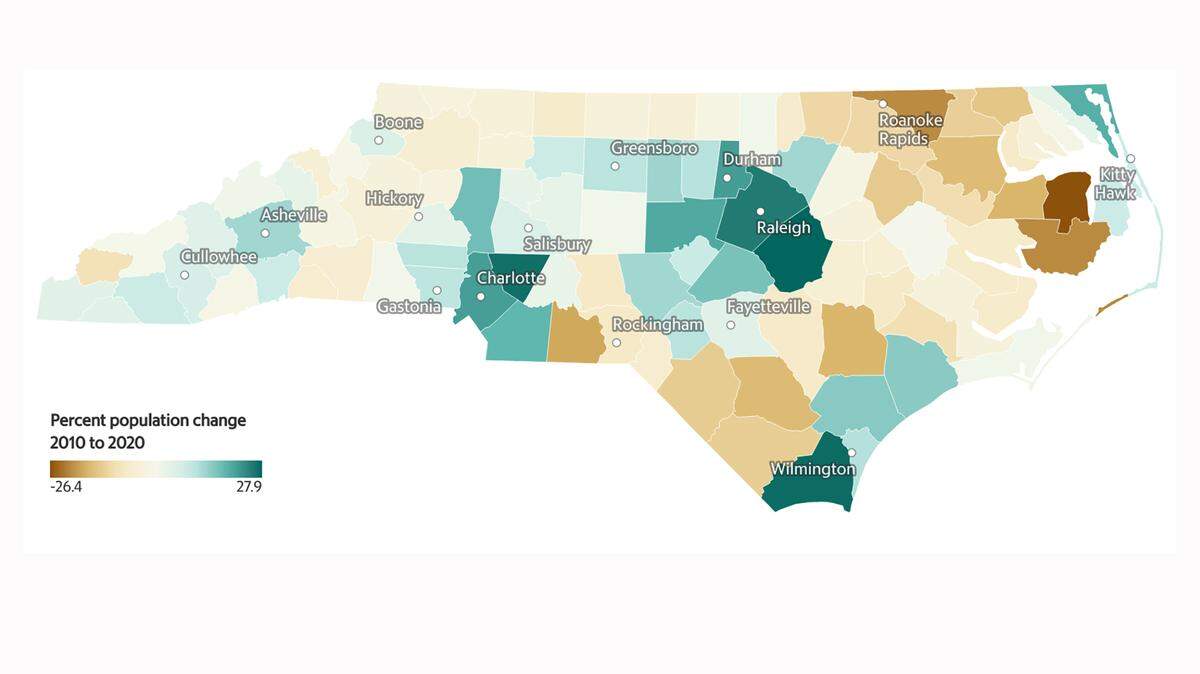
North Carolina’s population grew by 9.5% in the last decade, but that growth was concentrated in metro centers. More than half of the state’s 100 counties (51) lost population between 2010 and 2020.
Each of North Carolina’s 14 congressional districts must have a population of 746,711. The per district numbers comes from North Carolina’s total population (10,439,948) plus state residents living overseas (14,563) divided by 14 districts. The census numbers are as of April 1, 2020.
District
2020 population
New district pop.
Over or under
1
687,356
746,711
-59,355
2
912,803
746,711
166,092
3
745,974
746,711
-737
4
877,520
746,711
130,809
5
747,822
746,711
1,111
6
807,271
746,711
60,560
7
823,747
746,711
77,036
8
820,973
746,711
74,262
9
786,523
746,711
39,812
10
775,553
746,711
28,842
11
782,215
746,711
35,504
12
899,779
746,711
153,068
13
771,842
746,711
25,131
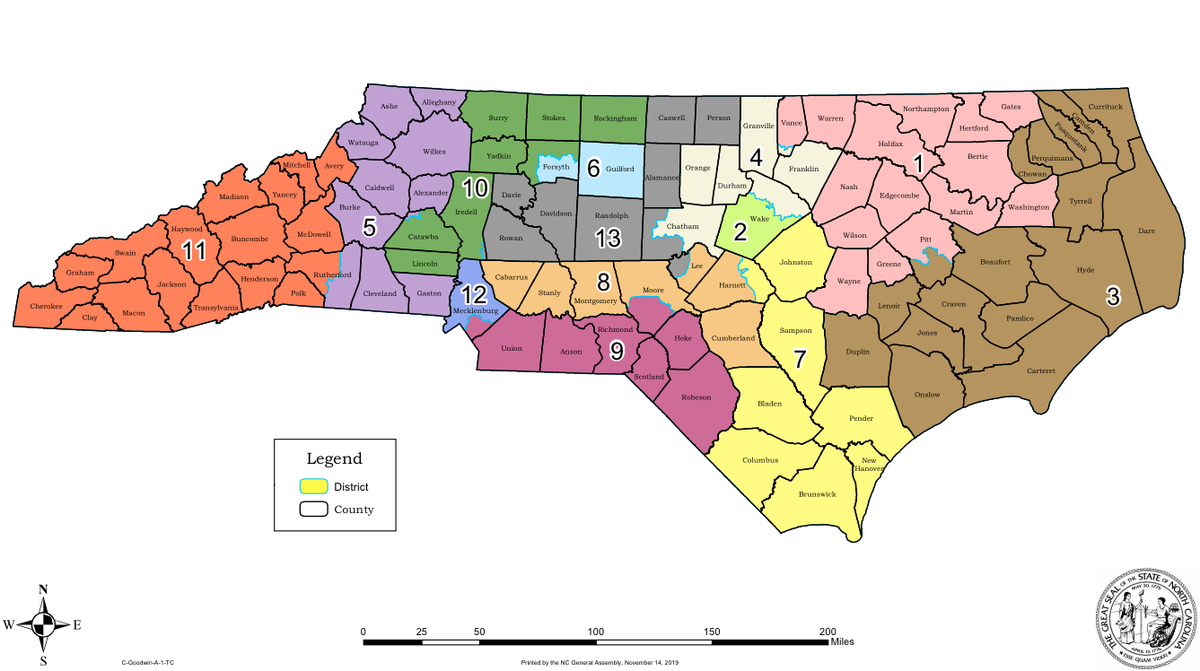
The 2nd Congressional District is solely contained in Wake County. The 4th includes parts of Wake County as well as Chatham, Durham, Franklin, Granville, Orange and Vance counties. The 12th is solely contained in Mecklenburg County.
The three districts with the most population — and, thus, the most overage — are represented by Democrats: Deborah Ross (NC-02), David Price (NC-04) and Alma Adams (NC-12).
The 1st District is in the rural northeastern part of the state. It includes 15 counties and is represented by Democrat G.K. Butterfield. With the district’s shrinking population, the district will have to grow geographically — perhaps moving into the Triangle as it did under previous maps. Under districts used in 2016 and 2018, the 1st included nearly all of Durham County.
Why is redistricting so important?
North Carolina has eight Republican representatives and five Democratic representatives. With the U.S. House closely divided, gaining an additional seat or two could determine which party controls the House after the November 2022 elections.
The state’s congressional maps were challenged repeatedly throughout the 1990s and the 2010s, resulting in changes at points in the decade.
North Carolina’s Republican majority in the state legislature controls the map-drawing process, and Gov. Roy Cooper, a Democrat, does not have the ability to veto or change the maps.
Lawmakers adopted criteria this week that prohibits using “partisan considerations and election results” as part of the process. Among the criteria that is to be used in the process: contiguity, compactness, municipal boundaries and member residence. The criteria also addressed county boundaries and put in language assuring Wake and Mecklenburg counties of having their own district, as is currently the case.
“Division of counties in the 2021 Congressional plan shall only be made for reasons of equalizing population and consideration of double bunking. If a county is of sufficient population size to contain an entire congressional district within the county’s boundaries, the Committees shall construct a district entirely within that county,” the criteria says.
Wake and Mecklenburg are the only two counties with sufficient population to meet that benchmark.
At least one current member of the delegation is not running for re-election. Republican Rep. Ted Budd, who represents the 13th Congressional District, is running for U.S. Senate.
This is a map of the congressional districts used in North Carolina for the 2020 U.S. House elections. North Carolina, based on Census population data, is getting an additional seat in the U.S. House for the 2022 election. Screen grab/North Carolina General Assembly map
East and west North Carolina
The 7th Congressional District currently stretches from Johnston County to Wilmington and includes eight counties. Rep. David Rouzer, a Republican, moved from Johnston County to Wilmington in 2018.
Due to growth in southeastern North Carolina, legislative mapmakers could opt to draw a much tighter coastal district this time around based on population. New Hanover, fast-growing Brunswick County, Pender, Onslow, Jones and Carteret counties have a combined population of 737,066 — about 9,000 shy of a district.
The 11th Congressional District includes 17 counties in the far-western part of the state. It is represented by Republican first-term Rep. Madison Cawthorn. The current district is overpopulated by 35,505. One potential remedy is to remove Avery (17,806) and Mitchell (14,903) counties — the northernmost counties — from the district.
The mapmakers will be using much more sophisticated technologies than simply county-level population data, but the rough calculations do offer a peek at some of the decisions that will have to be made.
Florida is one of six states to gain at least one seat in the U.S. House of Representatives based on the 2020 Census. Seven states, most in the Northeast and Midwest, lost a seat. The gains were among Southern and Western states. U.S. Census
For more North Carolina government and politics news, listen to the Under the Dome politics podcast from The News & Observer and the NC Insider. You can find it at link.chtbl.com/underthedomenc or wherever you get your podcasts.
Under the Dome
On The News & Observer's Under the Dome podcast, we’re unpacking legislation and issues that matter, keeping you updated on what’s happening in North Carolina politics on Monday mornings. Check us out here and sign up for our weekly Under the Dome newsletter for more political news.
Brian Murphy is the editor of NC Insider, a state government news service. He previously covered North Carolina’s congressional delegation and state issues from Washington, D.C. for The News & Observer, The Charlotte Observer and The Herald-Sun. He grew up in Cary and graduated from UNC-Chapel Hill. He previously worked for news organizations in Georgia, Idaho and Virginia. Reach him at bmurphy@ncinsider.com.