In Meck district attorney race, Merriweather talks adjustments, Emry promises deconstruction
READ MORE
The Charlotte Observer Voter Guide 2022
Information on where to vote, the candidates, how to vote and more.
Expand All
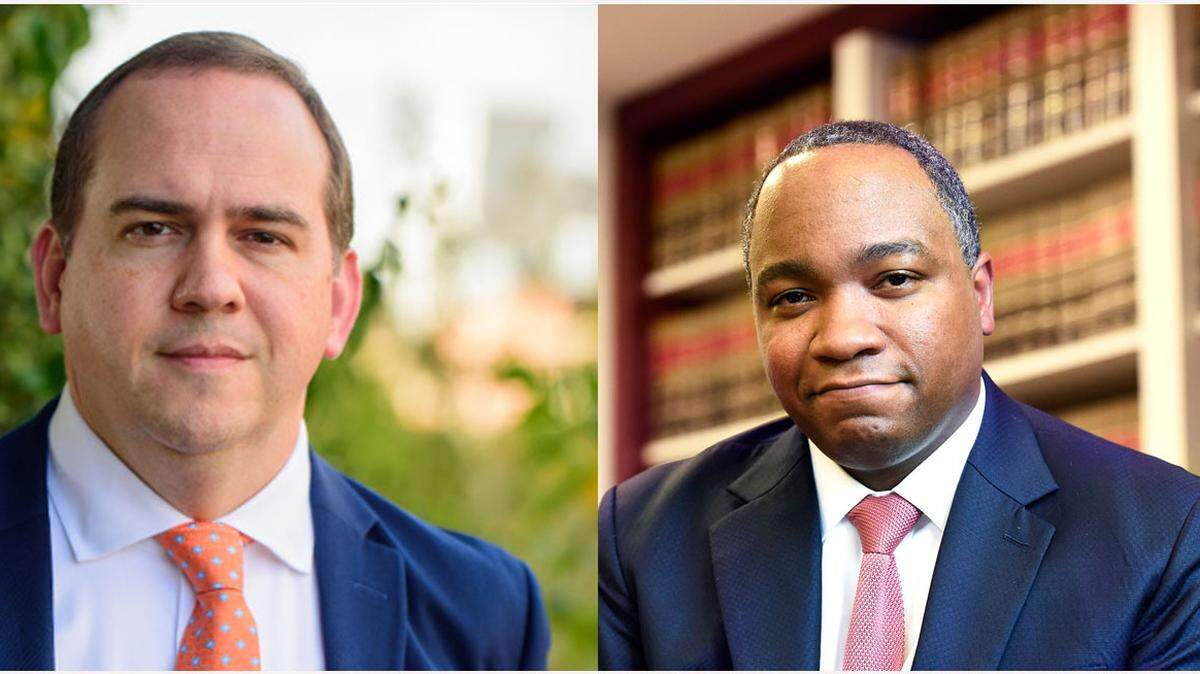
To understand the philosophical dividing lines in the Mecklenburg County district attorney’s race, consider the widely different answers the two candidates — both Democrats — give to the same question.
Asked what’s the most important change he would make, incumbent Spencer Merriweather says he’ll continue putting more emphasis on prosecuting violent crimes so his office can whittle down the pandemic-driven backlog of cases “posing the greatest threat to public safety.”
But while Merriweather talks about an adjustment, albeit a significant one, challenger Tim Emry promises a deconstruction — an end to what he describes as “the mass incarceration policies” used by Merriweather and other prosecutors that lead to “unacceptable racial disparities and do not keep us safe.”
Merriweather, the county’s top prosecutor since 2018, still believes in his office’s ability to protect public safety, achieve some level of justice for victims and to promote the common good.
Emry, on the other hand, advocates a re-imagining of the entire criminal justice system, which he insists is “rooted in white supremacy and anti-Black racism.”
The 45-year-old criminal defense attorney and former public defender, who is white, is among a small but growing wave of reform-minded candidates nationwide who have rejected the “law-and-order, tough-on-crime” campaign template for most prosecutor jobs.
So-called progressives vowing major criminal-justice reforms already have been elected district attorney in such cities as Philadelphia, San Francisco, Chicago, St. Louis, Austin, Texas, and Durham. Even more are running this year, including in Wake County.
Whether Charlotte-Mecklenburg follows remains to be seen. Emry is considered a significant longshot to unseat Merriweather in the May 17 Democratic primary. Since no Republicans entered the race, the winning Democrat gets the job.
Nonetheless, Emry’s campaign has been relentless in promising specific reforms and attempting to tie Merriweather to what Emry describes as a racist and destructive status quo.
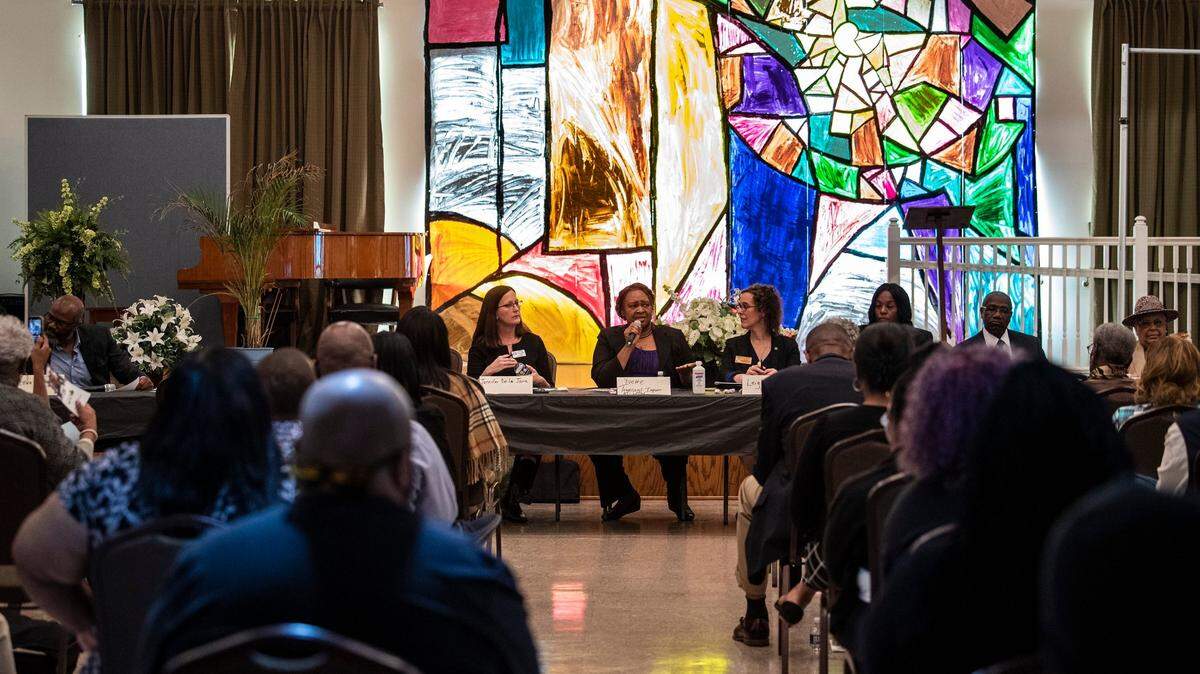
“It’s not broken,” he said of the courts system during an online forum with mostly Black voters last month. “It’s working exactly the way it was designed.”
Merriweather, 44, the first African-American elected Mecklenburg D.A., says he became a prosecutor in part “because I knew what it felt like to be treated inequitably by the government because of my race.”
He’s also been a visible partner to ongoing efforts by the Mecklenburg courts to address racial and economic biases in the courtroom and the first D.A. in the state to create a “Diversity and Inclusion” team to examine the treatment of defendants and crime victims alike.
Emry wants to go further and faster. He promises an end to death-penalty prosecutions in Mecklenburg, which he calls “the most visible symbol of white supremacy in North Carolina.”
He promises to create a special team to investigate and prosecute police crimes — vowing to be “tireless about holding police accountable when they break the law.” Merriweather, he says, has failed on that front.
“From high profile police killings to officers who knowingly withhold evidence and give false testimony in court, the current D.A.’s office has demonstrated a persistent unwillingness to hold police accountable to the same laws they enforce,” Emry wrote in response to a series of Observer questions.
For his part, Merriweather says police remain a trusted and vital criminal-justice partner, but one he will prosecute if they clearly break the law.
Asked what distinguishes him from Emry, Merriweather describes himself as a proven reformer who remains committed to the law, a safer community and building on what he describes as “a career of experience serving victims.”
It’s for that reason, Merriweather says, that he will not rule out seeking the death penalty, saying he owes it to every parent who loses a child to a killer to consider all legal options, including capital punishment. The county, at least for now, no longer has any death penalty cases scheduled.
He cites his creation both of a special victims team in the D.A. office to prosecute sex crimes and offenses against children as well as a violent-crime unit to focus on felonies involving firearms. To place more emphasis on violent crime, Merriweather dropped the prosecution of low-level drug crimes last year.
He pledges to work with other government partners for a “school system that is free of guns” as well as a continuation of bond-reform policies in which custody is based on “dangerousness not debt.” He blames both political parties for under-supporting the courts and pledges to “take the fight to Raleigh” in hopes of convincing the legislature to do more.
Emry offers a different set of priorities. He says he wants to end the prosecution of habitual-offender cases, which he says too frequently lead to exorbitant prison sentences for low-level crimes.
He also promises within his first two years in office to cut the number of Mecklenburg residents sent to state prison by half.
Emry says he will refuse to prosecute any case that involves a racially profiled traffic stop. Studies indicate that Black drivers are far more likely than whites to be stopped, searched and charged with a crime.
In a more recent break with Merriweather, Emry says he would call for an outside investigation of the handling of high school sexual assault cases by the Charlotte-Mecklenburg Schools. In September, after a rash of reported rapes and assaults at Myers Park High, Merriweather announced he would not, according to WBTV.
This story was originally published April 24, 2022 at 6:00 AM.

.JPG)